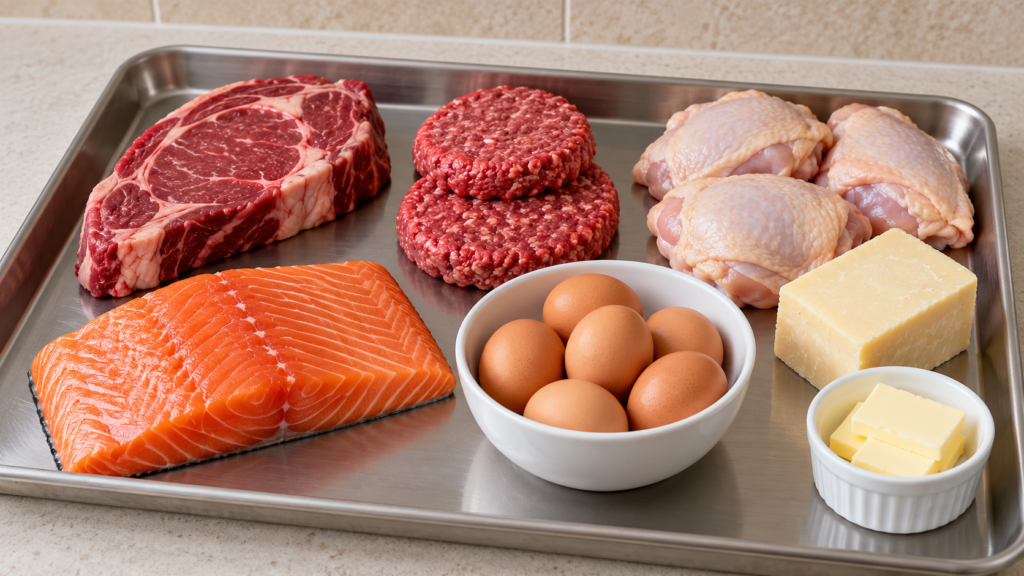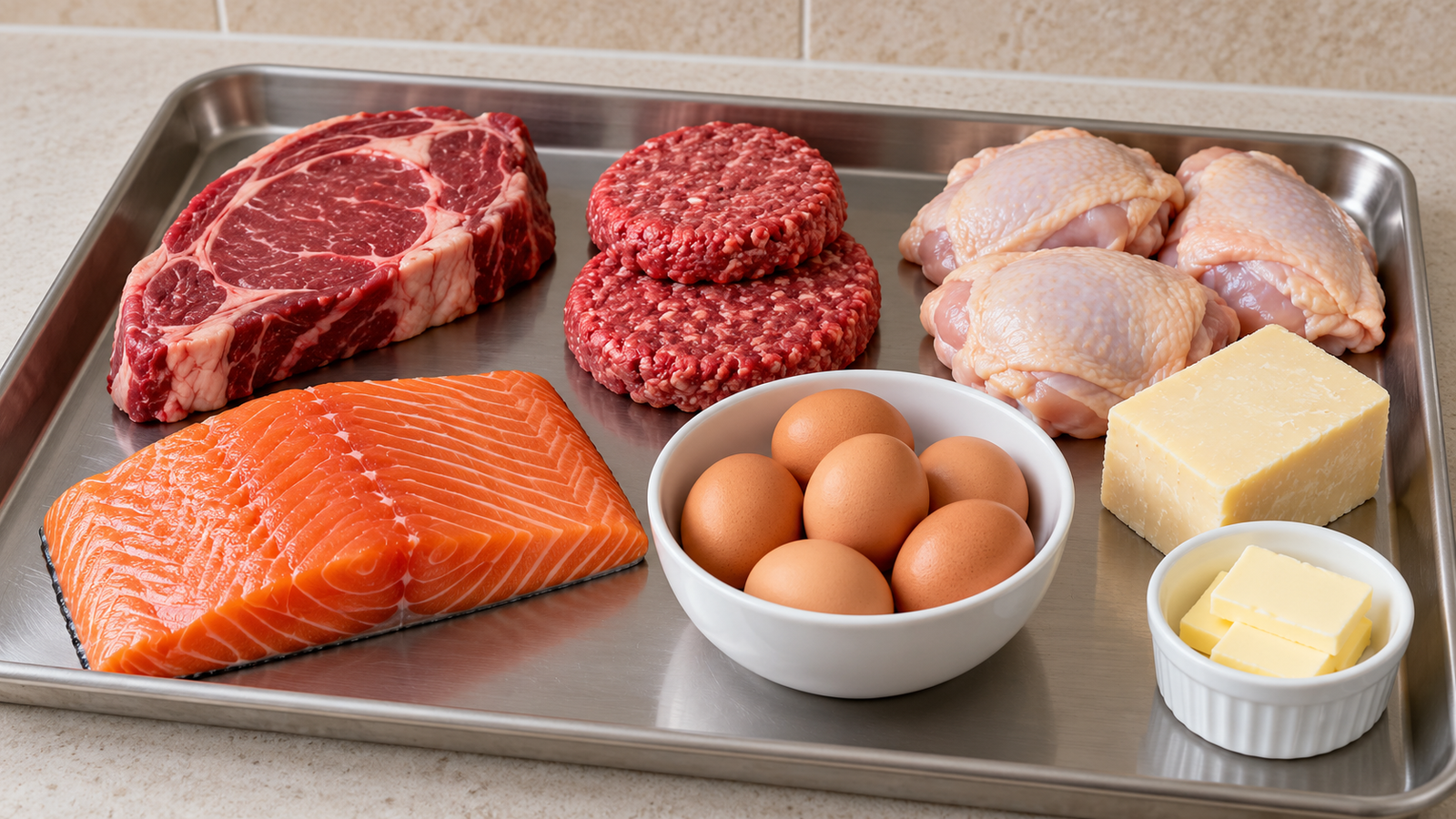
Search for a food list built around animal products and most of the results that come back are loaded with weight-loss promises, strict daily rules, and a tone closer to a medical treatment plan than an ordinary grocery guide. None of that is actually necessary to answer a much simpler, far more practical question than any of it addresses: what genuinely belongs on the plate, bought at a normal store, cooked in a normal kitchen. This is meant as a practical, usable list, not a diet protocol or a set of rules to follow, and it leans heavily on the specific, detailed guides already covering each individual category rather than repeating thin, surface-level summaries of all of them in one place.
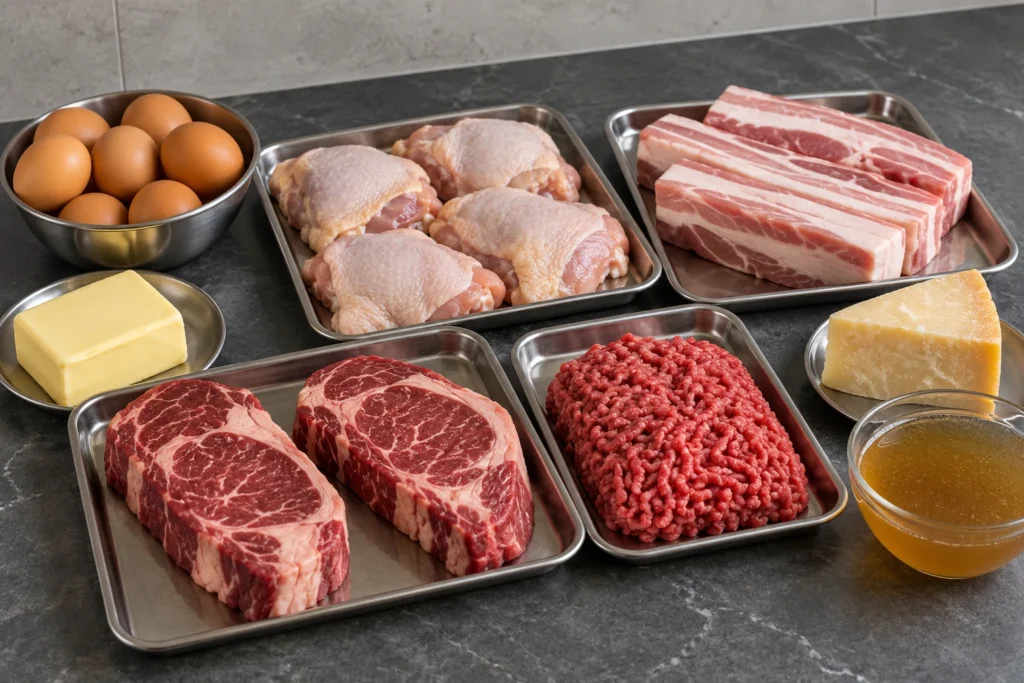
The full list, by category
Meat. Beef, pork, chicken, turkey, lamb, and other game meats cover most of the weekly rotation for most households, spanning everything from quick-cooking steaks and chops to long, slow cuts like chuck and brisket that reward patience more than speed. Ground meat belongs here too, and it deserves its own attention rather than being treated as an afterthought version of whole cuts, since fat ratio and handling change the result as much as the type of animal does. Cuts smoked low and slow, like a shoulder or a brisket, and cured meats like bacon round out the category further, each asking for a genuinely different approach than a quick weeknight sear.
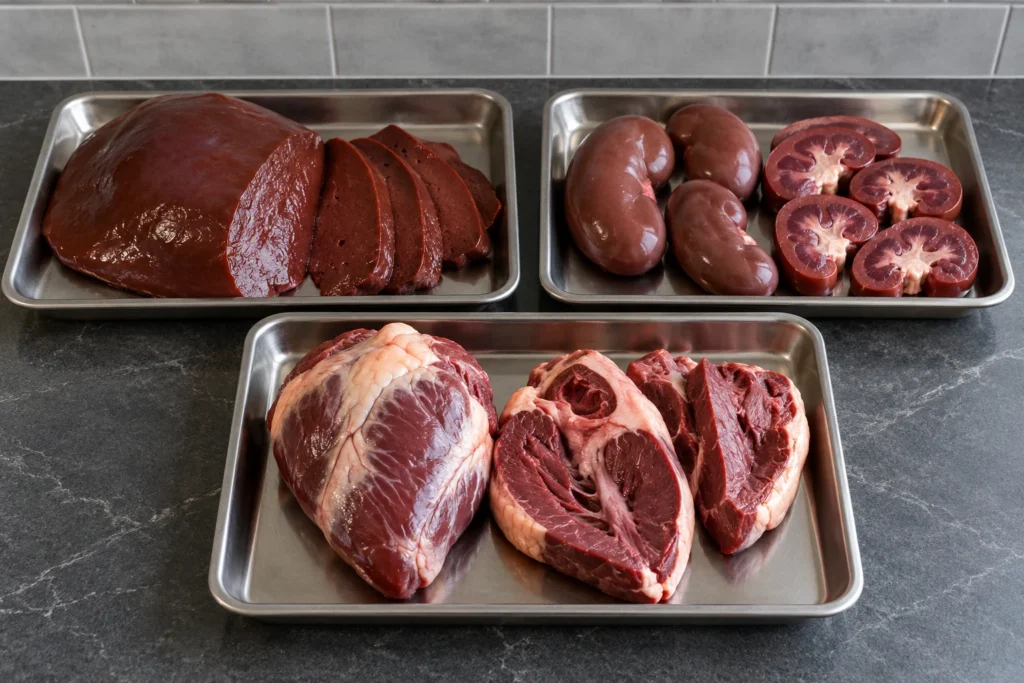
Organ meat. Liver, heart, kidney, and bone marrow are genuinely approachable once cooked correctly, and they’re often the cheapest, most overlooked items at a meat counter, frequently sitting in a cooler case that most shoppers walk straight past without a second glance. Liver gets a reputation it doesn’t entirely deserve once the bitterness is handled properly, heart cooks closer to a lean steak than people expect, and bone marrow is about as close to a zero-effort luxury as cooking gets, requiring little more than an oven and a spoon.
Eggs. Cheap, fast, and genuinely versatile enough to fill the gap between a batch-cooked dinner and the next grocery trip. What the carton labels actually mean, and how heat actually changes an egg, matters more to the result than most people realize.
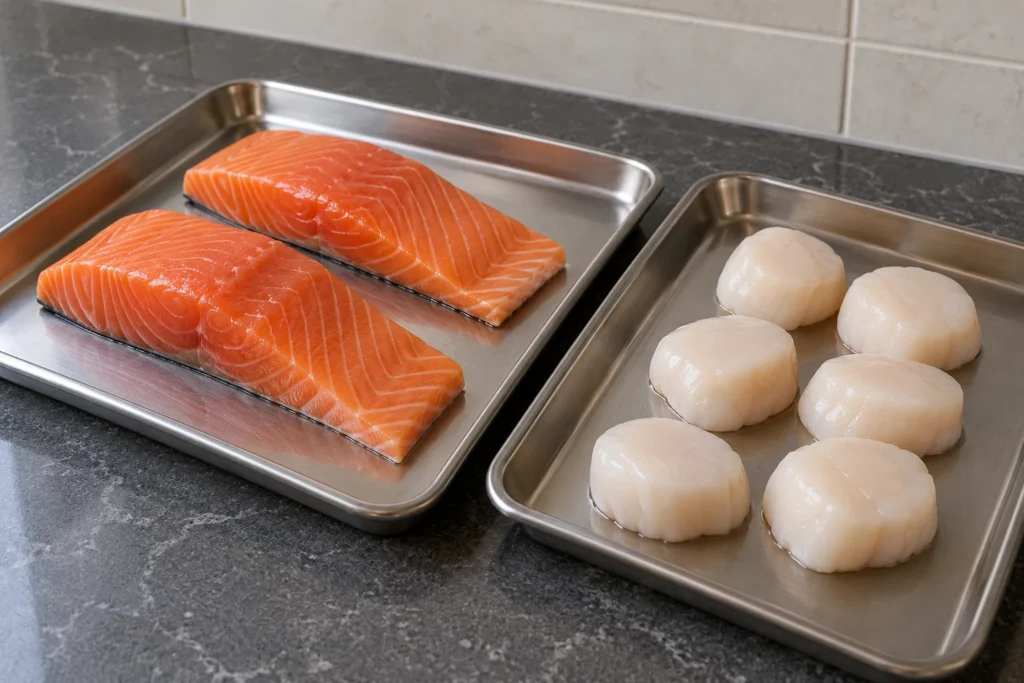
Fish and seafood. Finfish, shellfish, and canned options like sardines and salmon all count, and canned fish specifically deserves more credit than it usually gets as a zero-prep, shelf-stable staple. Buying and cooking fish without overdoing it covers the specific pitfalls that trip up most people new to cooking it.
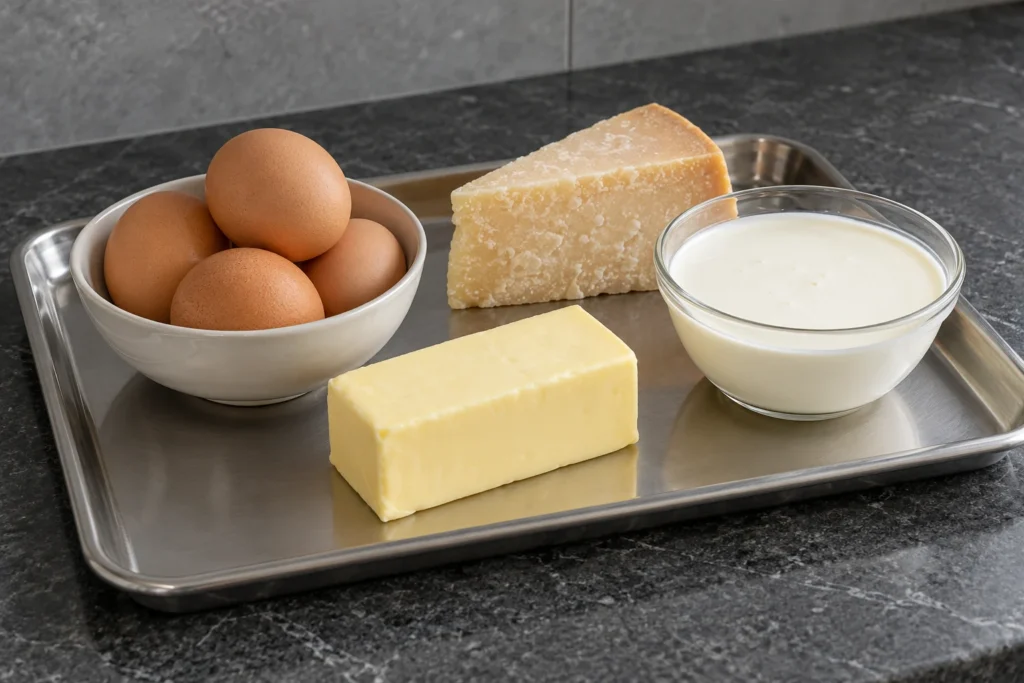
Dairy, specifically butter, ghee, cream, and cheese. What actually separates these from each other, and why they’re treated differently here than raw milk, is worth reading in full rather than assuming all dairy belongs in one bucket.
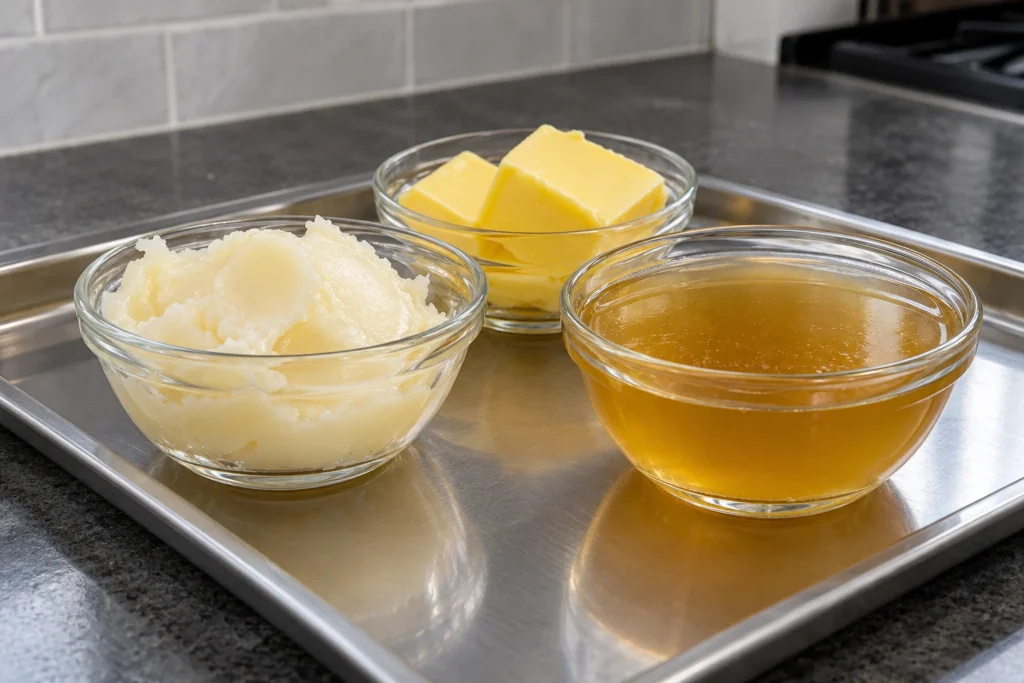
Rendered animal fat. Tallow, lard, and schmaltz aren’t a separate food group so much as the natural byproduct of cooking everything above, and using them deliberately rather than pouring them down the drain is one of the simplest upgrades available to anyone already cooking meat regularly.
Budgeting across these categories instead of treating them as equal-cost options
These categories span an enormous price range, and treating them as interchangeable on a budget is a common early mistake. Ground beef, chicken thighs, and eggs sit at the cheap, reliable end of the list and can reasonably anchor most of a week’s meals without straining a grocery budget. Organ meat is frequently cheaper still, often the least expensive item at a counter precisely because demand for it is lower than for muscle cuts, despite it being just as nutritious and, once cooked properly, genuinely enjoyable rather than merely tolerable.
Fish and shellfish vary dramatically by species and whether it’s fresh or canned, with canned sardines and frozen fillets sitting closer to the budget-friendly end and fresh shellfish or specialty cuts sitting well above it. Dairy fat, specifically butter and ghee, tends toward the pricier end per pound compared to cooking fats like rendered tallow, though a little goes a long way in most applications, which softens the actual cost impact over a week of cooking. Where the real value actually sits when buying meat applies the same underlying logic across every category on this list, not just beef specifically.
Mistakes worth avoiding when putting this list into practice
- Treating meat as the only category that counts. Eggs, fish, and dairy solve real logistics problems meat alone doesn’t, particularly speed and variety, and skipping them makes a week harder to plan than it needs to be.
- Avoiding organ meat entirely out of unfamiliarity. It’s often the best value on this entire list, and the texture and flavor concerns that keep people away from it are usually solved by a specific technique detail, not by avoiding the category altogether.
- Buying raw milk because it technically fits the broader animal-product category. As covered above, this is a different risk and regulatory category than the rest of this list, worth researching specifically and separately rather than assuming it belongs in the same grocery basket without a second thought.
- Assuming more expensive automatically means better. A well-cooked, budget-friendly cut from this list consistently beats a poorly cooked expensive one, and technique accounts for more of the final result than the price tag does.
What’s deliberately left off this list, and why
Raw milk is the clearest example. It’s a real animal product, and plenty of animal-product-focused eaters do drink it, but it’s left off this list specifically because the actual search and purchasing intent around it runs toward legality and safety debate rather than straightforward grocery or cooking questions, and that territory is better left to public health sources than a cooking site. Its legal status also varies considerably by state and country, which makes any general cooking guidance about it far less useful than guidance about a product sold the same way nationwide. Butter, ghee, cream, and aged cheese give nearly all the same practical dairy options without wading into that regulatory patchwork at all.
Plants, grains, legumes, and anything built around them sit outside the scope of this list entirely, not because they’re treated as forbidden in some strict sense, but because they’re simply not what this particular list or this particular site is organized around. Anyone building a plate that includes both animal products and plants is welcome to use this list for the animal-product half of it; nothing here requires excluding everything else to be useful. This is a list of what belongs in this specific category, not a ruling on what belongs on anyone’s plate overall.
Highly processed products that happen to contain animal ingredients, think heavily reformed deli meat loaded with fillers, or a “meat snack” built mostly around starch and additives with a small amount of actual meat mixed in, also sit outside the spirit of this list even though they technically clear the bar of containing some animal product. The list above is about foods in forms close to their original state, not every packaged product that can technically claim an animal-derived ingredient on its label.
Why this list looks different from most of what shows up in a search
Most lists built around eating mostly or entirely animal products come from either a medical or weight-loss angle, promising specific health outcomes, or from a commercial angle, built to sell a program, a supplement, or a meal kit. Neither of those is what this list is doing. It exists to answer a narrower, more useful question: given a trip to a grocery store or a butcher counter, what’s actually worth buying and how should it actually get cooked. No daily calorie targets, no required ratios between categories, no claims about what any of this will do for anyone’s health. Just a straightforward inventory, treated the way a reference list should be treated.
That distinction also shows up in which items make the list at all. A lot of the medically framed versions of this kind of list lean heavily on supplements, bone broth powders, or specific branded products positioned as necessary additions. Nothing on this particular list requires a trip down the supplement aisle or a loyalty to any specific brand. Every single category listed above is something available at an ordinary grocery store or a local butcher counter, bought and cooked in much the same way people have been buying and cooking these exact foods for a very long time now, well before any of it needed a catchy name or a marketing angle attached to it to sell.

Turning a list into an actual week of eating
A list on its own doesn’t cook dinner. A single prep day that turns raw cuts from several of these categories into ready-to-eat portions solves the actual logistics problem a list can’t: having something ready to eat on a Tuesday night without starting from scratch every single time. Planning a week that doesn’t repeat the same meal five times gets considerably easier once eggs, fish, and dairy are genuinely in the rotation alongside meat, rather than meat carrying the entire week on its own.
A genuinely reasonable way to use this list in actual practice: pick two or three items from the meat and organ categories as the backbone of a week’s dinners, keep eggs on hand as the default fast breakfast or backup meal, and treat fish, dairy, and rendered fat as the pieces that add actual variety without adding real effort. A freezer stocked with a mix of these categories, rather than one dominated entirely by a single cut of beef, is what actually makes a week feel varied instead of repetitive.
Rotating categories instead of defaulting to the same two or three items
It’s genuinely easy to fall into a narrow rotation of two or three familiar items and call it done, usually ground beef, chicken breast, and eggs on repeat. That narrow rotation works fine in a pinch for a busy week, but left unchecked for months at a time, it leaves most of the rest of this list completely untouched indefinitely. Picking one unfamiliar item from this list every couple of weeks, a specific organ meat, a cut of fish not tried before, a cheese beyond the usual block of cheddar, is a low-effort way to actually explore the full range here rather than settling permanently into the first few items that felt comfortable early on.
Seasonality plays a role too, even within a list this broad. Certain fish are fresher and cheaper at different times of year depending on region, and some farms sell meat shares seasonally around specific slaughter windows rather than year-round. Staying flexible about exactly which specific item from a category shows up in a given week, rather than insisting on one particular cut every single time, tends to produce both better prices and more actual variety over the course of a year.
A starting grocery list, if the full category breakdown feels like too much at once
- A couple of pounds of ground beef, the most flexible single item on this entire list
- A tray of bone-in chicken thighs
- A dozen eggs
- A can or two of sardines or salmon
- A pound of butter or a jar of ghee
- One organ meat to try, even just once, such as a small piece of liver or a package of chicken hearts
That short list alone covers five of the six categories above in a single ordinary grocery trip, without requiring a specialty store, a farmers market, or a significant budget to pull together all at once. Everything beyond that core list is expansion and variety, worth adding in over time as specific items become familiar, not a requirement to clear before any of this actually gets started in a real kitchen.
This is a practical food and cooking guide, not medical or nutrition advice. It makes no claims about health outcomes. Anyone with specific dietary needs or health conditions should consult a qualified healthcare provider before making significant changes to how they eat.
Visual steps