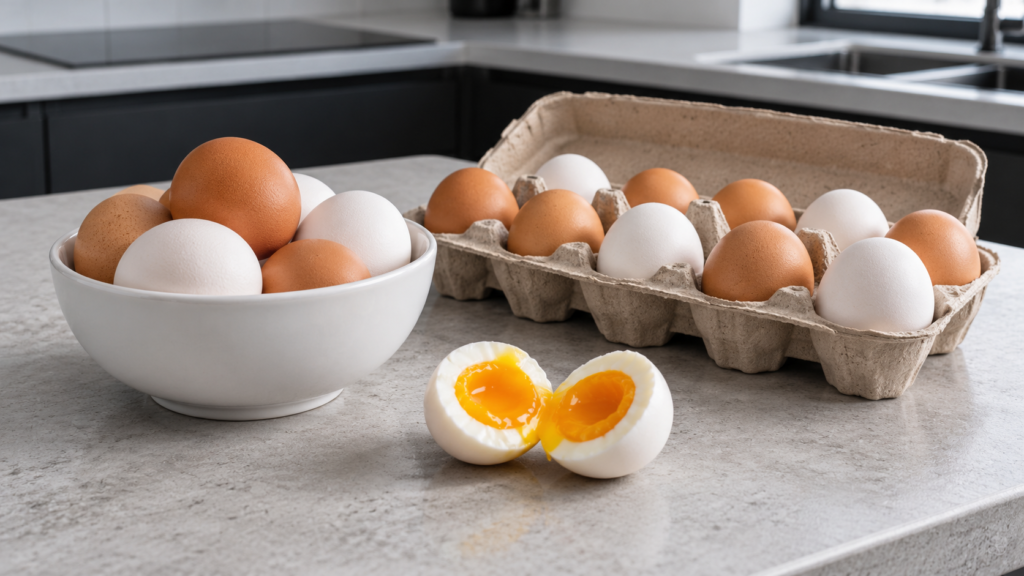
Eggs are the easiest animal product to get wrong in small, repeatable ways. You buy a carton without reading what the label actually promises, you cook them too hot because the pan looked ready, and you store them somewhere that quietly works against you. None of that is complicated once you know what the label words mean and what heat actually does to egg proteins. This is the buying, storing, and cooking of eggs without the guessing.
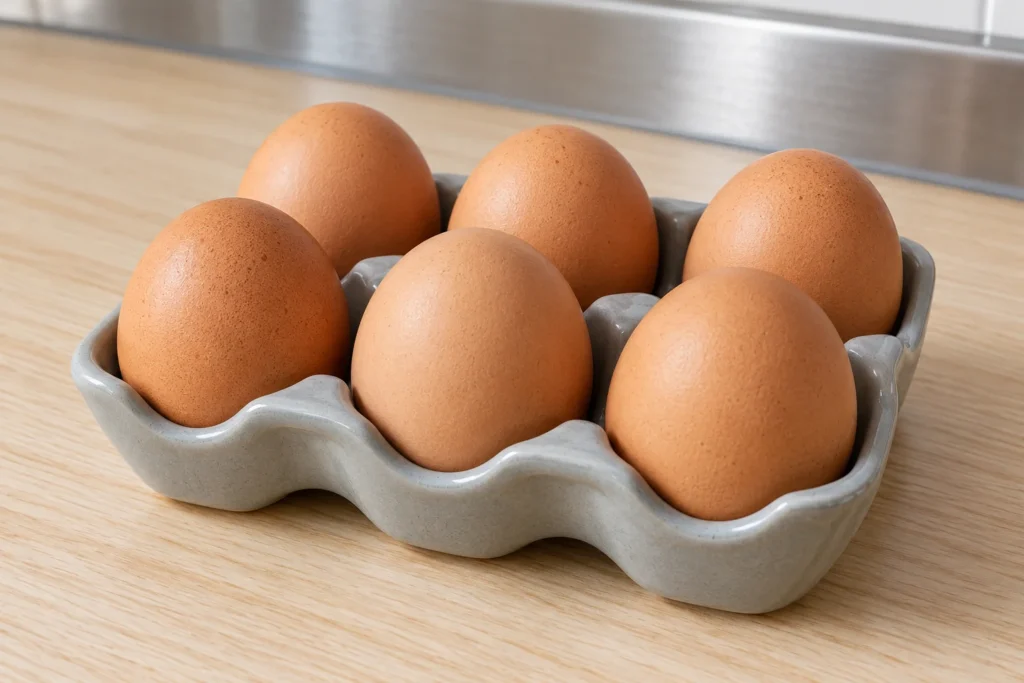
What the carton label is actually telling you
Carton labels carry two separate kinds of information, and mixing them up is where most confusion starts: a USDA quality grade, and a set of production claims that are regulated to very different degrees.
The grade (AA, A, or B) measures the condition of the egg white and yolk at the time of grading, not nutrition and not how the hen was raised. Grade AA whites stand tall and cling close to the yolk; by Grade B the white has thinned and spreads further in the pan. Grade has nothing to do with shell color, yolk color, or price beyond what the thicker white is worth to a cook who wants a tidy fried egg.
| Label term | What it actually requires | What it does not mean |
|---|---|---|
| Cage-free | Hens roam inside a barn or building, no cages | No outdoor access is required |
| Free-range | Cage-free plus some access to the outdoors | The outdoor space can be small and access limited |
| Pasture-raised | Not a federally regulated term; relies on third-party certifiers (commonly 108 sq ft per hen outdoors) | Without a certifier’s name on the carton, the claim is effectively unverified |
| Organic | USDA-certified organic feed, outdoor access required | Says nothing about cage-free or pasture conditions beyond the baseline |
| Vegetarian-fed | No animal byproducts in feed | Hens naturally eat insects and grubs when allowed outdoors, so this label usually means less outdoor access, not a bonus |
Yolk color is a feed artifact, not a quality signal. Hens on a diet heavy in corn and marigold meal produce pale yellow yolks; hens that forage on greens and insects produce deeper orange ones. A darker yolk tells you about the feed, not about freshness or how the egg will cook.
The date on the carton is older than you think
Every carton carries a three-digit Julian date code printed near the “Sell-By” or “Best if Used By” date: 001 for January 1, 365 for December 31. That code is the actual pack date. Federal rules allow up to 30 days between packing and the sell-by date, so an egg sitting on the shelf on day one of its sell-by window may already be close to a month old. None of this makes the egg unsafe; properly refrigerated eggs hold well past the printed date. It just means the carton date is a planning tool, not a safety cliff.
Why U.S. eggs live in the refrigerator
If you’ve traveled and noticed eggs sitting unrefrigerated on European shelves, that is not a loophole. It is a different starting point. U.S. processors wash eggs, a step that removes the natural cuticle, the thin outer coating that blocks bacteria and moisture loss. Washing is why U.S. eggs must stay cold from the processing plant onward: once that cuticle is gone, refrigeration is doing the protective work the shell used to do on its own. Leaving a washed carton on the counter for more than two hours puts it back into the temperature range where bacteria multiply fastest.
Store eggs in the main body of the refrigerator, not the door. The door is the warmest, least stable zone every time it opens, and that fluctuation matters more to an egg than people assume. Keep them in the carton, too. It blocks the shell’s pores from absorbing odors, slows moisture loss, and keeps the pack date in view.
Telling a fresh egg from a tired one
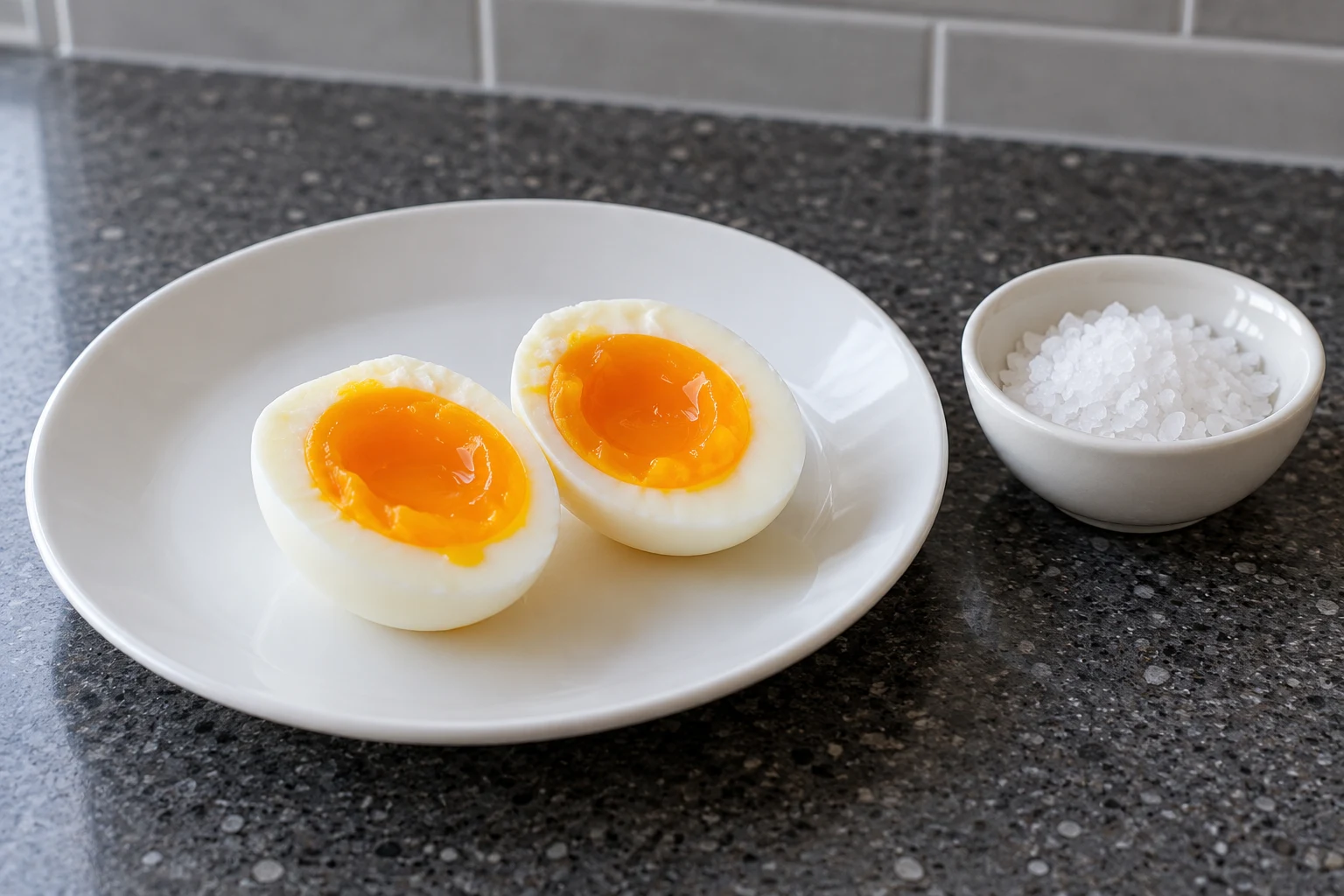
Crack a fresh egg into a pan and the yolk sits high, round, and firm, with a white that holds close around it in two distinct layers: a thick inner white and a thinner outer one. As an egg ages, it loses carbon dioxide and moisture through the shell, the air cell inside grows, and the white relaxes into one thin, watery layer that spreads further before it sets.
The float test uses that same air cell: lower an egg into a bowl of water. A fresh egg lies flat on the bottom. An egg a couple of weeks old tilts or stands on one end as the larger air pocket lifts it. An egg that floats to the surface has lost enough moisture that it is best discarded rather than cooked. This is a freshness indicator, not primarily a safety test. Eggs can be unsafe without failing the float test, and safe eggs can occasionally float if the air cell happens to be large. Smell is still the most reliable check: a spoiled egg announces itself immediately when cracked.
What heat actually does to an egg
Egg proteins unwind and bond together, a process called coagulation, at specific, fairly low temperatures, and the white and yolk don’t do it at the same point. Egg white proteins begin setting around 144–149°F and firm up fully near 155–160°F. Yolk proteins set a little higher, around 149–158°F. That narrow gap between the two is the entire reason a soft-cooked egg is possible at all: there’s a real temperature window where the white has fully set and the yolk hasn’t.
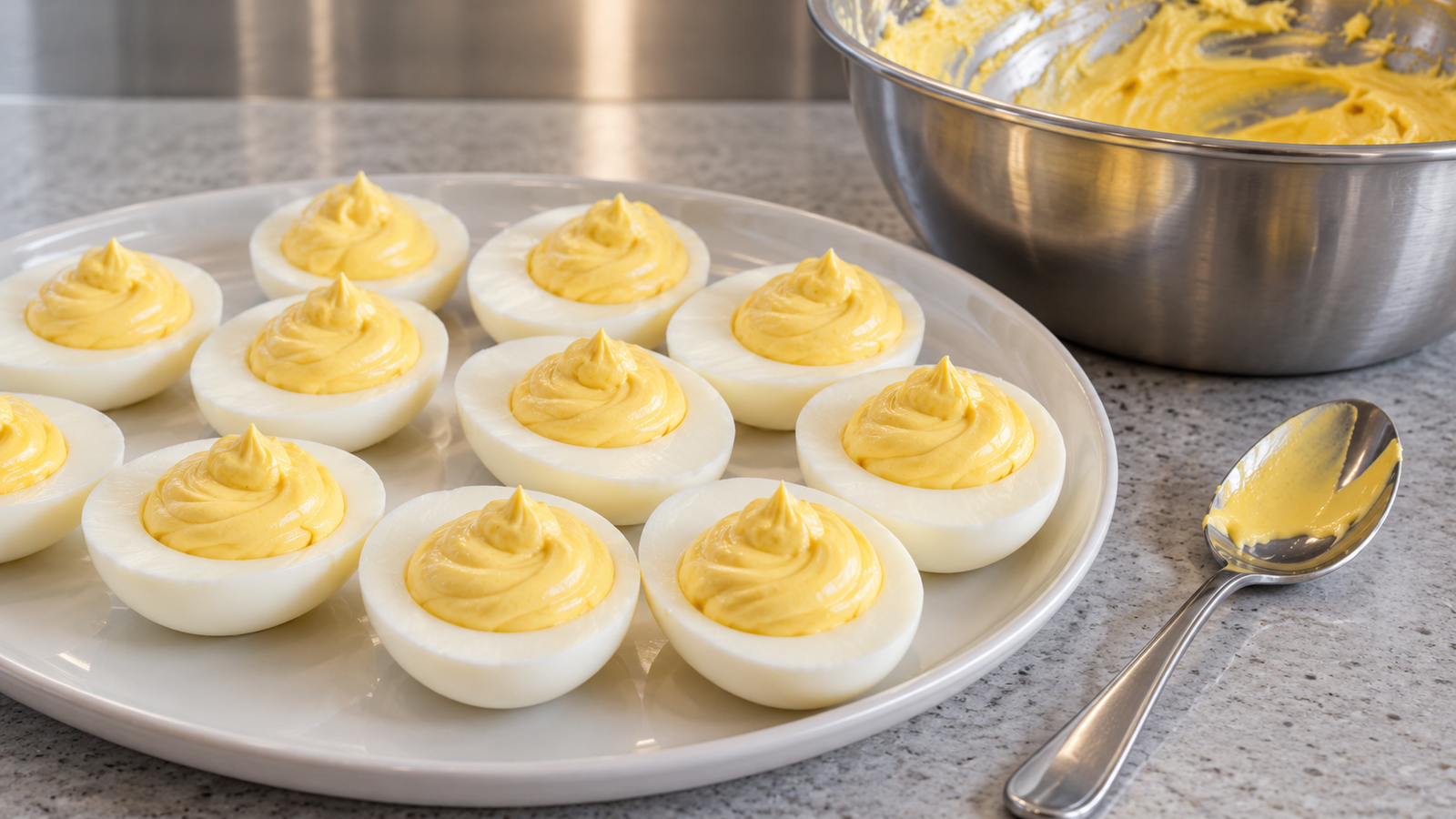
It also explains why a screaming-hot pan ruins scrambled eggs. High heat races past that narrow coagulation window before the proteins can set gently, which squeezes out moisture and leaves curds that are tight, rubbery, and weeping liquid on the plate. Low, patient heat lets the proteins set slowly and hold on to more of that moisture, which is the entire difference between a dry scramble and a creamy one.
Egg size changes the math, even if the carton doesn’t say so
Size grades (Jumbo, Extra Large, Large, Medium, Small) are set by minimum weight per dozen, not by individual egg weight, so two eggs in the same carton can look noticeably different. Most recipes default to Large without saying so, and the gap matters more than it looks: a dozen Jumbo eggs weighs about 30% more than a dozen Medium eggs. Swap sizes in a recipe that depends on egg volume, such as custard or a soufflé base, and the ratio of liquid to everything else shifts with it. For a simple fried or scrambled egg the size barely matters; for anything where eggs are doing structural work, it does.
Frying and poaching without the usual mess
A fried egg sticks for one of two reasons: the pan wasn’t hot enough when the egg went in, or there wasn’t enough fat to fill the microscopic gaps in the pan’s surface. Let the fat shimmer before the egg goes in, not just melt. Crack the egg into a separate small bowl first rather than straight into the pan. It costs five seconds and means a broken yolk or a stray shell fragment never makes it to the heat.
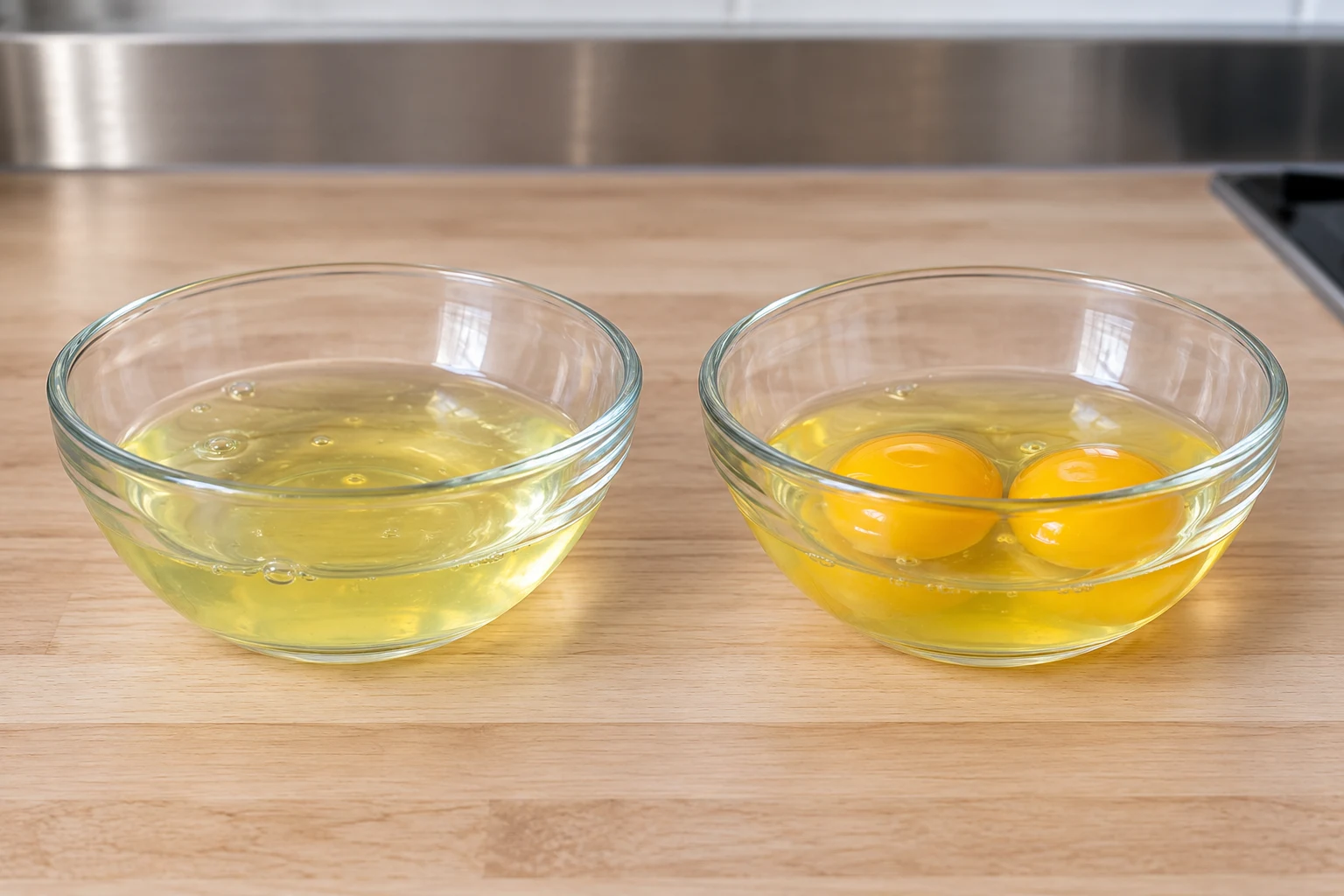
For over-easy, the egg needs to be flipped once the white has fully set but before the yolk has had any chance to firm from the bottom up: usually 2 to 3 minutes over medium-low heat, with the flip taking no more than 10 seconds of extra cooking on the second side. A too-hot pan sets the underside before the top has a chance to finish, which is what forces a flip that breaks the yolk.
Poaching works on the same coagulation window as boiling, just without the shell. A gentle simmer, not a rolling boil, keeps turbulence from tearing the white apart before it sets around the yolk. A splash of vinegar in the water (roughly a tablespoon per quart) lowers the pH enough to help the white firm up faster, which means less time for it to drift apart into wisps. Crack the egg into a fine-mesh strainer for a few seconds first and the thinnest, wateriest part of the white, the part most likely to feather out into the pot, drains away before it ever hits the water.
Boiling by result, not by the clock alone
Start eggs in already-boiling water (or bring cold water to a boil with the eggs already in, then start timing at the boil) and the timer becomes far more predictable than “boil for a while.” These times are for large, refrigerator-cold eggs:

| Time at a boil | Result |
|---|---|
| 6 minutes | Fully set white, liquid yolk |
| 8 minutes | Set white, thick and jammy yolk |
| 10 minutes | Firm but still slightly soft yolk center |
| 12–13 minutes | Fully firm yolk, no gray-green ring if cooled immediately |
The gray-green ring that sometimes forms around an overcooked yolk is a real but harmless reaction between iron in the yolk and sulfur compounds in the white, pushed along by heat and time. Shocking the eggs in ice water the moment they come off the heat stops the reaction and keeps the yolk a clean yellow.
For peeling, eggs that are a week or so old peel more cleanly than truly fresh ones. The lower pH of an aging egg white loosens its grip on the shell membrane. If peeling matters more to you than ultimate freshness, don’t reach for the eggs you bought yesterday.
Storage limits worth writing down
- Raw eggs in the shell: 3 to 5 weeks refrigerated from the pack date.
- Hard-boiled eggs, still in the shell: about 1 week refrigerated.
- Raw eggs out of the shell (whites and yolks combined): up to 4 days refrigerated, or freeze for longer storage.
- Raw whites separated from yolks: up to 4 days refrigerated.
- Cooked egg dishes (frittatas, quiches): 3 to 4 days refrigerated.
Whole raw eggs do not freeze well in the shell, since the liquid expands and cracks it, but beaten whole eggs freeze cleanly for up to a year in an airtight container, which is a genuinely useful trick if a carton is about to age out and you aren’t ready to use it.
Small mistakes that quietly change the result
- Salting whites before whisking. Salt added well before cooking breaks down some of the protein structure in raw egg white, which is why whites meant to be whipped stiff (for a soufflé or meringue) are salted at the end, not the start. For a simple scramble it’s a minor effect, but salting right before the pan rather than ten minutes ahead gives more consistent texture either way.
- Crowding the pan. Eggs release steam as they cook. Too many in too little pan traps that steam against the eggs instead of letting it escape, which steams the texture toward rubbery instead of letting it set cleanly.
- Walking away from the heat. Eggs cross their entire coagulation window in a narrow band of temperature and time. There usually isn’t a two-minute buffer where nothing changes. Scrambled eggs in particular keep cooking from residual heat even off the burner, so pulling the pan when the eggs look just slightly underdone is usually the right call, not a mistake.
- Storing eggs pointy-end up. The air cell sits at the wide end. Storing eggs wide-end up (as most cartons already orient them) keeps that air cell at the top, away from the yolk, which helps the yolk stay centered and the egg stay fresher slightly longer.
Fitting eggs into an animal-product routine
Eggs solve a real logistics problem that meat alone doesn’t: they cook in minutes with no thaw time, which makes them the fastest animal-product meal in the kitchen on a morning when the week’s batch-cooked meat is already portioned for dinner but breakfast still needs something. Hard-boiled eggs made on a prep day hold for a week and travel without any reheating step at all, which is a genuinely different kind of convenience than reheating a portion of meat.
Two or three eggs scrambled low and slow, finished with a pat of butter off the heat for extra creaminess, is a complete, fast animal-product meal that asks nothing of a freezer or a prep plan. That is the actual case for keeping a full carton on hand: not a nutrition target, just a backup that is always ready in under five minutes.
This is a technique and storage guide, not a nutrition or medical recommendation. Food-safety references: USDA shell egg handling guidance and FDA egg safety guidance. Always refrigerate eggs promptly and cook to a safe internal temperature if you have any concern about freshness or handling.
Visual steps