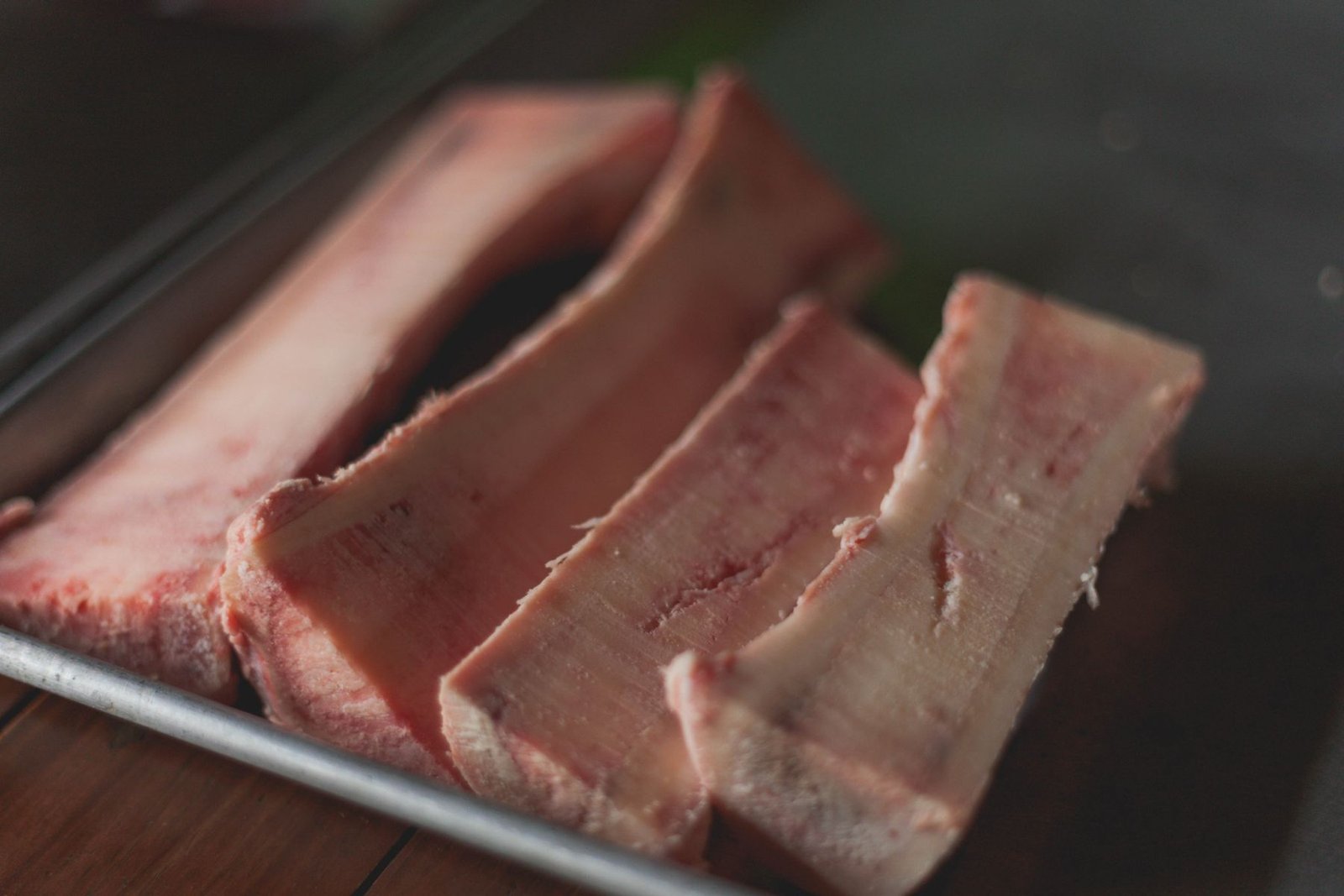
Bone marrow is not difficult cooking. It is timing and containment. Split beef bones go into a hot oven until the marrow turns soft, glossy, and just loose enough to scoop. Leave them too long and the marrow renders out across the tray. Pull them too early and the centre stays firm. The useful window is visible, which makes this a good first offal preparation.
Ask for canoe-cut bones
Marrow bones are usually cut crosswise into rounds or lengthwise into canoes. Rounds hold the marrow neatly but require a narrow spoon. Canoes expose the centre along the full bone, making doneness easier to see and the finished marrow easier to remove. Ask the butcher to split them lengthwise and to keep the pieces similar in thickness.
Cold storage and a clean tray
- Keep the bones refrigerated until the oven and tray are ready.
- Use a rimmed metal tray that can contain rendered fat.
- Pat the cut surfaces dry so they roast instead of steaming.
- Set canoe bones cut-side up and brace any piece that wants to roll.
- Clean utensils and surfaces that contacted the raw bones.
The optional cold-water soak
A refrigerated soak in cold salted water can draw out some blood and give the marrow a paler appearance. It is optional, not a requirement for tenderness. If you soak, keep the bones cold, change the water, then dry them thoroughly before roasting. Do not trade a cosmetic improvement for warm, prolonged handling.
Roast hot and watch the centre
- Heat the oven to about 425°F with a rack near the upper middle.
- Arrange the dry bones cut-side up and season the exposed marrow with salt.
- Roast until the centre looks glossy and soft and the edges begin to bubble.
- Check the thickest pieces first with a narrow spoon or skewer.
- Remove the tray before the marrow collapses into a clear pool of rendered fat.
Fifteen to twenty minutes is a common range, but bone diameter, marrow depth, starting temperature, and oven accuracy can move the finish. Treat the clock as the first inspection point. The visual change—from opaque and firm to glossy and yielding—is the better guide.
How to recognize the finish
| Stage | What you see | What it means |
|---|---|---|
| Too early | Opaque, firm centre | Marrow will resist the spoon |
| Ready | Glossy, soft, lightly bubbling edges | Rich but still held inside the bone |
| Too far | Collapsed cavity and a tray of clear fat | Much of the marrow has rendered out |
Serve it without changing the subject
Scoop the warm marrow directly from the bone and finish it with salt. It can be eaten as a small rich course, spooned over sliced steak, or used to enrich hot ground beef. A little goes a long way because marrow is mostly fat. The point is its texture and animal richness, not a neutral platform or decorative garnish.
Save what renders
Rendered fat left on the tray is still useful if it has not burned. Strain it while warm, cool it promptly, and refrigerate it in a clean covered container. Use it as a cooking fat for another meat preparation. The emptied bones can move to a stockpot, though already-roasted bones contribute flavour more than fresh collagen.
This guide describes a standard preparation rather than a formally tested recipe. Source the bones from a reputable butcher, keep them refrigerated, prevent cross-contamination, and clean all surfaces that contact raw animal products.