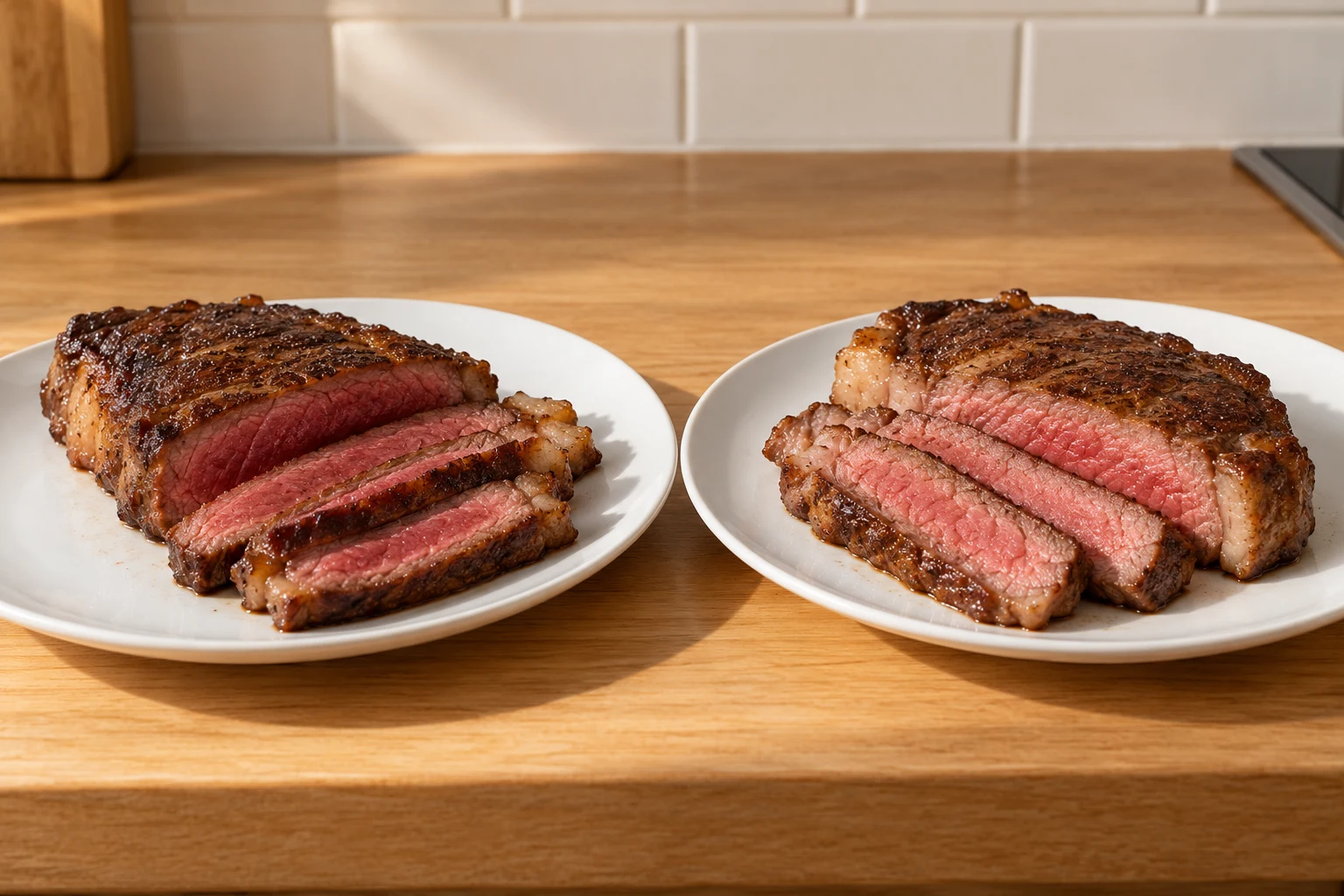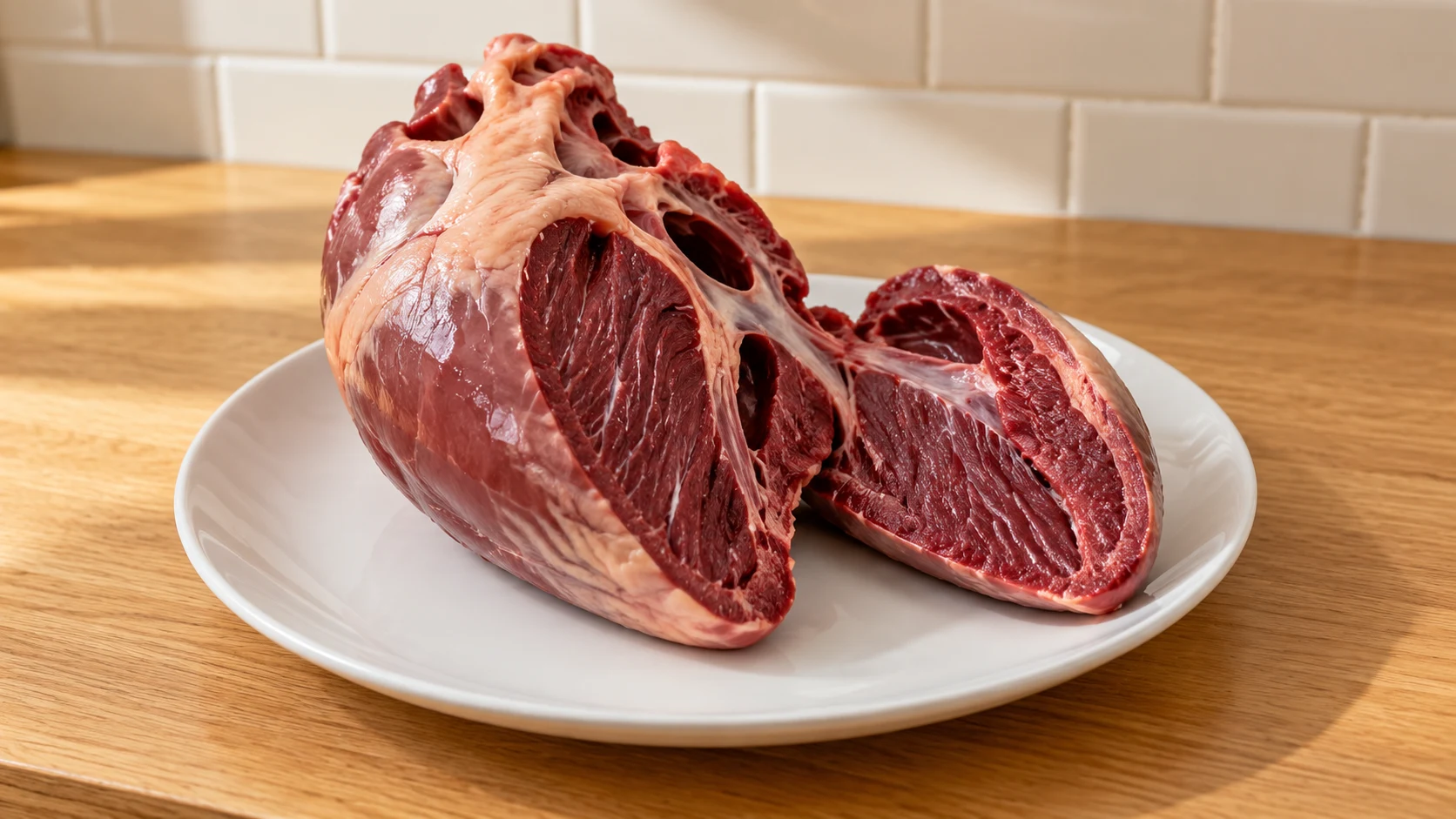
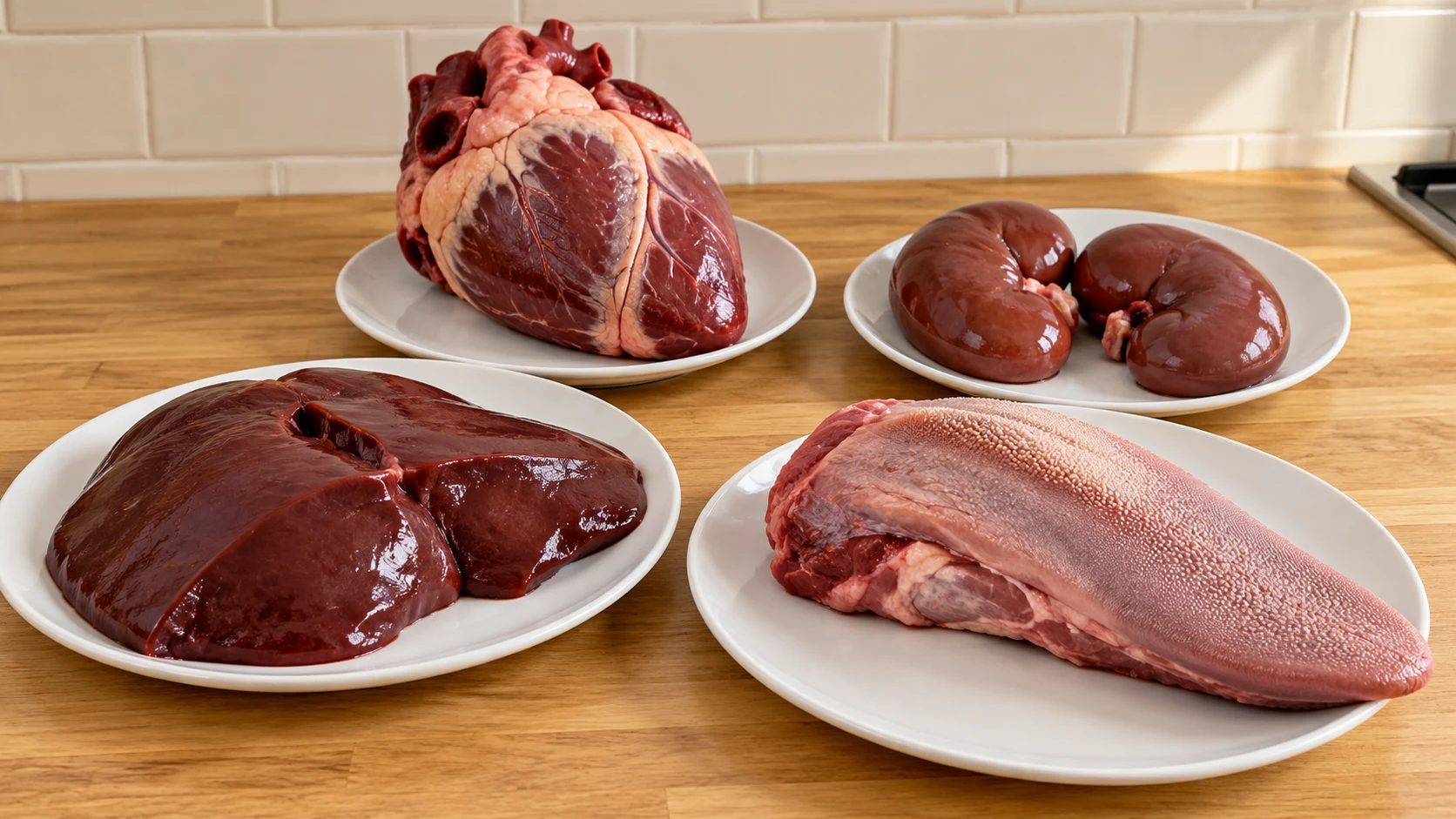
Heart gets grouped with liver and kidney under “organ meat,” and that is why many cooks approach it with the wrong expectations. Heart is a dense, hard-working muscle. Its flavour is mild and recognizably beefy, while its texture is firm. Treat its structure seriously, trim it well, and it becomes much less intimidating.
Heart and liver need different playbooks
| Beef heart | Beef liver | |
|---|---|---|
| Structure | Dense muscle fibres | Soft glandular tissue |
| Flavour | Mild, beef-forward | Mineral and assertive |
| Preparation focus | Trim valves, vessels, fat, and silverskin | Remove membranes and cut evenly |
| Useful methods | Thin, fast-seared pieces or a long braise | Brief, controlled pan cooking |
There is no reason to copy every step from a liver technique. Heart does not need a soak to remove bitterness. Its main obstacle is physical: tough internal structures that need to be cut away and long muscle fibres that become easier to chew when sliced across the grain.
Trim before you think about heat
- Open the chambers so the heart lies flat and the interior is visible.
- Remove hard valves, tubes, clotted blood, and fibrous white tissue.
- Trim thick exterior fat and silverskin that will not soften in a fast cook.
- Find the direction of the grain, then plan slices across it.
- Keep raw-heart tools and surfaces separate from cooked meat.
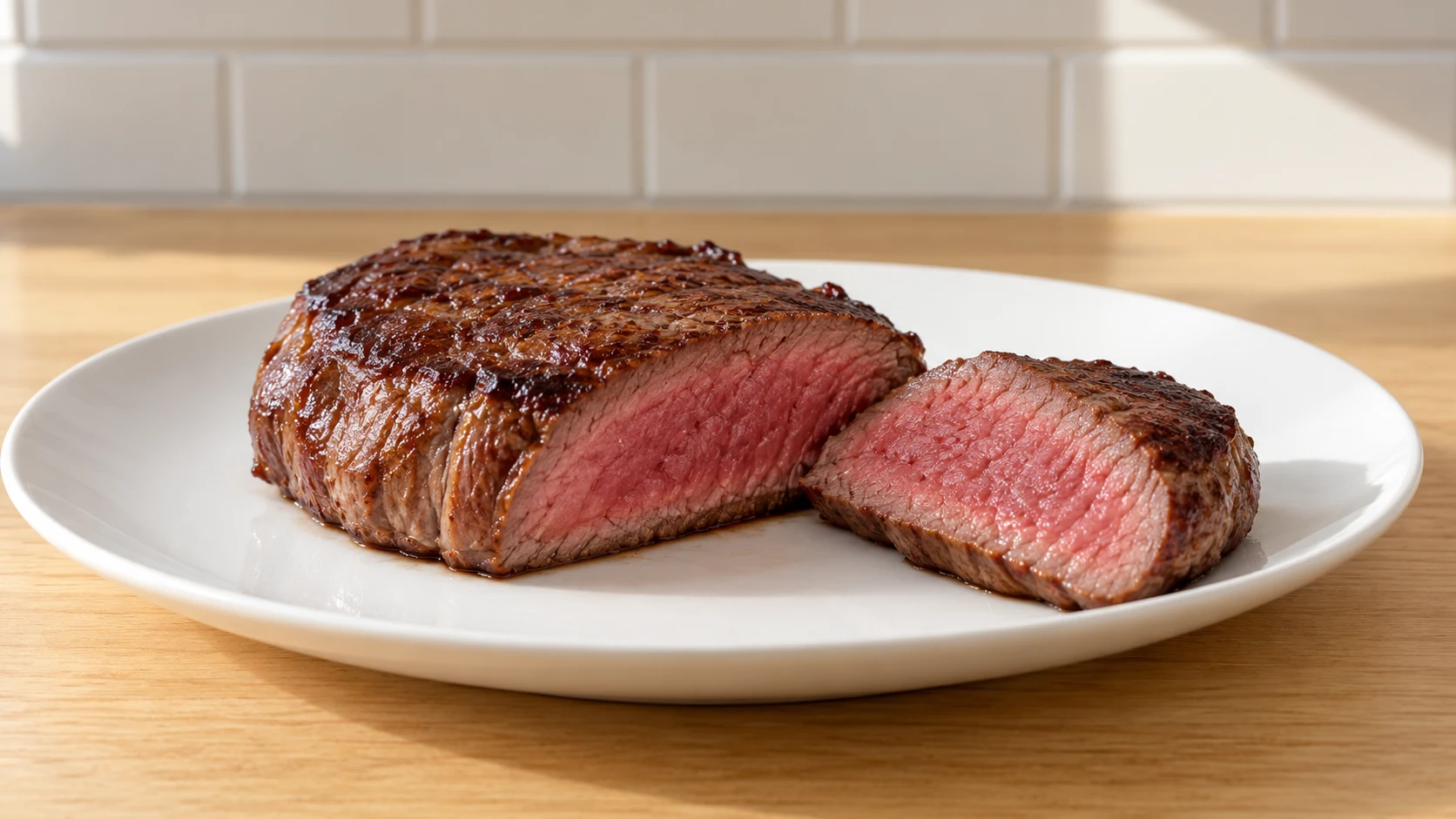
A carefully cleaned heart should resemble very dark, lean beef. Uneven pieces cook unevenly, so cut fast-cooking strips to a similar thickness. Dry them thoroughly and salt them before they meet a hot pan.
Buy enough, then portion deliberately
A whole heart looks large, but trimming removes more than it would from an ordinary steak. Plan for valves, vessels, silverskin, and hard fat to leave the cutting board. Once clean, divide the meat by method: even slices for today and larger pieces for a future braise. Freeze the portions separately so thawed meat does not have to be forced into the wrong technique.
Two routes: quick pieces or a patient braise
For the steak-like route, use small, thin pieces and high heat. Leave space between them so the surface browns rather than steams. Turn with purpose and check the thickest piece with a thermometer. For the slow route, use larger cleaned pieces in bone broth and continue until the connective tissue relaxes and the meat slices easily.
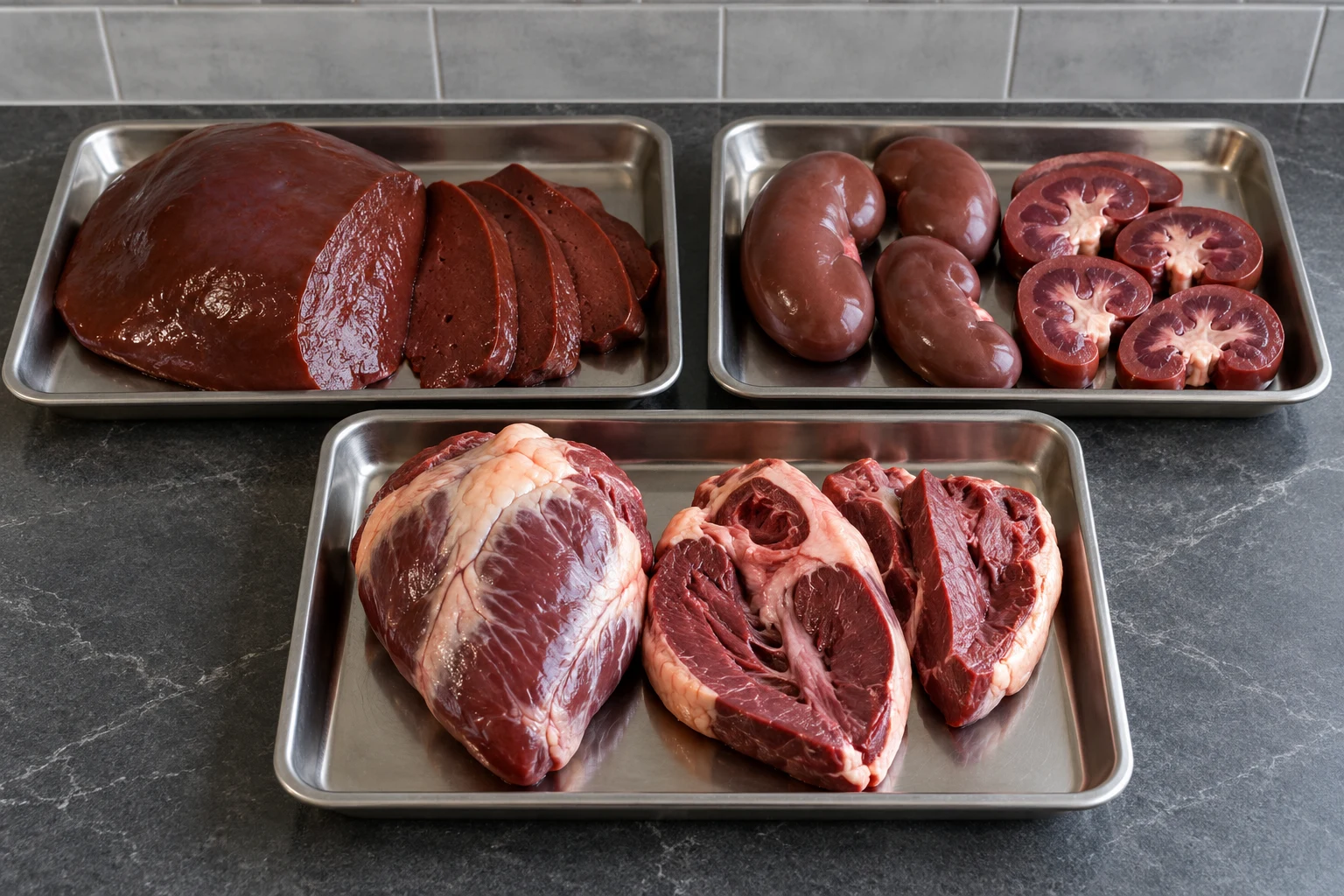
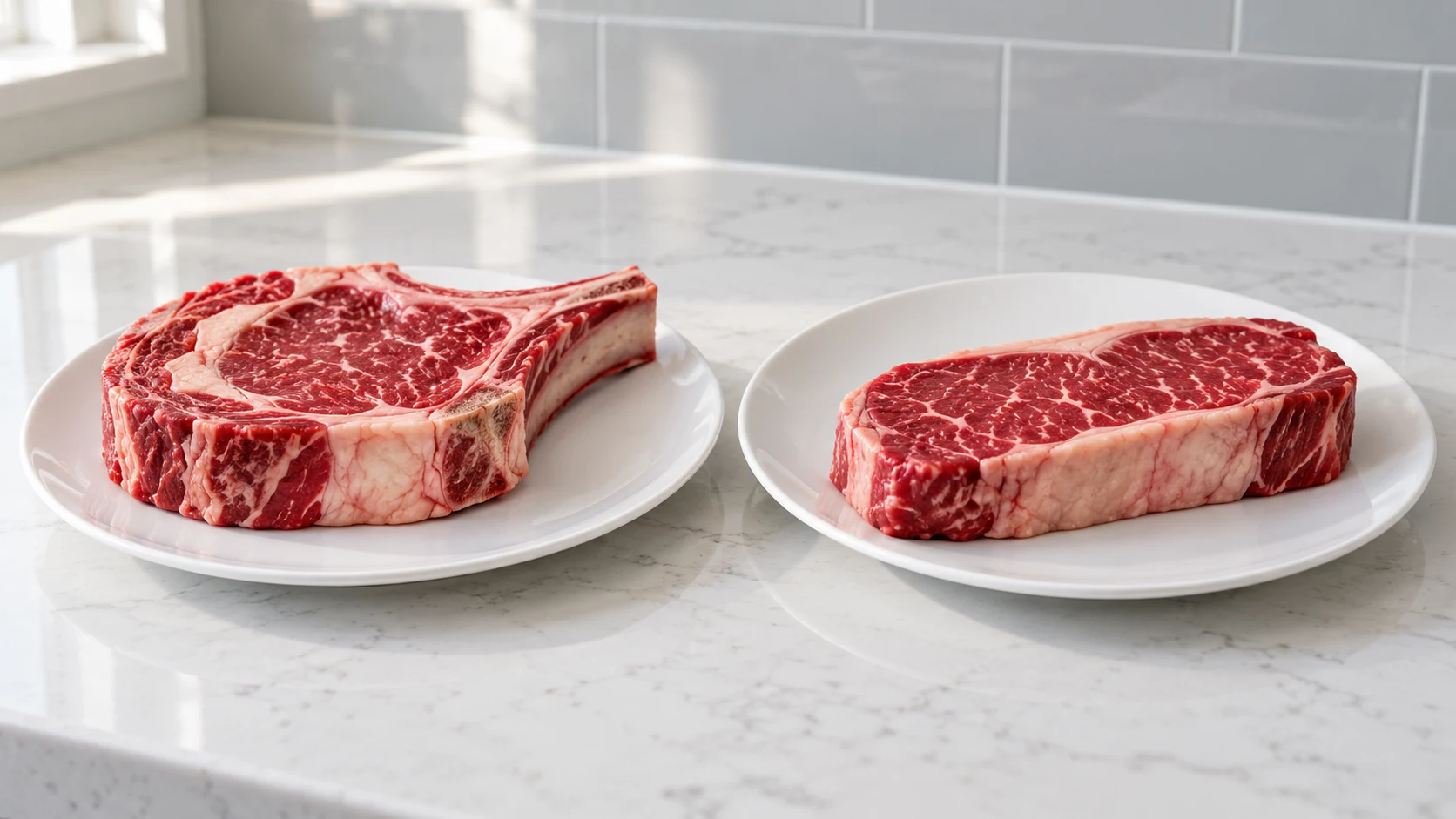
Do not use pink colour as a safety test. USDA guidance for beef identifies heart with organ and variety meats and recommends cooking it to 160°F. That is higher than the guidance for an intact steak, so thin, evenly cut pieces help you reach the safe temperature without spending unnecessary time over the heat.
The easiest first plate
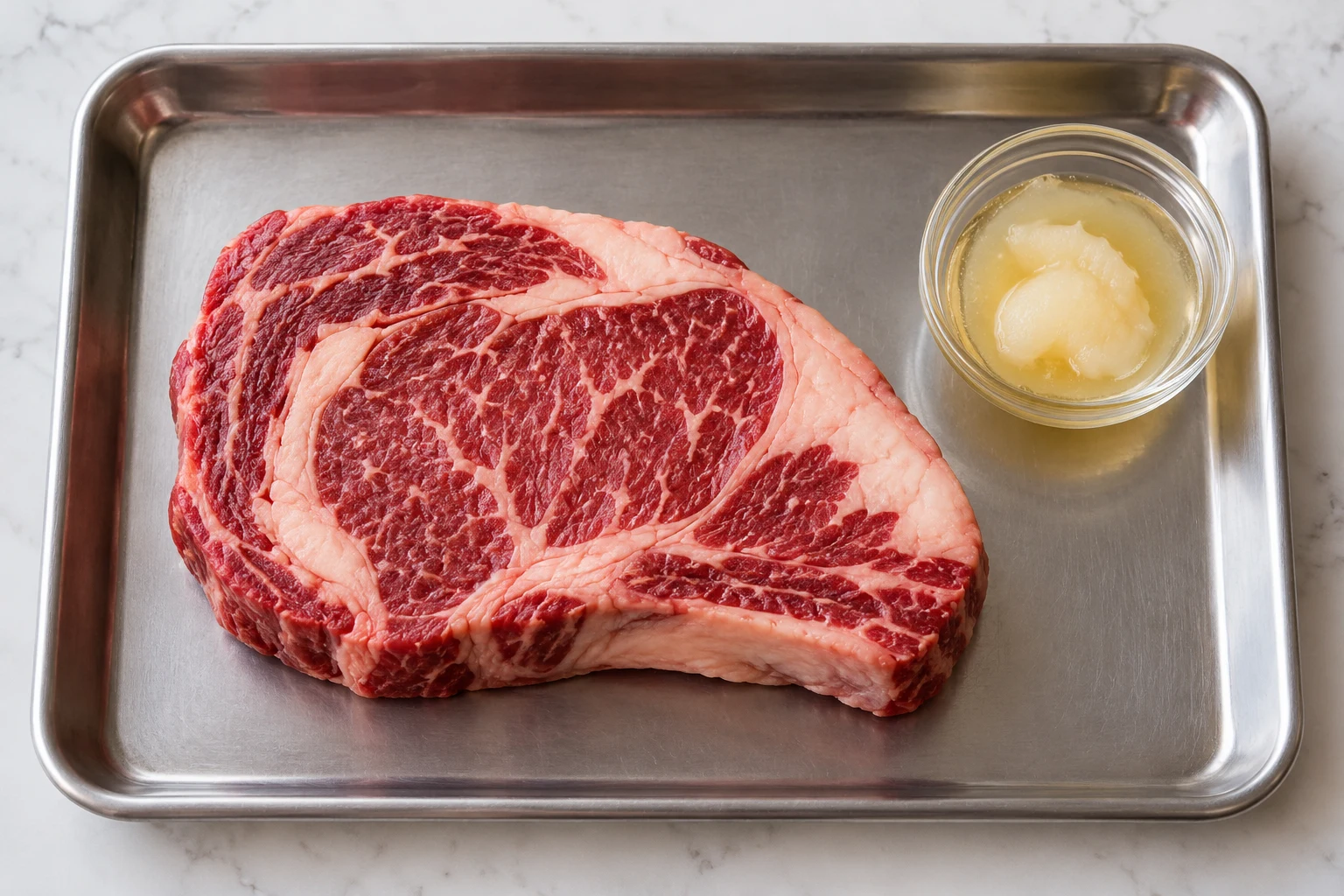
Start with one cleaned chamber cut into narrow pieces across the grain. Salt, dry, and sear in beef tallow without crowding the pan. Check several of the thickest pieces, remove each as it reaches 160°F, and rest briefly. The result will be firmer than tenderloin but far closer to lean beef than most people imagine when they hear “organ meat.”
Food-safety source: USDA Food Safety and Inspection Service, Beef From Farm to Table, which recommends 160°F for beef heart and other organ or variety meats.