
Every cooking method on this site comes down to one variable: how fast heat is allowed to move into the meat, and whether that speed matches what the specific cut actually needs. A lean, tender muscle wants heat fast and briefly. A tough, connective-tissue-heavy cut wants heat slow and sustained, long enough to break that tissue down into something soft. Almost every grilling disaster, every dry roast, every tough braise traces back to using the wrong speed for the cut in front of you, not a failure of skill.
Fast and direct: for cuts that are already tender
A tender cut with decent fat content, a steak, a chop, a burger, has nothing to gain from a long cook. Its muscle fibers are already short and its connective tissue is already minimal, so the job is simply to brown the surface and warm the center without overshooting either one. High, direct heat does that fast, which is exactly why it works here and fails everywhere else on this list.

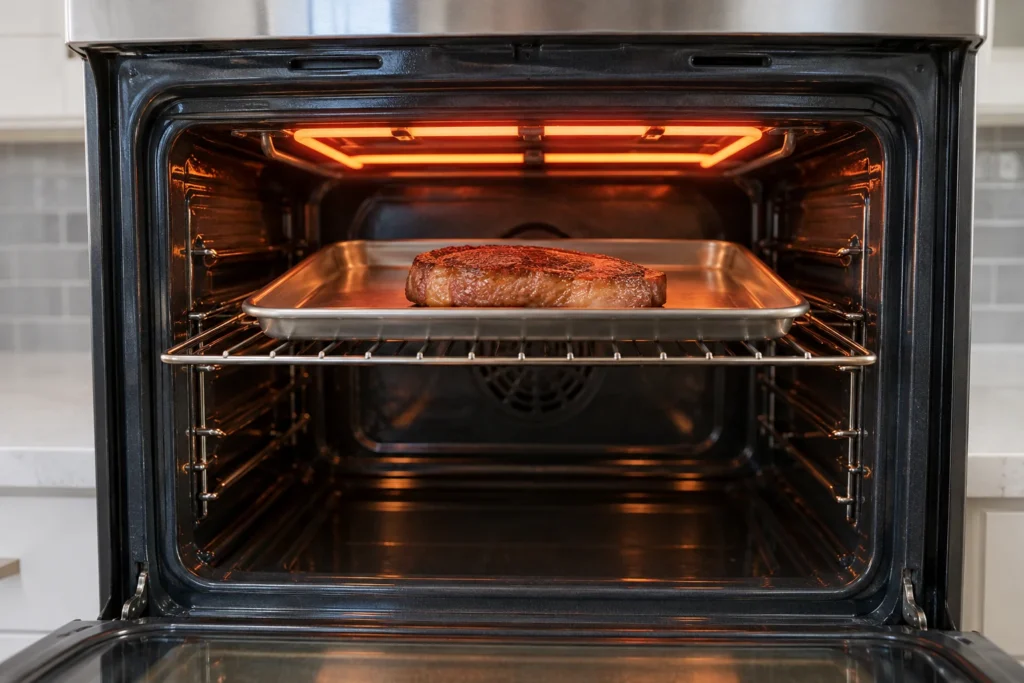
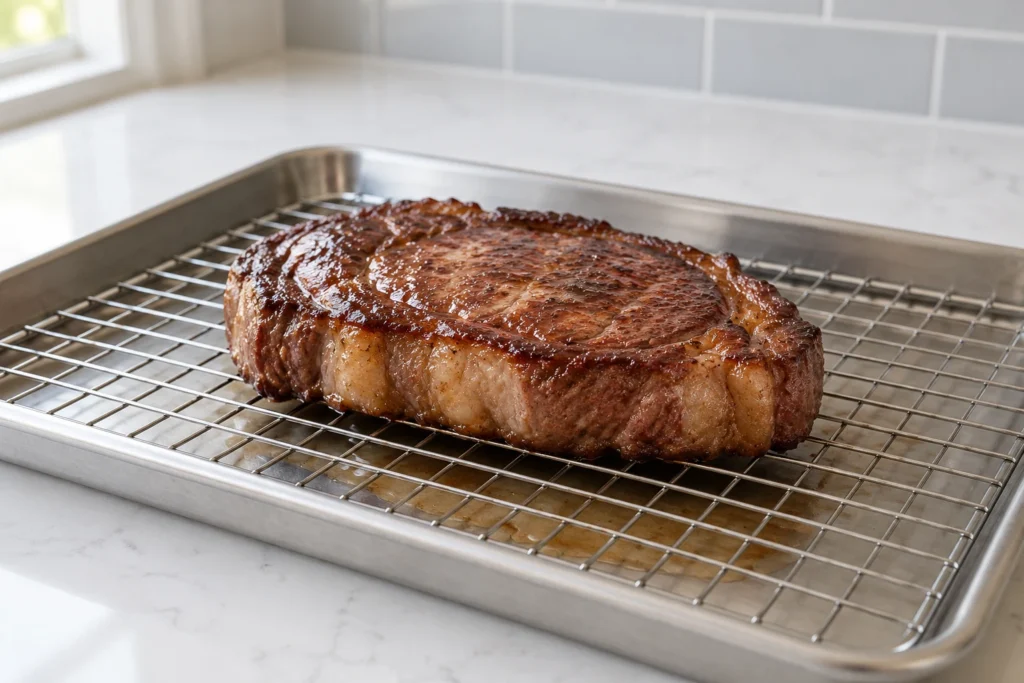
Two-zone grilling is the foundational setup for this entire category: a hot side for browning and a cooler side as an escape valve, which turns a single uncontrolled fire into two separate, usable tools. A real crust depends on the same direct-heat logic applied in a pan instead of over coals, and reverse searing is the deliberate exception that proves the rule: it splits a thick cut’s cook into a slow warm-up stage followed by a fast, hard sear at the very end, borrowing patience from the slow camp and finishing with speed from the fast one. Cast-iron searing and the specific case of a reverse-seared ribeye both apply this same direct-heat principle to particular cuts and fats.
Slow and sustained: for cuts that need to transform
A tough cut loaded with collagen, chuck, brisket, pork shoulder, short rib, is a completely different problem. Fast heat here just toughens the outside while the connective tissue inside stays rigid. What that tissue actually needs is hours of sustained heat, somewhere in the 200 to 275°F range, giving collagen time to slowly convert into gelatin: a textural transformation, not just a temperature one. Rushing it with higher heat doesn’t speed up that chemistry, it just dries out the meat before the conversion finishes.

Dry heat versus moist heat covers the fork in the road once a cut calls for a slow approach: a dry oven or smoker concentrates flavor on the surface while a liquid-based braise keeps the whole piece submerged and bastes it continuously. Smoking is the dry-heat branch of this same family, covered in full in its own cluster: the first thing to smoke if you’ve never used a smoker, smoked brisket, and smoked pulled pork all build on the identical slow-heat logic described here, just with real wood smoke added to the equation.

Moist heat and extraction: when the goal is the liquid, not just the meat
Some cooking isn’t really about the meat ending up tender at all, it’s about pulling something out of it. A bone broth that actually gels depends on the same slow, sustained heat that breaks down connective tissue in a braise, except here the goal is drawing collagen and minerals out into the surrounding liquid rather than keeping them in the meat. The clock and the temperature range are nearly identical to a braise; only the finished target changes.
Matching method to cut before picking a recipe
| Cut type | Right method | Why |
|---|---|---|
| Lean, tender (steaks, chops) | Direct, fast, high heat | Little connective tissue to break down; speed prevents drying |
| Thick, tender (roasts, thick steaks) | Reverse sear | Even warm-up first, then a fast finish for crust |
| Tough, collagen-heavy (chuck, brisket, shoulder) | Low and slow, dry or moist | Collagen needs sustained heat and time to become gelatin |
| Bones and connective tissue specifically | Extended simmer | Goal is extraction into liquid, not texture in the meat itself |
Before salting or seasoning anything, this is the first real decision: fast or slow, dry or moist. When and how to salt changes depending on which path a cut is on, since a quick sear and an overnight braise both reward early seasoning but for slightly different reasons tied to how much time the salt actually has to work.
Where to start
Anyone new to grilling or pan-searing should start with two-zone grilling: it’s the single setup that prevents the most common beginner mistake. Anyone staring down a tough, cheap cut and wondering what to do with it should read dry heat versus moist heat before picking a specific recipe, since that decision determines everything downstream of it. The smoking-specific posts are the right next step once the slow-heat logic here feels familiar, not before.
This is a technique overview, not a food-safety substitute. Always cook meat to a safe internal temperature using a reliable thermometer.
Visual steps
