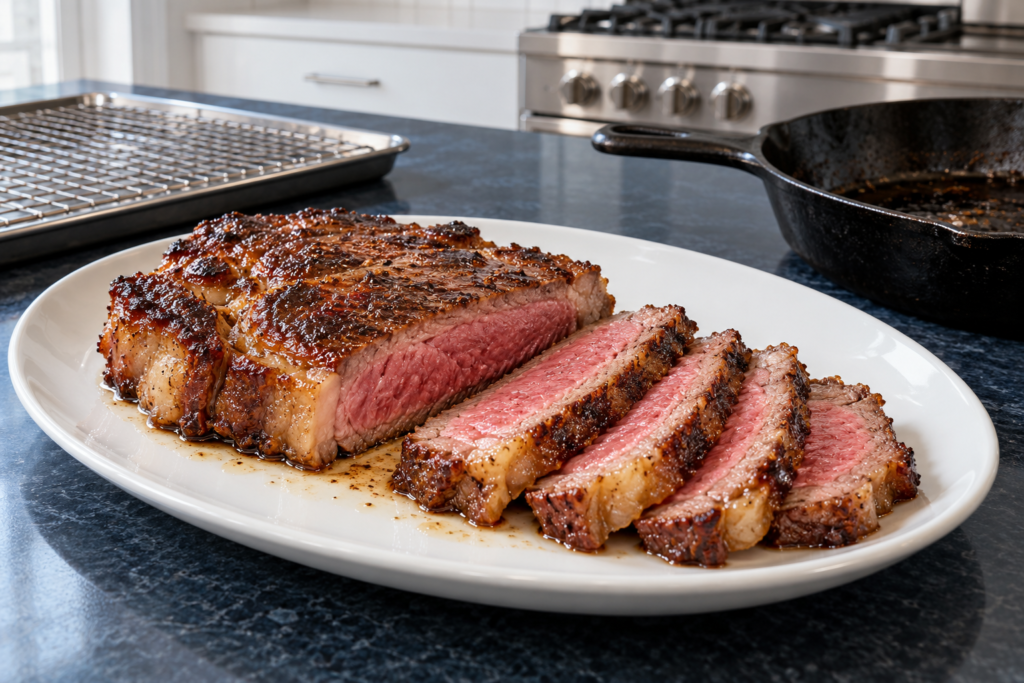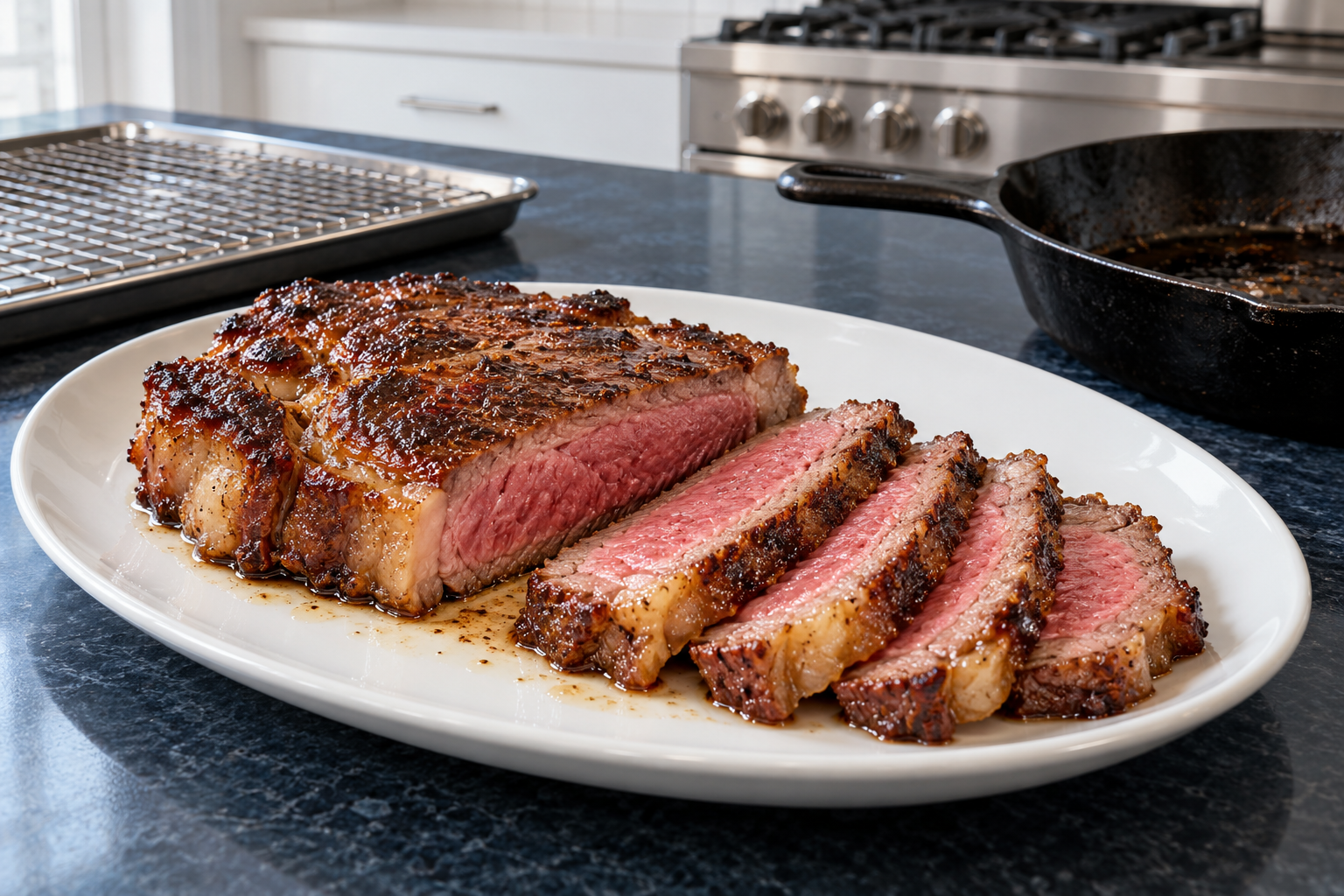
This is the ribeye-specific version of reverse searing: exact temperatures, an exact fat, and a doneness chart built around this one cut. For the general case for reverse searing over a straight hot-and-fast sear, including when hot-and-fast is actually the better call, this site’s broader comparison of the two methods covers that decision in depth. This article assumes reverse sear is already the plan and focuses entirely on getting the most out of it with a ribeye specifically.
A thick ribeye (anything over an inch and a half) needs two different things to happen to it: the inside needs to come up to temperature slowly and evenly, and the outside needs a hard, fast blast of heat to brown. Try to do both in the same pan at the same time and the outside burns long before the inside is warm, since heat moves into meat slowly and a screaming-hot pan has no patience for that. Reverse searing separates the two jobs. The whole steak comes up to temperature gently first, in an oven, then the crust gets finished in under two minutes in a pan that’s already as hot as it will ever get. Neither step interferes with the other.
Why this works especially well on ribeye
Ribeye is the single best cut for this method, mostly because of the fat running through it. A lean cut like flank steak has almost no margin for error; too much time in a low oven and there is nothing left to protect the texture. Ribeye’s intramuscular fat buys real time. It bastes the muscle fibers from the inside as the oven brings the steak up, and it is exactly what caramelizes hardest and fastest once the steak hits a hot pan, which is why a reverse-seared ribeye develops a crust that a thinner, leaner steak usually can’t match using the same technique.
There is also a practical timing benefit most people don’t think about until they’ve done it once: a reverse-seared steak is almost impossible to rush. The oven stage is slow by design, which means there’s no standing over a pan making second-by-second decisions about whether now is the moment to flip. There’s a built-in checkpoint, the internal temperature, before the fast part even starts.
What you need
- 1 bone-in or boneless ribeye steak, at least 1.5 inches thick (roughly 16–20 oz)
- 1–2 teaspoons coarse salt
- 2 tablespoons beef tallow, divided (a neutral, high-smoke-point rendered beef fat; see how to render and store it if you don’t keep some on hand)
- A light crack of black pepper, optional
That is the entire ingredient list. No oil, no butter from a plant-fed dairy blend of mystery origin, no aromatics. The fat doing the work here is rendered beef tallow, which has a smoke point north of 400°F and tastes like more of the same animal that’s already in the pan. There’s no reason to reach for anything else.
Equipment that actually matters here
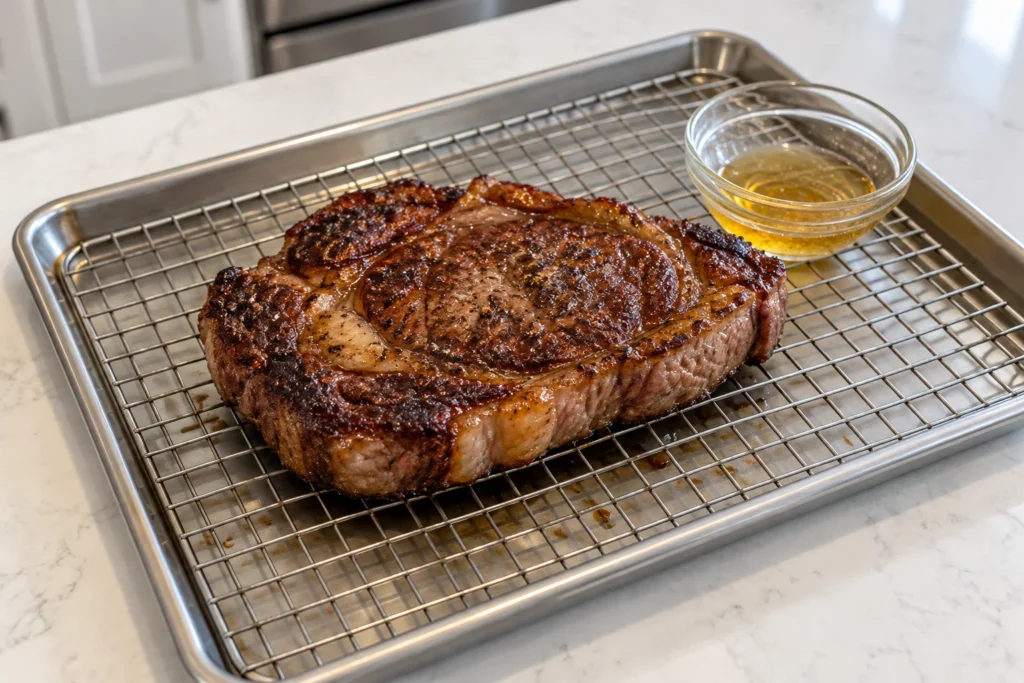
An oven, a wire rack set inside a sheet pan (so air moves under the steak instead of the bottom stewing against the pan), a cast-iron or carbon-steel skillet for the sear, and an instant-read thermometer. The thermometer is not optional. Reverse searing is a temperature-driven method, not a timing-driven one, and guessing defeats the entire point of the technique.

Step by step
- Salt the steak generously on both sides and set it, uncovered, on the wire rack. If there’s an hour to spare, let it sit in the fridge uncovered: salting early rather than right before cooking gives a drier surface, which matters more for the crust than people expect.
- Preheat the oven to 250°F. Low and slow is the entire point of this stage; a hotter oven cooks the outer layer of the steak faster than the center, which reintroduces the exact problem reverse searing exists to solve.
- Place the steak, still on its rack, into the oven. Cook until the center reads 115–120°F on an instant-read thermometer for a steak headed to medium-rare, or 125–130°F for something closer to medium. This typically takes 30 to 45 minutes depending on thickness and how cold the steak was going in.
- Pull the steak and let it rest on the counter for 5 minutes while the skillet heats. This short rest is not the main resting period; it just lets the surface dry further before searing, which helps the crust.
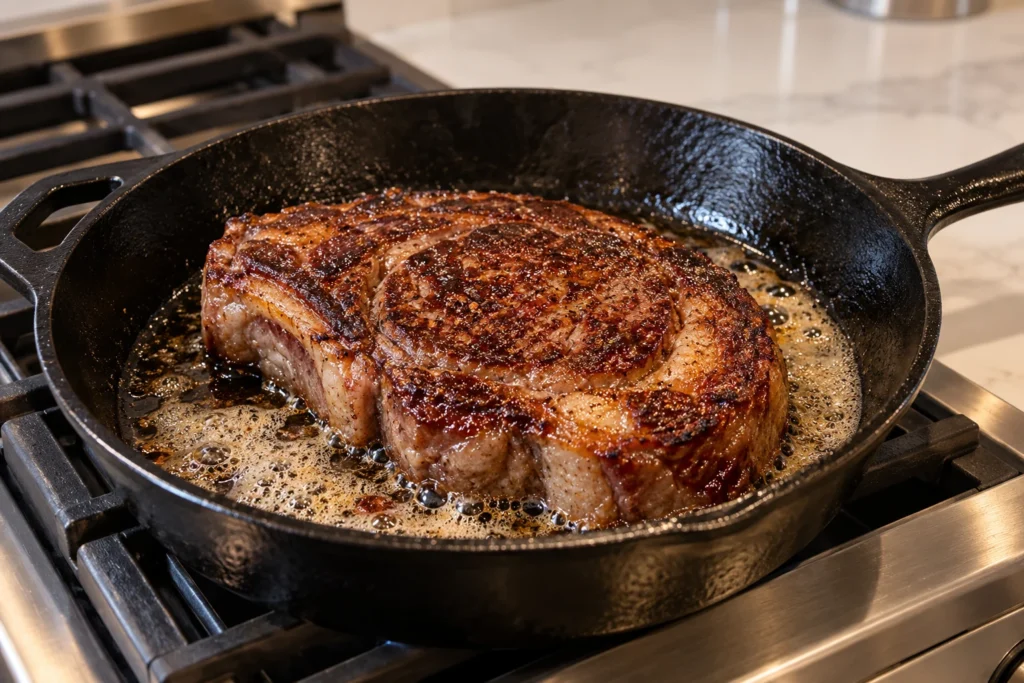
- Get the skillet ripping hot over high heat, then add 1 tablespoon of tallow. It should shimmer and move loosely almost immediately.
- Lay the steak in the pan. Sear for 60–90 seconds per side, pressing lightly with tongs to maximize contact. Add the remaining tallow partway through and tilt the pan to baste the top of the steak as it finishes.
- If the steak is bone-in, stand it on its edge for 15–20 seconds to render and brown the fat cap along the bone.
- Pull the steak the moment the crust is deep mahogany-brown, not black. Check the internal temperature: 125–130°F for medium-rare, 130–135°F for medium.
- Rest for 5 minutes on a cutting board before slicing. Carryover heat pushes the center up another 3–5 degrees during this rest, which is normal and part of why pulling slightly under the target temperature matters; see what resting actually does for the full mechanism.
About that internal temperature number
The USDA’s recommended safe minimum internal temperature for whole-muscle beef is 145°F with a 3-minute rest. That number exists for a real reason and is worth knowing, especially for anyone cooking for someone immunocompromised, pregnant, very young, or otherwise more vulnerable to foodborne illness. Most steak eaters, including plenty of people who take food safety seriously, choose to pull ribeye well below that line. 125–130°F is an extremely common target for a reason: that is where the fat starts to render properly without the muscle fibers tightening up and squeezing out their juice. This guide gives that commonly chosen range because it’s what most readers are actually asking for, but the decision to serve a steak under 145°F internal is a personal one, not a food-safety recommendation, and it carries more weight the lower-quality or less fresh the beef is to begin with. Buy from a source worth trusting, and factor that into how far below the recommended minimum that trust extends.

Mistakes that ruin this specific method
- Skipping the rack. A steak sitting directly on a sheet pan steams on the bottom from trapped moisture, which works against the dry surface needed for a good sear later.
- Oven too hot. 275°F might seem like a small bump from 250°F, but it shrinks the margin for error and starts cooking the outer edge faster than the method is designed to tolerate.
- Not getting the pan hot enough before searing. This is the single most common failure. If the tallow doesn’t shimmer and move within a few seconds of hitting the pan, the pan isn’t ready, and the steak will steam instead of sear.
- Searing too long because the crust “doesn’t look done yet.” At this heat level, 90 seconds a side is usually enough. Waiting for a deeper color risks pushing the already-warm interior past the target.
- Skipping the post-sear rest. Cutting immediately loses more juice than people assume, especially on a cut this thick.
Working around a thinner steak
Reverse searing stops making sense below about 1.25 inches of thickness. A thinner ribeye moves through the oven stage so fast that the main benefit, the slow, even approach to temperature, mostly disappears, and a straight hot-and-fast sear is the better call instead. If a butcher’s ribeyes run thin, ask for a thicker cut specifically, or buy two and stack them: an improvised double-thick steak still reverse sears fine as long as it’s tied or held together with a couple of toothpicks through the searing stage.
Storage and reheating
Leftover ribeye keeps in a sealed container in the fridge for up to 4 days. The worst way to reheat it is a microwave, which overcooks the outer layer long before the center is even warm, the exact problem this whole method exists to avoid in the first place. Instead, slice the cold steak thin and warm it quickly in a hot skillet with a small spoon of tallow for 30–45 seconds per side, or drop slices into simmering bone broth for a fast reheated meal that doesn’t dry the meat out. Reheated leftovers should reach 165°F if food safety is the priority; for a quick personal reheat most people aim for “hot enough to eat” rather than that number specifically, similar to the doneness-preference point above.
A note on buying the right steak for this
Not every ribeye in a grocery case is cut the same way. A thin-cut “value” ribeye at 0.75 inches will not give the two-stage benefit this method depends on. For a ribeye bought specifically for reverse searing, ask the counter for a thick-cut ribeye or a ribeye roast sliced to order at 1.5 to 2 inches. It costs a bit more per steak but goes further: a thicker steak feeds one hungry person comfortably or splits cleanly for two, which matters when also thinking about where the real value is when buying meat.
A doneness chart worth taping inside a cabinet door
Because this method hands a precise checkpoint before the fast searing stage even starts, it’s worth knowing exactly what each pull temperature gets after the rest brings it up a few more degrees.
| Pull temp (after sear) | Finished temp (after rest) | What you get |
|---|---|---|
| 120–125°F | 125–130°F | Rare center, loose and very red |
| 130–135°F | 135–140°F | Medium-rare, the most common target for ribeye |
| 140–145°F | 145–150°F | Medium, matches the USDA-recommended floor |
| 150°F+ | 155°F+ | Medium-well; fat starts fully rendering but the center firms up noticeably |
Notice the gap between pull temp and finished temp shrinks as the overall temperature climbs. Carryover is smaller on a steak that’s already hotter going into the rest, since there’s less of a differential pulling heat toward the center. That’s a small detail, but it’s the kind of thing that separates a cook who’s done this fifty times from one still guessing on every steak.
Why tallow specifically, and not another fat
Rendered beef tallow is almost entirely saturated and monounsaturated fat, which is exactly why it tolerates the high, sustained heat of a screaming skillet without breaking down into bitter, smoking compounds the way a more delicate fat would. Compare that to something like unrefined olive oil, which starts smoking well before a cast-iron pan reaches searing temperature, and the reason a beef-on-beef pairing is more than a flavor choice becomes clear: it’s the fat whose chemistry actually matches the job. For anyone rendering their own, straining it well matters, since any leftover bits of connective tissue in the fat will scorch and turn bitter at these temperatures long before the fat itself has a problem.
What to put next to it on the plate
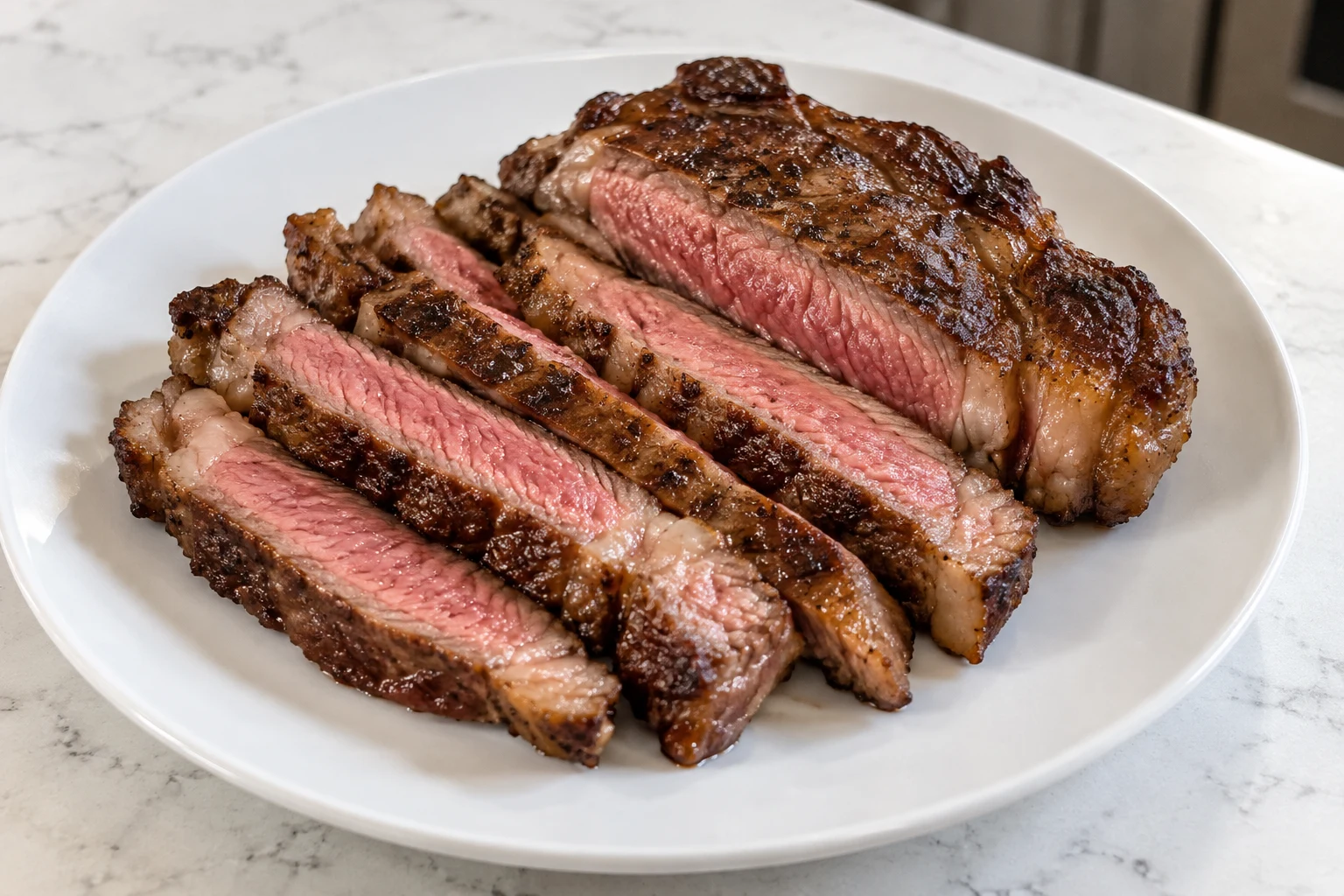
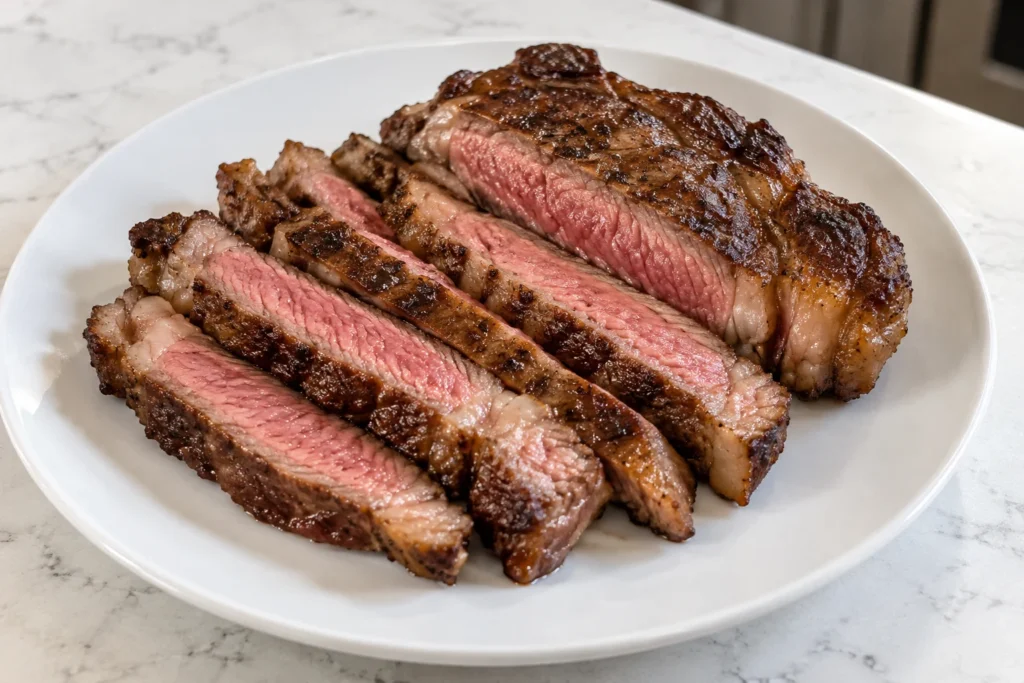
A reverse-seared ribeye is rich enough that it rarely needs anything beyond itself, a small ramekin of the pan’s own rendered drippings for dipping, and maybe a side of roasted bone marrow for going further in the same direction. For feeding more than one person off a single steak, slicing it thin against the grain and fanning it out makes a 20-ounce ribeye look and serve like considerably more food than it is, a trick worth knowing on nights when the budget is also part of the equation.
Quick answers
Can I use butter instead of tallow for the sear? It’s possible, but dairy butter has a lower smoke point and burns faster at the heat level this method needs. Tallow holds up better and keeps the dish fully carnivore without introducing dairy at all, which matters if that’s a line being drawn deliberately.
Do I need to flip the steak during the oven stage? No. At 250°F the heat surrounds the steak evenly enough that flipping doesn’t meaningfully change the result. Save the flipping for the hot pan, where it actually matters.
What if there’s no thermometer on hand? Get one before trying this method seriously. A $10 instant-read thermometer is the single piece of equipment that turns reverse searing from a guessing game into something repeatable exactly, every time, on every steak bought from here on.
Visual steps