Pulled pork forgives more mistakes than almost anything else that goes on a smoker, which is exactly why so many people get a mediocre, merely acceptable result without ever realizing a handful of small changes would have made it genuinely good. The cut itself does most of the heavy lifting here. The rest is mostly about not rushing the last stretch, the part most people get impatient with right when patience matters most.
Picking between the two halves of the shoulder
What gets sold as “pork shoulder” usually comes from one of two spots on the pig, and they behave a little differently on the smoker. The Boston butt, despite the name, actually comes from the upper shoulder, is more evenly marbled, and is the more common choice for pulled pork specifically. The picnic shoulder sits lower on the leg, carries a bit more connective tissue and often a section of skin, and tends to need slightly longer to break down fully.
For a first attempt, a bone-in Boston butt is the more straightforward choice. The bone itself becomes a built-in doneness check later in the cook, and the cut’s more even marbling makes it a bit more forgiving of small timing or temperature swings than a picnic shoulder tends to be. Boneless versions of either cut exist on the market and cook a little faster since there’s no bone slowing heat transfer through the center, but they lose the built-in doneness test the bone provides, which makes a reliable, well-calibrated thermometer even more important than usual whenever a boneless shoulder happens to be the only thing available at the local store that week.
A long cook at a temperature that rewards patience
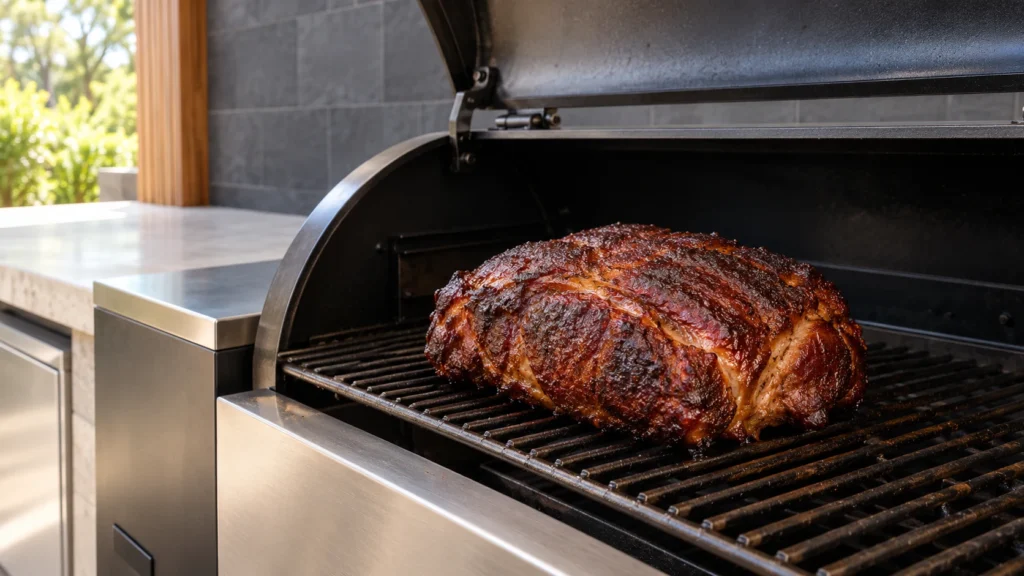
225°F to 250°F is the standard smoking range for pork shoulder, the same range used for brisket, and for the same underlying reason: this cut is full of tough collagen that needs hours of sustained heat to break down into soft, moist gelatin. A typical bone-in Boston butt in the 8 to 10 pound range takes roughly 1.5 to 2 hours per pound at this range, though, just like brisket, actual time varies enough with size, fat content, and weather that the number is a planning reference, not a promise.
Pork shoulder goes through the same stall most long smokes do, a stretch where internal temperature plateaus for a few hours as surface moisture evaporates and cools the meat. The mechanism behind the stall is identical across cuts; the only real difference here is that pork shoulder’s higher overall fat content tends to make the stall feel slightly less dramatic and slightly shorter than it often is on a leaner brisket flat.
Seasoning that holds up over a long cook
A dry rub applied several hours ahead, or even the night before and left uncovered in the refrigerator, gives both the salt and the spices real time to work into the meat rather than just sitting on the surface. A basic rub of salt, black pepper, paprika, garlic powder, and a touch of brown sugar covers most of what pulled pork actually needs; sugar in particular helps the bark develop a deeper color and a slightly sweeter edge over the many hours it spends near the heat.
A thin coat of yellow mustard brushed on before the rub is a common step, not for flavor, since the mustard taste cooks away almost entirely, but as a cheap, effective binder that helps the rub stick evenly to the meat’s surface through the first hours of cooking before natural moisture takes over that job on its own.
The real finish line is well past minimum safe temperature
Pork is safe to eat at 145°F internal, but pulled pork is not actually finished at that temperature. Pulled pork wants to reach somewhere between 195°F and 205°F internal, the point at which collagen has fully broken down into gelatin and the meat is loose enough to separate into shreds with minimal effort. Pulling it at the minimum safe temperature instead produces meat that’s technically safe but far too tough and compact to shred the way pulled pork is supposed to.
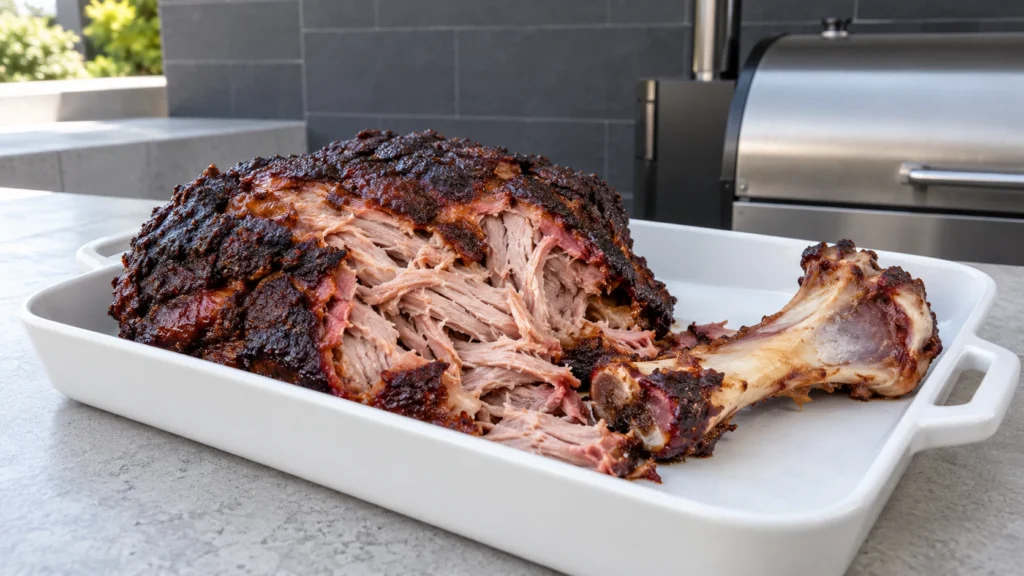
The bone test is the most reliable confirmation on a bone-in cut: at full doneness, the bone will twist and pull free from the meat with very little resistance, almost no tugging required. If the bone still feels locked in place, the shoulder needs more time regardless of what the thermometer says, the same probe-feel-over-number principle that applies to brisket.
Wrapping, and why it matters a little less here than on brisket
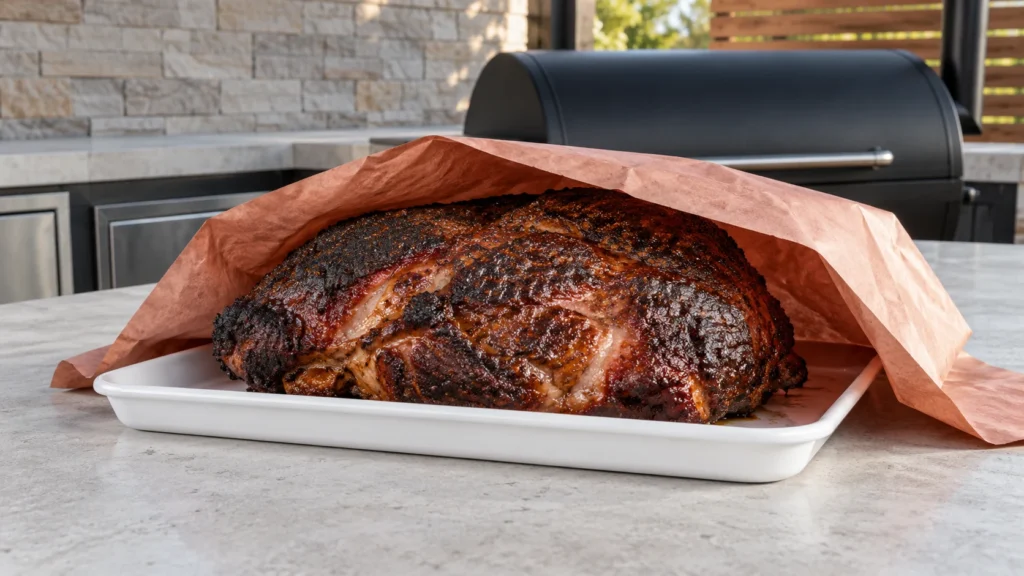
Wrapping in foil or butcher paper once the stall hits speeds things along the same way it does with brisket, trapping moisture against the surface to push through the plateau faster. Pork shoulder’s higher fat content makes it somewhat more forgiving if the wrap gets skipped entirely, since there’s more internal fat already protecting the meat from drying out during the extra unwrapped time. Skipping the wrap also tends to produce a firmer, more deeply bark-covered exterior, which some cooks specifically pull apart by hand later for extra texture mixed through the shredded meat.
If the cut came with skin still on
A picnic shoulder sometimes arrives with a section of skin still attached, and it’s worth deciding ahead of time what to do with it rather than discovering the question mid-cook. Left on through the whole smoke, that skin rarely crisps the way roasted pork skin does, since the low, moist smoking environment works against the dry heat that crackling actually needs. Most cooks either remove the skin before cooking, which lets smoke and rub reach more of the meat’s surface directly, or render it off separately afterward in a hot oven or under a broiler for a few minutes, treating it as a separate crispy side rather than expecting it to crackle on the smoker itself.
A Boston butt typically doesn’t come with skin at all, which is one more reason it tends to be the simpler starting cut between the two.
Resting before pulling matters more than people expect
Pulling a shoulder apart the moment it comes off the smoker releases a lot of moisture straight onto the cutting board rather than back into the meat. A rest of at least 30 minutes, wrapped and set in an empty cooler if a longer hold is needed, gives the internal juices time to settle. An hour or two of rest at a safe holding temperature rarely hurts a pork shoulder and often actually improves the final texture, since the meat continues to relax and the collagen continues settling into the surrounding muscle even after it comes off direct heat.
Pulling it apart without turning it to mush
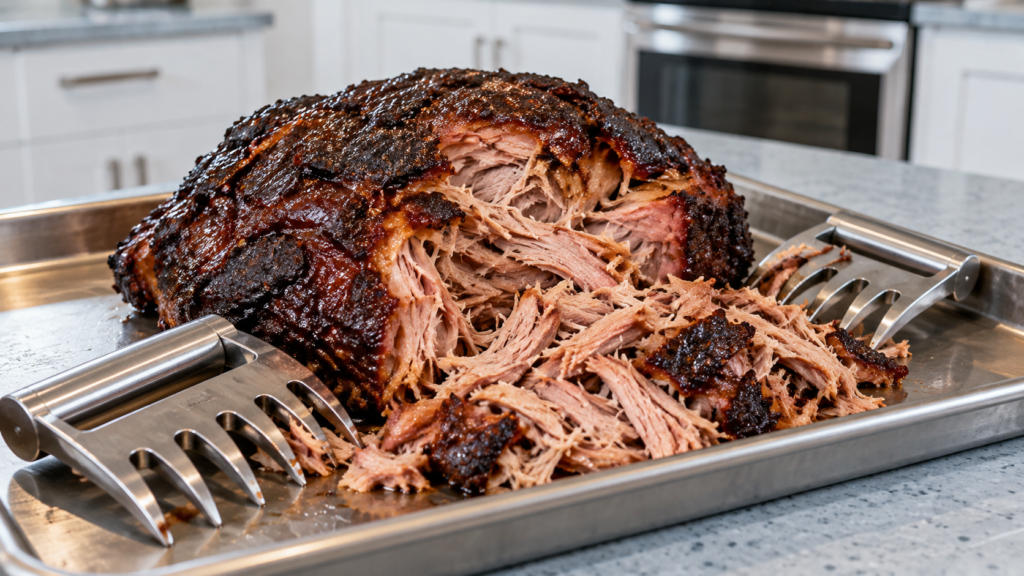
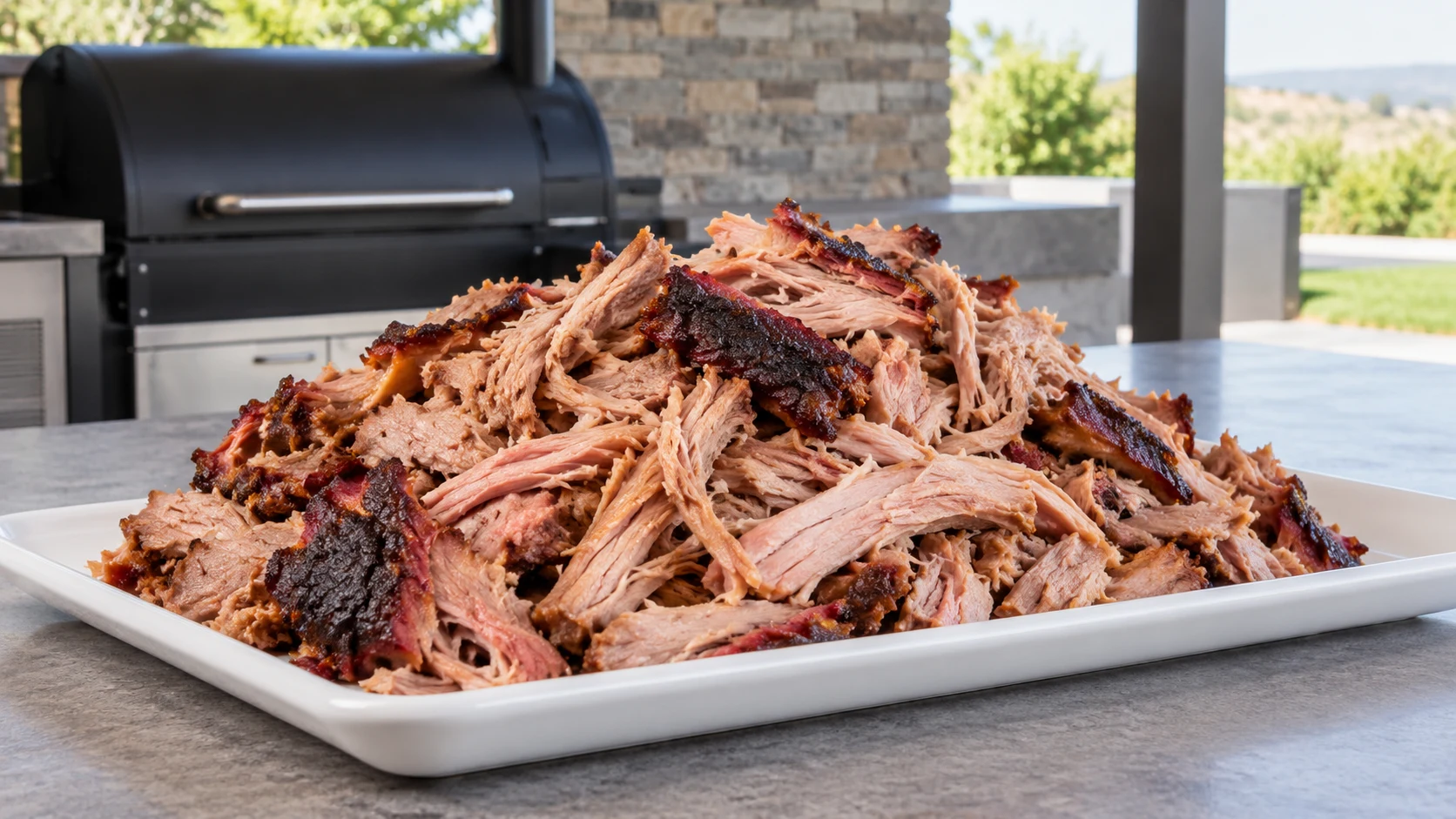
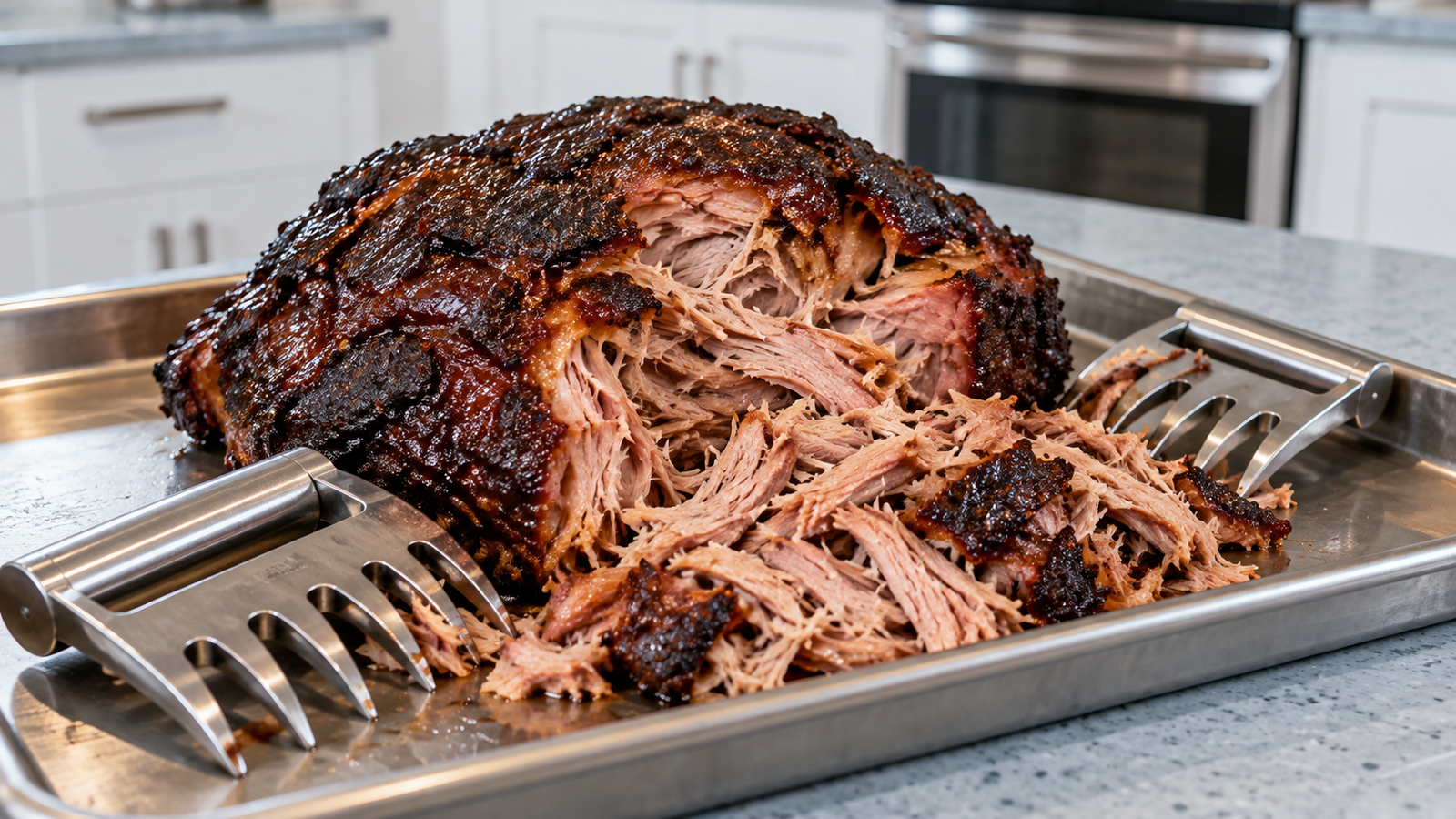
Two forks, dragged in opposite directions through the meat, is the classic method and still a reliable one. Heat-resistant gloves worn over a thin pair of regular gloves give more control and speed for anyone shredding a full shoulder by hand, since fingers can find and follow the grain more precisely than forks can. Either way, pulling along the direction the muscle fibers naturally run, rather than across them, produces longer, more satisfying shreds than tearing in random directions.
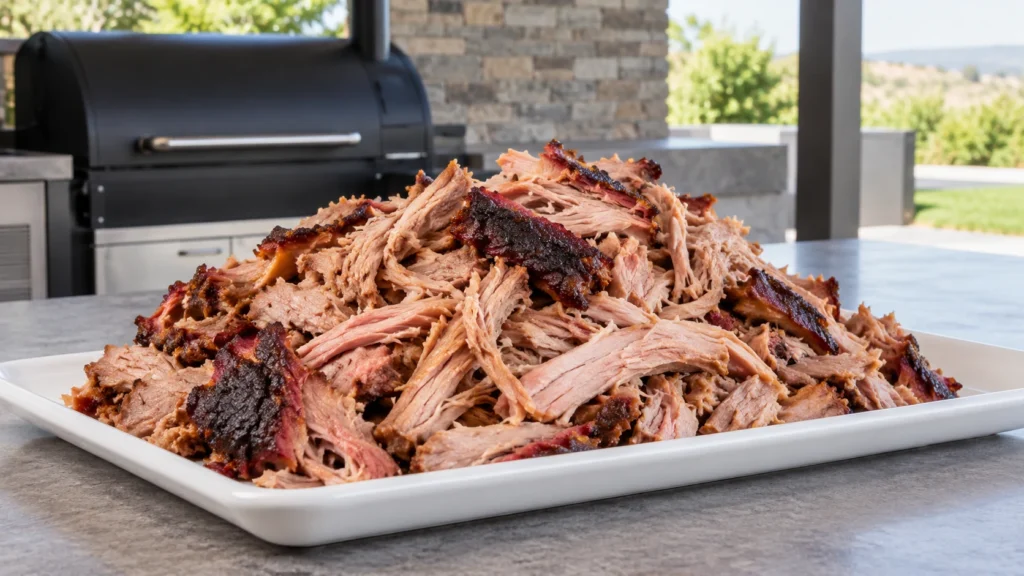
Pulling the meat while it’s still warm, not piping hot straight off the smoker, is the easiest point in the whole process: warm fat is still loose and pliable, and it shreds apart far more easily than the same meat does once it’s cooled and the fat has begun to firm back up.
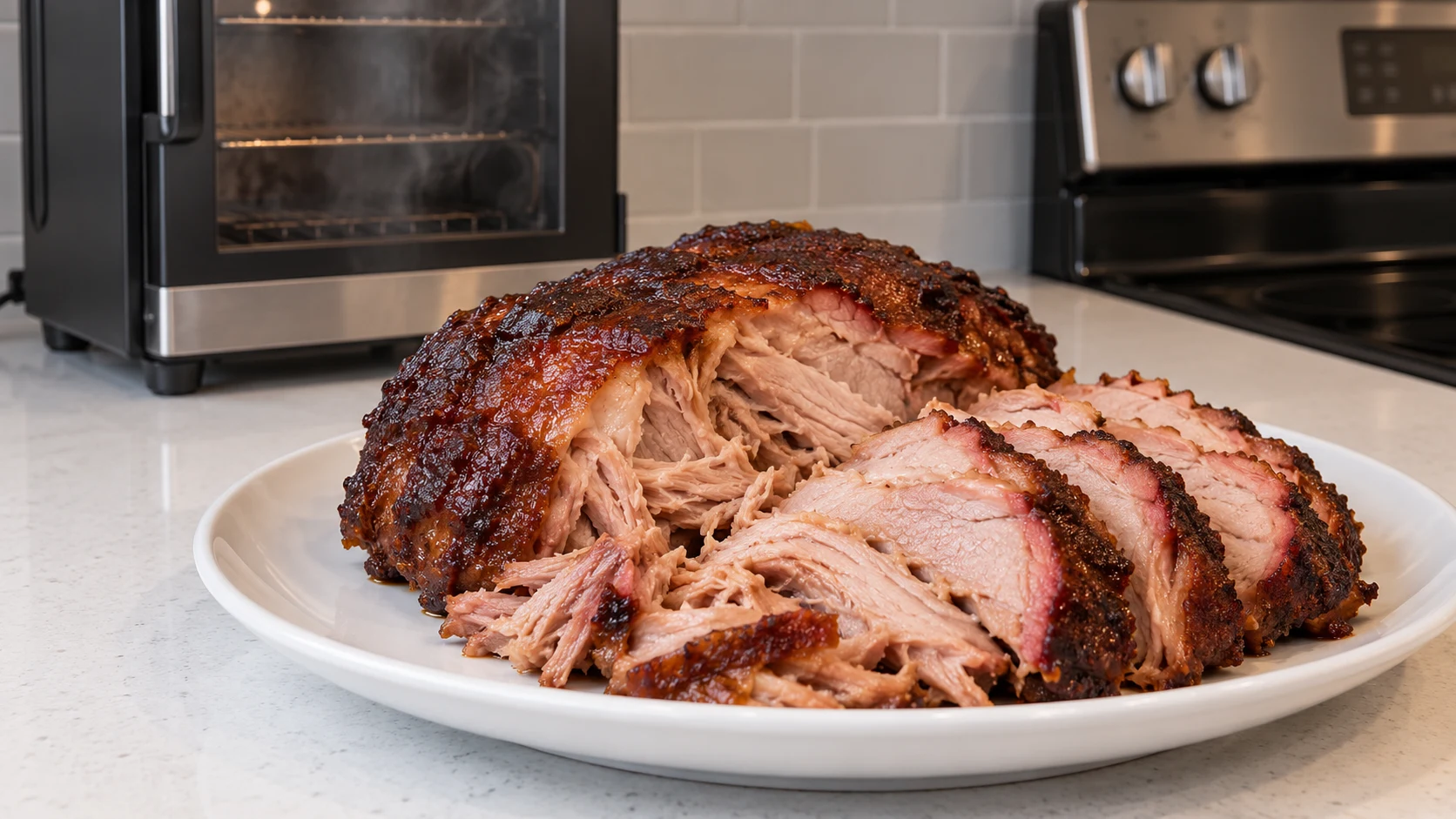
What to do with the rendered fat and juices pooling in the pan
A pulled pork shoulder leaves behind a meaningful amount of rendered fat and juice, sometimes called the “pan drippings” or, in some barbecue traditions, “pot liquor.” Skimming off the fat and mixing a portion of the remaining liquid back into the shredded meat before serving keeps it noticeably moister than serving it dry, especially once it sits out for a while at a gathering. The skimmed fat itself is worth keeping rather than discarding; it behaves similarly to other rendered animal fats and works well for crisping other dishes later in the week.
Sauce styles are a regional argument worth knowing before picking a side
Pulled pork sauce varies by region in a way that’s worth knowing even for a cook with no particular loyalty to any one style. Eastern North Carolina sauce is a thin, vinegar-and-pepper mixture with no tomato at all, meant to cut through the fat rather than add sweetness. South Carolina is known for a mustard-based sauce, a regional quirk tied to the area’s German settlement history. Kansas City style is the thick, sweet, tomato-and-molasses sauce most people picture by default when they hear the word barbecue sauce. None of these is more correct than the others; they’re different answers to the same question of how to balance fat, salt, and sweetness against a cut this rich.
A thin vinegar-based sauce mixed directly into the meat while it’s still warm actually penetrates and seasons the shreds themselves. A thicker, sweeter sauce tends to work better served on the side or brushed on just before serving, since mixing a heavy sauce all the way through can leave the meat feeling more like a sauce delivery vehicle than a showcase for the smoke and bark that took ten hours to build.
Storing and reheating without losing what made it good
Pulled pork keeps well for three to four days refrigerated, and it freezes better than most smoked meat, since the shredded texture and higher fat content both help it reheat more gently than a sliced cut like brisket does. Storing it with a portion of the reserved drippings mixed in, rather than bone dry, makes a real difference days later, giving the reheat something to work with instead of starting from meat that’s already lost most of its moisture to the refrigerator.
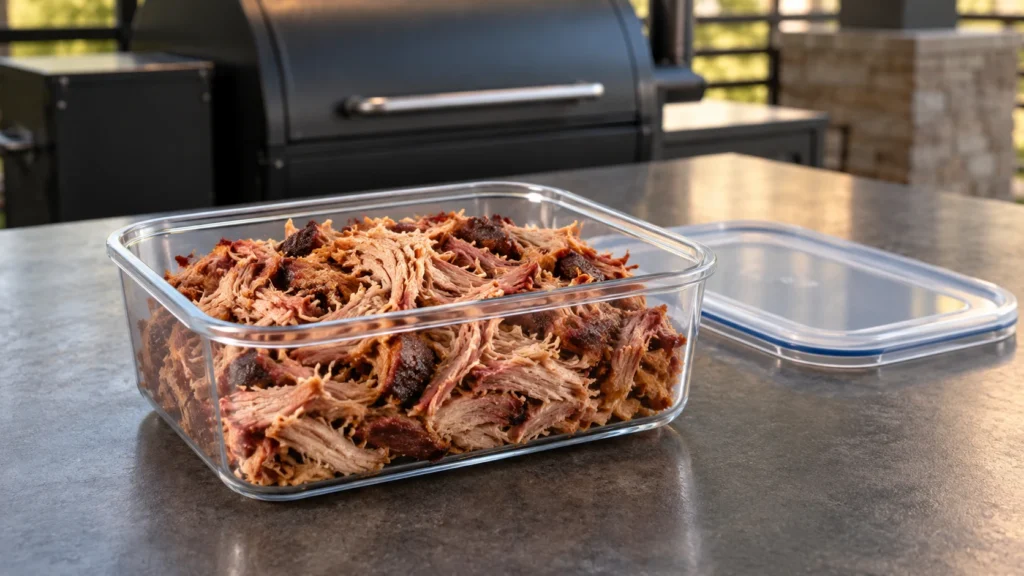
A low oven around 250°F, covered, with a splash of broth or reserved drippings added before sealing, brings leftover pulled pork back close to its first-day texture. A covered skillet over low heat with the same splash of liquid works nearly as well for a smaller portion. A microwave will technically heat it through but tends to firm up the texture unevenly, since the outer edges of each piece heat faster than the center.
Mistakes specific to this cut
- Pulling it at the minimum safe pork temperature. 145°F is safe but far too early for the collagen breakdown that actually makes pulled pork tender.
- Shredding it cold. Fat firms back up as the meat cools, making the same shoulder noticeably harder to pull apart than it would have been thirty minutes earlier.
- Throwing out the drippings. That liquid is most of what keeps shredded pork from drying out once it’s off the heat and sitting on a table.
- Skipping the rest to serve faster. A rushed rest sends moisture onto the cutting board that a properly rested shoulder would have kept inside the meat.
- Sauce added too early and left to sit too long before serving. A vinegar-forward sauce mixed in right before serving keeps its brightness; mixed in too early and left to sit, it can mute into something flatter.
Where this sits next to the other long, slow cuts
Pork shoulder is a genuinely good second project after a shorter first smoke like chicken thighs, since it shares brisket’s long timeline and reliance on patience but carries enough built-in fat to be considerably more forgiving along the way. The oven version of this same cut is a useful side-by-side reference, since the internal transformation, collagen breaking down into gelatin over many hours, happens on a similar curve regardless of whether the heat source is an oven or a smoker. The smoker just adds a flavor layer the oven can’t replicate on its own.
This is a technique guide, not a food-safety substitute. Always use a reliable thermometer and follow safe minimum cooking temperatures for pork. Reference: USDA/FoodSafety.gov safe minimum cooking temperatures.
Visual steps