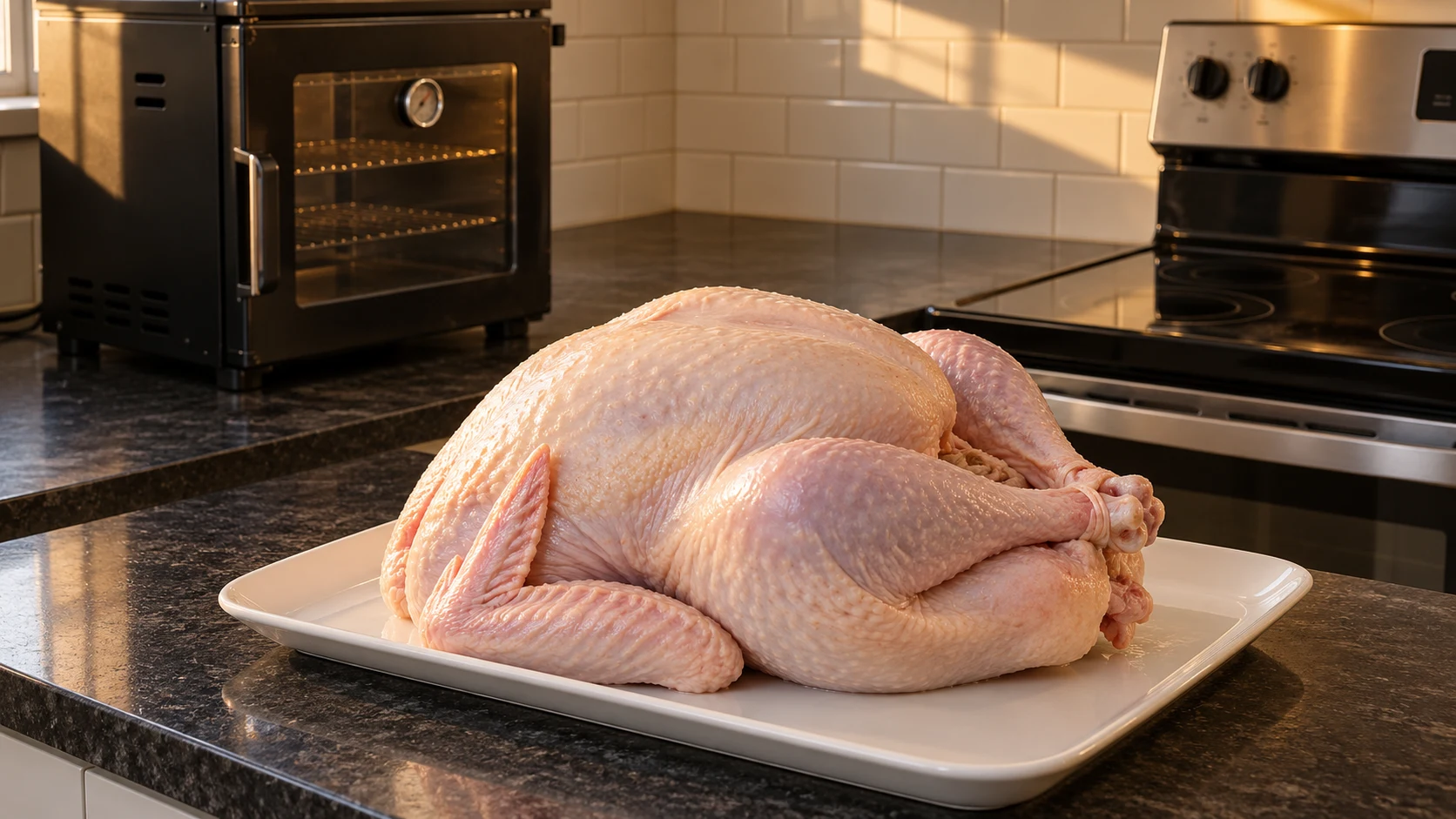
Turkey gets treated as a once-a-year problem to survive rather than a bird worth cooking regularly, which is exactly backward. Once the whole-bird logistics are off the table, it’s one of the more flexible options in the kitchen: a lean, mild protein that takes well to fast searing, slow confit, ground preparations, and smoke, often at a lower price per pound than chicken. Everything in this category is really about picking the right piece and the right method for what’s actually needed, rather than defaulting to the whole bird out of habit.
The whole bird, and when to skip it
Spatchcocking the turkey solves the whole bird’s central problem directly: flattening it so breast and legs cook far more evenly than they do in the traditional upright roast, in considerably less time. How much turkey per person, and how long to thaw it covers the planning math that actually determines whether a whole-bird holiday dinner goes smoothly, since most turkey disasters start days before the oven is ever involved.
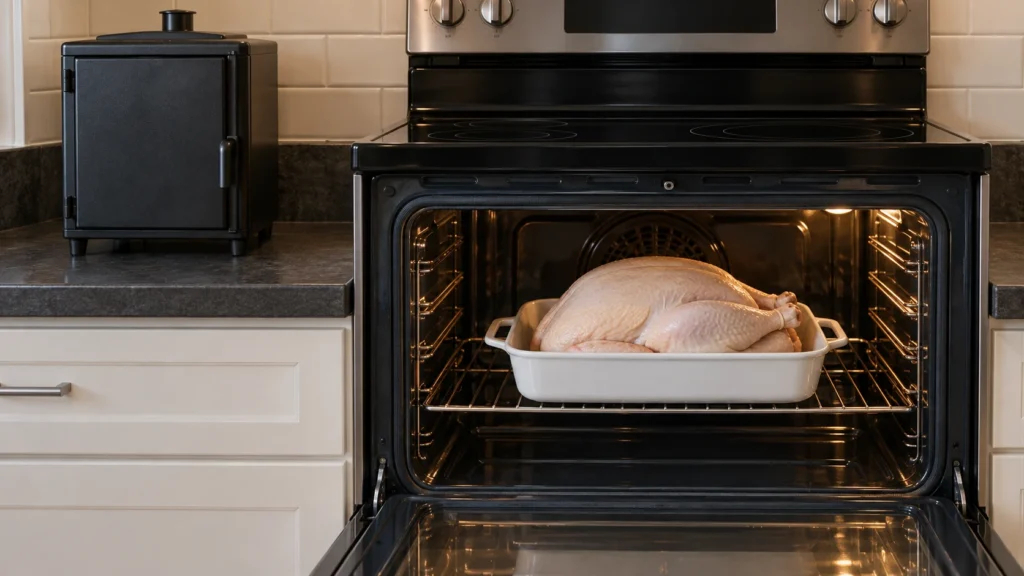
For anyone not actually feeding a crowd, skipping the whole bird and roasting just the breast is the more honest answer most of the year: less thawing, less oven space, and no compromise between white and dark meat finishing at different rates. Butter-basted turkey breast roast builds a specific technique on top of that same decision, using repeated basting through the cook to keep a lean cut from drying out the way an unbasted breast easily can.

Parts, cooked for what they actually are
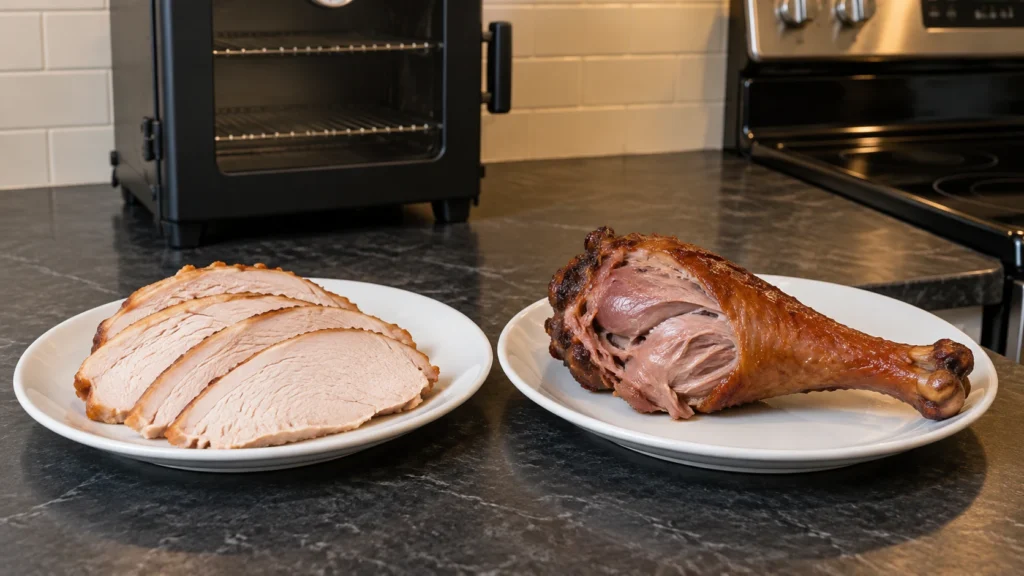
Turkey breaks down into pieces just like any other bird, each suited to a different method. Pan-seared turkey tenderloin treats the leanest, fastest-cooking part of the bird the way a chicken breast gets treated: quick, hot, and watched closely. Turkey thigh confit in rendered fat goes the opposite direction entirely, using slow, fat-submerged cooking to turn the bird’s fattier, more forgiving part into something closer to duck confit than anything “turkey” usually suggests.

Ground and cured, the parts of the aisle most people walk past
Simply seasoned ground turkey patties deals honestly with ground turkey’s real weakness: it’s lean enough that it needs deliberate help, usually added fat, to avoid turning dry the way ground beef rarely does. Pan-crisped turkey bacon covers the other common substitution, where turkey stands in for pork and needs its own specific handling to actually crisp rather than just curl and steam.
Smoke, applied to a bird most people only roast
Smoked turkey leg, low and slow takes a part of the bird built with enough connective tissue to handle a long cook and puts it through the same slow-heat logic that governs brisket and pork shoulder, just with turkey’s milder flavor underneath the smoke instead.
Why turkey breast dries out faster than it should
Turkey breast carries even less intramuscular fat than chicken breast does, which means the same narrow margin between done and dry shows up here, just with less room for error on either side. Every technique across the whole-bird and breast-specific posts in this category circles back to the same underlying fix: either add fat back deliberately, through basting, confit, or a fattier part of the bird entirely, or control the cook tightly enough (even thickness, an accurate pull temperature, a real rest) that the lack of fat never becomes a problem in the first place.
Picking whole bird, breast, or a specific part
| Situation | What to buy |
|---|---|
| Feeding a genuine crowd on a holiday schedule | Whole bird, spatchcocked for even cooking |
| A normal weeknight, cooking for one to a few people | Just the breast, or the tenderloin for the fastest option |
| Wanting something richer and more forgiving than breast meat | Thighs, for confit or a slower braise-style cook |
| Replacing ground beef or bacon in an everyday dish | Ground turkey or turkey bacon, with the fat-content adjustments each needs |
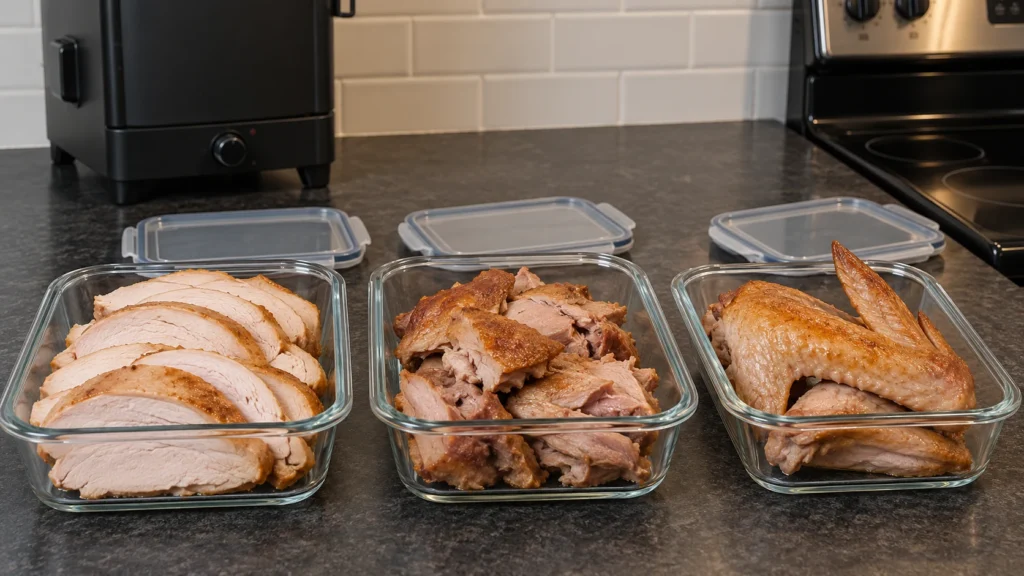
Whole birds are consistently the cheapest way to buy turkey by weight, which is worth knowing even outside the holiday season: a whole bird broken down at home, with the breast, thighs, and carcass used for entirely different dishes across the week, often beats buying the equivalent parts pre-portioned, the same economics that apply to breaking down a whole chicken at home.
Mistakes that show up again and again with turkey specifically
- Roasting a whole bird upright without accounting for the breast-legs conflict. Spatchcocking or at minimum tenting the breast partway through solves most of what makes a traditional roast turkey dry.
- Treating ground turkey like ground beef. Without added fat, lean ground turkey dries out at the same heat and timing that works fine for a fattier ground beef blend.
- Skipping the thaw-time math. A frozen turkey takes real, predictable days to thaw safely in the refrigerator, and running out of time forces either a dangerous counter-thaw shortcut or a last-minute scramble.
- Treating every part of the bird as interchangeable. Breast, thigh, and tenderloin each have different fat content and different forgiving windows; a technique that works for one often fails on another.
Where to start
Planning a holiday meal around a whole bird starts with the per-person math, then spatchcocking if even cooking is the priority. Cooking turkey on a normal week, with no crowd to feed, starts with the breast alone or the tenderloin specifically, both considerably faster and more forgiving than committing to a whole bird out of habit. The ground and smoked options are worth reaching for once the basic cuts feel familiar, as genuine variations rather than default starting points.
This is a technique overview, not a food-safety substitute. Always cook poultry to a safe internal temperature using a reliable thermometer.
Visual steps
