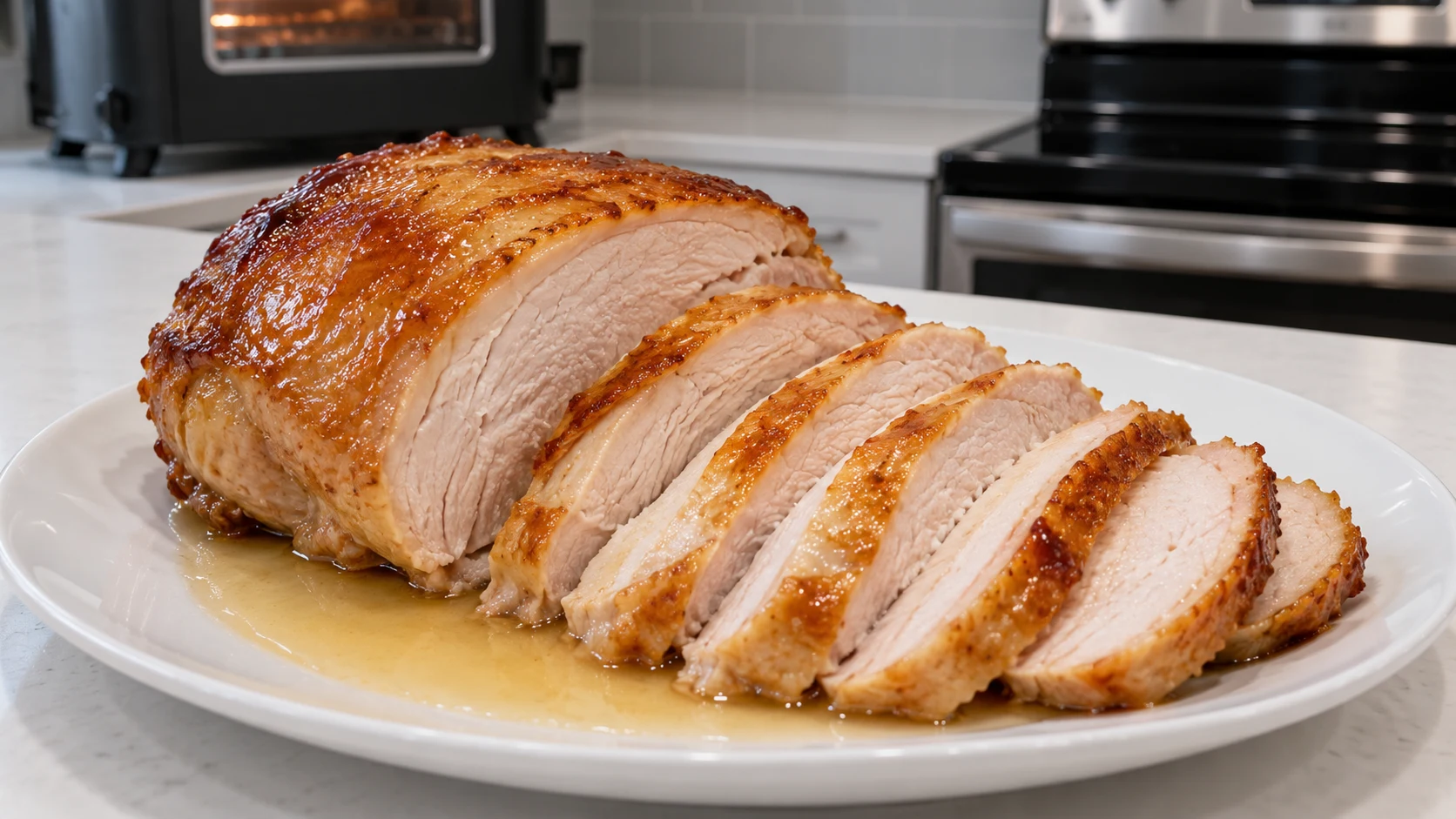
For many tables, a whole turkey is more ceremony than solution. The moment you are not feeding a large crowd or staging a centrepiece, a bone-in turkey breast delivers the white meat people want with less thawing, less oven space, and fewer competing temperatures. Choosing the cut to fit the table is not a shortcut. It is better planning.
The whole bird asks for compromise
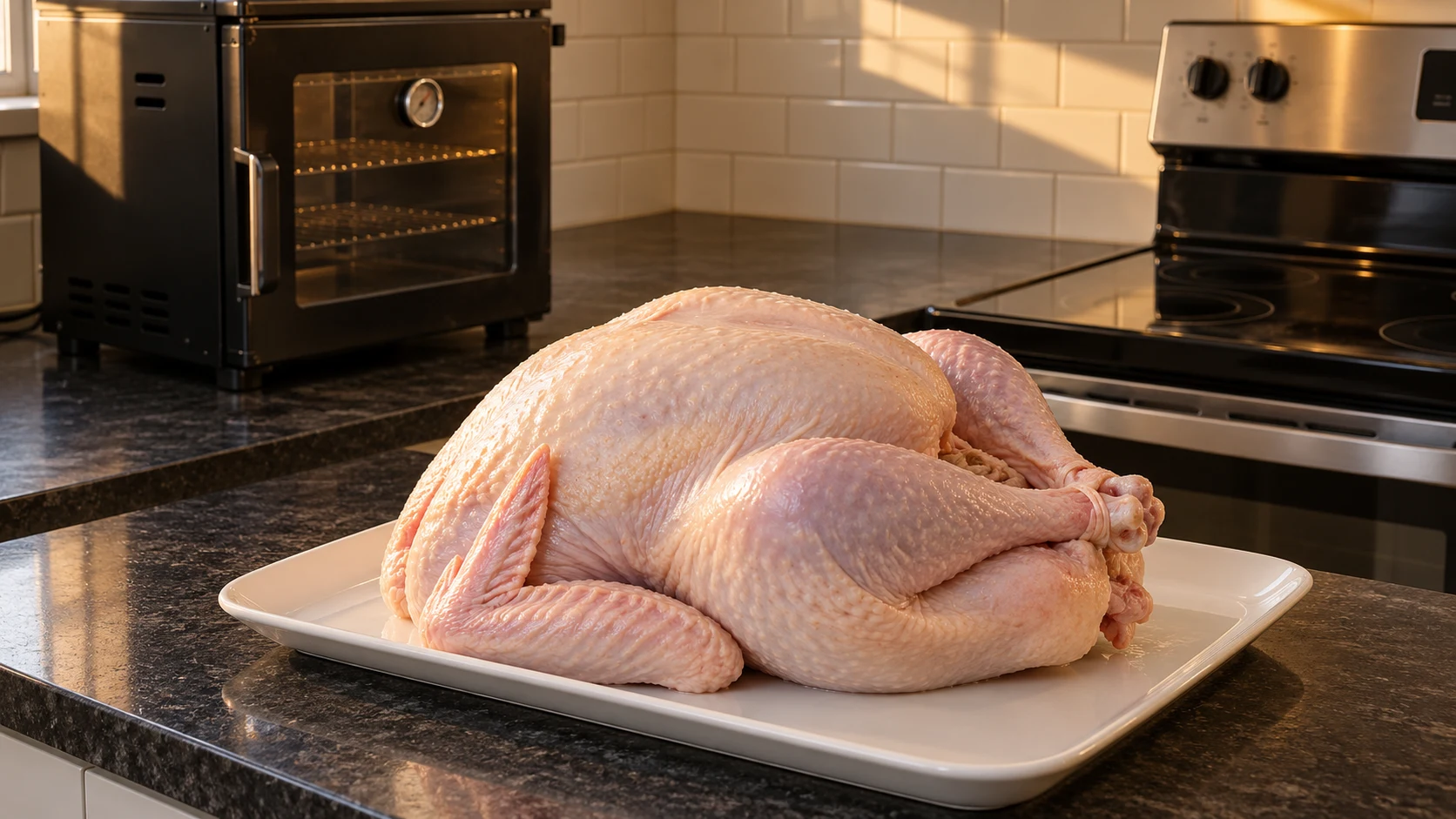
A whole turkey combines lean breast meat with legs full of connective tissue. Those parts do not become pleasant at the same pace. The breast can dry while the legs continue cooking, which is the same argument a whole chicken creates on a smaller scale. The bird is also awkward to turn, carve, chill, and fit around anything else in the oven.
Choose by the meal, not the tradition
| Your priority | Better choice | Reason |
|---|---|---|
| Four to eight people who prefer white meat | Bone-in breast | Less waste and simpler temperature control |
| White and dark meat for a large crowd | Whole bird or separate parts | More total meat and both textures |
| Fast carving and a smaller oven | Bone-in breast | Easier handling and a smaller footprint |
| A ceremonial centrepiece | Whole bird | The presentation is part of the goal |
A breast also makes portion planning clearer. Buy for the people actually coming rather than for the visual scale of a holiday photograph. If the table is larger, two smaller breasts can be easier to manage than one enormous bird, and each can leave the oven as soon as it is ready.
Bone-in gives you a steadier shape
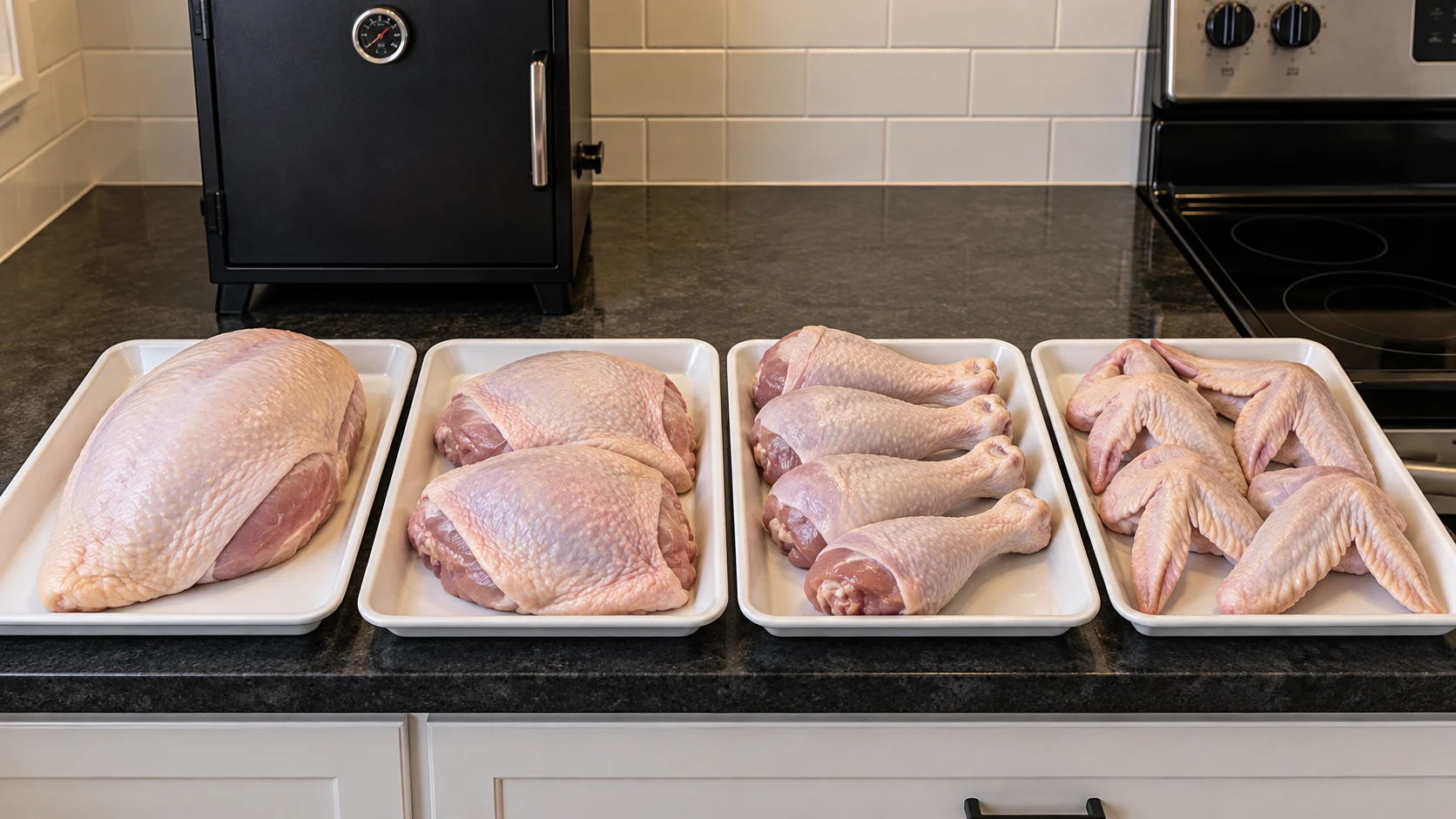
A bone-in breast is bulkier than a boneless roast, but the rib cage supports the meat and gives the skin a broad surface to brown. A boneless breast is easier to fit into a small pan and simpler to slice, yet its shape can vary dramatically. Whichever you buy, judge the cook by the thickest point rather than the package weight alone.
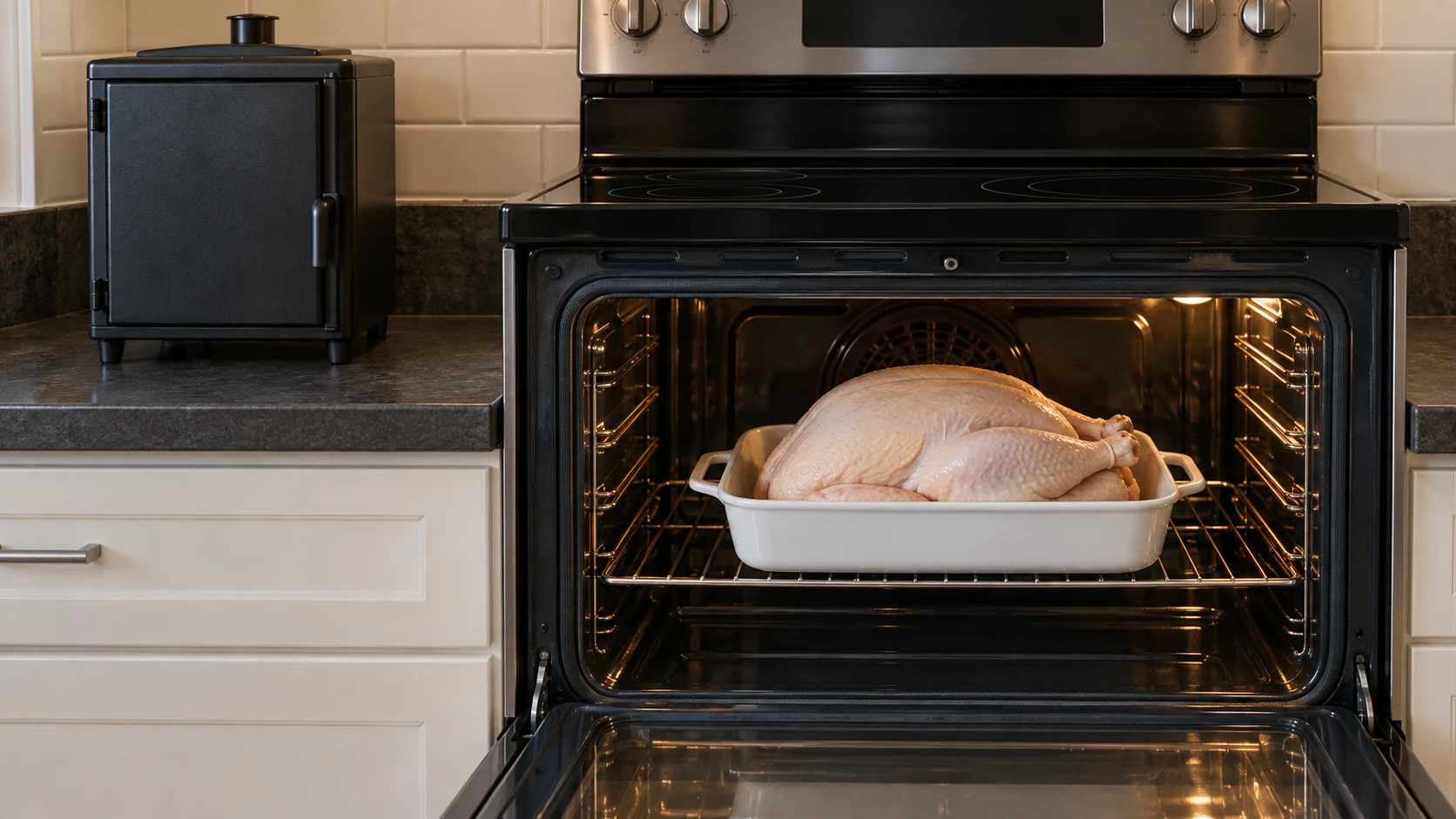
If you buy two breasts, do not assume they finish together. Check each piece separately and remove the first one when it reaches its target. Independent pieces are an advantage only when you let them leave the heat independently.
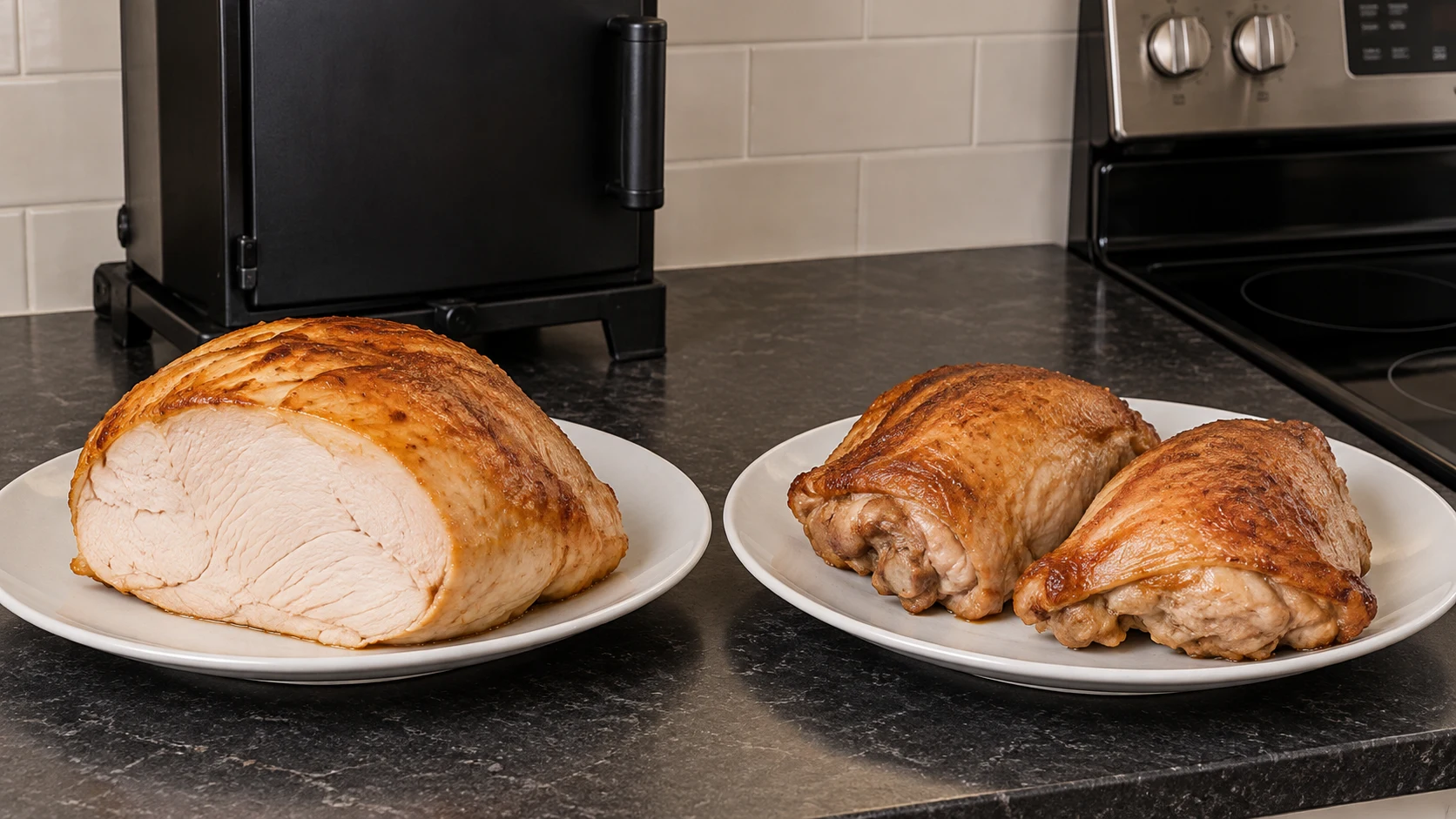
Set up the breast for even roasting
- Thaw fully in the refrigerator and keep the raw bird contained.
- Pat the skin dry, salt evenly, and refrigerate uncovered when time allows.
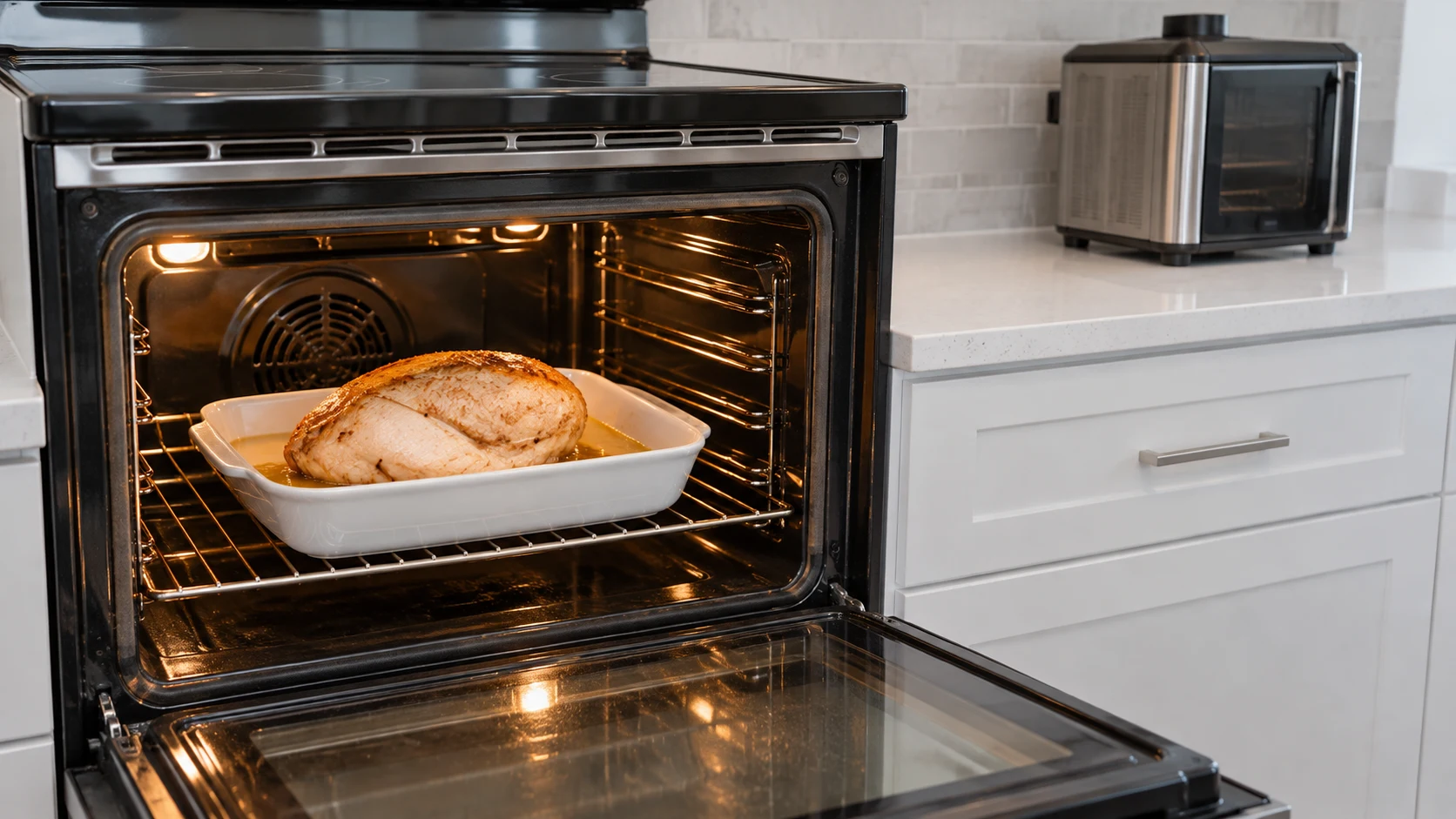
- Set the breast skin-side up with room for hot air to circulate.
- Place the thermometer in the thickest part of the breast without touching bone.
- Confirm 165°F, then rest before carving across the grain.
Time estimates are only scheduling tools. Shape, starting temperature, oven behaviour, and whether the breast is bone-in all change the clock. The thermometer decides when dinner is ready. USDA guidance lists 165°F for all poultry, including turkey breast.
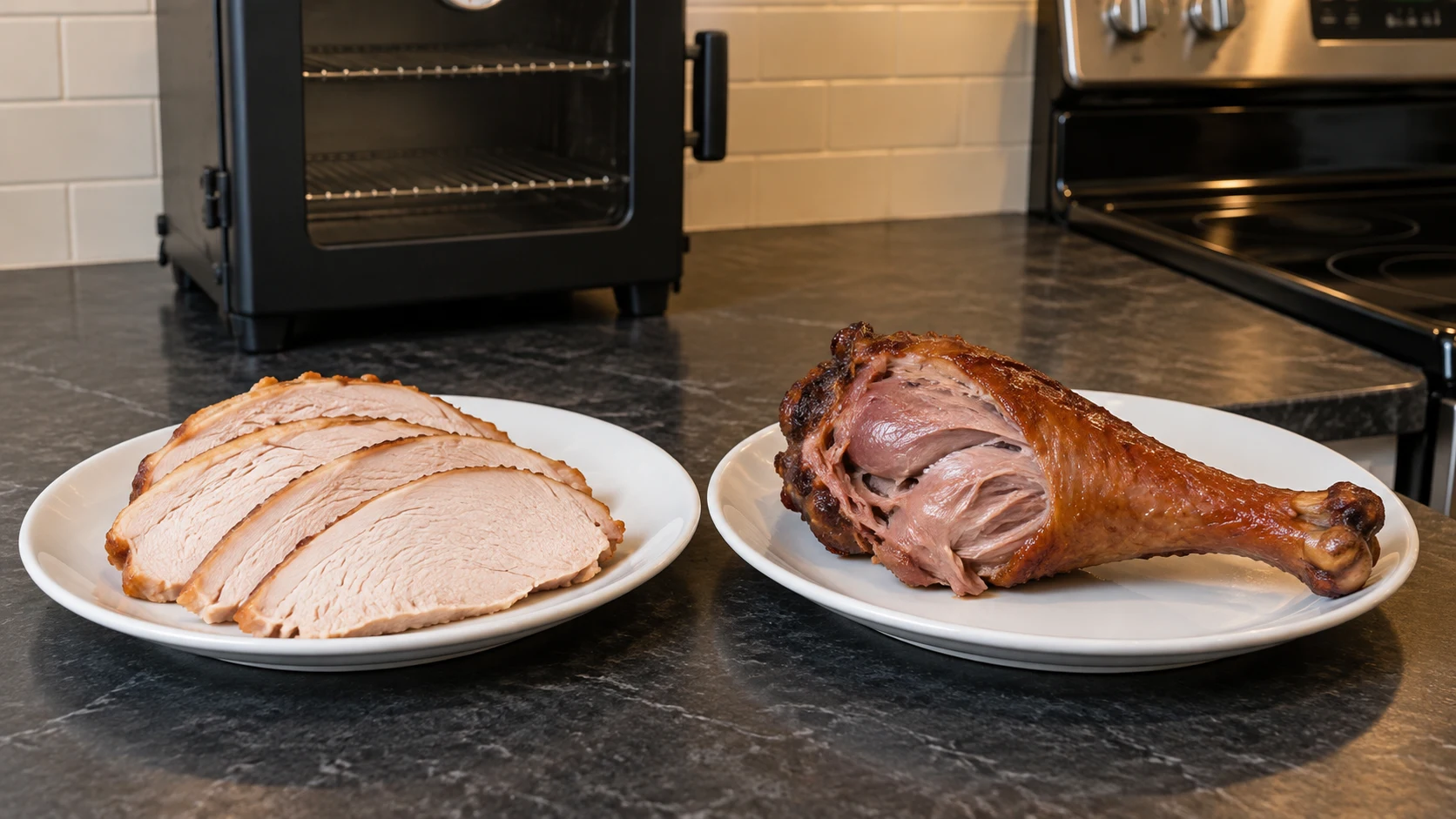
When the whole turkey still earns its place
Roast the whole bird when the table genuinely wants dark meat, when one large bird is easier than several cuts, or when carrying a burnished turkey into the room is part of the celebration. Otherwise, choose the breast without apology. The smaller cut gives you more control over the meat most guests will eat and leaves less room for holiday stress.
Food-safety source: USDA Food Safety and Inspection Service safe-temperature chart. All poultry should reach 165°F as measured with a food thermometer.