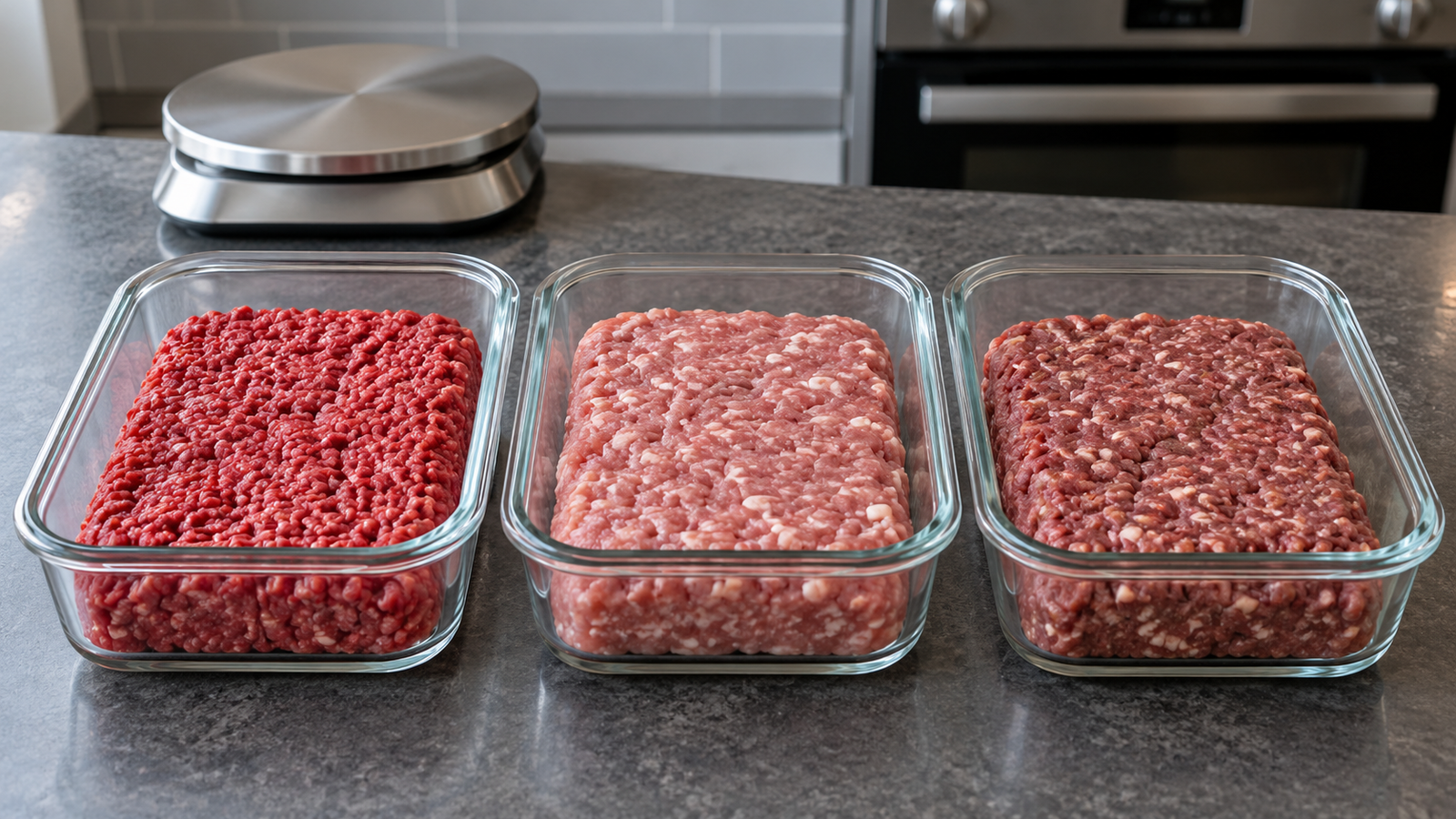
Ground meat looks like the simplest category on this entire site and causes some of the most consistent mistakes, mostly because the same few variables, fat content, mixing, and heat, show up in every single problem whether it’s a burger, a meatball, or a plain skillet. Fix those three variables once and the fix carries across nearly everything here, regardless of which animal the meat came from.

The browning fundamentals everything else builds on
Why your ground beef steams instead of browning is the single most foundational post in this category, since the mechanism it explains, an overcrowded pan trapping moisture instead of letting it escape as steam, is the root cause behind a surprising number of other “ground meat” complaints that actually have nothing to do with seasoning or fat ratio at all. Read this one first regardless of what’s actually being cooked.
Burgers and patties: the mixing and fat questions
Why your burgers turn out dense (and how to stop it) covers the overmixing problem that ruins more burgers than bad meat ever does. Classic carnivore smash patties and double smash burger stack both apply a deliberately different, high-heat, thin-patty technique that depends on getting that mixing question right first. Seasoned ground beef skillet, salt and fat only strips the format down to its simplest form, no patty shape at all, which makes it the clearest place to see the browning and seasoning fundamentals with nothing else competing for attention.
Meatballs: a binding problem, not a seasoning problem
Why meatballs fall apart, and what actually holds them together explains the real structural question behind a dish people usually troubleshoot by changing the seasoning instead of the binder. Beef meatballs in bone broth takes that corrected technique and applies it to a specific moist-heat finish, poaching the meatballs gently in broth rather than browning them hard in a pan.
Ground meat beyond beef, where the fat math changes
The browning and binding lessons above hold across every animal, but fat content doesn’t, and that’s where ground lamb patties with tallow and ground venison burgers diverge from standard ground beef guidance: lamb runs fattier by default, while venison runs lean enough that it often needs fat added back deliberately, the same lean-meat caution that applies to the rest of the game meat on this site. Beef and liver blend patties is its own separate idea entirely: cutting ground beef with a portion of ground liver, which sneaks real organ meat into a familiar, easy format for anyone not ready to cook liver on its own yet.
Fat ratio, by animal, as an actual starting reference
| Ground meat | Typical fat content | What that means in practice |
|---|---|---|
| Beef (standard) | 80/20 is the common default | Forgiving; browns and holds together well without much adjustment |
| Lamb | Often fattier than standard ground beef | Renders generously; needs less added fat than leaner options |
| Venison, elk, bison | Very lean by default | Usually needs fat added back deliberately to avoid drying out |
| Turkey, chicken | Lean unless specifically labeled dark-meat blend | Same added-fat logic as lean game; dries out fastest of all without it |
Mistakes that show up across nearly every format here
- Crowding the pan. The single biggest cause of grey, steamed ground meat instead of properly browned meat, regardless of what’s being cooked.
- Overmixing by hand. This develops the protein structure too much and produces a dense, springy texture in burgers, patties, and meatballs alike.
- Using the wrong fat ratio for the animal. Treating lean game or poultry exactly like standard 80/20 ground beef skips the added-fat step those leaner options actually need.
- Skipping a rest after cooking. Even a thin patty benefits from a brief rest before cutting or serving, for the same moisture-redistribution reason that applies to a whole cut.
Where to start
Anyone whose ground beef consistently comes out grey and watery instead of browned should start with the browning-not-steaming post before touching anything else in this category, since that single fix improves nearly every other recipe here automatically. From there, burgers and meatballs are the two highest-traffic formats worth getting genuinely comfortable with before branching into lamb, venison, or liver-blend variations.
Batch quantity is worth planning for, too. Ground meat freezes and thaws more predictably than most whole cuts, which makes it one of the more natural things to buy and portion in bulk during a regular prep session rather than one package at a time. Flattening portions into thin, flat packs before freezing, rather than a thick frozen block, also means a faster, more even thaw when it’s actually time to cook.
This is a technique overview, not a food-safety substitute. Ground meat should reach a safe internal temperature measured with a reliable thermometer: 160°F for ground beef, lamb, and venison, 165°F for ground turkey.
Visual steps
