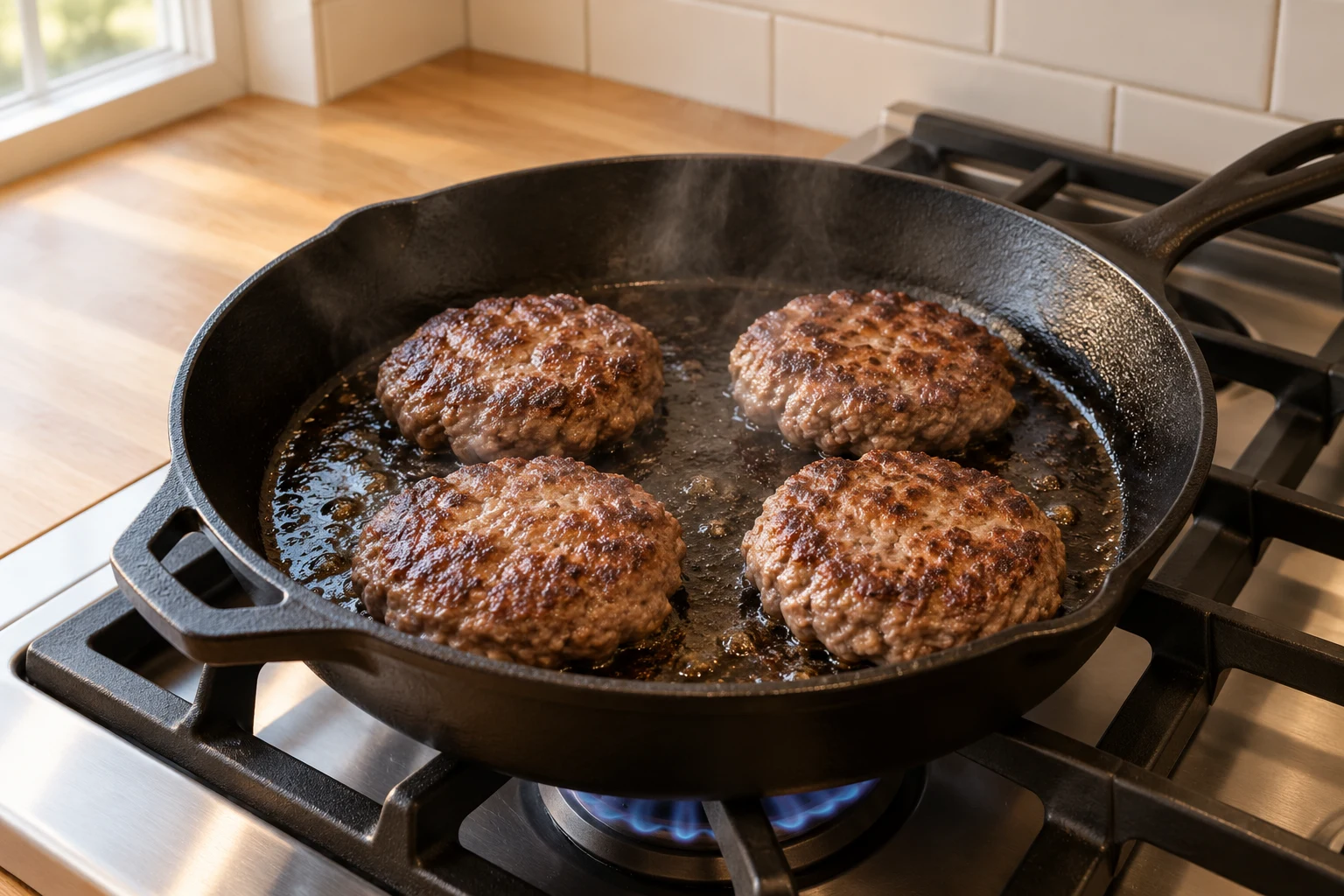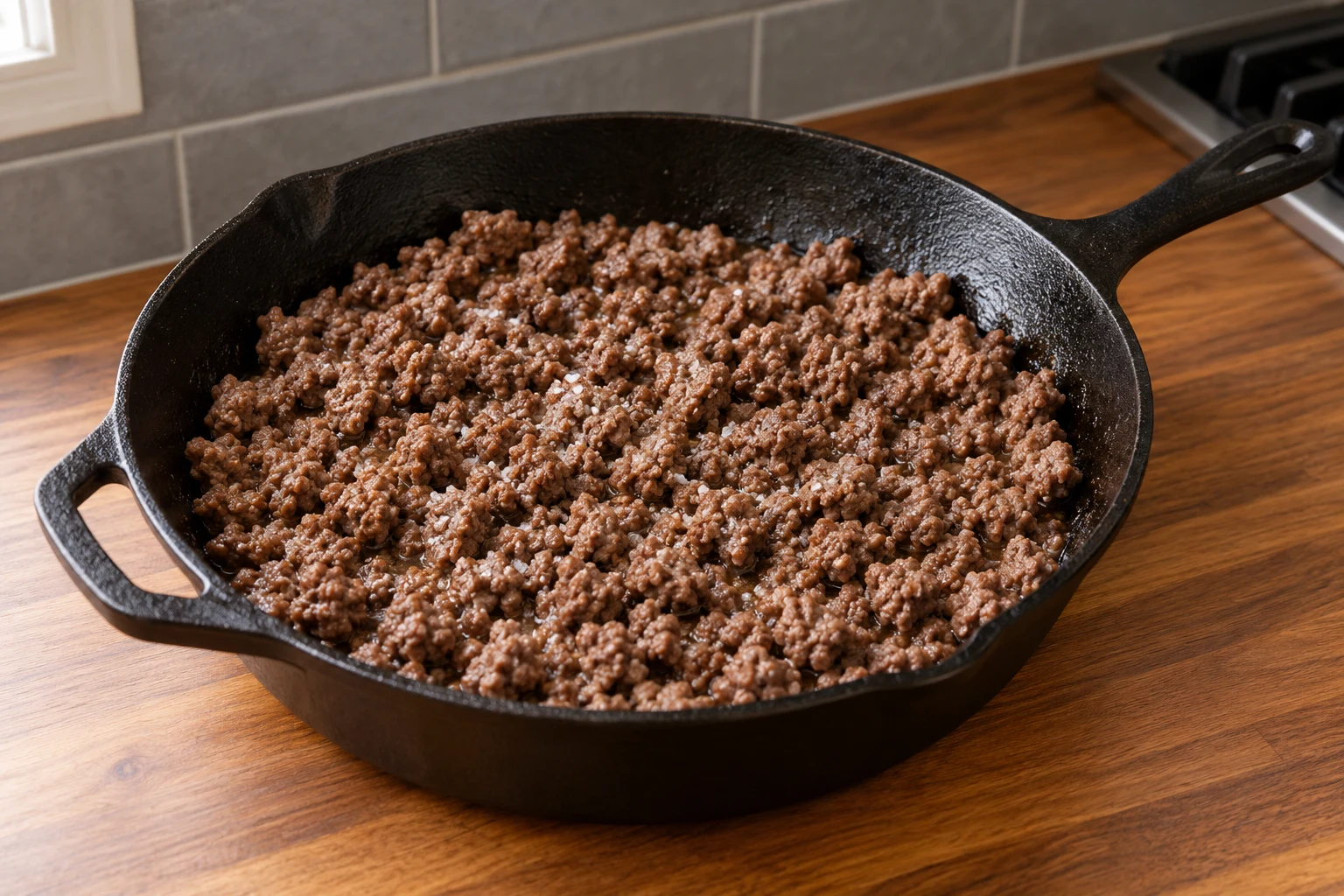
Ground beef turns grey when the pan becomes a crowded, shallow pot. The meat releases water, the temperature falls, and the bottom of the pan fills faster than the liquid can evaporate. Once the beef is sitting in that moisture, it simmers. The fix is not another seasoning blend. It is enough hot metal, less meat at once, and several minutes of deliberate non-interference.
Browning needs dry contact
The savoury crust on meat forms where a relatively dry surface stays against a hot pan. Water holds the surface temperature back while it boils away. Ground beef creates an extra challenge because grinding exposes more structure and freezing can increase the amount of liquid released during cooking. A cold, crowded pan cannot shed that moisture quickly enough.
Choose the pan by surface area
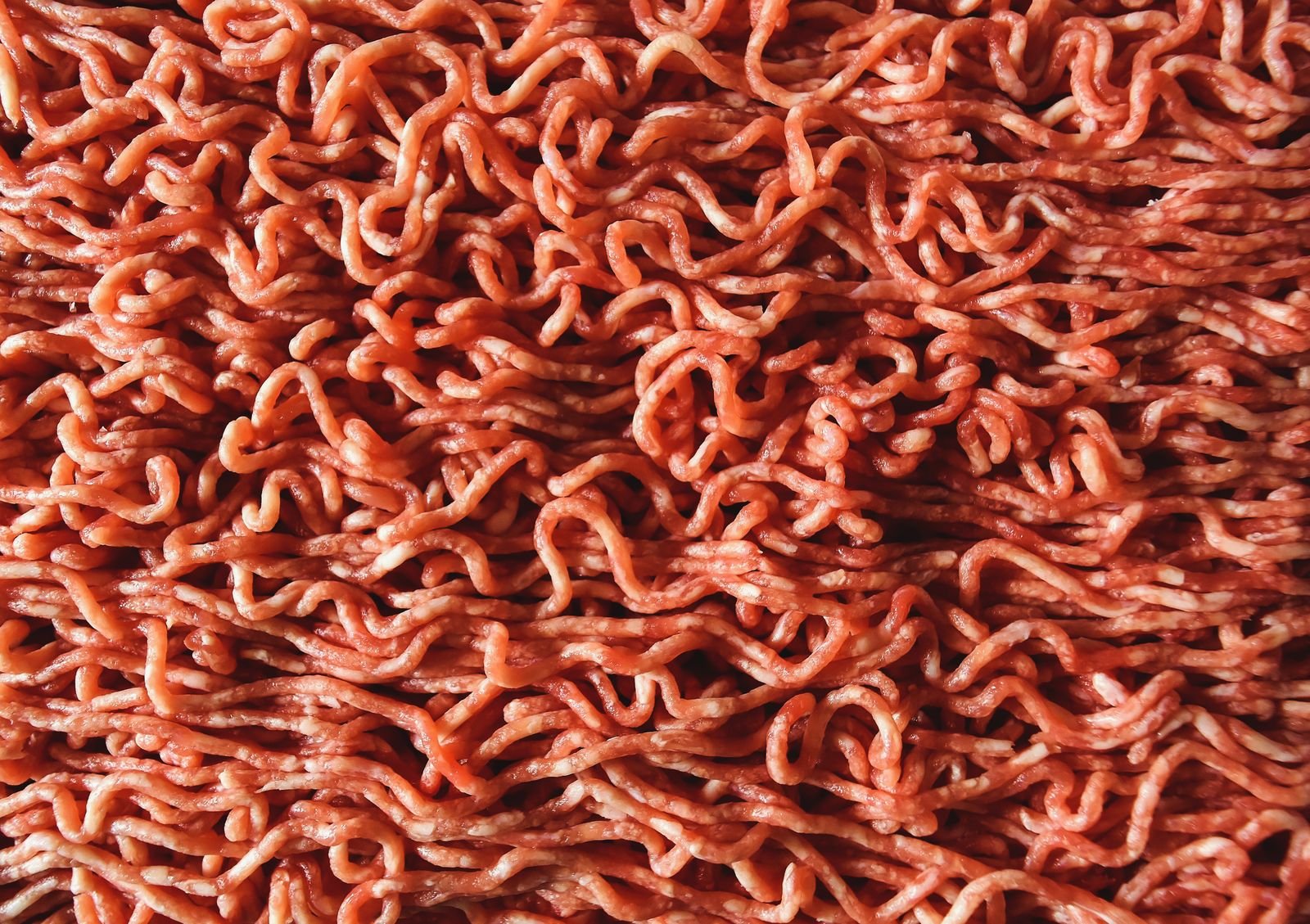
A wide skillet is more useful than a deep saucepan because more beef can touch the hot surface in a thin layer. Heavy pans recover heat after cold meat is added, but no pan can brown an oversized batch. If the beef would form a mound instead of a layer, divide it. Two fast batches beat one long grey batch.
The browning sequence
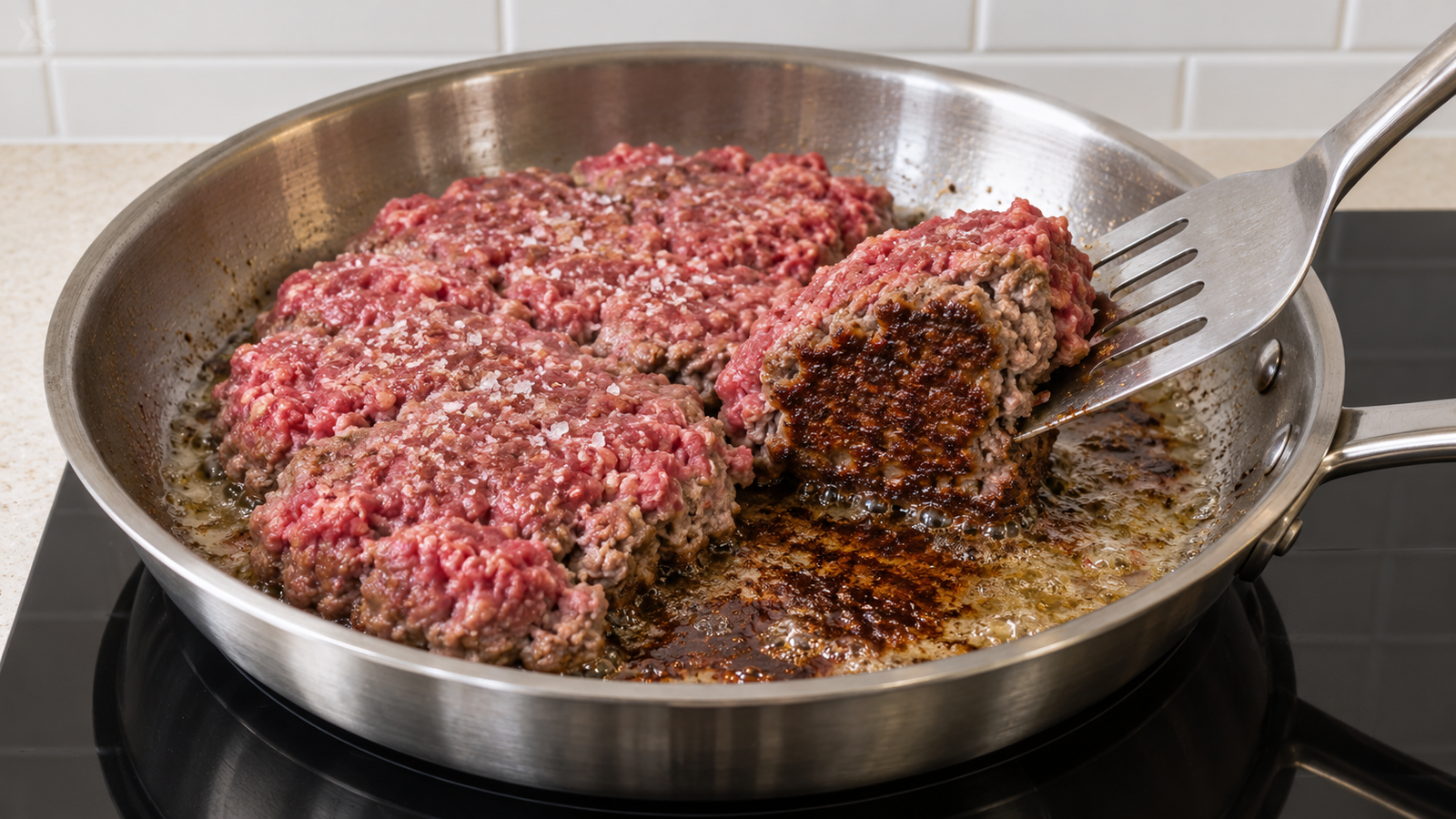
- Heat the empty pan until it is properly hot.
- Add the beef in a loose, even layer rather than one compact block.
- Press only enough to create contact; do not mash the strands into paste.
- Leave the first side alone until the sound changes from wet bubbling to a harder sizzle.
- Turn browned sections, then break them into the final size.
- Keep cooking until the ground beef reaches its safe internal temperature.
Stirring is not the same as cooking
Constant movement feels productive but prevents any one surface from staying against the pan. Use a broad turner to lift and flip sections after they have coloured. Break the meat more finely near the end. That preserves irregular browned edges instead of producing uniformly soft pebbles.
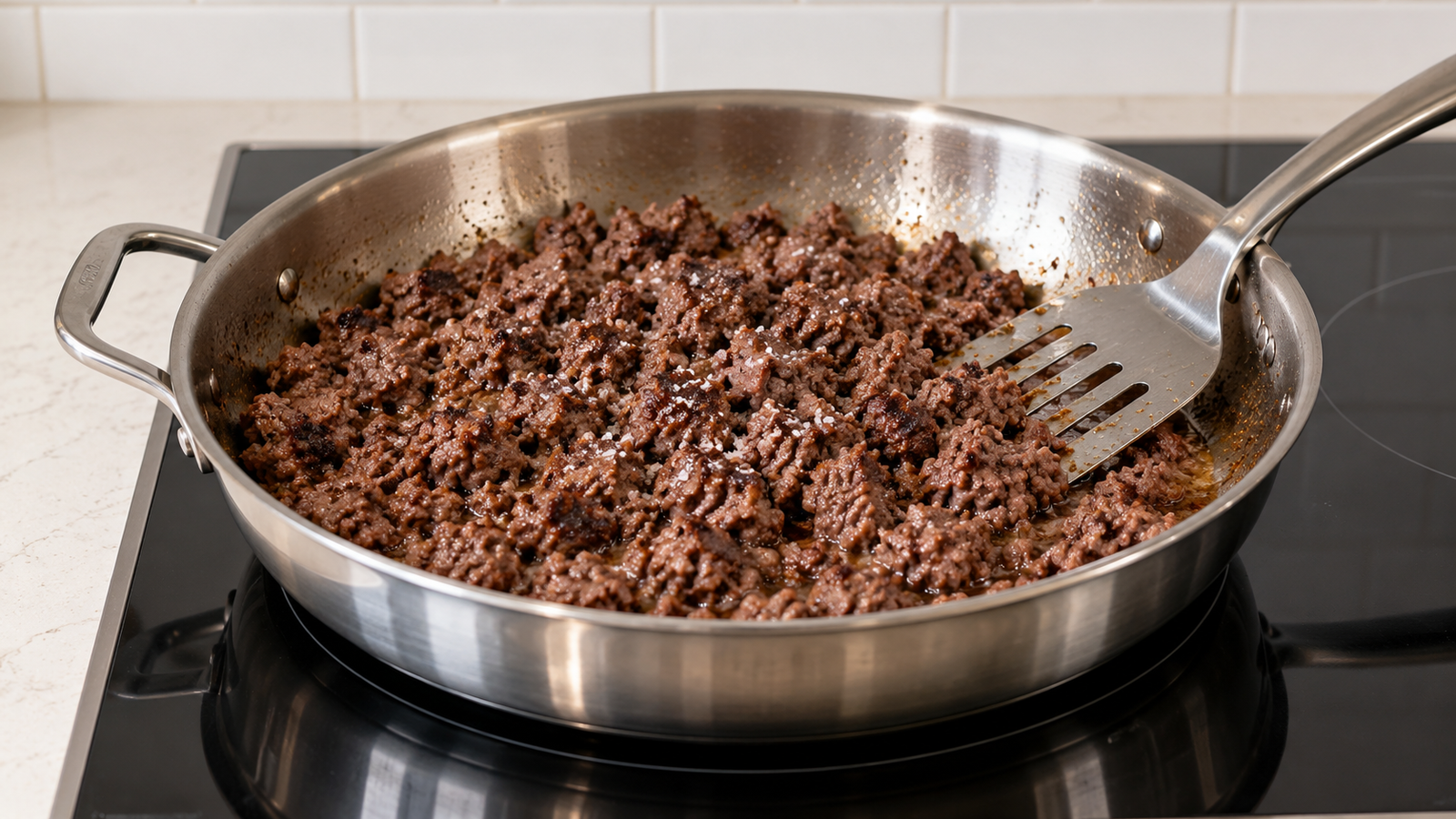
What to do when liquid pools
- A small amount: stop stirring and let it evaporate.
- A deep pool: move the beef aside, carefully spoon off excess liquid, and let the pan recover.
- A pan full of pale meat: remove half the batch, brown what remains, then repeat.
- Repeated trouble: thaw frozen beef fully in the refrigerator and blot the package liquid before cooking.
Fat percentage changes the finish
Leaner beef releases less fat but has less protection from drying. Fattier beef can fry in its own rendered fat once the water is gone. Neither automatically browns better if the pan is crowded. The important distinction is between rendered fat, which can help transfer heat, and water, which keeps the surface from searing.
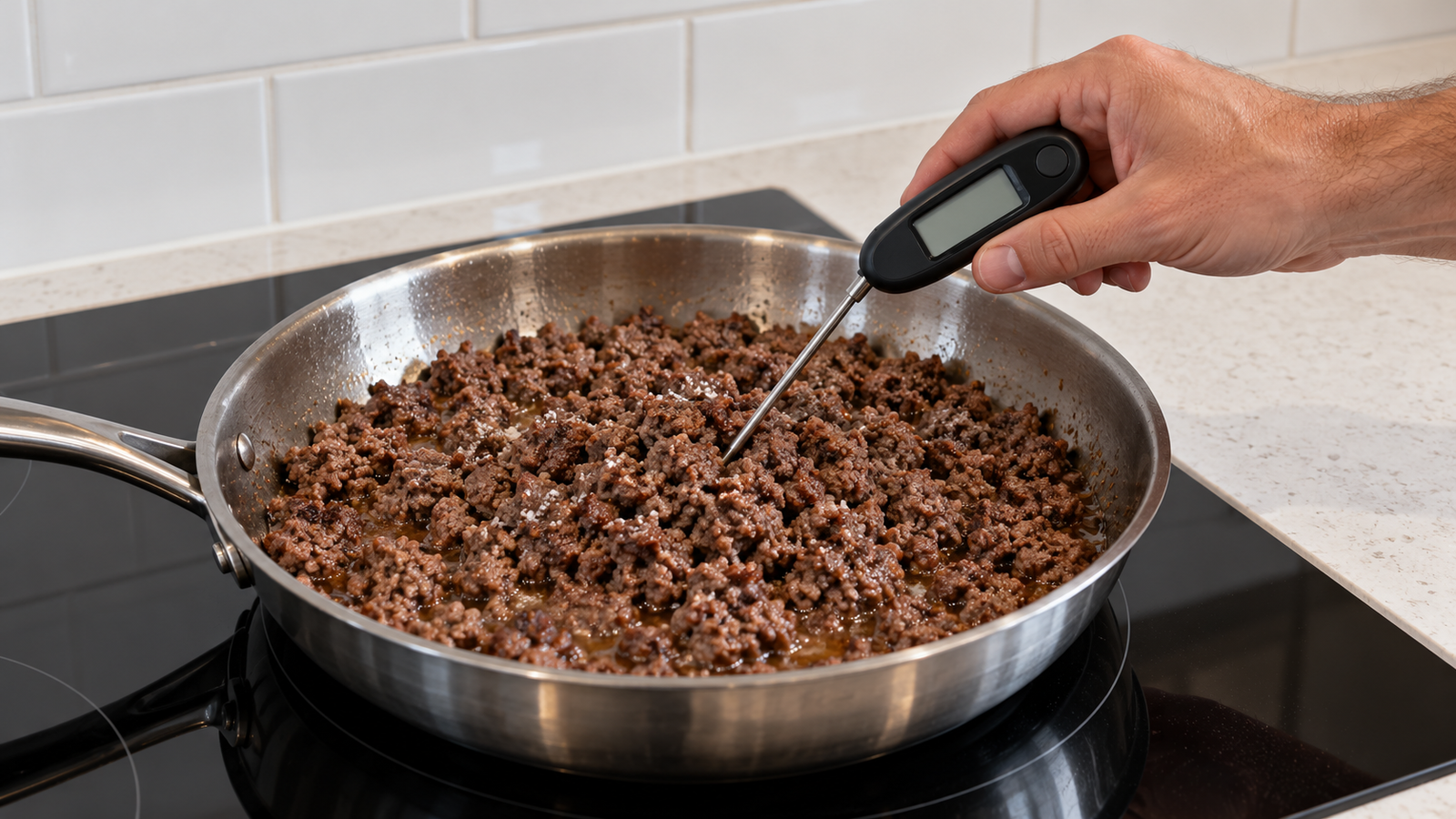
Brown colour is not a safety test
Ground beef can brown before it is safe, and it can retain some pink after reaching a safe temperature. Check the thickest clump with an instant-read thermometer instead of using colour alone. USDA guidance sets the safe minimum for ground beef at 160°F.
The useful rule
Use more pan, less meat, and fewer turns. Let released water escape before asking the surface to brown. Once you separate moisture management from breaking the meat apart, browned ground beef becomes repeatable instead of accidental. For a complete salt-and-fat-only skillet built on this same technique, see seasoned ground beef skillet, salt and fat only.
Food-safety reference: the USDA FSIS ground-beef guidance lists 160°F and explains why colour is not a reliable doneness indicator. This guide describes standard technique rather than a formally tested recipe.