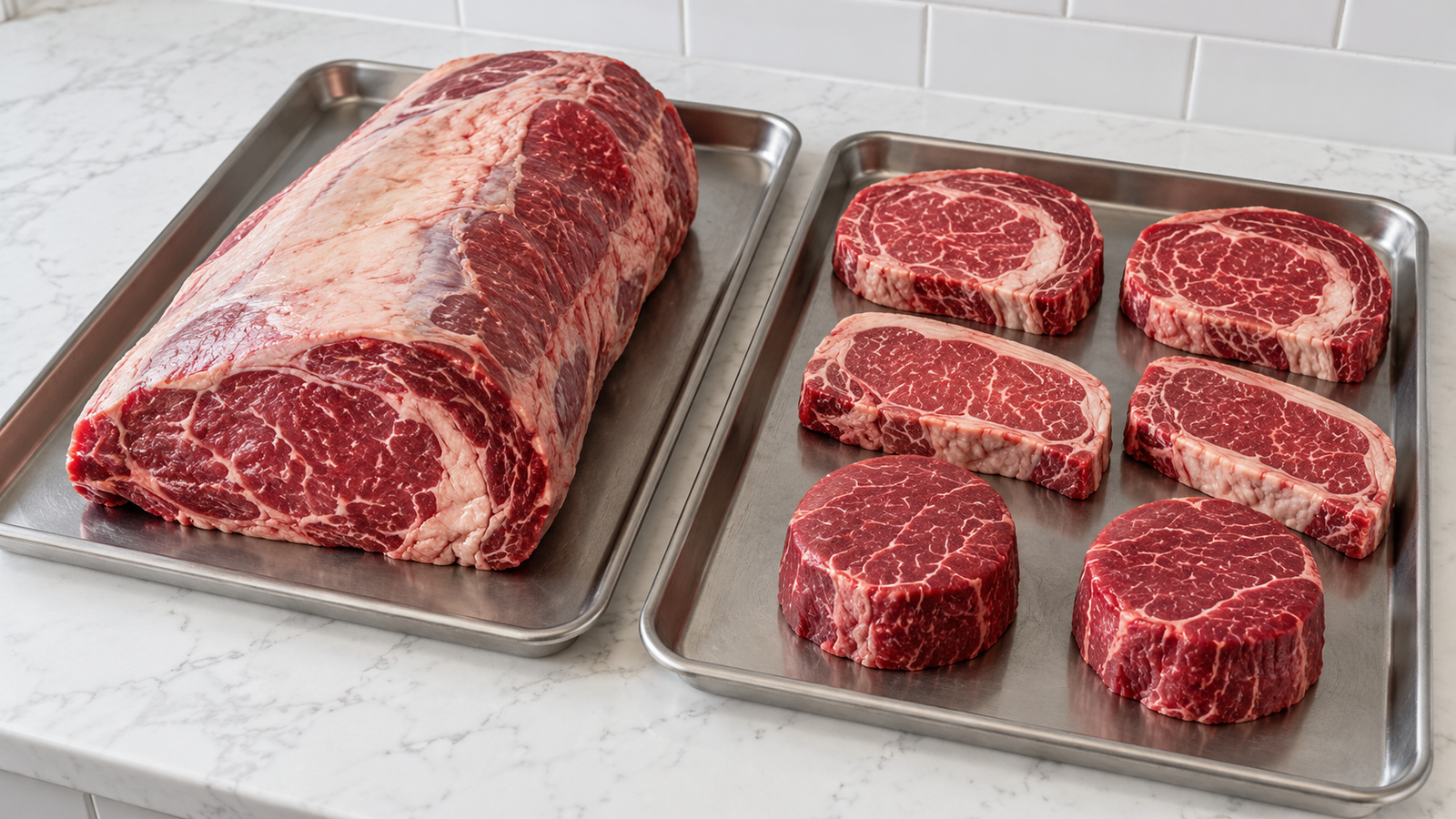
Buying a quarter or half of a cow sounds like something only serious, committed homesteaders do, but the actual math behind the decision is simpler than the size of the commitment makes it feel at first glance. The real question isn’t whether bulk buying saves money. It almost always does. The real question is whether a given household can actually use what shows up.
What “a quarter cow” actually means
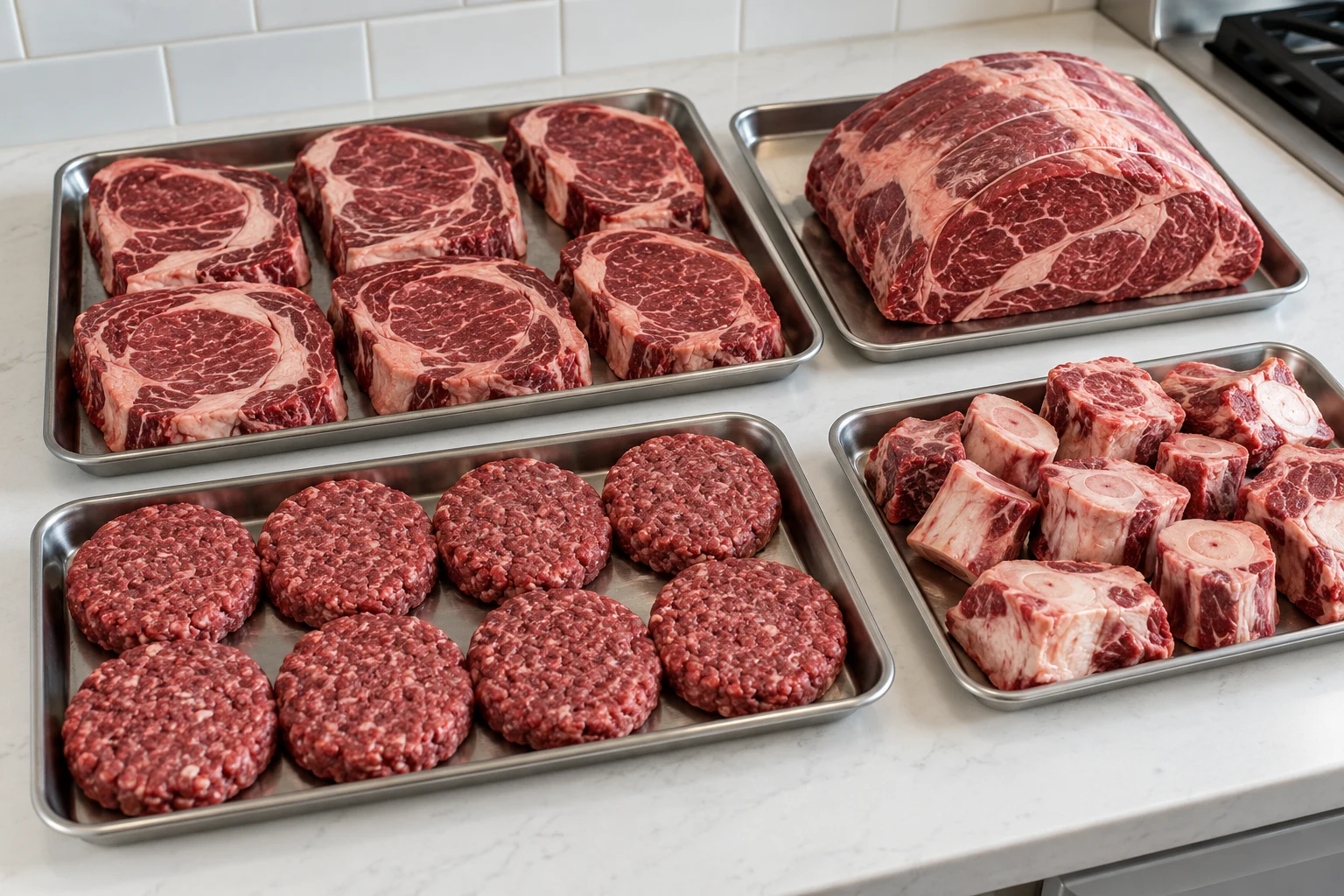
A whole animal gets split in standard fractions: whole, half, quarter, and sometimes eighth, depending on the farm. A quarter works out to roughly a quarter of the entire animal by weight, rather than a custom selection of just the popular cuts, which means it includes a proportional mix of everything from ground beef and roasts to steaks and organ meat. A half typically includes both a front quarter and a hind quarter, which matters because the two halves of an animal carry genuinely different cuts: the front leans toward chuck, brisket, and short rib, while the hind carries most of the steaks, like ribeye and sirloin.
| Share size | Typical hanging weight | Rough take-home weight | Fits in |
|---|---|---|---|
| Eighth | 75 to 100 lbs | 50 to 70 lbs | A few cubic feet of freezer space |
| Quarter | 150 to 200 lbs | 100 to 140 lbs | A large chest freezer compartment |
| Half | 300 to 400 lbs | 200 to 280 lbs | A standalone chest freezer |
| Whole | 600 to 800 lbs | 400 to 560 lbs | A large dedicated chest freezer |
“Hanging weight” is the carcass weight after slaughter but before butchering, and it’s the number most farms actually price by. Take-home weight runs meaningfully lower, typically 60 to 70 percent of hanging weight, since bones, excess fat trim, and processing loss all reduce the final usable amount. A farm quoting a price per pound of hanging weight without explaining that gap is one of the more common sources of sticker shock once the actual boxes arrive.
Why the math genuinely favors buying this way
A quarter or half animal typically works out to somewhere between $5 and $9 per pound of take-home meat, all cuts blended together, depending on region and the farm’s own pricing. That blended price includes steaks that would cost considerably more bought individually at a butcher counter, alongside ground beef and roasts priced lower than that same blended average. The savings come from averaging across the whole animal rather than cherry-picking only the premium cuts, which is exactly the tradeoff a share requires accepting.
Compared to buying the equivalent cuts individually at a supermarket or butcher counter over the same period, a cow share commonly runs 20 to 40 percent cheaper per pound, with the size of the gap depending heavily on how much of that individual buying would otherwise have gone toward premium steaks specifically. A household that mostly buys ground beef and cheaper roasts already won’t see nearly as dramatic a savings gap as one that regularly buys ribeye and strip steak at full retail price.
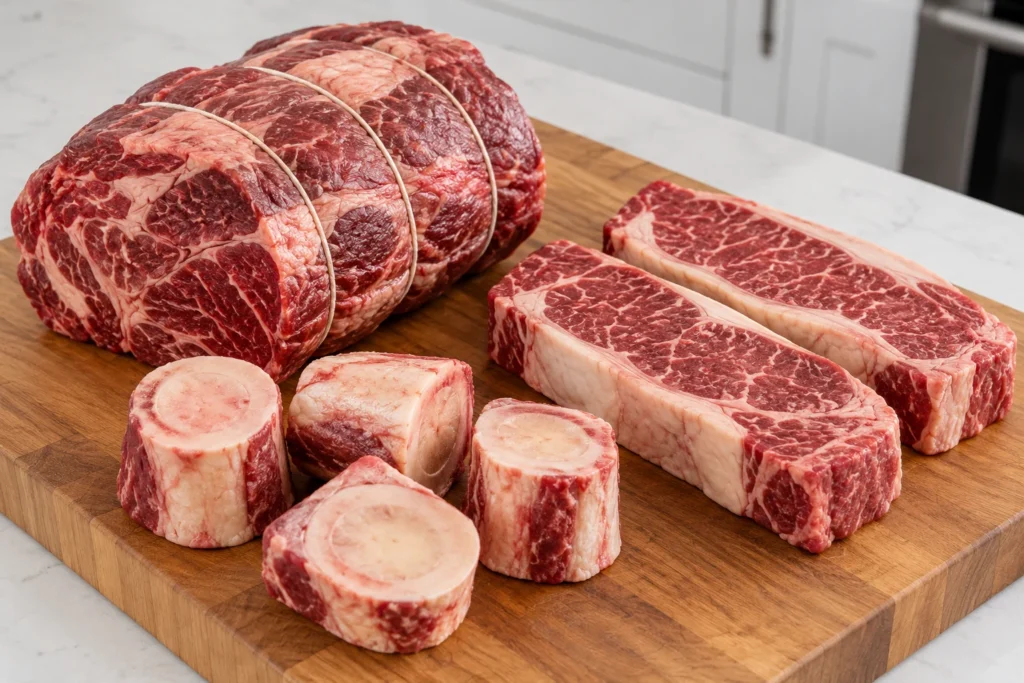
A worked example, so the math isn’t abstract
A quarter cow priced at $6.50 per pound of take-home weight, yielding around 120 pounds, comes to roughly $780 total. Spread across that proportional mix, the household ends up with somewhere around 50 to 60 pounds of ground beef and stew-type cuts, 30 to 40 pounds of roasts, 20 to 30 pounds of steaks, and a smaller allotment of organ meat and bones, all for that single upfront total. Pricing the steak portion alone at a typical supermarket rate for the equivalent cuts often comes close to matching the entire $780 spent on the whole quarter, which is where the real savings becomes visible rather than theoretical.
That example is a rough illustration, not a guarantee. Actual yield percentages, cut ratios, and pricing vary meaningfully by farm, breed, and region, which is exactly why getting a specific quote in writing before committing matters more than trusting any general example, including this one.
Choosing a farm worth trusting with a few hundred dollars upfront
Most cow-share arrangements require a deposit or full payment well before the animal is actually processed, which makes the farm’s reliability and communication genuinely important, not just a nice-to-have. A farm that answers specific questions clearly, about finishing type, processing timeline, and exactly what’s included, is a far safer bet than one that responds only in vague, reassuring generalities. Local farms that allow a visit, or at minimum share clear photos and details about their operation, are generally easier to vet than one found purely through an online listing with no way to verify anything firsthand.
Reviews and word of mouth from other buyers who’ve actually received a share from that specific farm carry more weight than marketing copy on the farm’s own website. A farm willing to provide references, past customers who can speak to the actual yield and cut quality they received, is signaling a level of confidence that’s worth something on its own.
The real cost nobody mentions upfront
Freezer space is the actual limiting factor for most households, not the sticker price of the meat itself. A quarter cow alone typically needs several cubic feet of dedicated freezer space, well beyond what a standard refrigerator’s built-in freezer compartment can hold. A chest or upright standalone freezer, if one isn’t already owned, adds a real upfront cost and ongoing electricity use that rarely gets factored into the simple per-pound math people compare before committing.
A standalone freezer also needs a place to actually go, which matters more than it sounds for anyone in an apartment or a smaller kitchen. Measuring the available space before placing an order, not after the meat arrives, avoids the genuinely common scenario of a quarter cow showing up with nowhere ready to put it.
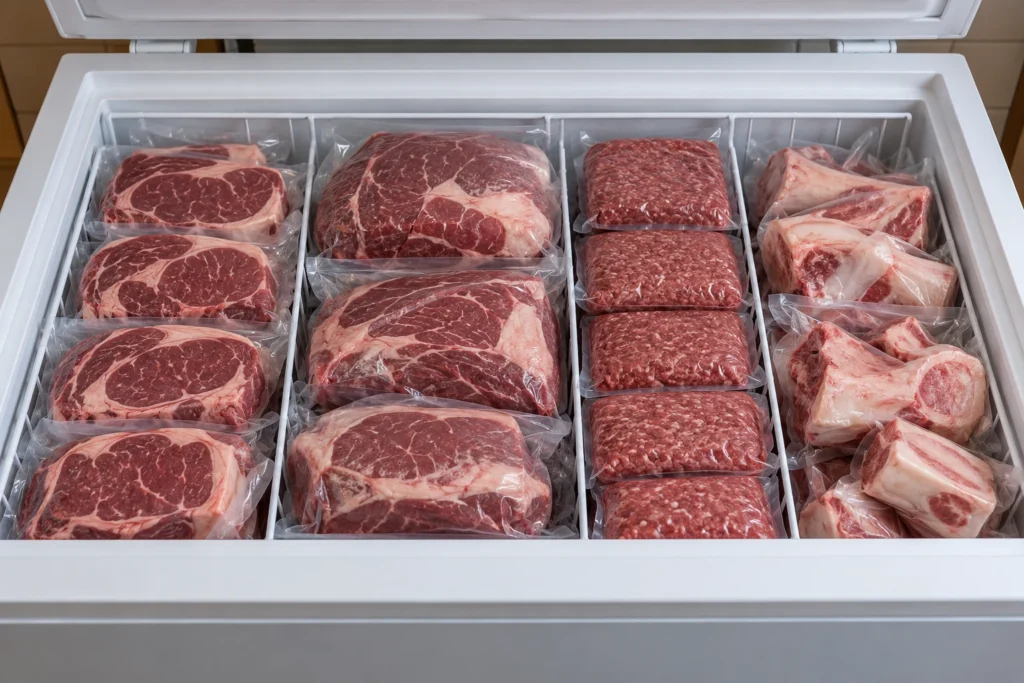
The cut mix is the part that actually determines whether this works
A proportional share includes roughly the same ratio of ground beef, roasts, steaks, and organ meat the whole animal actually carries, which for most cattle skews toward a meaningful amount of ground beef and roasts relative to steaks. A household expecting mostly steaks will likely be surprised by just how much ground beef and chuck shows up in a standard share. Most farms offer at least some customization: choosing a thicker or thinner steak cut, opting for more ground beef instead of certain roasts, or requesting organ meat included or left out specifically. Asking about these options before ordering, not after the box arrives, is the difference between a share that fits how a household actually cooks and one that sits in the freezer getting slowly worked through out of obligation.
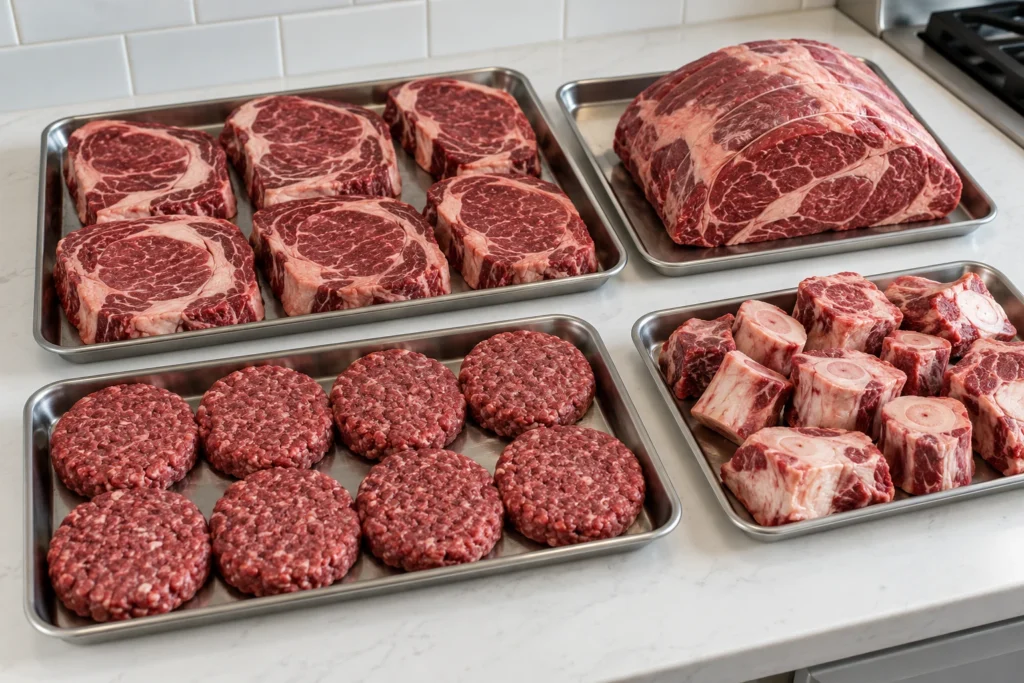
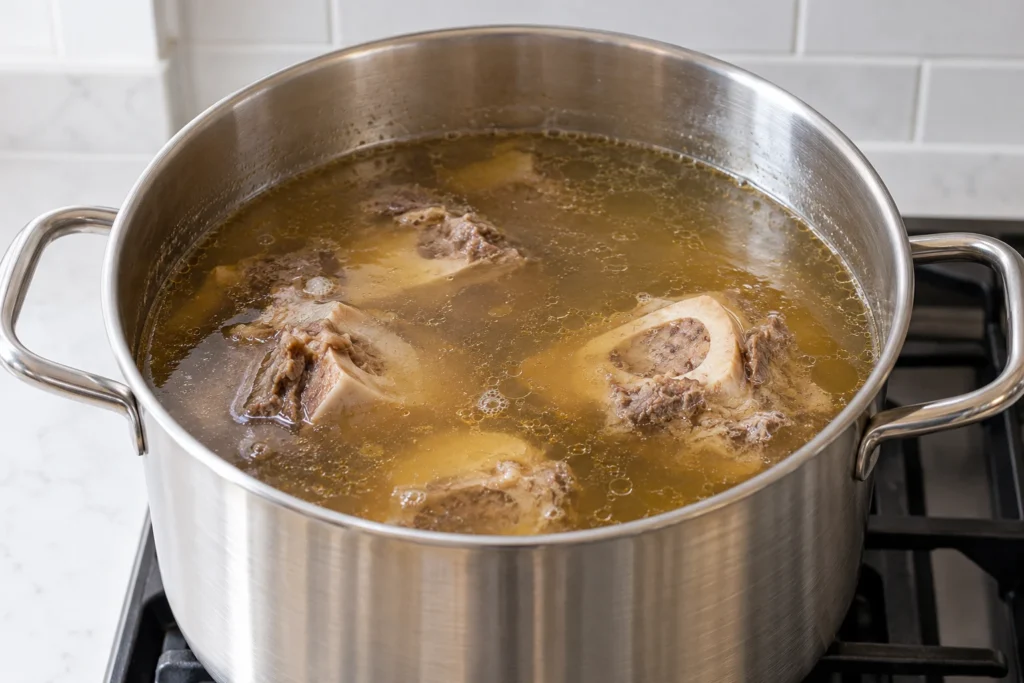
Organ meat is worth a direct mention here, since it’s included in most shares by default and often goes straight to waste if nobody in the household has a plan for it. Beef liver, heart, and bone marrow are all genuinely approachable once cooked the right way, and a share is one of the more natural ways to end up with these cuts on hand without having to specifically seek them out at a store.
Questions worth asking before putting down a deposit
- Is pricing by hanging weight or take-home weight, and what’s the expected yield percentage?
- What’s included in the base price, and what costs extra: processing fees, custom cut requests, delivery?
- How much choice is there in cut thickness, ground beef ratio, and whether organ meat is included?
- What’s the animal’s finishing type, grass or grain, and does the farm answer that question specifically rather than vaguely?
- What’s the actual delivery or pickup timeline, and does it land during a season when freezer space is realistically available?
Splitting a share to lower the commitment
Splitting a half or whole animal with another household or two is a common way to get the per-pound savings of buying in bulk without needing a full standalone freezer or committing to several hundred pounds of meat at once. An eighth or a smaller custom split, arranged directly with a farm willing to divide an order among a few buyers, is often the more realistic entry point for a first attempt at this kind of buying, before deciding whether a larger share makes sense down the line.
Storing it so it actually lasts
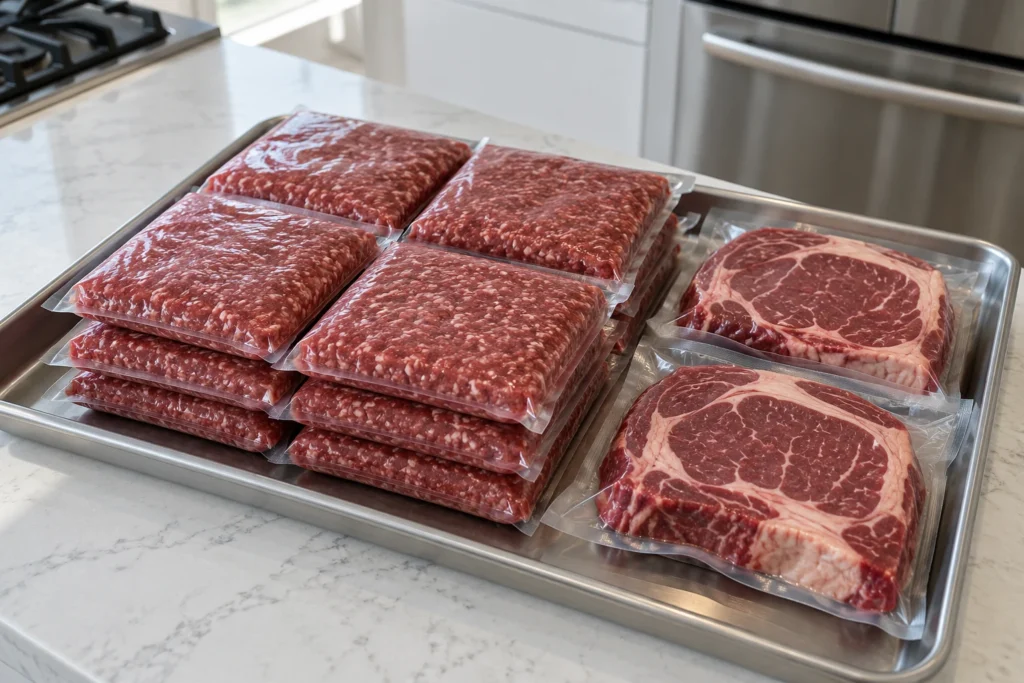
Vacuum-sealed packaging, which most processors already use for bulk orders, meaningfully extends freezer life compared to standard butcher paper by limiting the air exposure that causes freezer burn. Properly vacuum-sealed beef holds well for 12 months or more in a freezer kept at a consistent 0°F, considerably longer than the few months a typical supermarket package manages once frozen at home. Freezer burn itself isn’t a safety issue, just a quality one, but a share represents a real enough investment that minimizing it is worth the extra care a vacuum seal provides.
Organizing the freezer by cut type and labeling packages with the date they were frozen, rather than relying on memory, makes a large share far easier to actually work through in a sensible order instead of reaching for whatever’s on top every time and letting older cuts get buried and forgotten for a year or more.
Mistakes that turn a good deal into a freezer full of regret
- Not measuring freezer space first. Ordering before confirming where several hundred pounds of meat will actually fit is the single most common reason a share turns into a logistical headache rather than a win.
- Assuming hanging weight equals take-home weight. Skipping this question leads directly to sticker shock and a smaller final amount than the upfront price seemed to promise.
- Not asking about cut customization. A household that specifically wants more steaks and less ground beef, or wants organ meat left out entirely, needs to say so before the order is placed, not after the boxes show up.
- Underestimating how long a share actually takes to work through. A quarter cow can easily supply a small household for six months or more, which changes how it should be planned around compared to a single weekly grocery trip.
- Skipping proper labeling. A freezer full of identical white-wrapped packages with no date or cut name becomes a guessing game within a few months, and older cuts get buried and forgotten.
The same logic applies beyond beef
Pork and lamb are both commonly sold the same way, as whole or half animals through local farms, and the underlying economics work almost identically: a blended per-pound price across the whole animal, a proportional cut mix rather than a custom selection, and the same freezer-space and customization questions worth asking before committing. A half hog in particular tends to be a smaller, more approachable entry point than even a quarter cow, both in total cost and in freezer space required, which makes it a reasonable way to test whether this kind of buying fits a household’s habits before committing to a larger beef share.
Who this actually makes sense for
A household already eating meat regularly, with freezer space available or a realistic plan to get some, and enough flexibility to work a proportional mix of cuts into a regular rotation rather than just steaks, is the household this actually benefits. A household eating meat only occasionally, with no spare freezer space and no interest in cooking the full range of cuts a share includes, will likely find the commitment outweighs the savings, regardless of how favorable the per-pound math looks on paper.
The deciding question, more than the price per pound, is usually this: does the household already cook enough variety to work through roasts, stew meat, and organ meat alongside steaks, or would most of that proportional mix sit unused while the same few favorite cuts get pulled out week after week. A share rewards households that already cook broadly. It asks a lot more of households still building that habit.
This is a buying guide, not financial advice. Prices and yields vary by region, farm, and current market conditions; get a specific quote before committing to any share.
Visual steps
