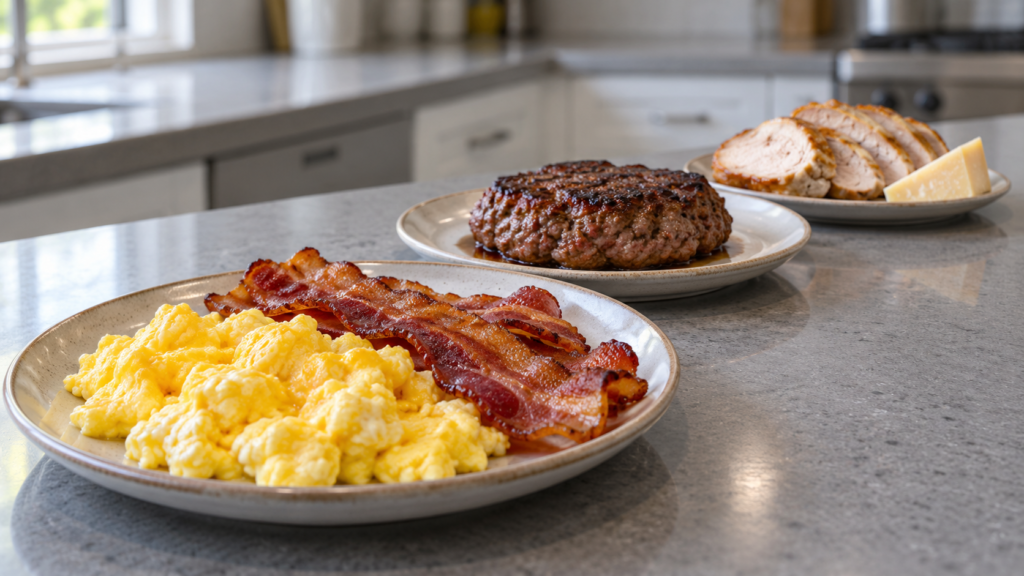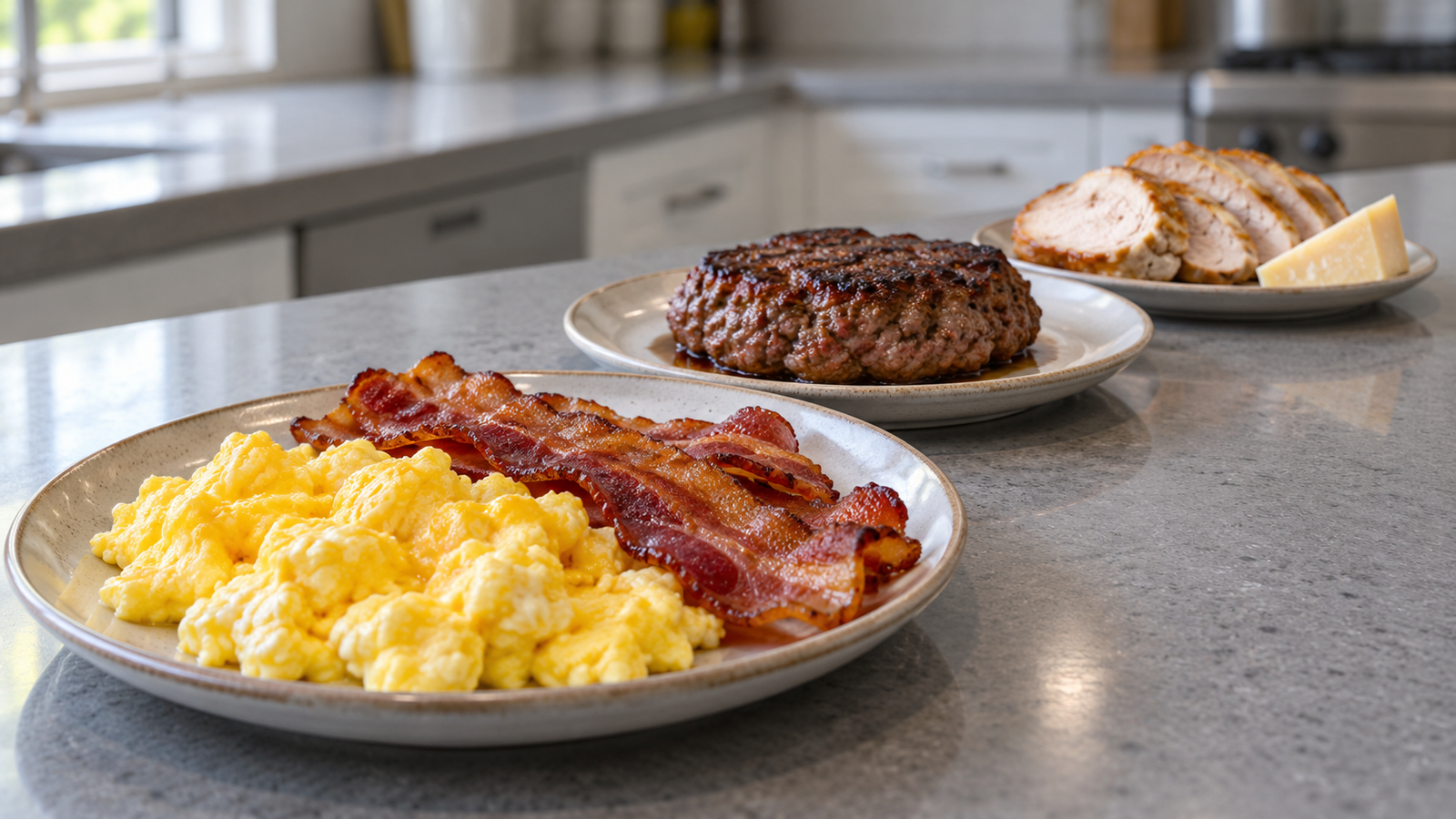
A full day of eating mostly animal products looks considerably less dramatic in actual practice than it tends to sound when described in the abstract, especially to someone who’s never tried it themselves. No shakes to mix up, no special timers to carefully set, no separate pantry stocked with anything genuinely unusual. Just meat, eggs, fish, and dairy swapped in for whatever used to fill the rest of the plate, all built around whatever happens to actually be sitting in the fridge and freezer on a given day.
Morning: fast, or not there at all
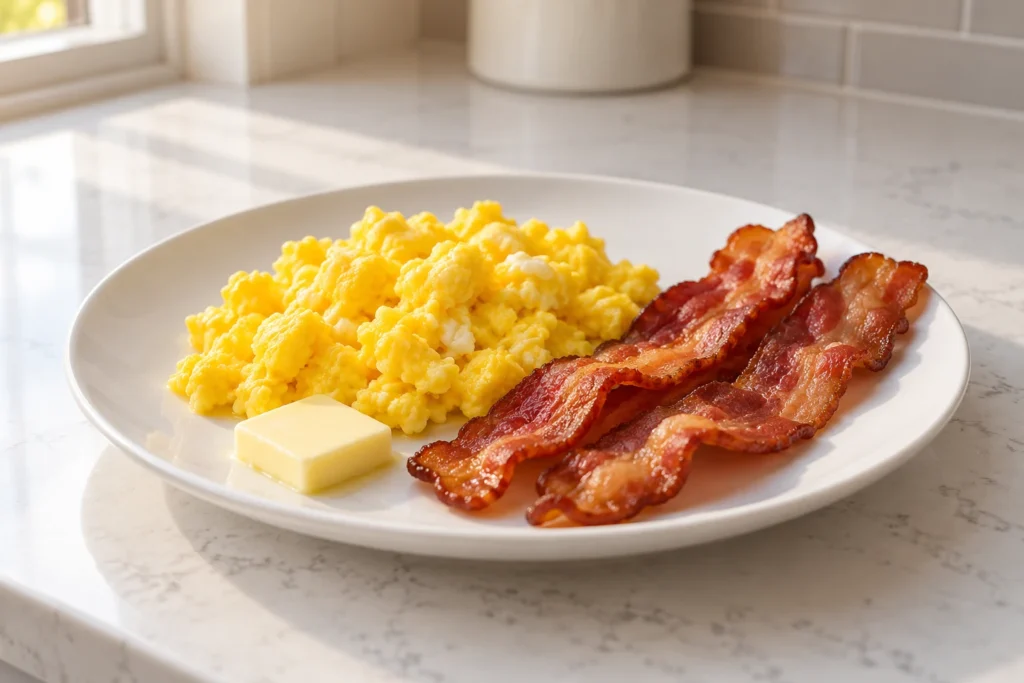
For a lot of people, mornings are the easiest meal to simplify and the first one to shrink or disappear entirely once a day stops revolving around cereal or toast as the default. A couple of eggs, fried or scrambled in butter, takes under five minutes and needs nothing defrosted ahead of time. Leftover meat from the night before, reheated gently in a pan rather than a microwave, works just as well and skips the cooking step almost entirely. Eggs specifically earn their place here mostly on speed: nothing else on this food list goes from fridge to plate as fast.
Plenty of people simply aren’t hungry in the morning once they stop eating out of habit or schedule rather than actual appetite, and skipping straight to the first real meal of the day around midday is a common, entirely normal pattern rather than something to correct.
Midday: built from whatever’s already ready
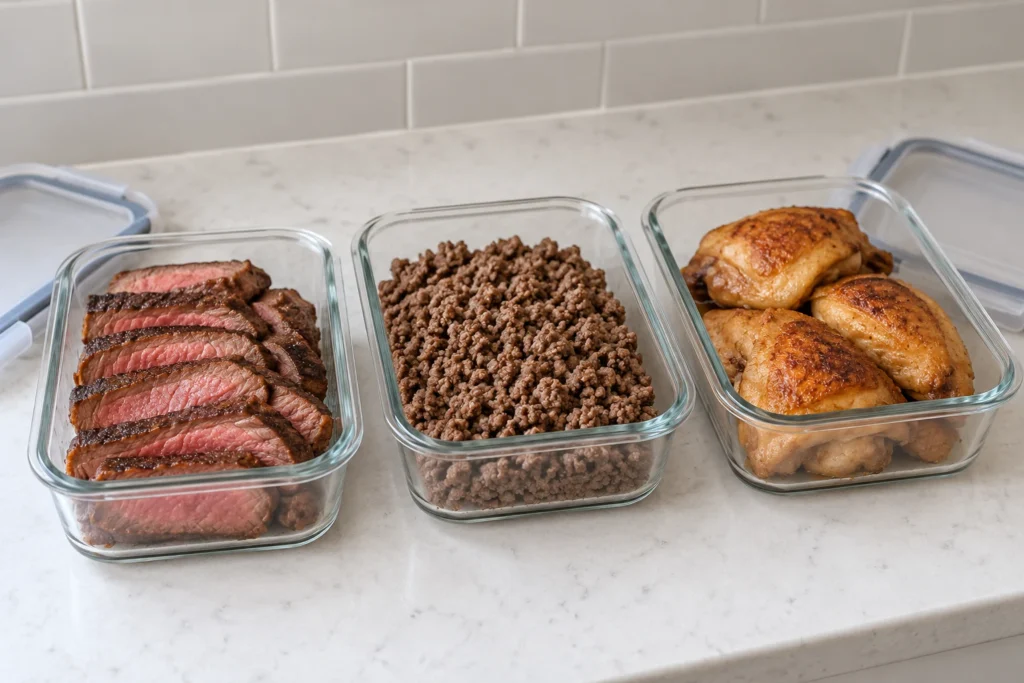
This is where a prep day earns its keep. A midday meal built from something already cooked, portioned, and waiting in the fridge takes no more effort than reheating, which keeps a workday lunch from turning into a second full cooking session. A couple of portions of batch-cooked ground beef or chicken thighs, warmed through and eaten plain or with a pat of butter melted over the top, covers this meal without requiring any decision beyond what’s already in the container.
On a day without prepped leftovers on hand, a tin of sardines or canned salmon straight from the pantry is the realistic fallback: zero cooking, zero cleanup, and genuinely underrated as a complete midday meal on its own.

Evening: the one meal most people actually cook
Dinner is where most of the actual real cooking tends to happen, since it’s genuinely the one meal with the most time and attention available around it for most people’s schedules. A properly seared steak, a simple roast chicken thigh, or a braised cut pulled from the freezer that morning to thaw through the day are all reasonable anchors. This is also the meal where variety matters most, since it’s usually the one eaten slowest and noticed most, which makes it worth rotating through different categories, a seared fish fillet one night, a braised cut the next, rather than defaulting to the same protein on repeat.
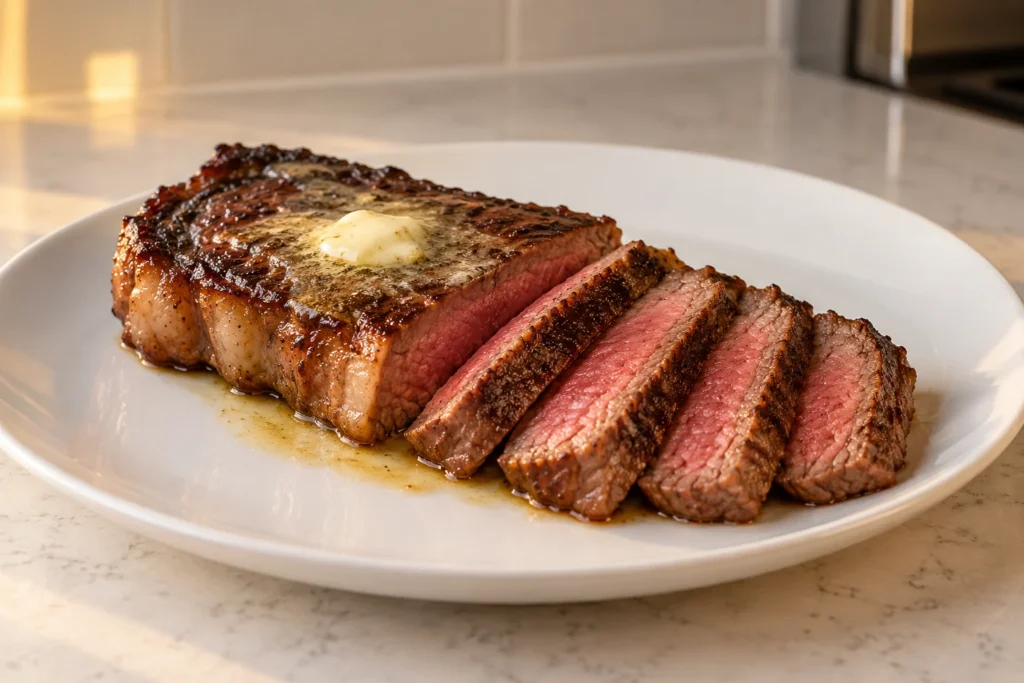
A side of butter-finished vegetables isn’t required by anything here, and plenty of people keep this way of eating strictly to animal products at dinner too: a piece of meat, a fat, and nothing else, kept simple on purpose rather than as a compromise.
A full day, laid out concretely
| Meal | What it might actually be | Time it takes |
|---|---|---|
| Morning | Two eggs fried in butter, or skipped entirely | Under 5 minutes, or zero |
| Midday | Reheated prep-day meat, or canned fish straight from the pantry | 2 to 5 minutes |
| Evening | A seared or braised cut, cooked fresh or finished from the freezer | 15 to 45 minutes depending on the cut |
This table is one version of a day, not a required template. Someone eating two meals instead of three, or shifting the heavier meal to midday instead of evening, is adjusting the same basic pattern to their own schedule rather than doing it wrong.
A weekday looks different from a weekend
A workday version of this leans hard on speed: reheated leftovers, canned fish, eggs cooked in under five minutes, nothing that asks for active attention during a packed afternoon. A weekend day, with more time and usually more appetite for the process itself, is a more natural fit for a longer cook, a braise started in the morning and left alone for hours, or a cut that benefits from real attention like a proper reverse sear. Saving the more involved cooking for whichever days actually have the time for it, rather than trying to force a long braise into a Tuesday evening, keeps the whole week realistic instead of aspirational.
A weekend cooking session is also a natural moment to restock the freezer for the week ahead, which folds neatly into the same prep-day habit that makes weekday mornings and lunches this simple in the first place.
Common early mistakes on a first real attempt
- Not eating enough. A plate that used to include a large portion of rice or pasta leaves a real gap in total food volume if the protein portion doesn’t grow to fill it. Undereating in the first week or two is one of the most common and most avoidable early stumbles.
- Skipping salt out of old habit. Food cooked entirely from scratch, with none of the passive sodium packaged and restaurant food usually carries, often needs a more generous hand with salt than people expect, not a lighter one.
- Relying on the same one or two cuts every single day. It’s the fastest route to genuine boredom with this way of eating, and it’s also the easiest problem to fix, since the full list of what actually qualifies is considerably longer than most people’s first few weeks of shopping reflects.
- Not prepping anything in advance. Without at least some batch cooking done ahead of time, every single meal becomes a decision made from a cold start, which is where this starts to feel like a burden rather than a routine.
Social meals and family dinners
A day built mostly around animal products doesn’t require eating alone or separately from everyone else at the table. A whole roast chicken, a pot of braised short ribs, or a tray of seared steaks still works perfectly well as a shared family meal exactly the way it always has, with the only real difference being what doesn’t get served alongside it. For a household where not everyone is eating the same way, serving the protein as the shared centerpiece and letting starches or vegetables be optional additions for whoever wants them keeps one meal working for the whole table without anyone needing a separate plate cooked specifically for them.
What the first couple of weeks commonly feel like
Appetite and hunger patterns shift for a lot of people in the first stretch of eating this way, partly from the straightforward change in what’s actually on the plate and partly from simply breaking old scheduled-eating habits that had little to do with actual hunger in the first place. Feeling fuller on less food by volume, needing fewer total meals across the day, or finding a specific time of day that used to trigger hunger out of habit no longer does, are all commonly described adjustments rather than anything unusual or concerning on their own. Everyone settles into a genuinely new rhythm on their own different timeline, and there’s no fixed, universal number of days anyone should realistically expect this particular adjustment to take.
What’s different from a typical day of eating
The biggest practical shift isn’t in any single meal, it’s in what disappears from the shopping list entirely: bread, cereal, pasta, rice, the default starches that usually anchor a plate. Meals end up built around a protein and a fat instead of a protein and a starch, which changes grocery shopping more than it changes the actual cooking itself. A kitchen stocked this way tends to lean more heavily on the freezer and the fridge than the pantry, since very little of what’s actually eaten day to day is shelf-stable in the way rice or pasta is.
Portion sizes also tend to run larger per meal than a plate built around a smaller portion of meat alongside a large serving of starch and vegetables. A meal built mostly around animal products is more calorie-dense per bite than one padded out with grains, which generally means less total food by volume for the same sense of being full, something worth expecting rather than being surprised by on a first attempt.
Drinks across the day
Water covers most of the day for most people, with the addition of bone broth as a genuinely common habit worth mentioning specifically. A mug of broth sipped mid-morning or mid-afternoon fills a role somewhere between a snack and a drink, and it’s one of the few things on this list that works just as well warm in a mug as it does poured over a finished dish. Coffee and tea aren’t animal products themselves, but plenty of people eating this way keep them in the rotation without treating it as any kind of conflict, often with a splash of cream added rather than nothing at all.

When the day doesn’t go as planned
Travel days, sick days, and genuinely chaotic days all break the tidy version of a day described above, and none of that is a real problem worth stressing over. A travel day built entirely around gas-station jerky and hard-boiled eggs from a convenience store cooler is a legitimate version of this way of eating under constrained circumstances, not a failure of the pattern. A sick day where cooking feels like too much effort and the only thing that gets eaten is a can of soup with some shredded chicken stirred in is still closer to this pattern than a complete departure from it. The structure described earlier in this article is a default for an ordinary day, not a standard every single day needs to clear.
Where the real effort goes
The actual daily effort is front-loaded rather than spread evenly across the week. A properly stocked freezer, set up once and restocked on a regular rhythm, is what makes most individual days this simple. Without that groundwork in place, each individual meal becomes a small decision made from scratch, which is where this way of eating starts to feel like more work than it actually has to be. The freezer and the prep day are doing the heavy lifting; any single day is mostly just drawing from what’s already been set up in advance.
A day that goes off script, and why that’s fine
Not every day looks like the table above, and treating any deviation as a failure misses the actual point entirely. A day that ends up being two meals instead of three because lunch got skipped in a busy stretch, or a day that leans heavily on canned fish because nothing got prepped the week before, is still a perfectly normal day within this pattern, not a broken one that needs correcting or apologizing for. The structure above is a starting reference for someone building their first real routine around this, meant to be adapted and loosened once it feels familiar, not a rule that needs defending every single day without exception for the rest of a person’s life.
The version of a day that actually sticks long-term tends to look less rigid than the one someone starts with in their first week. Early on, following a structure closely helps build the habit and the shopping patterns that make the whole thing easier; later, once the underlying routine is comfortable, more improvisation creeps in naturally, and that’s a sign the pattern has actually become a normal part of how someone eats rather than a system being actively managed day to day.
This is practical meal-structure guidance, not medical or nutrition advice, and it makes no claims about health outcomes or an ideal number of calories. Anyone with specific dietary needs or a medical condition should talk to their own doctor before making significant changes to how they eat.
Visual steps