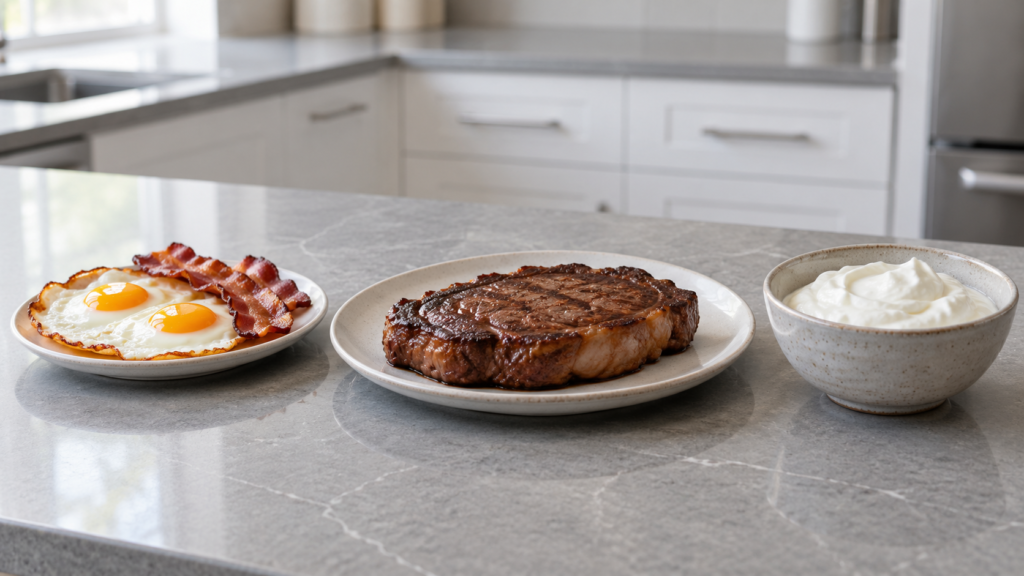
How many meals a day to eat is one of the few genuinely open questions in how someone builds a routine around animal-product eating, and unlike a lot of other decisions covered on this site, there’s no single clearly correct answer here. One meal, two meals, and three meals a day all work for different people, for different practical reasons that have more to do with schedule and personal preference than anything else.

Three meals: the familiar default, for familiar reasons
Three meals a day lines up with how most workplaces, schools, and social calendars are already structured, which is the single biggest practical argument in its favor regardless of anything about food itself. Breakfast, lunch, and dinner are built into most daily schedules by default, which means fewer explanations needed at work, fewer awkward moments at social gatherings, and generally less friction fitting eating around everything else happening in a day.
The tradeoff is more cooking and more decisions. Three separate meals means three separate points in the day where something needs to be ready, whether that’s fresh cooking, reheating from a prep day, or grabbing something simple like eggs. For anyone who finds meal planning genuinely enjoyable or who has the schedule flexibility to cook more than once a day without it feeling like a burden, three meals spreads that out comfortably rather than concentrating it.
Two meals: a common middle ground
Two meals a day, often landing somewhere around midday and early evening, is a common pattern for people who find they’re simply not hungry at a traditional breakfast time, or who prefer to skip one meal to cut down on the total number of times they need to plan and prepare food in a day. This pattern still fits reasonably well into a standard workday schedule, which keeps most of the social and logistical benefits of three meals while trimming one cooking or reheating session out of the day.
A common version of this skips breakfast specifically, since morning hunger varies enormously between people and a lot of people report simply not wanting food first thing in the day once they stop eating it purely out of habit or schedule. Others prefer to skip dinner instead, especially if an early, substantial meal fits better around evening plans, exercise, or simply not wanting to cook late in the day.
One meal a day: the most demanding version, for a specific kind of schedule
Eating one larger meal a day, sometimes referred to by the shorthand OMAD, is the most concentrated version of this choice. It removes meal planning almost entirely from most of the day, which some people find genuinely freeing, especially anyone with an unpredictable schedule, frequent travel, or simply little interest in thinking about food outside of one dedicated window. A single meal also tends to be more straightforward to make satisfying and substantial, since there’s no need to split appetite or ingredients across multiple sittings.
The tradeoff is real and worth naming plainly: one meal a day asks for more planning around that single window, and it doesn’t fit every schedule or every social calendar equally well. A single large meal eaten alone at an unusual hour can feel isolating if most social eating in someone’s life happens at traditional meal times, and a demanding physical job or intense training schedule may not pair comfortably with going long stretches without food at all. This pattern suits people whose daily rhythm and social life already align with it more than it suits everyone by default.
What actually changes when meal count drops
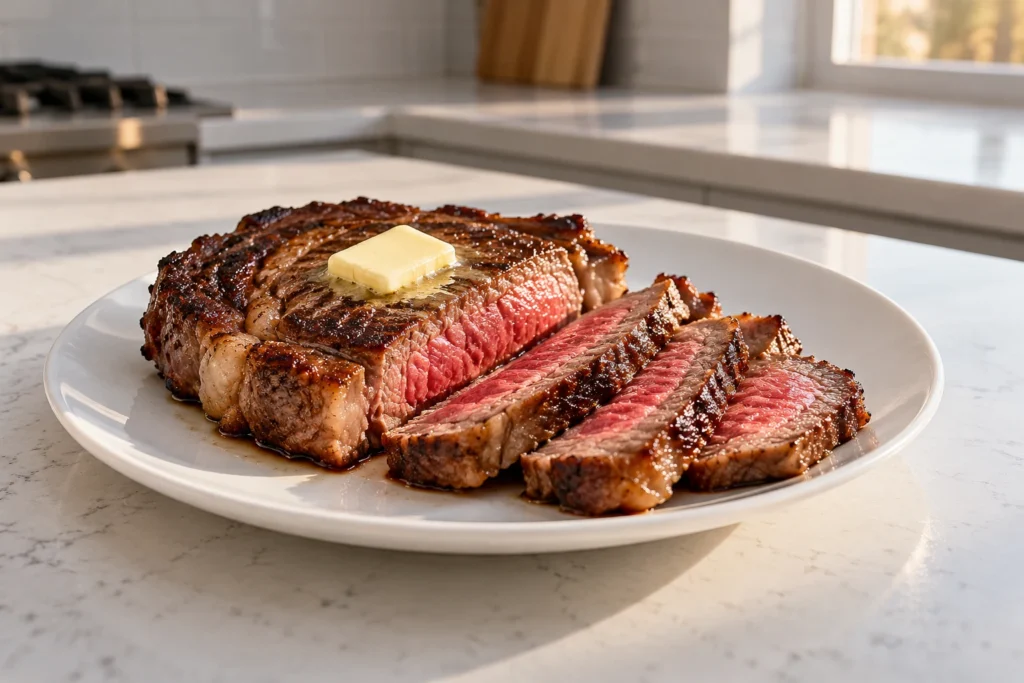
Dropping from three meals to two, or two to one, generally means each remaining meal needs to be noticeably larger and more substantial to feel satisfying, simply because the same amount of food across a day is now being delivered in fewer sittings. A single egg and a small piece of meat that felt like a reasonable breakfast inside a three-meal pattern will likely feel thin as the entire midday meal inside a two-meal pattern. Portions generally need to scale up as frequency scales down, and treating a reduced meal count as an excuse to also shrink portion size tends to leave someone hungry and frustrated rather than actually satisfied by the new pattern.
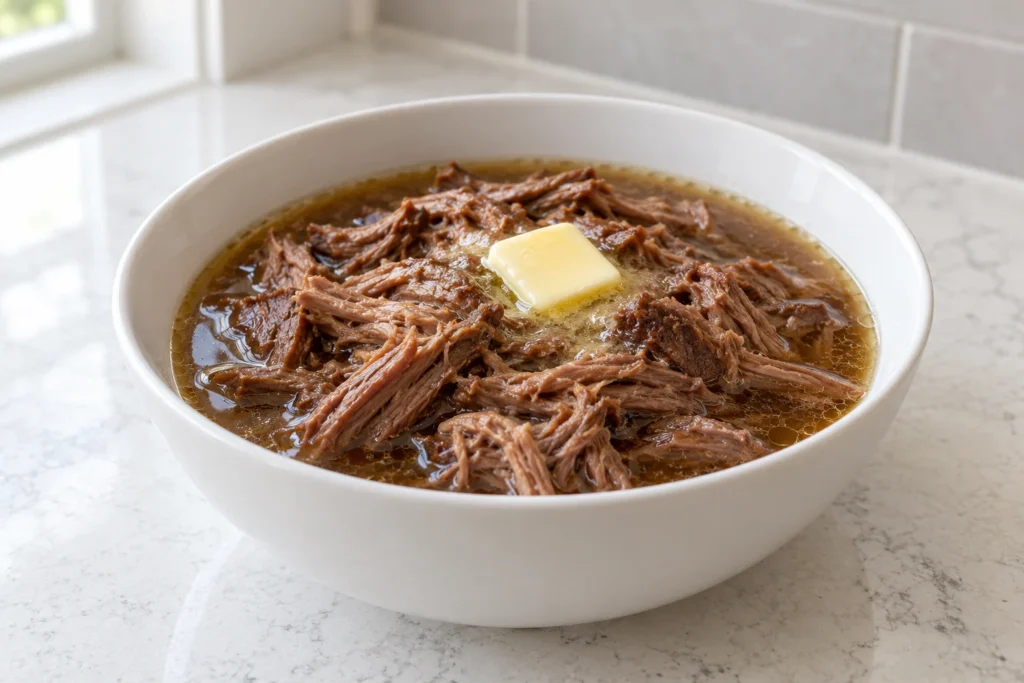
Cooking technique shifts a little too. A single substantial meal benefits from the kind of cut and preparation that holds up well and stays interesting across a larger portion, a roast, a thick steak, or a hearty mix of several items, rather than something designed to be a quick, light bite. Building real variety into a week matters more, not less, once there are fewer total meals to spread that variety across.
Changing patterns gradually rather than all at once
Jumping straight from three meals a day to one is a bigger adjustment than it might sound like on paper, both in terms of appetite and in terms of simply building a new daily rhythm. Dropping one meal at a time, say from three down to two for a couple of weeks before considering a further drop to one, gives both appetite and daily routine more time to settle into the new pattern before adding another change on top of it. There’s no prize for making the jump quickly, and a gradual approach is just as legitimate an outcome as arriving at one meal a day directly.
A side-by-side comparison
| Pattern | Biggest advantage | Biggest tradeoff |
|---|---|---|
| Three meals | Fits standard schedules and social norms with the least friction | Most total planning and cooking across the day |
| Two meals | Reduces planning while keeping most schedule compatibility | Requires each meal to be more substantial to feel satisfying |
| One meal | Minimal planning outside a single window | Can conflict with social eating patterns and demanding schedules |
Fitting the cooking workload around whichever pattern actually fits
Meal frequency changes how prep work should actually be organized, more than it changes what gets eaten. A well-stocked freezer system matters more for someone eating three smaller meals a day, since there are simply more individual eating moments to cover across a week. Someone eating one larger meal a day often finds that a single substantial cooking session, rather than several small ones, fits their rhythm better, since there’s only one real window each day that needs to be planned around at all.
Planning a week that doesn’t repeat the same meal constantly also looks different depending on frequency. Three meals a day across a week means roughly twenty-one individual eating moments to vary; one meal a day means only seven, which makes variety considerably easier to achieve without much deliberate effort, simply because there are fewer total meals competing for different ingredients.
How work and training schedules actually push this decision
A desk job with regular, predictable hours tends to accommodate any of the three patterns reasonably well, since there’s usually enough flexibility to eat a scheduled lunch, skip it in favor of a bigger dinner, or stretch to one larger meal without much disruption either way. Shift work, especially overnight or rotating shifts, often makes a rigid three-meals-a-day schedule genuinely harder to maintain, since the normal cues for breakfast, lunch, and dinner stop lining up with when someone’s actually awake and hungry. A lot of shift workers find that two meals, timed around their actual waking hours rather than the clock on the wall, fits their life considerably better than trying to force three meals into a schedule that doesn’t naturally support them.
Physical training adds another variable worth considering honestly. Someone doing intense or frequent exercise often finds that spreading food across more, smaller meals feels more comfortable than concentrating it into one large sitting, partly because a very large single meal can feel heavy around a workout, and partly because recovery and appetite after hard training don’t always line up conveniently with a single predetermined eating window. This isn’t a universal rule, since plenty of people train hard and still prefer one or two meals, but it’s a real enough pattern that it’s worth factoring in rather than assuming meal frequency and activity level are entirely unrelated.
What a day actually looks like at each frequency
Concrete examples make the tradeoffs easier to picture than general descriptions alone. A three-meal day might look like a couple of eggs in the morning, a simple lunch built around leftovers from a prep day, and a proper cooked dinner in the evening, each one modest on its own but adding up across the day. A two-meal day often collapses breakfast into the first real meal, landing somewhere around late morning or early afternoon, followed by a substantial dinner, with nothing in between beyond water or a mug of broth. A one-meal day tends to concentrate everything into a single sitting large enough to actually carry someone comfortably through to the next day, often built around a bigger cut of meat alongside a few smaller items rather than one item alone.
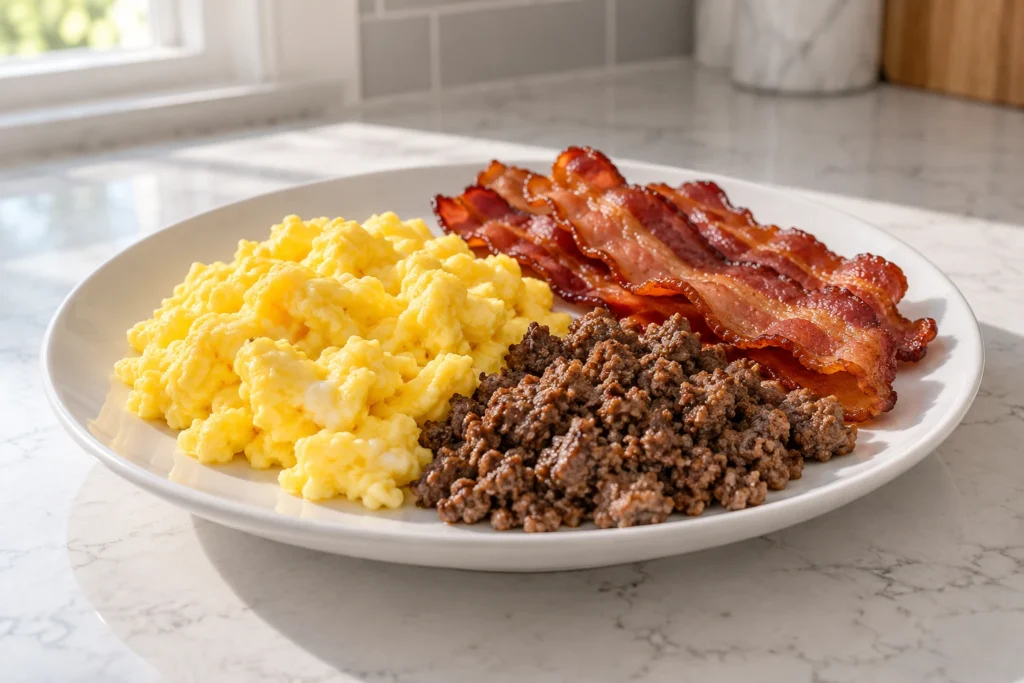
None of these examples are a required template. They’re meant to illustrate how the same basic food list stretches differently depending on how many times a day it gets divided up, not to prescribe exactly what any single meal should contain.
Households where people land on different patterns
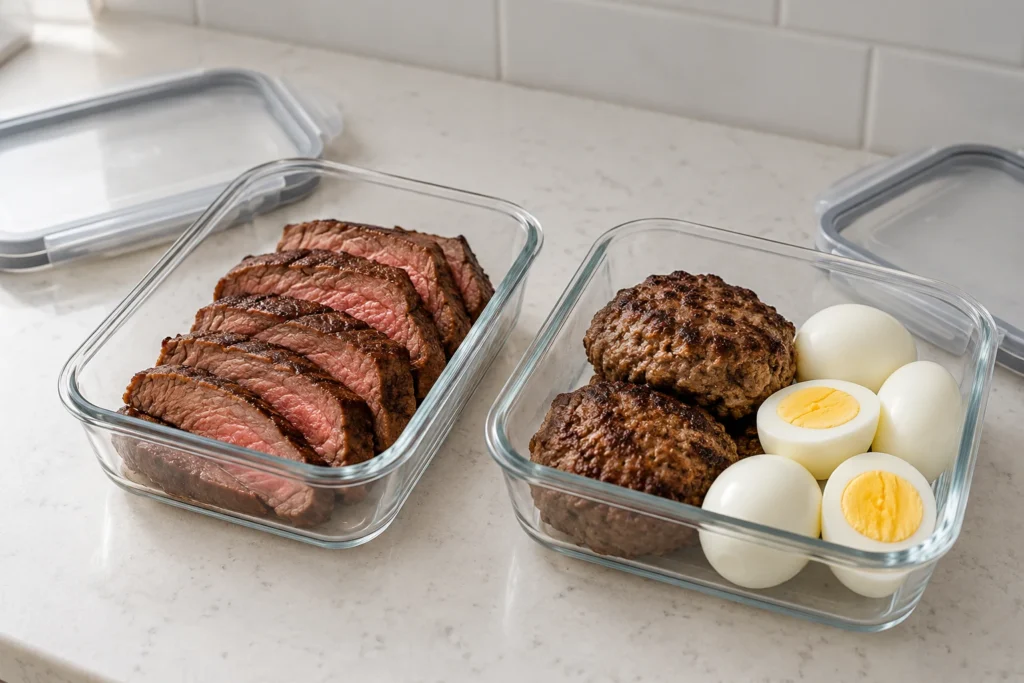
A household doesn’t need everyone eating on the same schedule for this to work. One person settling into two meals while a partner or a child keeps a more traditional three-meal pattern is genuinely common, and it tends to work best when the cooking itself is organized around shared ingredients rather than entirely separate meals for each person. A freezer stocked with the same base proteins, portioned out and ready to become a quick plate for whoever’s actually hungry at a given moment, accommodates mismatched schedules far more easily than trying to coordinate one single mealtime that works for everyone in the house at once.
Switching between patterns is normal, not a sign of failure
A lot of people don’t settle permanently on one single pattern and instead shift between them depending on the day, the week, or the season. A demanding work week might call for two efficient meals instead of three; a weekend with more social plans might naturally fall back into three meals around family or friends; a long travel day might end up closer to one meal almost by accident, simply because food wasn’t readily available earlier. None of this requires picking a single permanent approach and defending it. Treating meal frequency as a flexible tool that adapts to a given day, rather than a fixed rule to maintain no matter what, tends to hold up better over the long run than rigid consistency does.
Signs a pattern isn’t actually fitting well
- Constant preoccupation with the next meal. A pattern that leaves someone thinking about food far more than they’d like, regardless of which frequency it is, is worth reconsidering rather than pushing through out of stubbornness.
- Consistently skipping meals out of simple inconvenience rather than choice. There’s a real difference between deliberately eating fewer, larger meals and accidentally under-eating because nothing was ready when hunger showed up.
- Social eating starting to feel like a constant obstacle. If a chosen pattern makes nearly every shared meal feel like friction to manage, that’s a sign the pattern and the actual life around it aren’t lining up well.
- Dreading the cooking workload a pattern requires. A pattern that technically works on paper but consistently feels like too much effort to sustain isn’t actually working in practice.
There’s no prize for picking the most extreme version
One meal a day gets talked about online as though it’s a more advanced or more serious approach than two or three meals, and that framing doesn’t hold up against how differently people’s schedules, social lives, and appetites actually work. The pattern that fits a specific life, specific schedule, and specific set of social obligations is the right one for that person, regardless of how it compares to whatever pattern gets the most attention elsewhere. The food itself stays the same across all three patterns; only the timing and the planning around it changes.
This is practical scheduling guidance, not medical or nutrition advice, and it makes no claims about which eating pattern is healthier or more effective than another. Anyone with diabetes, a history of disordered eating, or any other condition affected by meal timing should talk to their own doctor before making significant changes to how often they eat.
Visual steps