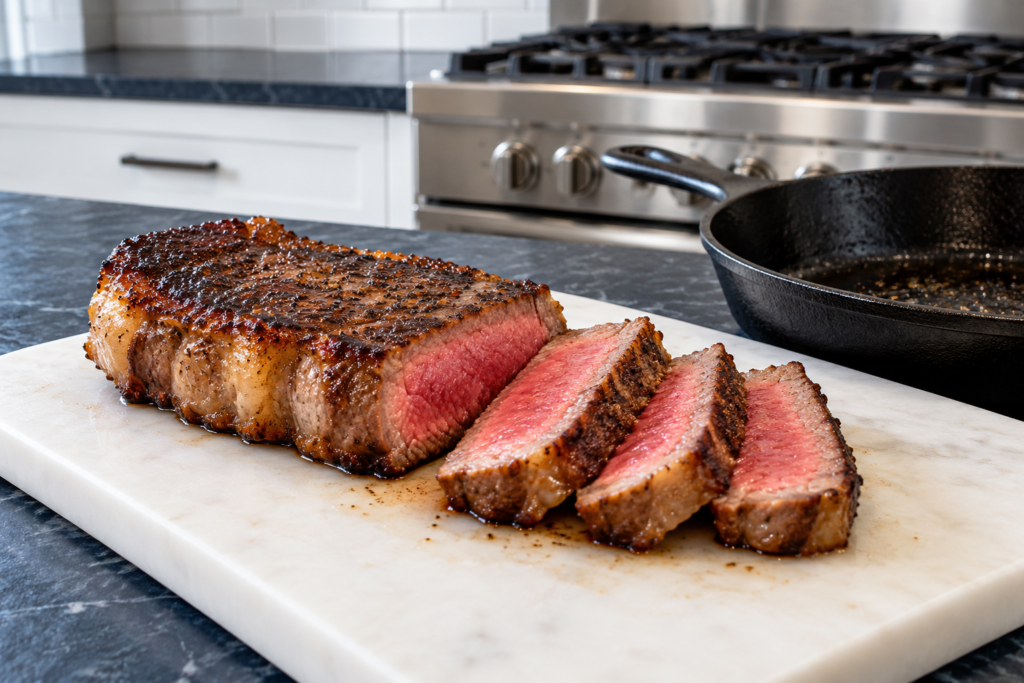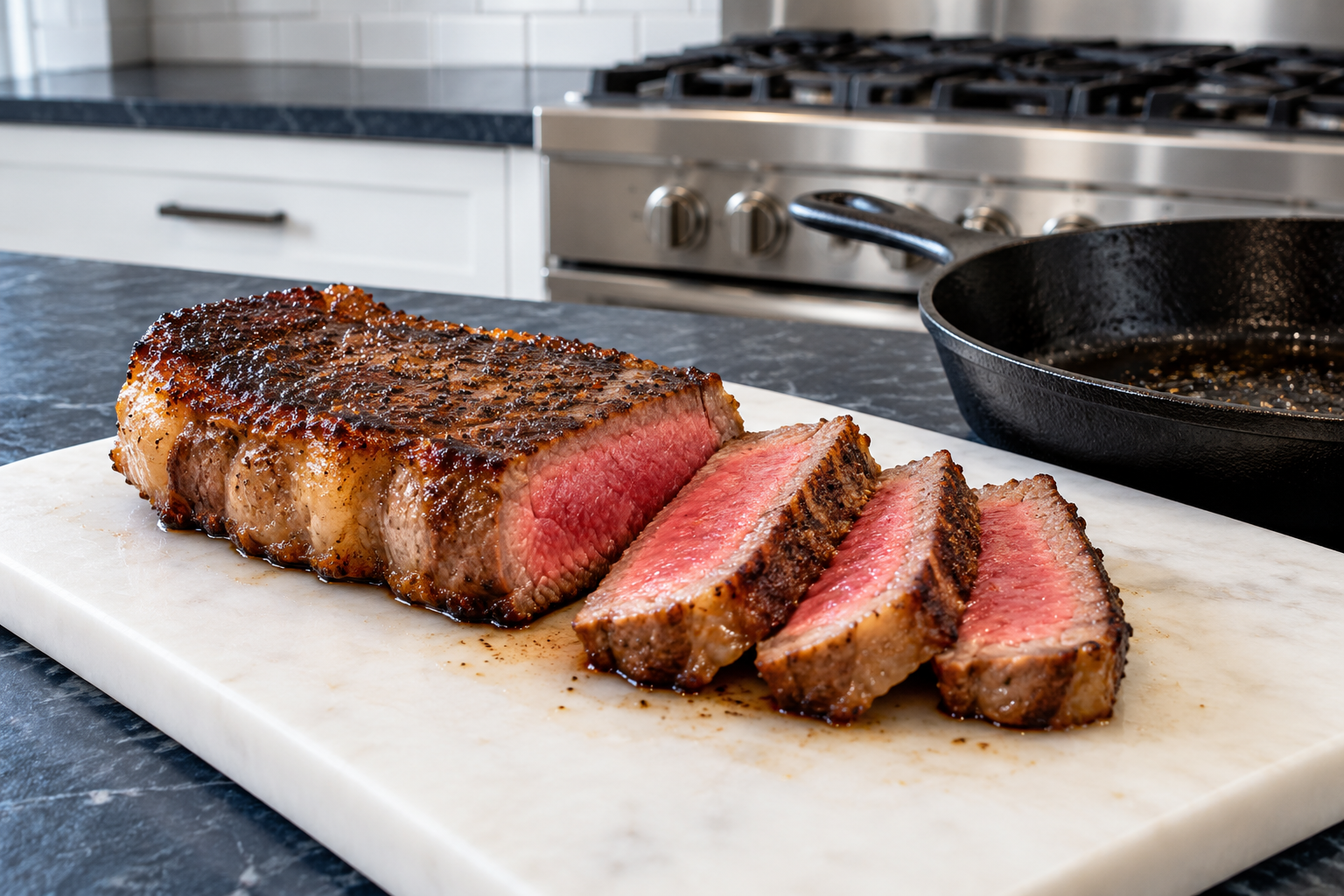
Is a New York strip a good steak for a basic pan sear, or does it need something more complicated? It’s arguably the single best cut for exactly this: a hot pan, a baste of its own rendered fat, and nothing else. Strip steak sits in an unusual middle ground; more marbled than a tenderloin, leaner and more uniform in texture than a ribeye, with a firm bite that holds up to a hard, fast sear without the uneven fat pockets that make ribeye occasionally flare and spit. That makes it the cut where a straightforward pan technique, done exactly right, outperforms almost any fancier method you could throw at it.
Why a baste, and why beef fat instead of anything else
Basting means spooning hot fat repeatedly over the top of the steak as it cooks, usually while tilting the pan to pool the fat on one side. It does two real things: it adds a second, indirect heat source to the top of the steak (useful since a pan only directly heats the side touching it), and it bastes flavor from the fat itself back onto the meat. Using the steak’s own trimmed fat, or a spoon of tallow rendered from a previous cook, keeps that flavor loop entirely within the same animal, which is the whole philosophy behind a lot of carnivore cooking: nothing added that didn’t come from the thing you’re already eating.
What you need
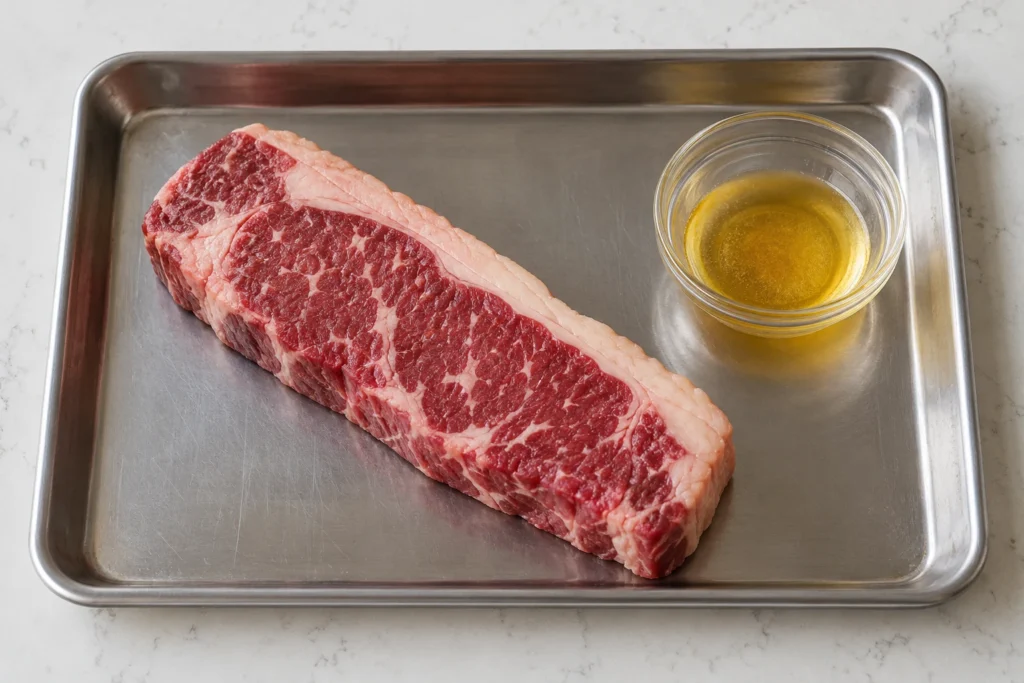
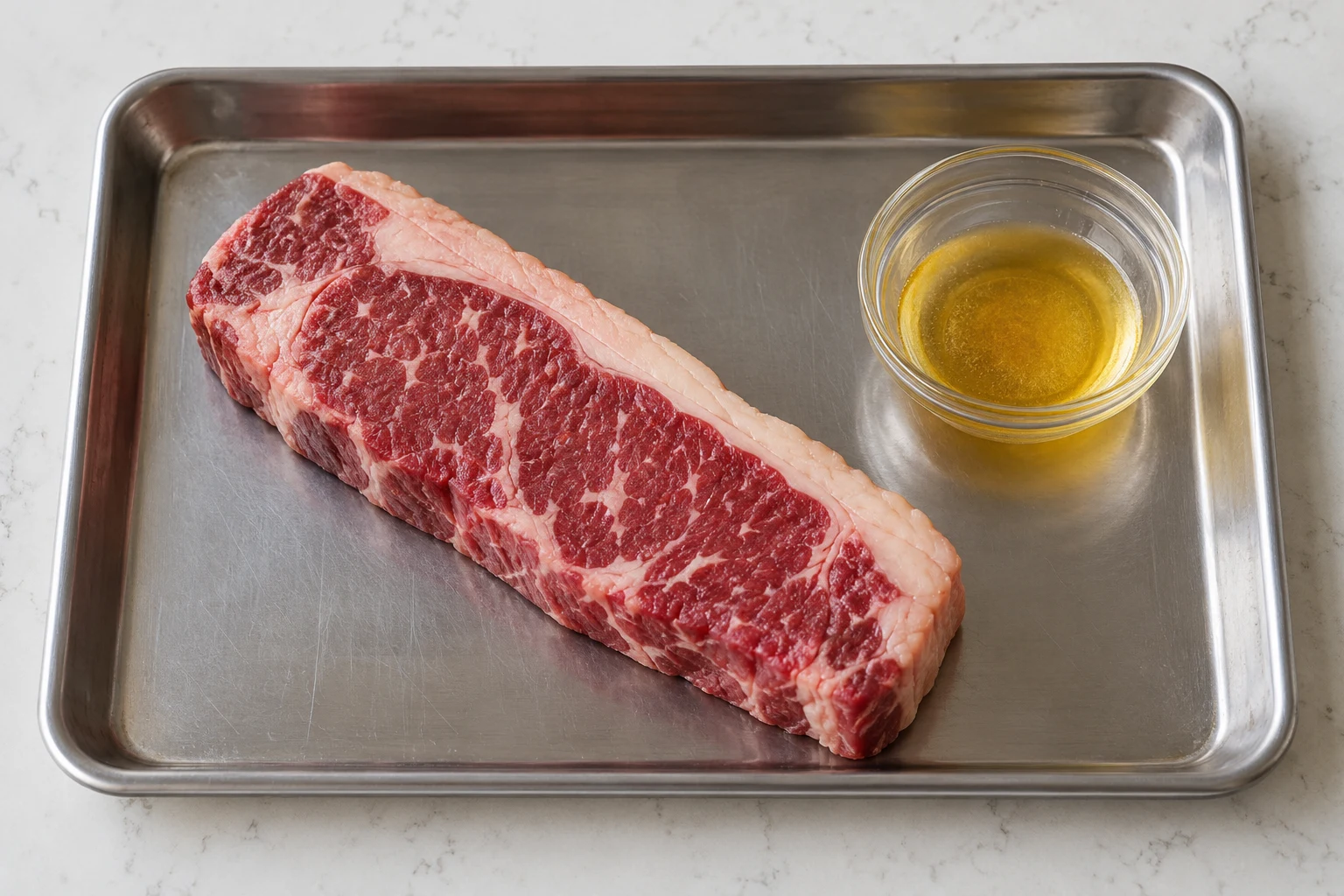
- 1–2 New York strip steaks, 1–1.25 inches thick (about 12–14 oz each)
- 2 tablespoons beef tallow, or the trimmed fat cap from the steak itself, cubed
- 1–2 teaspoons coarse salt per steak
- A light crack of black pepper, optional
Step by step
- If your strip has a thick fat cap along one edge, trim a few small cubes off it and set them aside; you’ll render these directly in the pan at the start for an extra-flavorful baste instead of using tallow from elsewhere.
- Salt the steak on both sides and let it sit at room temperature for 30–45 minutes. Strip steak’s firmer texture holds salt and seasons a bit more slowly than a fattier cut, so this step matters more here than it does on, say, a ribeye.
- Heat a heavy skillet, cast iron or carbon steel, over high heat until it’s just starting to lightly smoke. If you saved fat trim, render it now, swirling until you have a thin, hot layer of liquid fat across the pan.
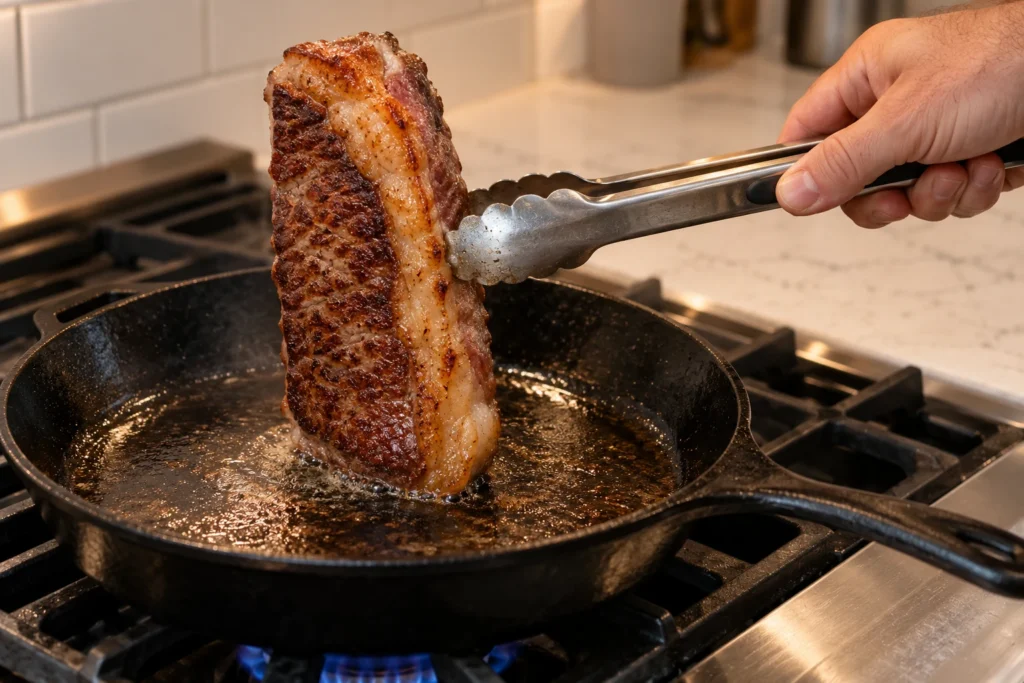
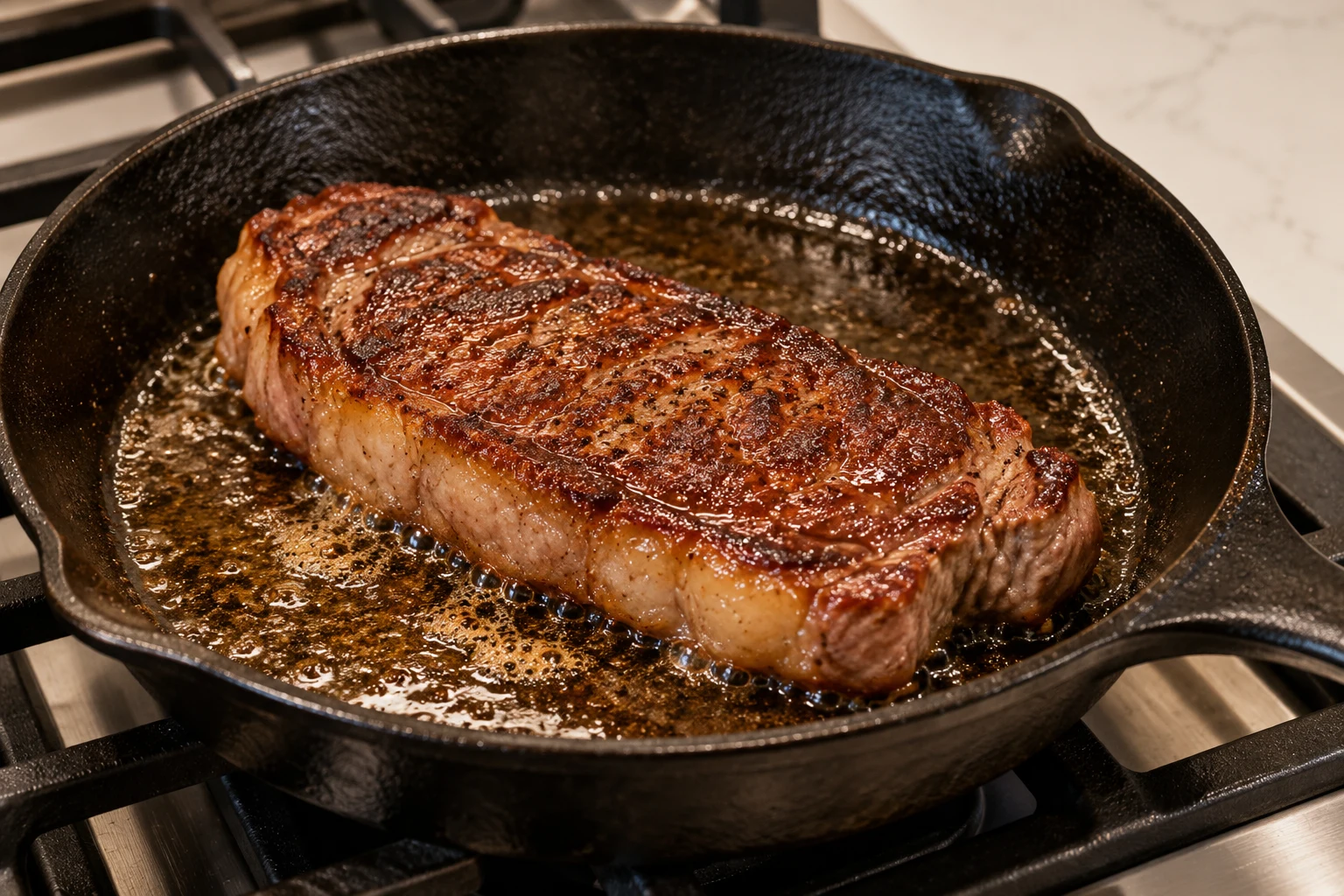
- Lay the steak in the pan away from you to avoid any splatter. Don’t move it for 2 minutes; resist the urge to check underneath early, which only slows the crust from forming.
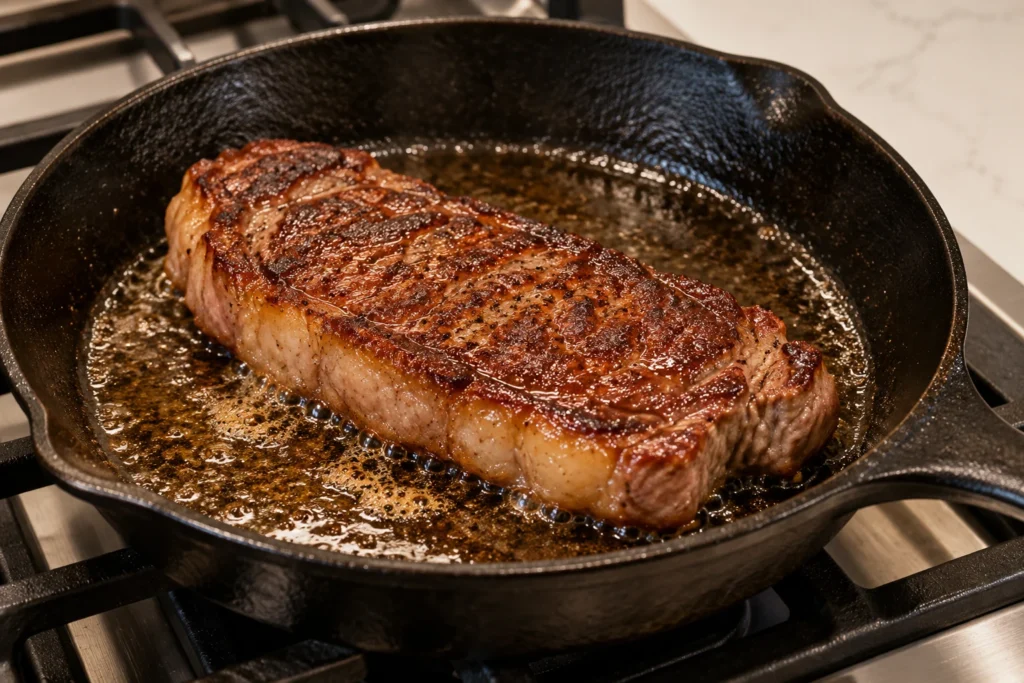
- Flip once. Immediately add the tallow if you haven’t already rendered trim fat, and begin basting: tilt the pan slightly, pool the fat at the low edge, and spoon it repeatedly over the top of the steak for the remaining cook time.
- Continue cooking and basting for another 2–3 minutes, checking internal temperature starting around the 3-minute mark on the second side.
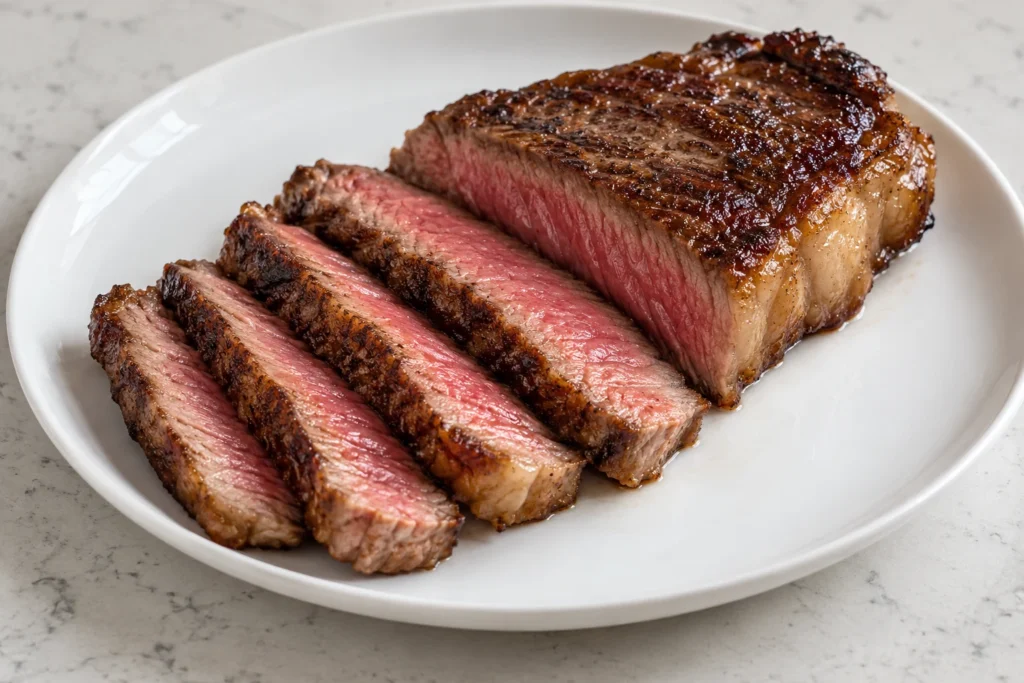
- Pull at 125–130°F for medium-rare. Let the steak rest on a cutting board, loosely tented, for 5 minutes before slicing against the grain.
Reading the strip’s grain before you cut
Strip steak has a more visible, uniform grain running in one clear direction than a ribeye does, which makes it an easy cut to practice slicing against the grain on, something worth getting right here before you try it on a more irregularly grained cut. Cutting against the grain means your knife crosses the muscle fibers rather than running parallel to them, which shortens each fiber in the piece you’re about to chew. Slice with the grain by mistake and an otherwise perfectly cooked steak can feel noticeably tougher for no reason related to how it was cooked at all.
The temperature question
USDA guidance sets 145°F with a 3-minute rest as the safe minimum internal temperature for whole-muscle beef. Most people cooking strip steak at home pull it well below that, in the 125–130°F range, for a doneness most steak-focused restaurants and home cooks consider the sweet spot for this particular cut; firm enough to hold its shape when sliced, but still pink enough that the leaner areas of the steak don’t read as dry. Going under the recommended floor is a personal choice about doneness, not a food-safety recommendation, and it’s worth factoring in how much you trust your source when deciding how far below 145°F you’re comfortable going.
| Pull temp | After rest | Result |
|---|---|---|
| 120–125°F | 125–130°F | Rare, loose texture |
| 125–130°F | 130–135°F | Medium-rare, the standard target for strip |
| 140–145°F | 145–150°F | Medium, at the USDA floor |
| 150°F+ | 155°F+ | Medium-well; strip firms up noticeably past this point |
Why strip handles direct heat better than ribeye does
Ribeye’s heavy, unevenly distributed marbling means pockets of fat can flare, spit, and occasionally char small spots faster than the surrounding muscle browns evenly; part of why a reverse sear is often the better call on a thick ribeye. Strip steak’s fat sits mostly along one edge as a defined cap, with much less fat marbled through the interior, so a straight hot-and-fast pan sear browns far more evenly across the whole surface. This is exactly the comparison covered in reverse sear versus hot and fast; strip is one of the clearest examples of a cut where the simpler, faster method is also the objectively better one, not just the more convenient one.
Mistakes that are specific to this cut
- Trimming off all the fat cap before cooking. That fat is your baste. Leave at least some of it on, even if you render part of it separately.
- Flipping too often. Strip steak’s firmer texture can make it tempting to keep checking progress by flipping, but each flip resets the browning clock on whichever side just touched the pan.
- Basting from cold fat. The fat needs to be actively hot and liquid to do anything useful; spooning barely-melted fat over the steak mostly just cools the surface down.
- Slicing with the grain out of habit. See above; this is the single most common way to make a well-cooked strip steak seem tougher than it is.
Buying the right strip
Strip steak is sold under a few different names depending on the butcher. New York strip, Kansas City strip, strip loin, all referring to the same muscle. Look for an even thickness across the whole steak rather than one that tapers sharply on one side, since a tapered steak cooks unevenly in exactly the way tying solves for a whole tenderloin roast, except here you can’t fix it with a knot; you’re stuck managing it in the pan. A visible but moderate fat cap, roughly a quarter-inch, is a good sign; a strip trimmed completely bare of fat has lost the exact thing this whole technique depends on.
Storage and reheating
Leftover strip keeps 3–4 days refrigerated. Reheat gently: a 300°F oven until just warmed through preserves texture far better than a microwave, which will overcook the exterior before the center is even warm. If you want to recreate some of the original sear, finish reheated slices with 20–30 seconds per side in a hot pan with a small spoon of fresh tallow; you’re not trying to re-cook the steak, just warm it and refresh the crust.
What to serve it with
A well-basted strip steak carries enough flavor on its own that it rarely needs a sauce, but pouring the leftover pan fat over the sliced steak right before serving adds back some of what cooked off during the sear. If you’re building a full carnivore plate around it, a small side of warmed bone broth sipped alongside the meal does something a sauce can’t; it adds moisture and richness without competing with the beef’s own flavor the way an acidic or herb-heavy sauce would. For a heartier plate, pair it with a smaller portion of something fattier like roasted bone marrow, which balances strip steak’s leaner profile.
Quick answers
Can I cook two steaks in the same pan at once? Yes, as long as they don’t touch and the pan is large enough that adding the second steak doesn’t drop the overall temperature too much. If your pan is on the smaller side, cook one at a time and keep the first warm, loosely tented, while the second cooks; a few minutes of rest never hurts a steak anyway.
My steak browned on the outside but the pan never produced enough fat to baste with, what went wrong? This usually means the fat cap was trimmed too aggressively before cooking, or the steak came pre-trimmed from the store with almost no fat left. Add a spoon of tallow from a previous cook rather than relying on the steak to supply its own if this happens; there’s no shame in it; plenty of good strip steaks simply don’t carry enough fat on their own to self-baste.
Is strip steak a good cut for someone new to cooking steak at home? Genuinely, yes; probably the best starting cut of all of them. Its even shape and more forgiving fat distribution make the timing more predictable than ribeye, and it doesn’t demand the extra planning a reverse sear or a whole roast does. Get comfortable here first.
What the sound and smell tell you before the thermometer does
Once you’ve cooked a handful of strip steaks this way, the pan itself starts giving you information before you ever reach for a thermometer. A steady, aggressive sizzle means the pan is holding its heat against the moisture coming out of the meat; a sizzle that suddenly goes quiet usually means the pan temperature dropped, often because the burner wasn’t preheated long enough or the steak was too cold going in. The smell shifts too; a clean, toasted smell means the exterior is browning the way it should; anything acrid or sharp means fat has scorched rather than rendered, usually because a stray piece of trim sat directly against the hottest part of the pan too long. None of this replaces the thermometer for doneness, but it tells you, in real time, whether the crust side of the equation is going well.
A note on pan choice
Cast iron and carbon steel both work well here, and the difference is smaller than cookware marketing suggests. Cast iron holds heat longer once it’s hot, which is forgiving if your stove runs a little weak; carbon steel heats and cools faster, which gives you quicker control if you’re adjusting on the fly. What matters far more than which one you own is preheating it properly; a heavy pan that hasn’t had 3–4 full minutes to come up to temperature behaves like a much lighter, less capable pan no matter what metal it’s made of. A thin, lightweight nonstick skillet is the one real exception to avoid entirely for this method: it can’t hold the sustained high heat a good sear needs, and most aren’t rated for the smoke point you’re working at here anyway.
How many strip steaks can I reasonably cook in one sitting without a second pan? Two is comfortable in a 12-inch skillet; a third usually crowds the pan enough to drop the surface temperature and slow the sear on all three. If you’re cooking for more than two people, either run two pans at once or sear in batches and rest the first batch, loosely tented, while the second cooks; the short wait does no harm to a steak that’s already resting anyway.
Does resting a strip steak for longer than 5 minutes help? Past about 8–10 minutes you’re mostly just letting the steak cool down without gaining much more from the redistribution of juices; 5 minutes captures nearly all of the benefit for a cut this size. If you need to hold it longer while finishing other food, tent it loosely rather than wrapping it tightly, which traps steam and softens the crust you just worked for.
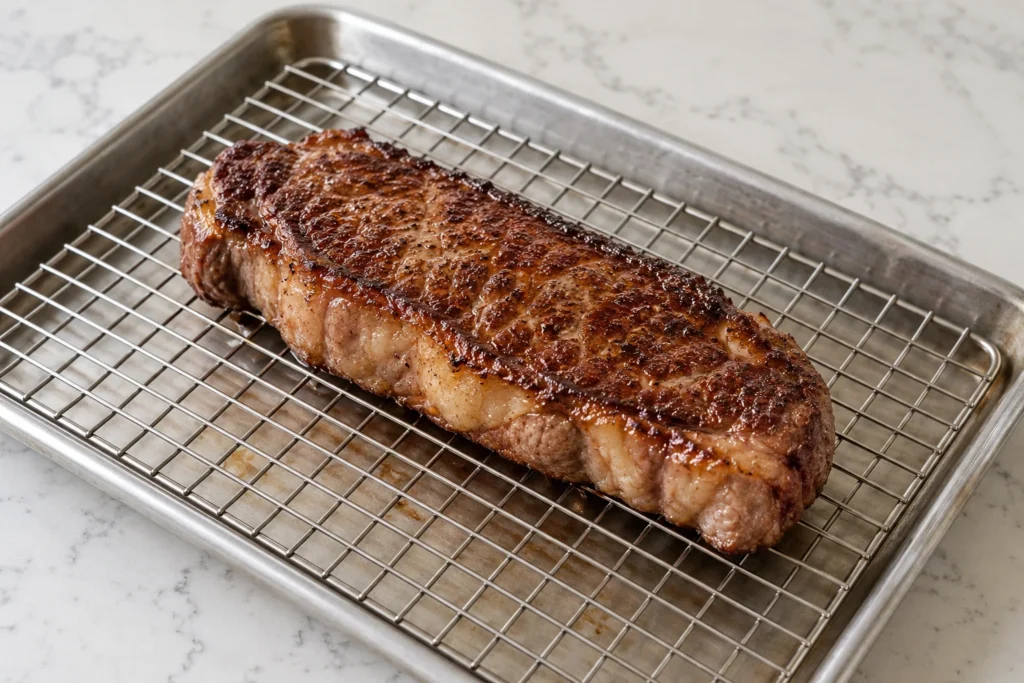
Should I salt again right before it hits the pan, on top of the earlier salting? Not necessary if you salted well 30-plus minutes ahead; by the time the steak hits the pan, that salt has already drawn moisture out and been mostly reabsorbed back into the surface. A second light pass is harmless if you’re unsure how evenly the first one covered the steak, but it won’t meaningfully change the result on its own.
Visual steps