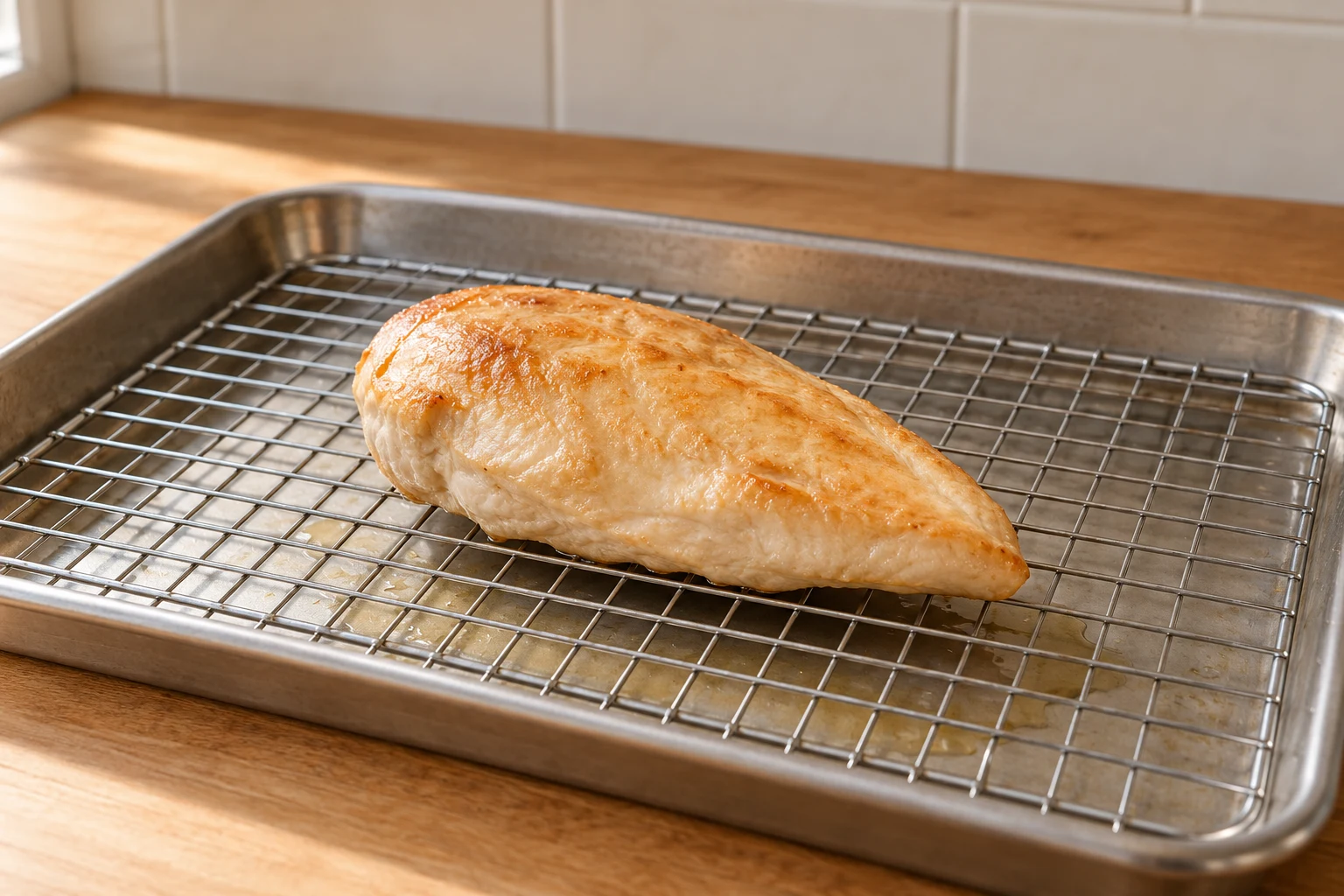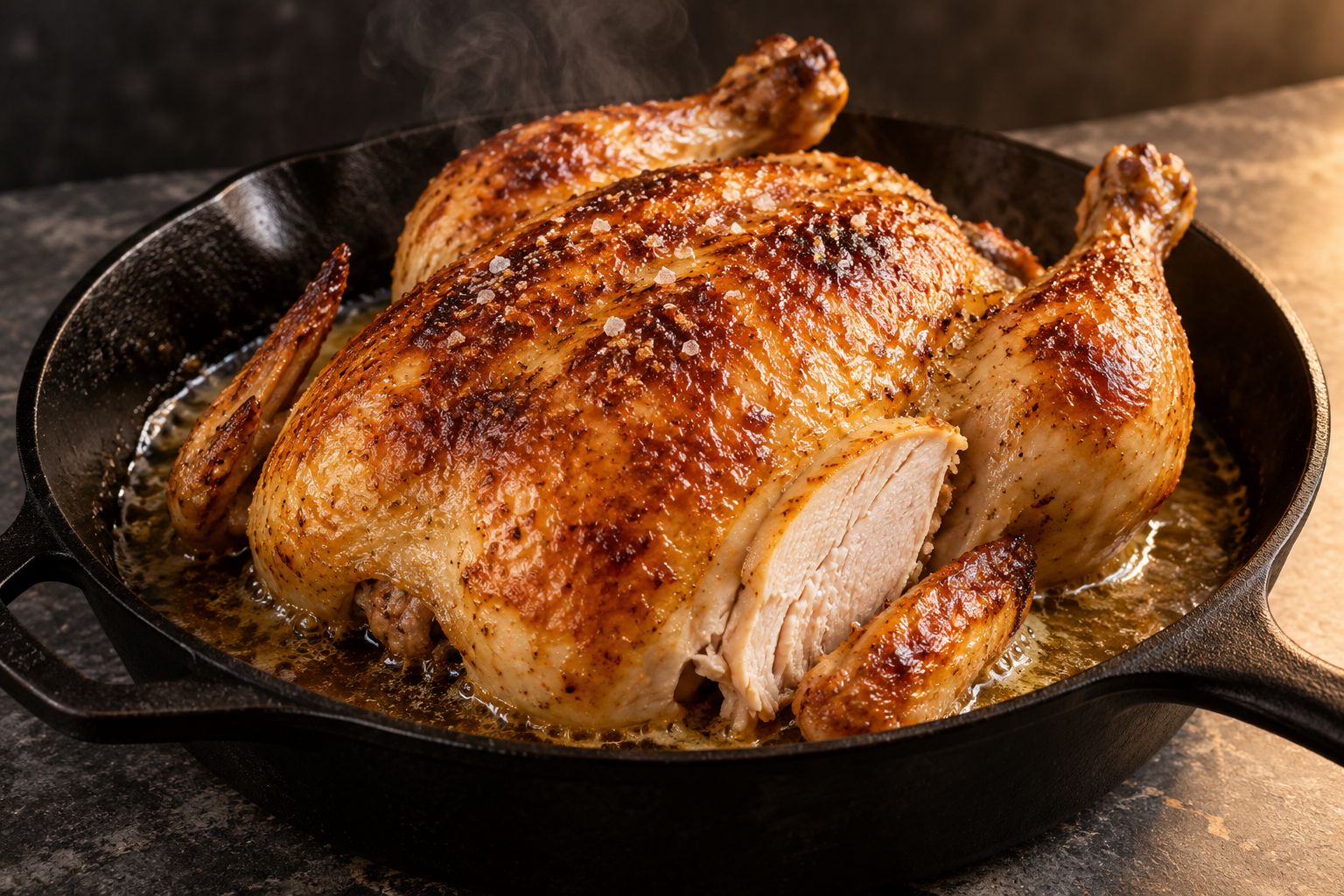
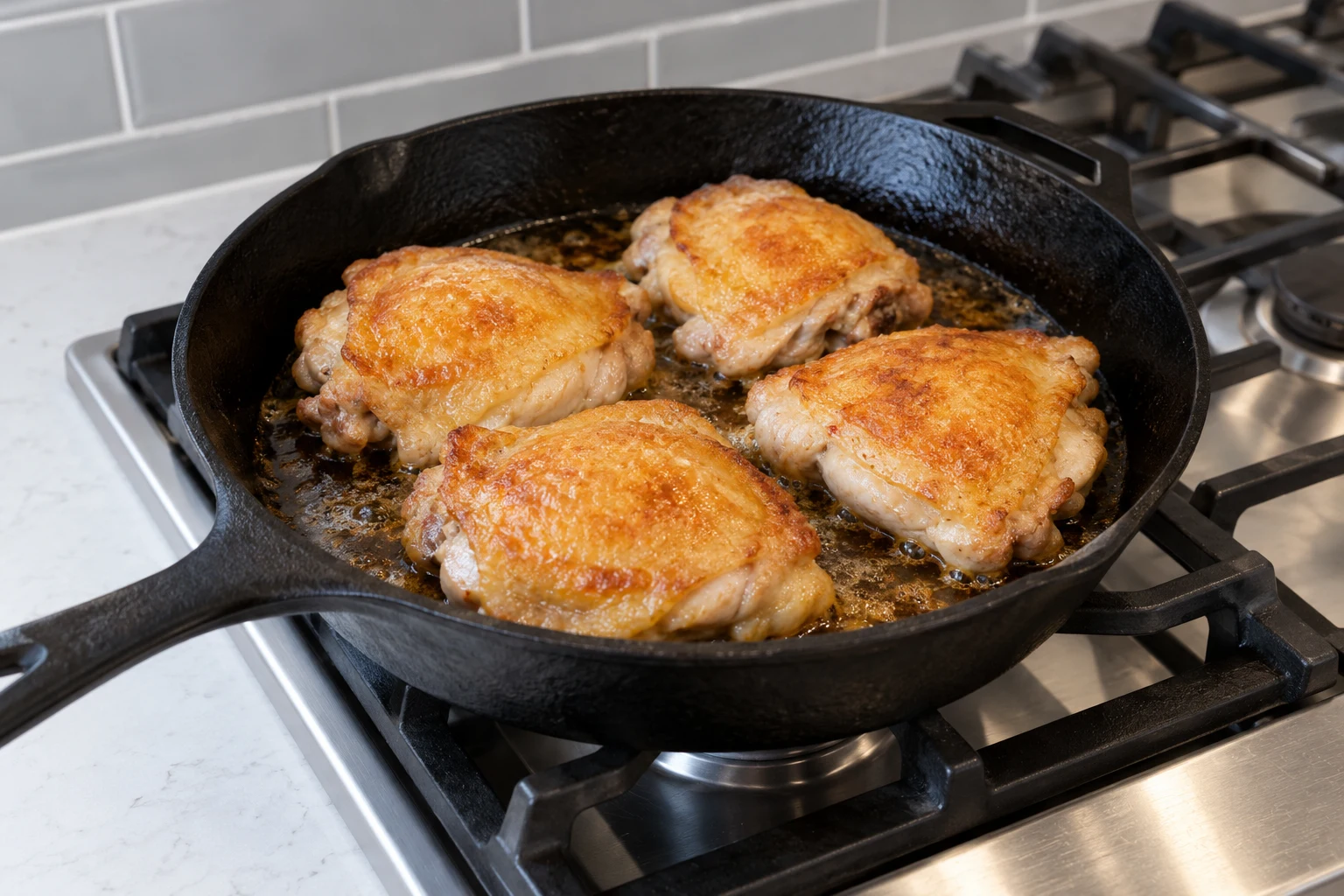
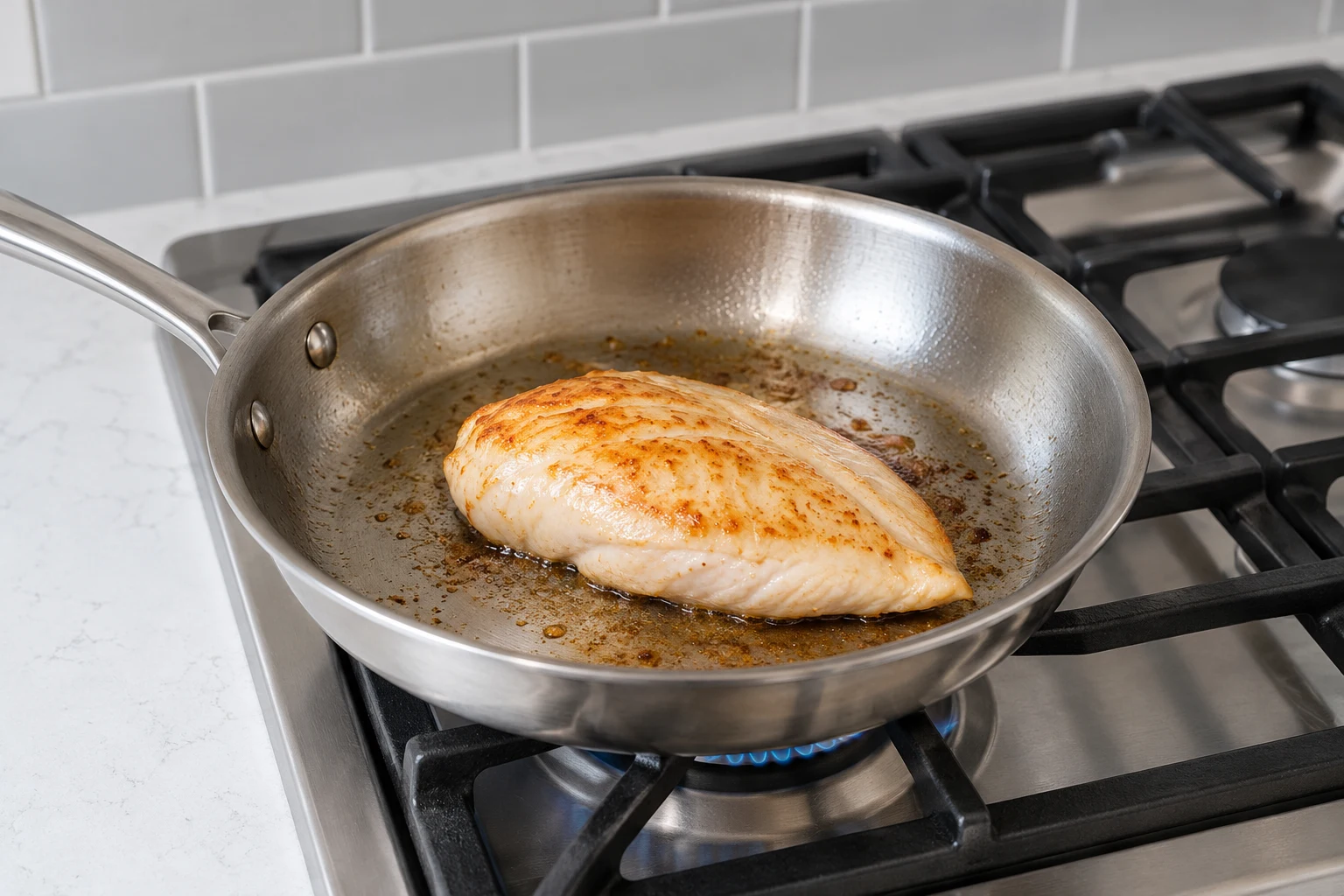
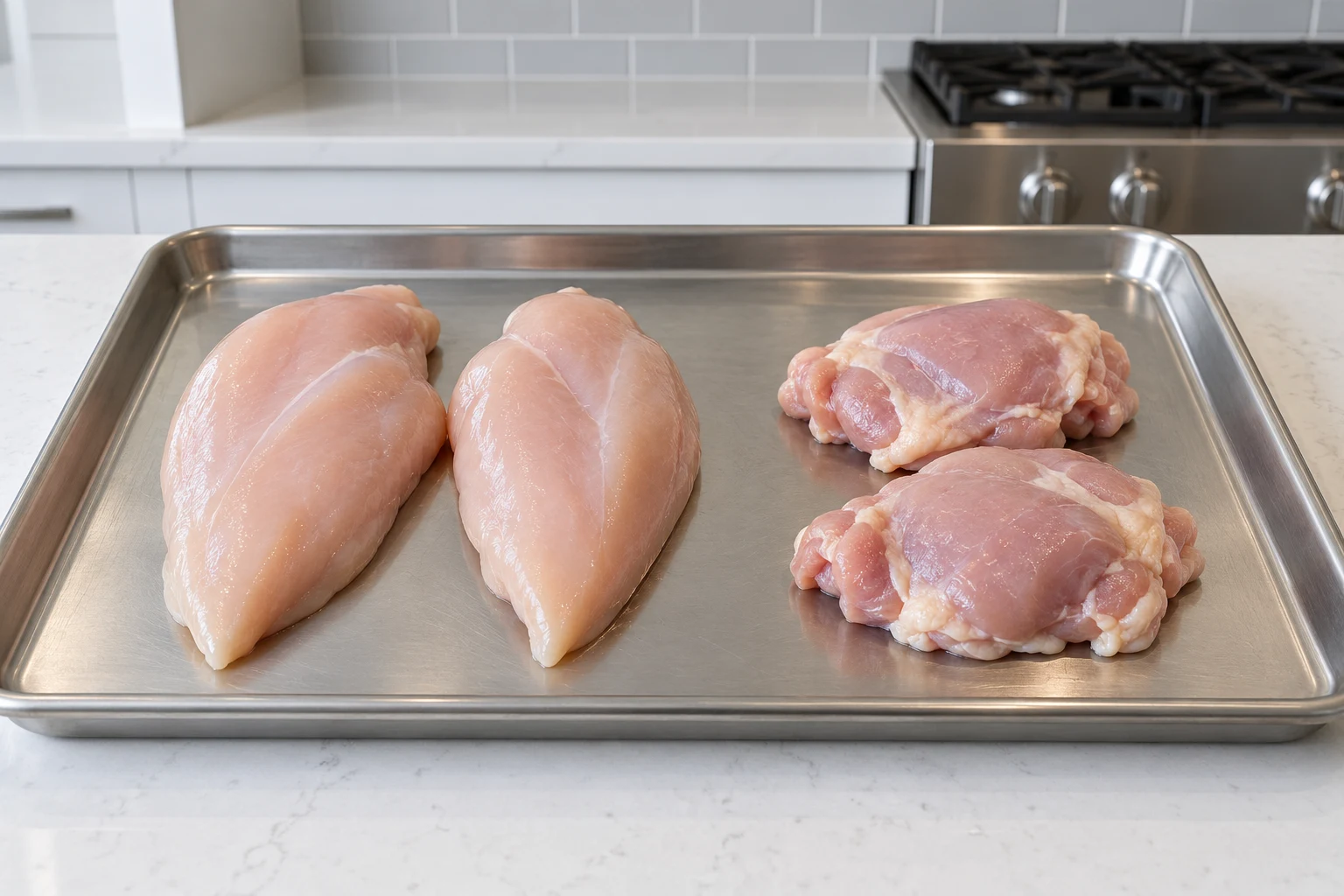
Every whole roast chicken is a quiet argument between two kinds of meat that want different things. The breast is lean and turns dry if it climbs much past done. The legs and thighs are full of connective tissue and only taste right when they go well beyond that. Roast the bird whole and they cook at different rates, so the usual result is one or the other: a breast that has gone dry by the time the thighs are ready, or juicy thighs sitting next to a leg joint that is still underdone. The good news is that this is a solvable geometry problem, not a curse.
Why the two ends disagree
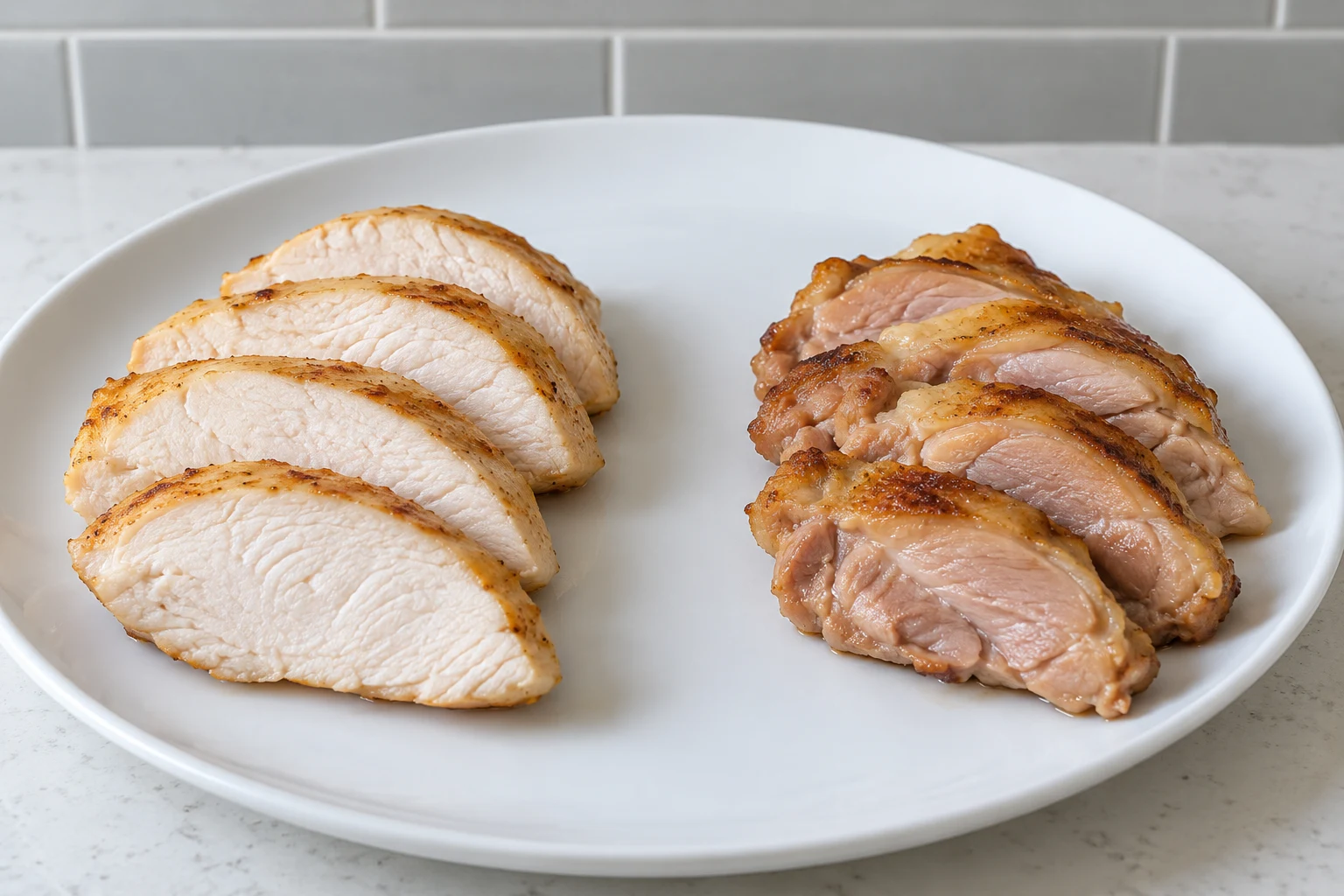
Chicken is safe at 165°F throughout, which is the number to trust for safety. The catch is texture. Breast is at its best right around that safe mark and dries quickly past it, while dark meat does not become truly tender until it is noticeably hotter, up in the 175 to 185°F range, where its connective tissue finally softens. On a whole bird, the thick thighs and the deep leg joints take longer to get there than the exposed breast, so the breast is done first and then keeps cooking while it waits. Every fix below is really just a way to close that gap.
Spatchcock: the single most effective move
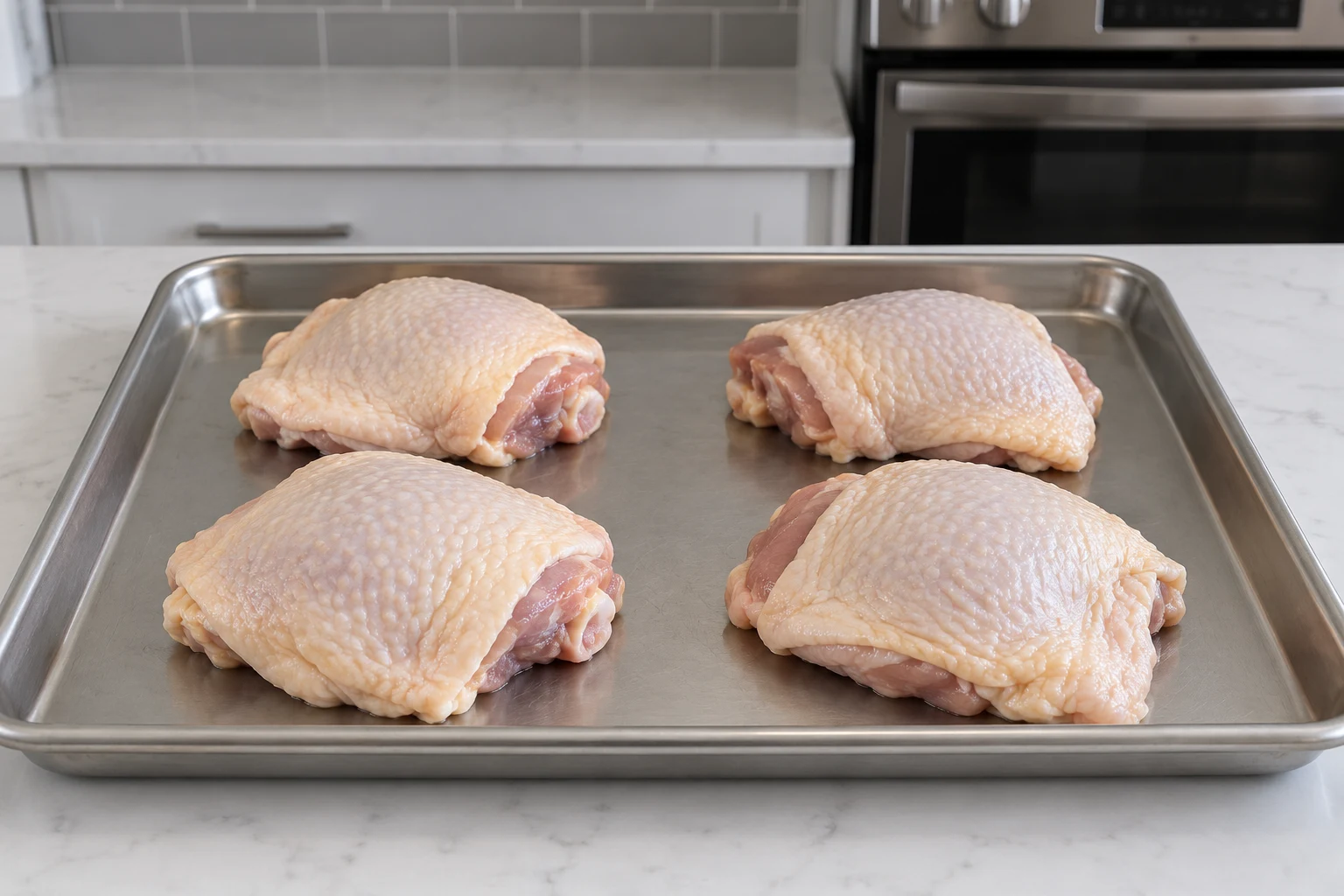
Remove the backbone with shears and flatten the bird, and you change the whole equation. Spread out, the legs sit at the hot edges of the pan while the breast lies lower and more protected, so the two finish much closer together. It also roasts faster and crisps the skin more evenly. If you do only one thing differently, do this; it fixes more uneven birds than any other single change.
If you want to keep the bird whole
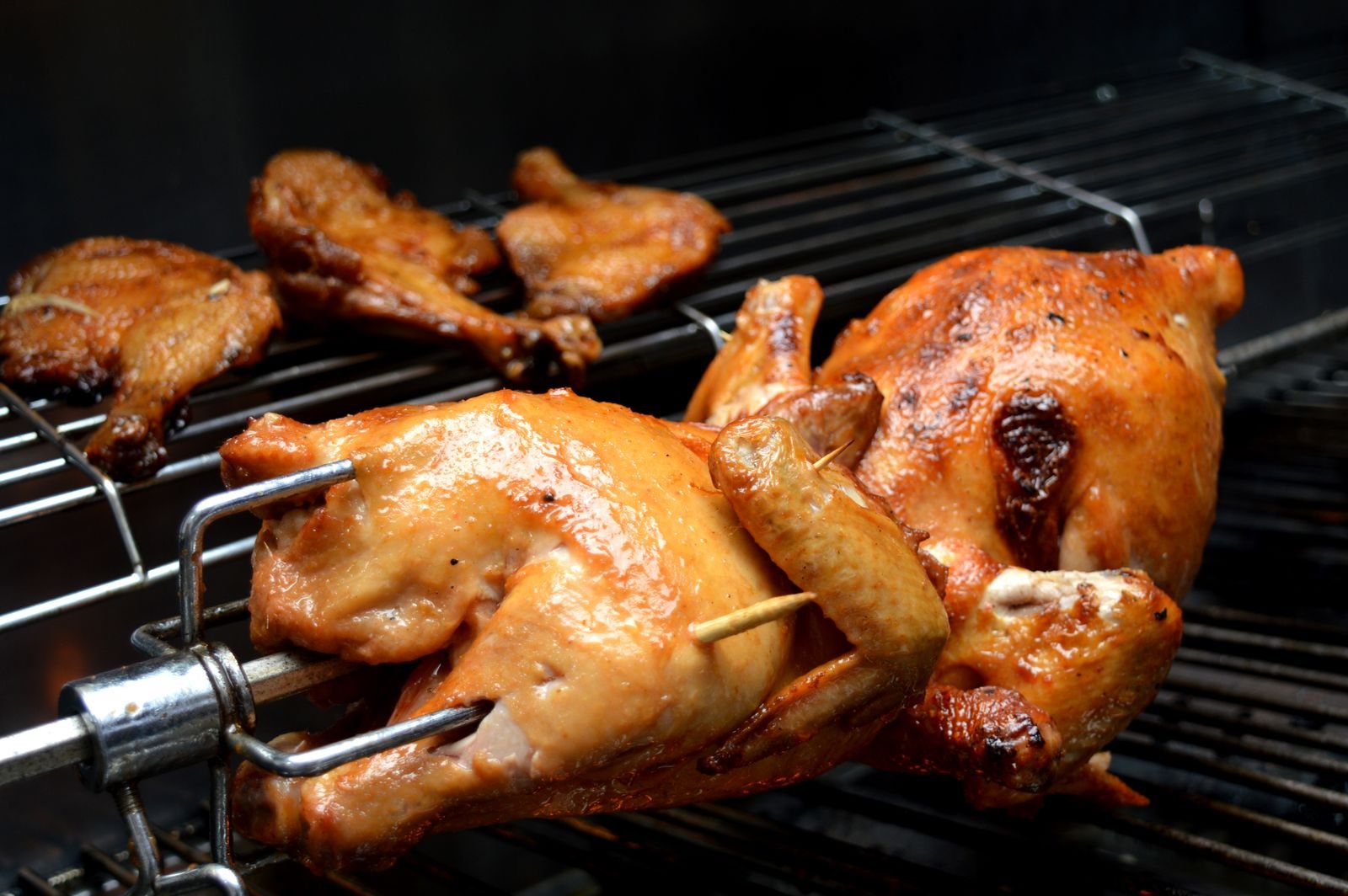
There are gentler options if flattening feels like a step too far. You can shield the breast partway through by loosely tenting it with foil once it has taken color, slowing it while the legs catch up. You can start the bird breast-side down or angle it so the legs face the hottest part of the oven, then finish breast-up for the skin. And you can lean on carryover: pull the chicken when the thighs read done and the breast is a touch under, then let it rest, during which the residual heat brings the breast up without overshooting. None of these is as decisive as spatchcocking, but each nudges the two ends toward agreement.
Fast and hot, or low and steady
Oven temperature is a lever too, with a tradeoff attached. A hot oven gives you the best skin and the fastest cook, but it widens the gap between the quick breast and the slow legs. A more moderate oven closes that gap and cooks more evenly, at the cost of some crispness. Many cooks split the difference, starting or finishing hot for the skin and spending the rest at a steadier temperature. Which way you lean depends on whether you care more about even meat or crackling skin on a given night.
The one I reach for
Given the choice, I spatchcock. It solves the underlying problem instead of managing around it, the skin comes out better, and the bird is done sooner. When I want the look of a whole roasted chicken on the table, I keep it intact, tent the breast partway, and pull the bird based on the thighs, letting the rest finish the breast. Either way, the fix is the same idea: stop treating a two-textured bird as if it were one thing.
The 165°F safe minimum for poultry is USDA Food Safety and Inspection Service guidance. Higher target temperatures for dark meat are a matter of texture and culinary preference, not tested claims.