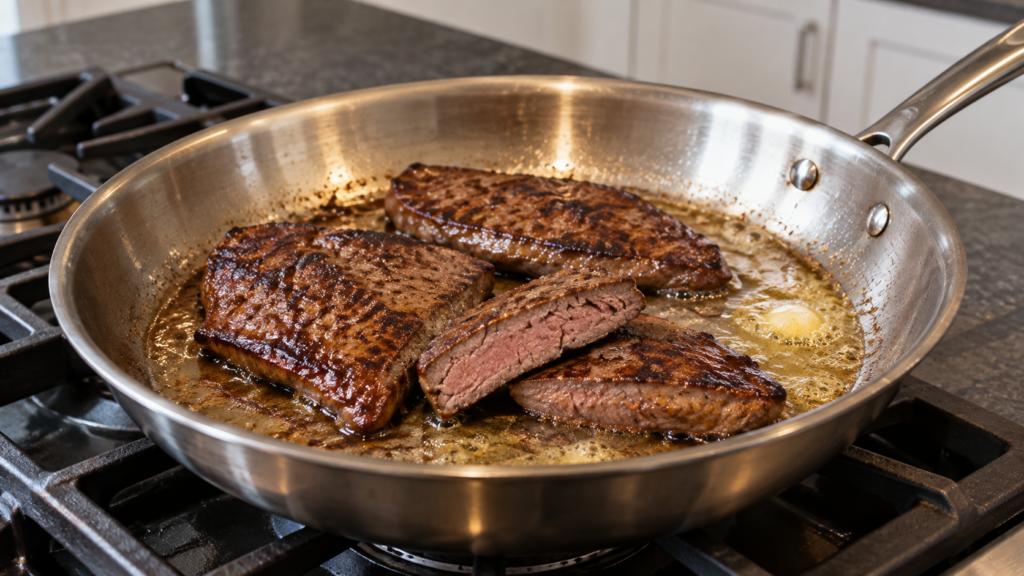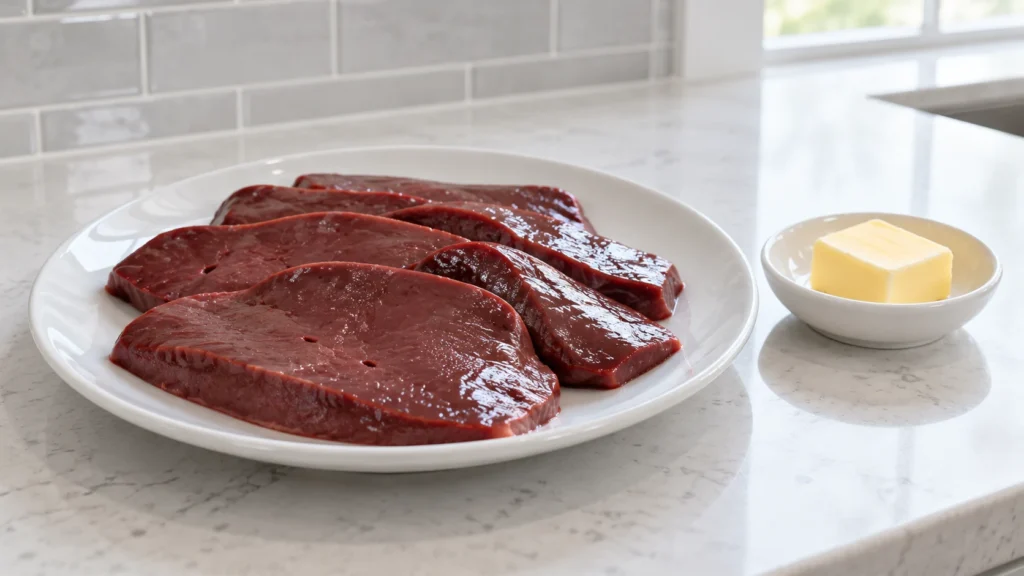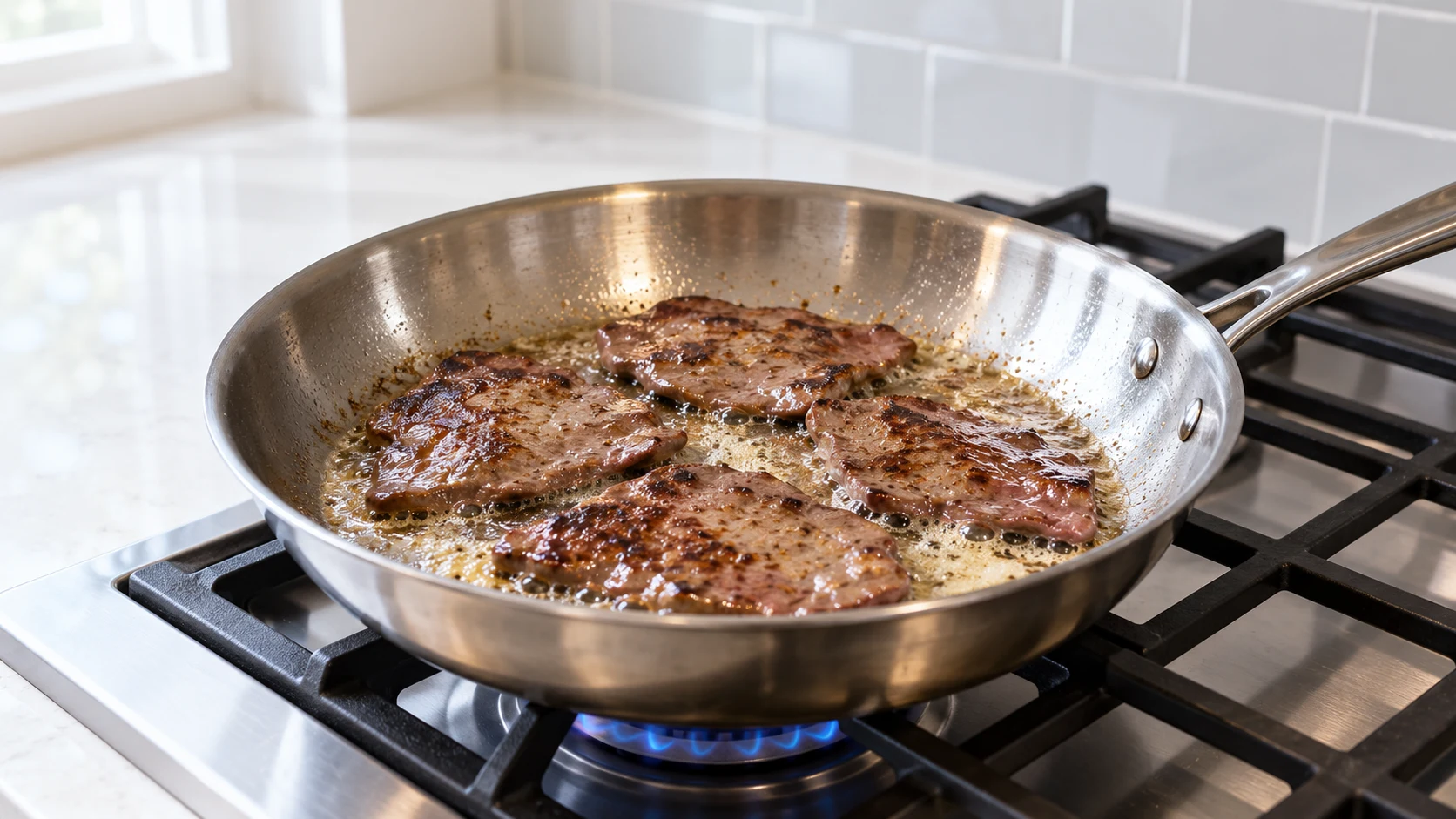
Someone hands you a plate of liver at a family dinner, you remember a gray, rubbery slab from childhood, and you quietly push it to the side of your plate. That memory is doing a lot of damage to a cut of meat that, cooked correctly, bears almost no resemblance to it. Overcooked liver turns bitter, dense, and chalky within what feels like seconds of crossing the line. Liver cooked briefly and hot, in plenty of butter, with nothing else competing for attention, is soft, rich, and far milder than its reputation suggests. The technique is almost entirely about speed and heat, and once you’ve done it correctly once, it’s hard to go back to overcooking it the old way.
Why liver punishes overcooking so severely
Liver has a different protein and fat structure than a muscle cut like steak. It’s dense with glycogen and has very little connective tissue to break down the way a tougher muscle cut does, which means there’s no “braise it longer and it gets more tender” escape route the way there is with, say, a chuck roast. Once liver passes a certain internal temperature, its proteins seize up tightly and squeeze out moisture fast, and the result is a dry, mineral-forward bitterness that’s almost unrecognizable from how it tastes a minute earlier in the cook. That narrow window is the entire reason liver has such a divisive reputation — most people’s only exposure to it is a version cooked well past that window, not because liver itself tastes bad. Understanding that the problem is almost always timing, not the ingredient, reframes the whole cook: this isn’t a cut you’re trying to tenderize through patience, it’s one you’re trying to protect from overcooking through speed.
Butter does real work here too, beyond flavor. It has a lower smoke point than a neutral cooking oil but a rich, dairy-forward flavor that pairs naturally with liver’s minerally taste, and because this cook is so brief, you’re rarely in the pan long enough for butter’s lower smoke point to actually become a problem. The milk solids in butter also brown quickly, adding a nutty depth in just the couple of minutes this recipe takes.
Choosing and sourcing beef liver
Beef liver is generally the mildest-tasting liver among common options, milder than lamb liver and noticeably milder than pork liver, which is part of why it’s a reasonable starting point if you’re new to organ meat generally. Look for liver that’s a deep, even reddish-brown, firm but still slightly yielding to the touch, without any gray patches or a strong ammonia-like smell, which would indicate it’s past its best. Grass-fed beef liver and conventionally raised beef liver both work fine with this method; the difference in flavor between them is usually subtler than the difference overcooking makes, so don’t feel like you need to track down a specific sourcing pedigree before trying this for the first time, especially on your first attempt, when learning the timing matters more than optimizing the source. Buying from a butcher counter where you can ask how recently it came in is generally a safer bet than a long-sitting package, given how quickly liver’s quality declines compared to a denser cut.
What you need
- 12 oz (340g) beef liver, sliced into pieces about 1/2 inch thick
- 3-4 tablespoons butter
- Salt, to taste
If your liver came whole rather than pre-sliced, slicing it yourself into even, half-inch pieces makes a real difference — uneven thickness means some pieces finish before others, and liver’s narrow doneness window doesn’t forgive that kind of inconsistency the way a thicker, more forgiving cut would.
Step by step
- Pat the liver slices dry with a paper towel. Any surface moisture will cause spattering and slow down browning once it hits the hot butter.
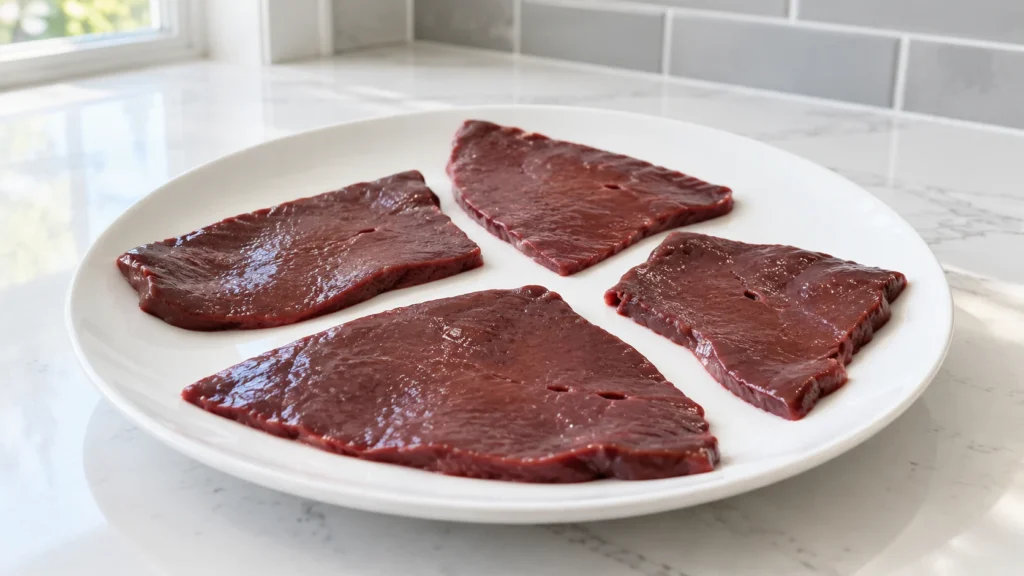
- Salt both sides of each slice just before cooking.
- Heat a skillet over medium-high heat and add the butter. Let it melt and begin to foam, but pull back the heat slightly if it starts browning too fast before the liver goes in.
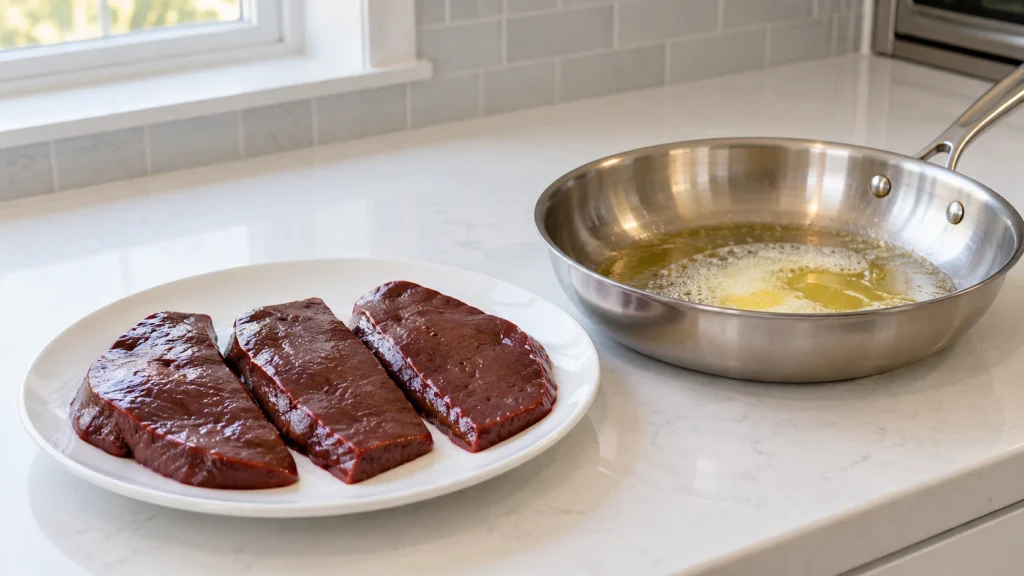
- Lay the liver slices into the pan in a single layer, without crowding. Work in two batches if needed rather than overlapping pieces.
- Sear for about 90 seconds on the first side, until a light golden-brown crust forms on the bottom.
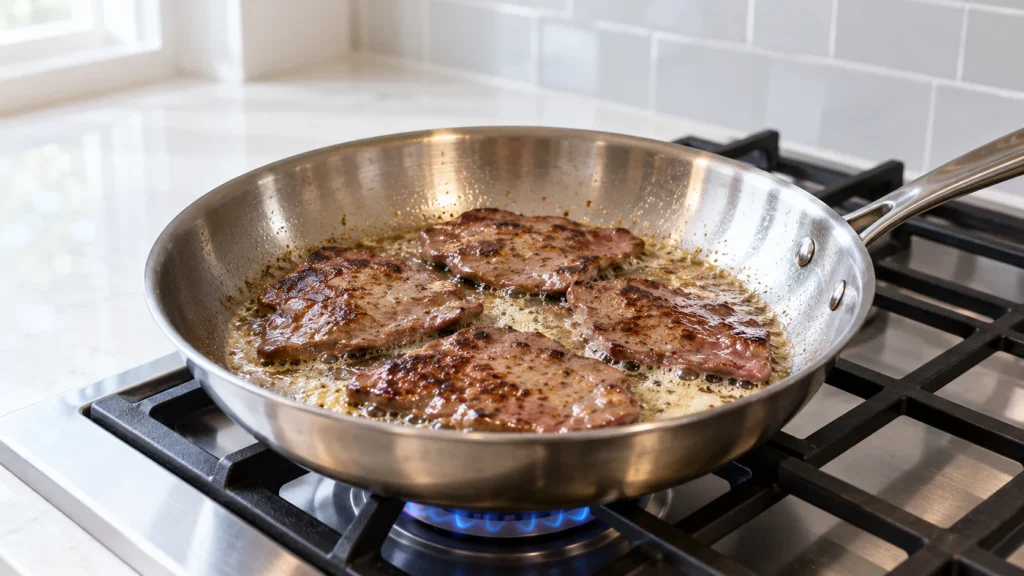
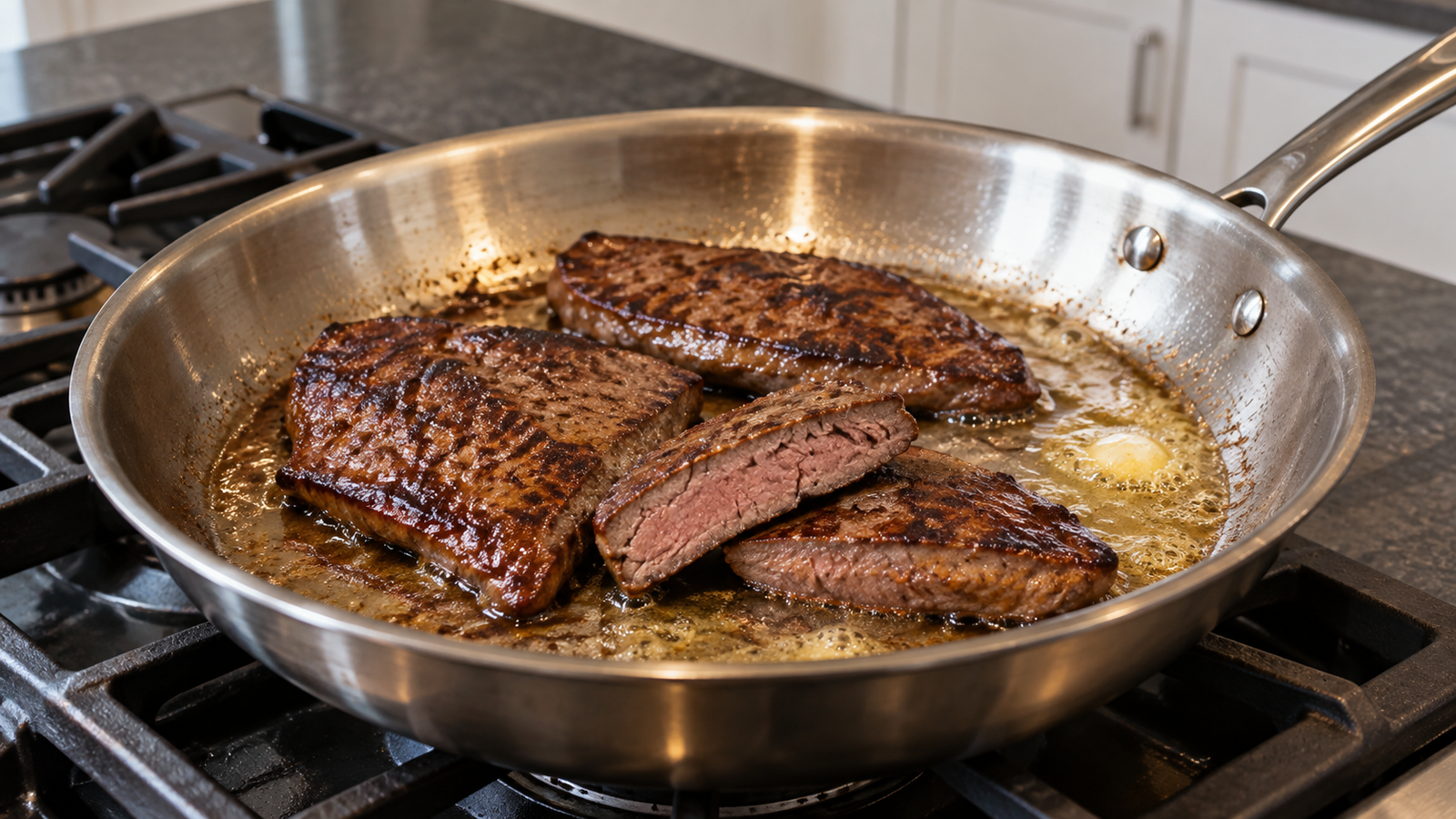
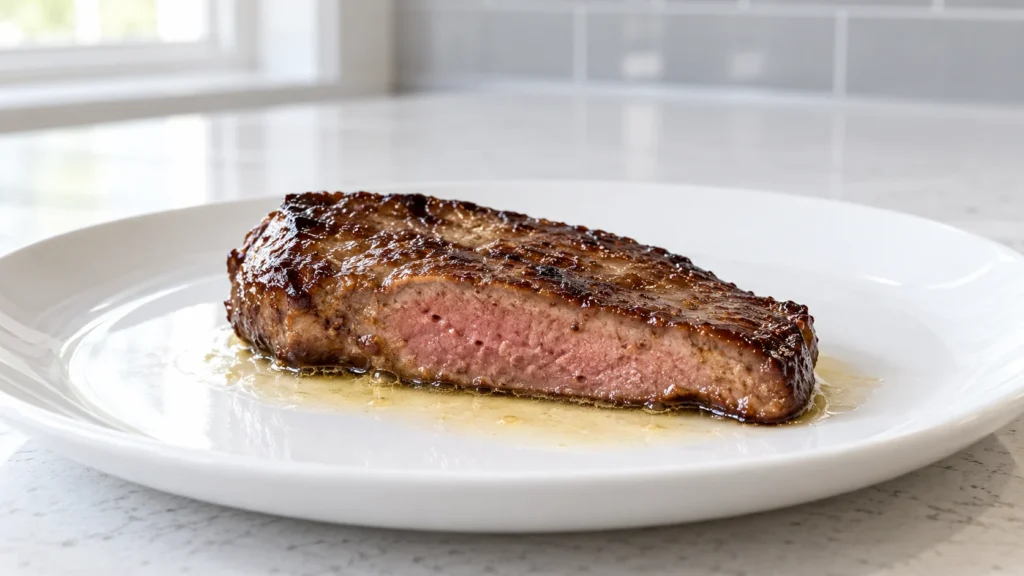
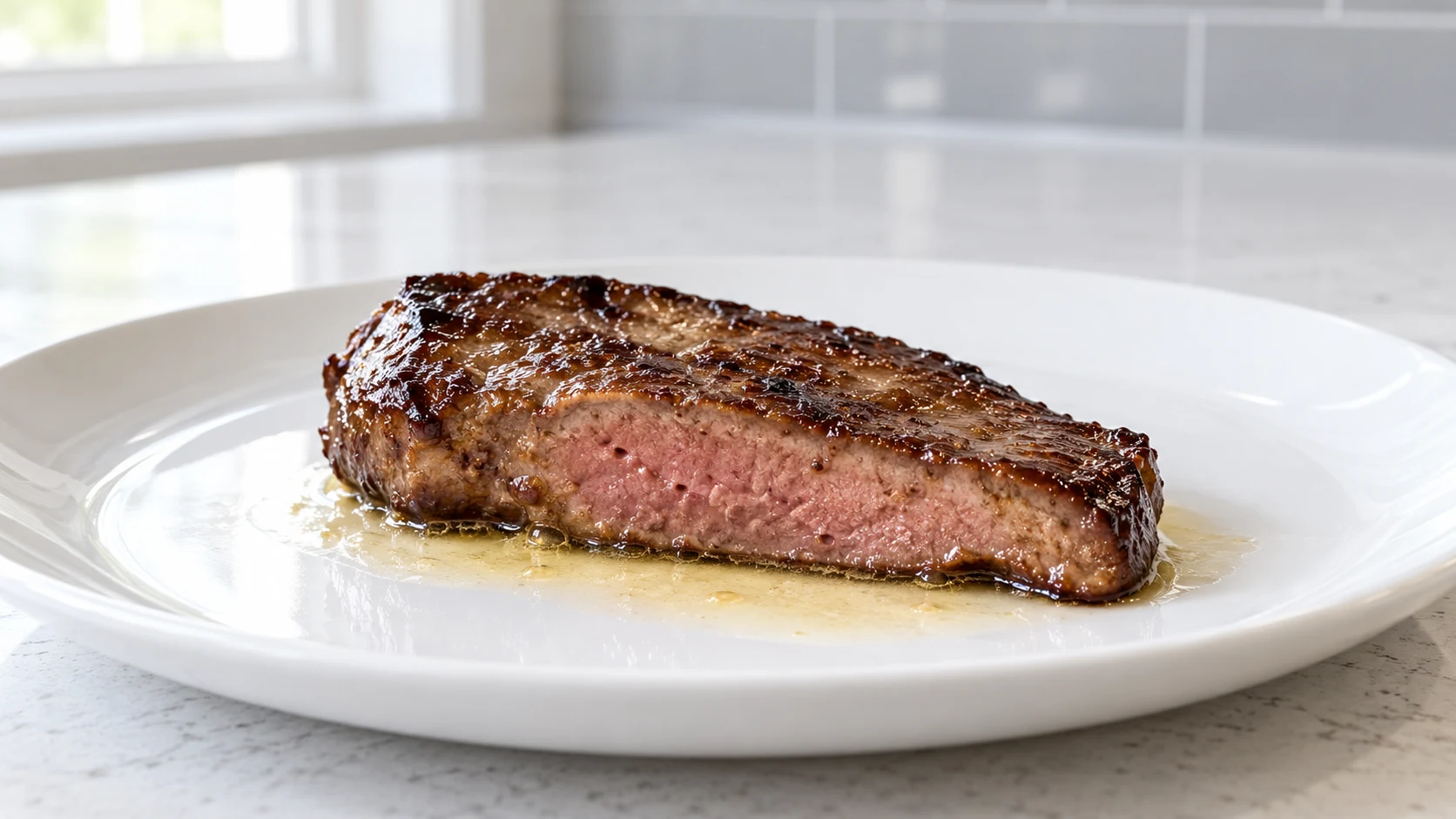
- Flip once and cook the second side for another 60-90 seconds. The center should still have a hint of give when pressed, similar to a medium-rare steak, rather than feeling firm all the way through.
- Pull the pan off the heat the moment the liver feels just barely firm at the center. It will continue cooking slightly from residual heat even off the burner, so err toward pulling it a touch early rather than late.
- Spoon some of the browned butter from the pan directly over the liver when serving.
On doneness and food safety for liver specifically
USDA guidance treats beef liver like other whole-muscle beef cuts for safety purposes, with a minimum safe internal temperature of 145°F (63°C) and a short rest. Many experienced cooks pull liver at this exact point, since that’s also very close to where the texture is at its best — soft and slightly yielding rather than firm. If you’re cooking for someone pregnant, very young, elderly, or otherwise in a higher-risk category for foodborne illness, there’s no harm in confirming with a thermometer rather than relying on touch alone; a quick-read thermometer inserted sideways into a slice will give you a reliable number in seconds given how thin these pieces are.
If you’re nervous about the taste
A lot of hesitation around liver comes from an expectation that it will taste overwhelmingly strong or metallic, and overcooked liver often does taste that way. Properly cooked liver is noticeably milder than people expect — rich and slightly sweet, with a texture closer to a soft, custardy steak than anything resembling organ-meat stereotypes. If this is genuinely your first attempt, start with a smaller portion than you think you’ll want, cooked exactly to the timing above, before deciding you don’t like it. A huge share of liver aversion traces back to one bad experience with an overcooked piece rather than to the actual flavor of liver cooked well, a pattern this site has seen often enough with readers working through beef liver without the bitterness that it’s worth repeating here directly.
Common mistakes
- Cooking it like a steak, for steak-length timing. Liver’s window is much shorter. Four to five minutes total is usually enough for pieces this thin; anything longer risks overcooking.
- Crowding the pan. Overlapping pieces steam each other instead of searing, and steamed liver loses the browned exterior that balances its richness.
- Walking away, even briefly. This cook moves fast enough that a minute of distraction can take you from perfectly cooked to overdone.
- Buying liver that’s been frozen and thawed repeatedly. Liver’s delicate texture suffers more from freeze-thaw cycling than a denser muscle cut does. Buy fresh when you can, and if using frozen, thaw it once, fully, in the refrigerator.
- Skipping the pat-dry step. Wet liver spatters violently in hot butter and browns more slowly, since the surface moisture has to evaporate before any real searing can start.
Variations
A few strips of bacon cooked first in the same pan, with the liver finished in the rendered bacon fat and butter together, is a classic pairing for a reason — the smokiness complements liver’s richness well. Chicken livers can be cooked with the exact same method, though they cook even faster given their smaller size, often needing less than a minute per side. For a slightly different texture, searing the liver whole as a single thicker piece rather than slicing it thin first, then slicing it after resting, gives you a steak-like presentation, though it requires more careful temperature monitoring since the timing changes with the added thickness. Onions are the traditional pairing in most liver-and-onions preparations, but they’re off the table here by design — if you’ve only had liver cooked alongside a heavy pile of caramelized onions, you may not have tasted what the liver itself actually contributes, since the onions tend to dominate the dish. Cooking it plain, as this recipe does, is a more honest test of whether you actually like liver’s own flavor.
Building confidence with organ meat more broadly
Liver is often the entry point into organ meat for people who grew up avoiding it, precisely because it’s widely available, relatively inexpensive, and forgiving once you understand the timing. If this recipe goes well, it’s a natural bridge into other organ cuts that follow similar quick-cook logic, like heart, which cooks like steak, not like liver — a useful distinction to understand before assuming every organ meat behaves the same way liver does. Kidney and tripe, by contrast, are closer to the opposite end of the spectrum, often cooked longer specifically for tenderness rather than briefly for a quick sear, so the lessons from this recipe won’t transfer directly to every organ you might try next, and it’s worth learning each cut’s own rules rather than assuming one method covers all of them. Think of this one as teaching you the “fast and hot” half of organ-meat cooking, not the whole picture.
Serving it simply
Beef liver doesn’t need much accompaniment once it’s cooked correctly. A few crisp strips of bacon alongside, or a second protein like pan-seared chicken thighs, rounds out the plate without diluting the liver’s own flavor, giving you a varied plate without reaching outside the strict carnivore framework at all. Spooning extra browned butter from the pan over the top right before serving is worth doing every time — it’s a small step that adds real richness for almost no extra effort, and it uses up every bit of flavor the butter picked up while cooking rather than leaving it behind in the pan to go to waste.
Storage and reheating
Cooked liver keeps in an airtight container in the refrigerator for 1-2 days — shorter than most other cooked meats on this site, since liver’s texture degrades faster than denser cuts. Reheating is genuinely difficult to do without overcooking it further; a very brief reheat in a pan over low heat, just long enough to take the chill off, is the gentlest option, and even that will firm up the texture somewhat. Because of how quickly it loses quality, liver is one of the few things on this site worth cooking fresh in the portion you plan to actually eat that sitting, rather than planning on leftovers the way you might with a braise or a roast that holds up for days.
Frequently asked questions
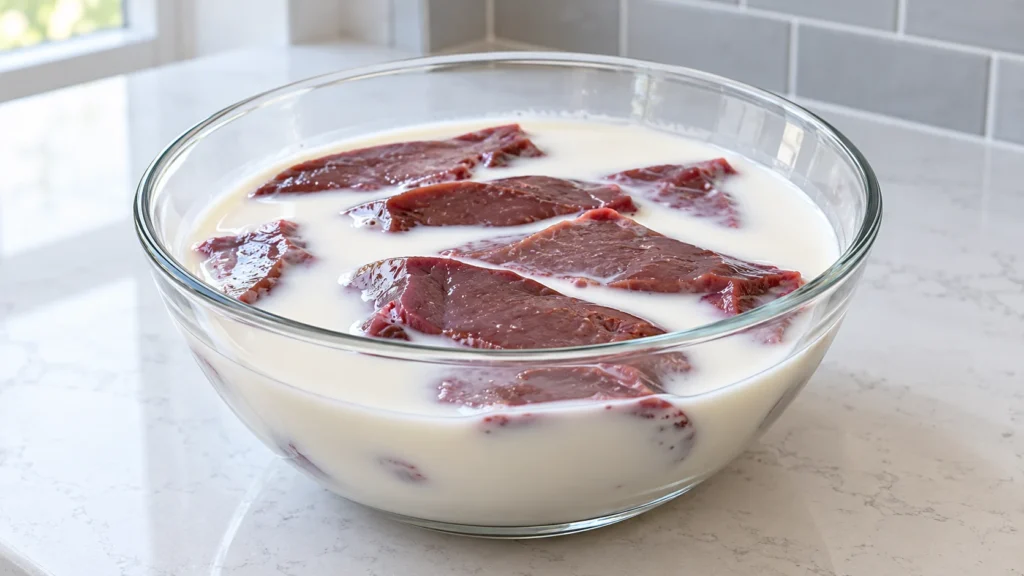
Do I need to soak liver in milk first to remove bitterness? This is a common piece of advice, but if you’re sourcing fresh, good-quality liver and cooking it to the timing above rather than overcooking it, a milk soak isn’t doing nearly as much work as proper cooking time does. It won’t hurt anything if you want to try it, but it’s not a substitute for pulling the liver off the heat at the right moment, which is the one step that actually determines how the finished dish tastes.
Why does my liver turn tough even though I didn’t cook it long? This is usually a heat issue rather than a time issue — a pan that’s too hot can firm up the exterior of the liver within seconds even if the total cook time was short. Medium-high, not screaming hot, is the right range for this specific cut, and if your pan tends to run hot, pull the heat down a notch from where you’d set it for a steak.
Is beef liver more nutritious than other cuts? Liver is widely recognized as one of the most nutrient-dense parts of the animal, carrying meaningfully more of several vitamins and minerals per ounce than most muscle meat. That alone is a reasonable argument for incorporating it into a regular rotation even for someone who isn’t sure yet whether they like the taste.
How often should I eat liver? There’s no universal rule, and this site doesn’t make medical claims about frequency or dosage. Many people who enjoy organ meat work it into their rotation once or twice a week rather than daily, treating it as one of several proteins in regular use rather than a replacement for everything else. Starting with smaller, more occasional portions and seeing how you feel is a reasonable approach if you’re new to it, and adjusting from there based on your own preference rather than a fixed schedule.
Visual steps