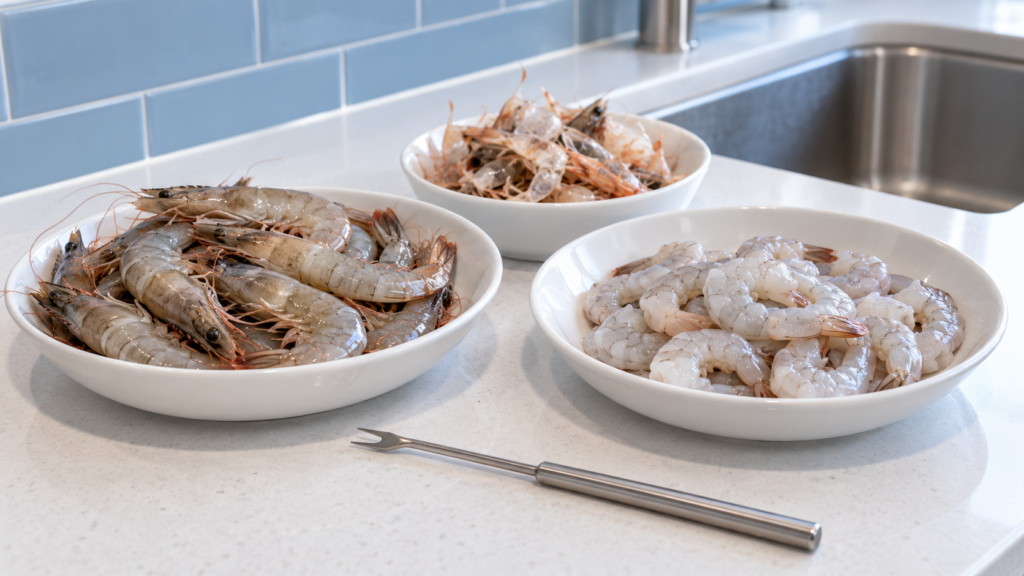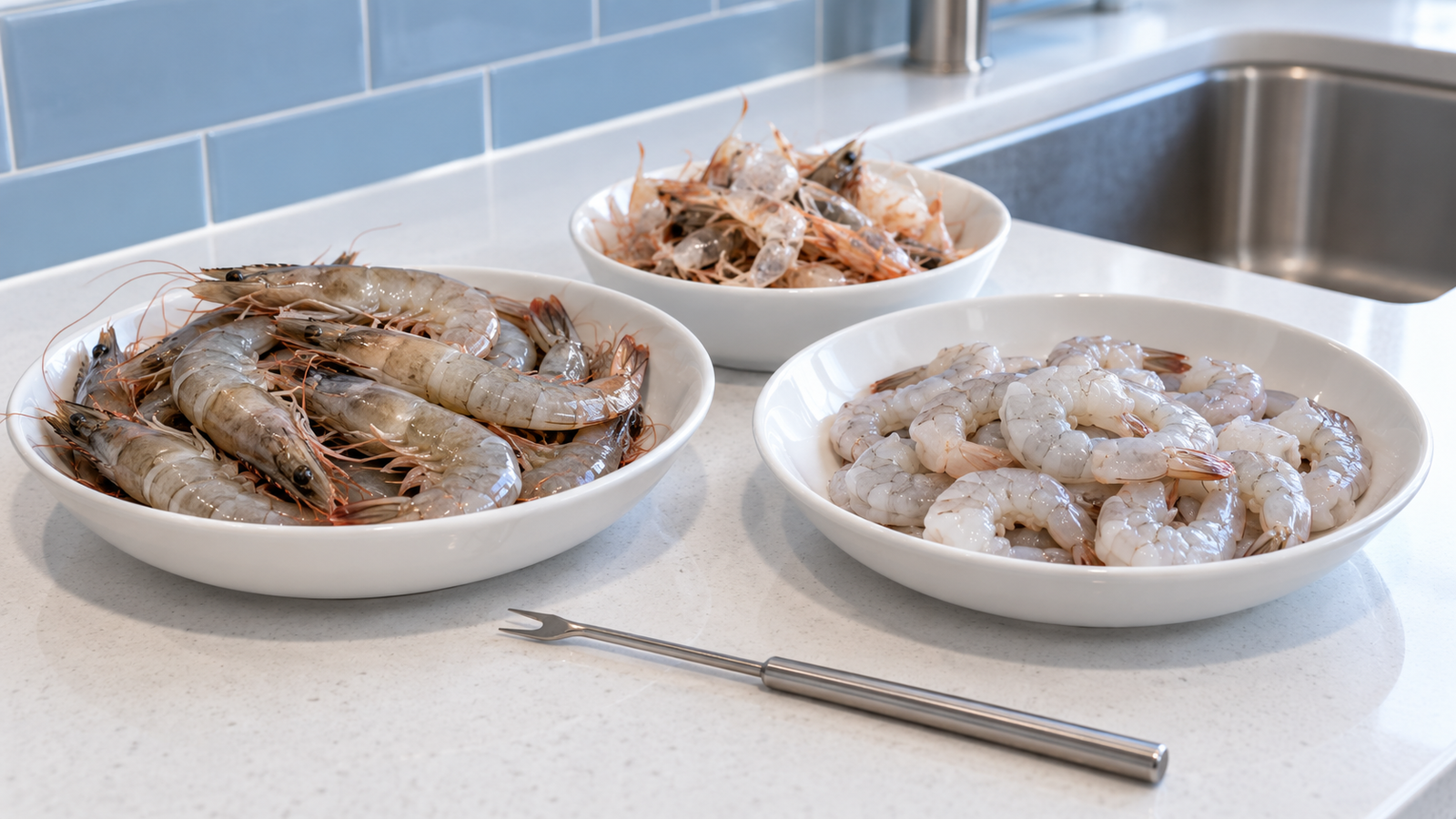
Most of the shrimp bought already peeled and fully cleaned at a store costs noticeably more per pound than the exact same shrimp sold shell-on, and the reason people pay that real premium usually has nothing to do with convenience alone. It’s because peeling and deveining feels like a fiddly, unclear step most people were never actually shown, so they pay someone else to do it rather than risk doing it wrong. The actual process takes under a minute per shrimp once it’s familiar, and skipping the markup is a real, easy saving once that minute stops feeling uncertain.
What’s actually being removed, and why it matters
The name “vein” is genuinely misleading and worth clearing up before anything else, since it sends a lot of people looking for something they’ll never actually find in the spot they expect. The dark line running along a shrimp’s back is its digestive tract, not a vein in the circulatory sense the name implies. It’s harmless to eat in small shrimp and genuinely not worth the effort of removing, which is why plenty of recipes skip deveining smaller shrimp entirely without any real consequence. In larger shrimp, that same tract carries more visible grit and a slightly gritty texture that’s worth removing mainly for the eating experience, not for any food-safety reason. Deveining is a texture and presentation choice on most shrimp, not a safety requirement, and knowing that changes how much effort it’s actually worth putting into a given batch.
Peeling, start to finish
- Hold the shrimp with the legs facing up. Starting at the head end, pinch the legs and the thin shell beneath them and pull gently toward the tail.
- The shell should come away in one or two pieces as a result, leaving the body of the shrimp exposed while the tail segment typically stays attached unless it’s pulled away too.
- For tail-off shrimp, continue pulling through the final tail segment; for tail-on, which holds its shape better in a sear and looks more finished on a plate, stop once the body shell is removed and leave that last segment in place.
- Rinse briefly under cold water to clear away any loose shell fragments left behind.
The shell separates cleanly from the meat underneath almost every time once the legs are gripped at the right spot; shrimp that fight the process usually just need a slightly firmer, more deliberate pull rather than a different technique entirely.
Deveining, once peeling is done
- With the shrimp peeled and lying flat, make a shallow cut along the curved back with a small, sharp paring knife, just deep enough to expose the dark tract without cutting the shrimp in half.
- Lift the dark vein out with the tip of the knife or a fingertip, then rinse briefly to clear any remaining trace.
- A deveining tool, a thin plastic hook sold specifically for this, does the same job faster once the motion is familiar, worth it for anyone doing this regularly in real volume.
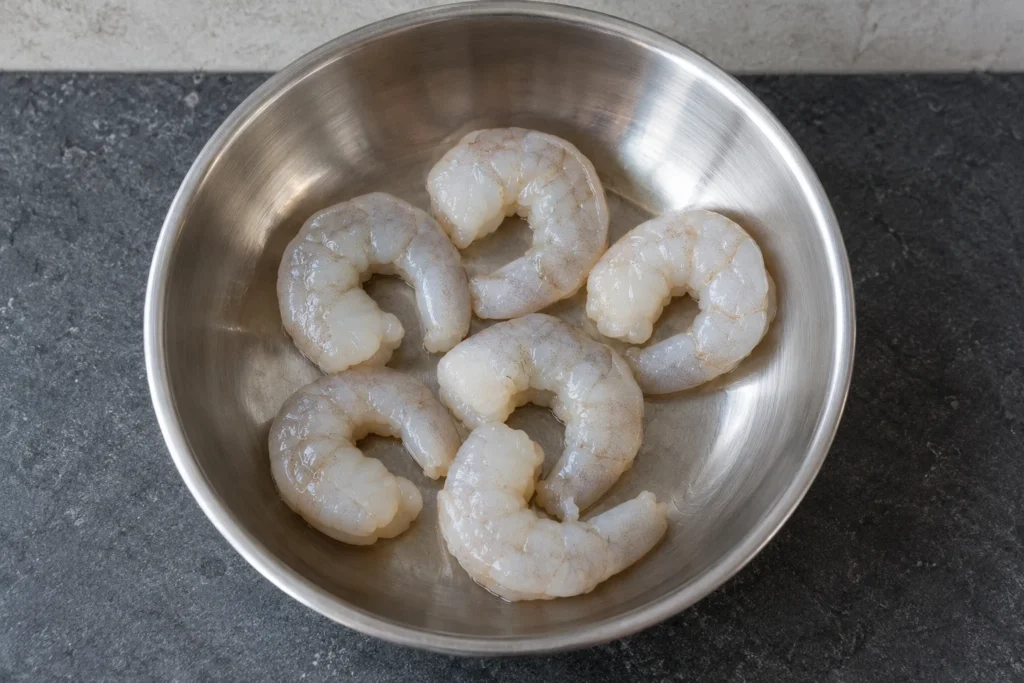
That shallow back cut also happens to be useful beyond deveining: it’s the same butterfly cut many grilling and breading recipes call for anyway, which means deveining and prepping a shrimp for a specific dish are often the same single step rather than two separate ones.
An alternative method with kitchen shears
Kitchen shears offer a faster, more consistent alternative for anyone peeling and deveining a larger batch at once. Running the tip of the shears along the curved back of the shell, through the shell only and not the meat, opens the entire length in one motion, exposing the dark tract directly in the same cut rather than requiring a second knife pass afterward. The shell then peels away from that opened seam easily by hand, and the exposed vein lifts out in the same step. For a pound or more of shrimp at once, this method genuinely cuts total prep time close to in half compared to peeling and deveining as two fully separate steps.
The tradeoff is a slightly less clean final shape, since the shears leave a visible cut along the back that a careful hand-peel doesn’t, which matters for presentation on a dish where the shrimp’s shape is meant to look pristine and matters far less for anything getting chopped, sauced, or mixed into a larger dish anyway.
Reading a shrimp size label, which actually means something specific
| Label | Count per pound | Good for |
|---|---|---|
| Colossal / U-10 | Under 10 per pound | Grilling whole, a dish where shrimp is the clear centerpiece |
| Jumbo / 16-20 | 16 to 20 per pound | Searing, skewers, anything wanting real presence on the plate |
| Large / 26-30 | 26 to 30 per pound | The most common all-purpose size for everyday cooking |
| Medium / 41-50 | 41 to 50 per pound | Stir-fries, pasta, and dishes where shrimp is one ingredient among several |
| Small / 51-60+ | 51 or more per pound | Soups, salads, and anywhere a smaller bite actually fits better |
That count-per-pound number, not a vague size word alone, is the actual useful figure on a shrimp label, since “large” or “jumbo” means something slightly different depending on the brand and the specific seafood counter. The number itself is standardized enough across the industry to compare directly between two different packages or two different stores, which a size adjective alone never reliably allows.
Shell-on versus already-peeled, as an actual buying decision
Shell-on shrimp is reliably cheaper per pound, and the shell itself isn’t wasted once removed: simmered briefly in water with any aromatics on hand, it makes a genuinely useful, concentrated shrimp stock worth keeping for a pan sauce or a quick soup base, a real value most people throw directly in the trash along with the shells. Shell-on shrimp also tends to hold its texture slightly better during cooking, since the shell offers a thin layer of physical protection against overcooking the delicate meat directly underneath it.
Already-peeled shrimp earns its premium on time, not quality: identical shrimp, already through the exact process covered above, for a price that reflects someone else having done it. For a fast weeknight dish where every extra step matters, that premium is a reasonable trade. For a larger batch, or for anyone who already has the deveining motion down, shell-on is close to free money being left on the table every single trip to the counter.
Frozen shrimp, and the thaw step most people skip too fast
The large majority of shrimp sold in the US, shell-on or already peeled, has been frozen at some point, usually immediately after harvest, regardless of whether it’s displayed thawed at a fresh counter or sold still frozen. Thawing it properly matters more than it gets credit for: a quick thaw under cold running water, shrimp sealed in its original bag or a fresh one, usually takes 10 to 15 minutes and works far better than either a slow refrigerator thaw, which can leave the shrimp sitting in its own released liquid for hours, or a hot-water shortcut, which starts cooking the outer layer before the center has even thawed.
Peeling and deveining frozen shrimp before it’s fully thawed is considerably harder than doing the same job once it’s pliable, since a half-frozen shell grips the meat underneath far more stubbornly than a fully thawed one does. Thawing first, then peeling, is the order worth sticking to even when it feels like it’s adding an extra step.
Telling fresh shrimp from shrimp past its window
Smell is the fastest, most reliable check here, the same first rule that applies to finfish. Fresh shrimp smells faintly of the ocean or carries almost no smell at all; a strong ammonia or sharply fishy smell means it’s gone past its window regardless of how it looks sitting in the case. The shell, when still attached, should look translucent and slightly glossy rather than dull, and black spots anywhere on the shell, a sign of oxidation called melanosis, are a quality issue worth avoiding at the counter even though they aren’t a food-safety problem on their own in early, minor cases.
Once peeled, the meat itself should look firm and slightly translucent, not mushy, gray, or sitting in a notable pool of its own liquid. Shrimp that’s already started to break down texturally rarely bounces back with better cooking technique; that particular problem starts well before the pan is even involved.
Storing it once it’s peeled
Peeled, raw shrimp keeps for 1 to 2 days refrigerated, a shorter window than most whole fish fillets get, and freezing it the same day it’s peeled if it won’t be cooked within that window is the more reliable plan than letting it sit and hoping. A shrimp that’s already been peeled loses its natural shell barrier, which means it’s more exposed to moisture loss and bacterial growth than the same shrimp would be left in its shell, part of why already-peeled shrimp at a store often carries a shorter use-by window than shell-on shrimp sitting right next to it in the same case.
Cooked shrimp keeps a little longer, 3 to 4 days refrigerated, and reheats best gently: a quick toss in a warm, not screaming-hot, pan, since shrimp is already a fast-cooking protein with very little margin, and reheating it the same hard, fast way it was originally cooked tends to push it from perfectly done to rubbery in a matter of seconds.
Why this step gets skipped, and what that actually costs
Rushing or skipping peeling and deveining entirely, tossing shell-on shrimp straight into a pan out of impatience, is a real, common shortcut, and it has real costs attached. Shell-on shrimp in a quick saute is genuinely harder to eat off the plate and messier at the table, and skipped deveining on larger shrimp specifically leaves a gritty, unpleasant texture behind in every bite that the shell wouldn’t have hidden. None of this is dangerous, which is worth remembering before overcorrecting into treating every shrimp meal as a slow, careful production. It’s a tradeoff between a few extra minutes of prep and a noticeably better eating experience, not a rule with real stakes attached either way.
Mistakes worth avoiding specifically
- Peeling before the shrimp is actually thawed. A half-frozen shell fights every step of this process; thaw fully first.
- Cutting too deep while deveining. A shallow cut exposes the tract without splitting the shrimp into two pieces.
- Throwing away shell-on shrimp’s shells. A quick simmer turns them into real, usable stock instead of trash.
- Treating deveining as a safety requirement on every single shrimp. It’s a texture choice, most relevant on larger shrimp specifically, not a food-safety step that needs defending every time.
- Buying pre-peeled out of habit rather than actual need. Once the motion is familiar, shell-on is cheaper for the exact same shrimp with no real downside beyond a few extra minutes.
Where this fits into actually cooking shrimp
Properly peeled and, where it matters, deveined shrimp is the starting point every other shrimp technique on this site assumes is already handled. A quick sear, a poach, or a pan sauce all move faster and cook more evenly once this prep step is done correctly and done in advance, rather than attempted on half-thawed, shell-on shrimp mid-recipe while something else in the pan is already cooking.
Doing this prep work ahead of time, as its own short, separate step rather than squeezed in at the last minute while a pan is already heating, is genuinely worth building into a regular routine. Peeling and deveining a full pound at once while doing other kitchen prep, then storing it properly until it’s actually time to cook, turns what feels like a fiddly obstacle into a five-minute task that happens once, well before dinner itself is under any time pressure at all. That’s the real difference between dreading shrimp as a weeknight option and treating it as one of the fastest proteins available once the shell is already off and out of the way.
This is a practical prep guide, not a food-safety substitute. Thaw frozen shrimp under refrigeration or cold running water, never at room temperature, and cook shrimp to a safe internal temperature. Reference: USDA/FoodSafety.gov safe minimum cooking temperatures.
Visual steps