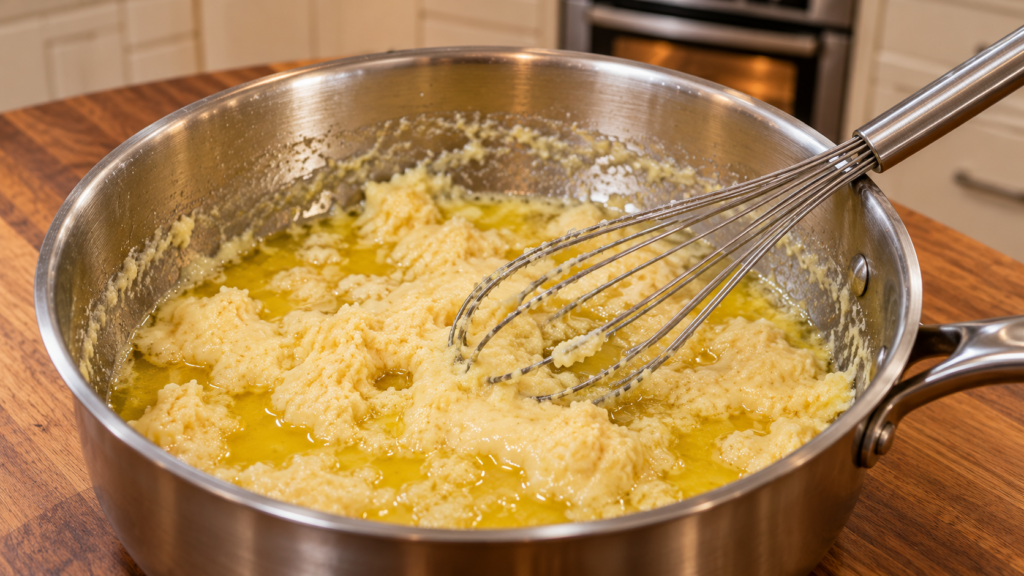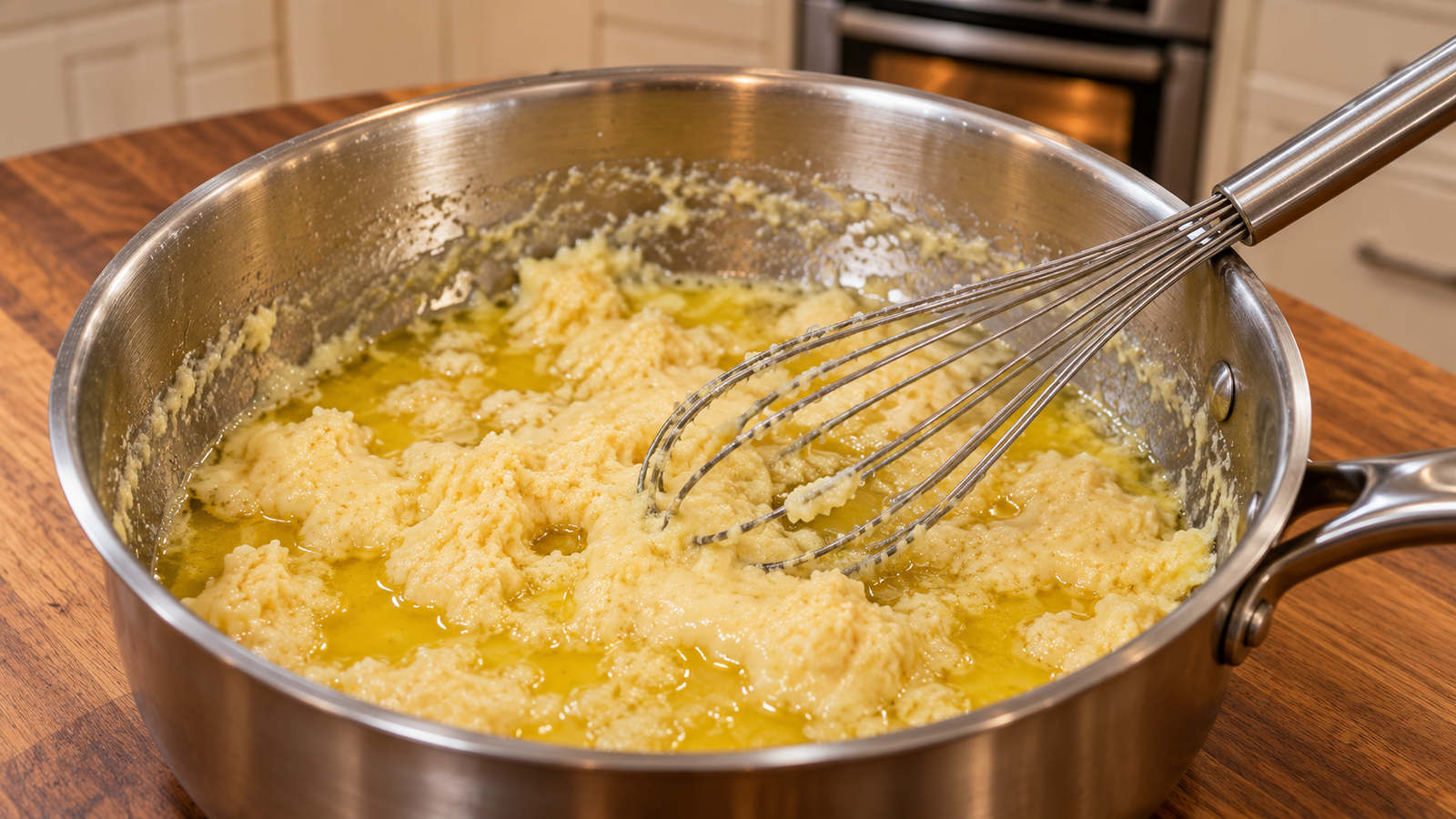
Cheese melting into a greasy, separated, genuinely disappointing mess instead of a smooth sauce almost never actually means the cheese itself was somehow bad or a wrong purchase to begin with. It almost always means heat was applied faster or harder than the cheese’s actual structure could reasonably tolerate at that exact moment. Melting is really a controlled breakdown, and controlled is the operative word here: push it too fast and the fat and protein that were holding together smoothly come apart instead, which is the entire real difference between a genuinely silky, smooth result and an oily, clumpy, disappointing one.
What’s actually breaking when cheese melts badly
Cheese is a network of milk proteins (mostly casein) with fat and water held inside that structure. Gentle, genuinely gradual heat lets that protein network loosen slowly and evenly over time, releasing the fat in a controlled way as it goes, which is exactly what produces a smooth, cohesive, properly unified melt rather than a separated one. Fast or excessive heat instead breaks the protein network apart all at once, and once it’s broken, the fat has nowhere organized to go. It pools out separately, which is exactly the greasy layer sitting on top of an otherwise clumpy, rubbery mass that shows up when cheese gets melted too aggressively. The cheese isn’t failing; the heat is simply moving faster than the protein structure can reorganize around.
This is also why cheese that’s melted and then overheated further (left on a hot surface too long, or reheated too aggressively) breaks even after it already melted smoothly the first time. The protein network that reformed during melting is just as vulnerable to overheating as the original solid structure was.
Why some cheeses melt smoothly and others barely melt at all
Moisture content and overall age both change, in real and measurable ways, how a specific cheese’s protein network actually behaves once real heat gets involved. A fresh, high-moisture cheese has a looser, less tightly bound protein structure to begin with, which generally lets it soften and melt more smoothly. A hard, well-aged cheese has a denser, more tightly bound structure from months or years of moisture loss, which makes it far more prone to breaking into a greasy, separated mess if heat is applied too quickly, even though the same cheese grated finely and added gradually to a warm (not hot) base can still melt into something smooth.
| Cheese type | Melts | Why |
|---|---|---|
| Fresh, high-moisture (mozzarella, young cheddar) | Smoothly, with moderate heat | Looser protein structure, more retained moisture |
| Semi-firm (gruyere, young gouda) | Smoothly, with gentle, gradual heat | Balanced structure; forgiving if heat is controlled |
| Hard, aged (parmesan, aged cheddar) | Reluctantly, prone to breaking | Dense, tightly bound protein network built over long aging |
| Very low-moisture, crumbly (feta, some fresh goat cheese) | Softens rather than truly melts | Protein structure built to hold its shape, not loosen smoothly |
Low and slow, the only real rule that matters
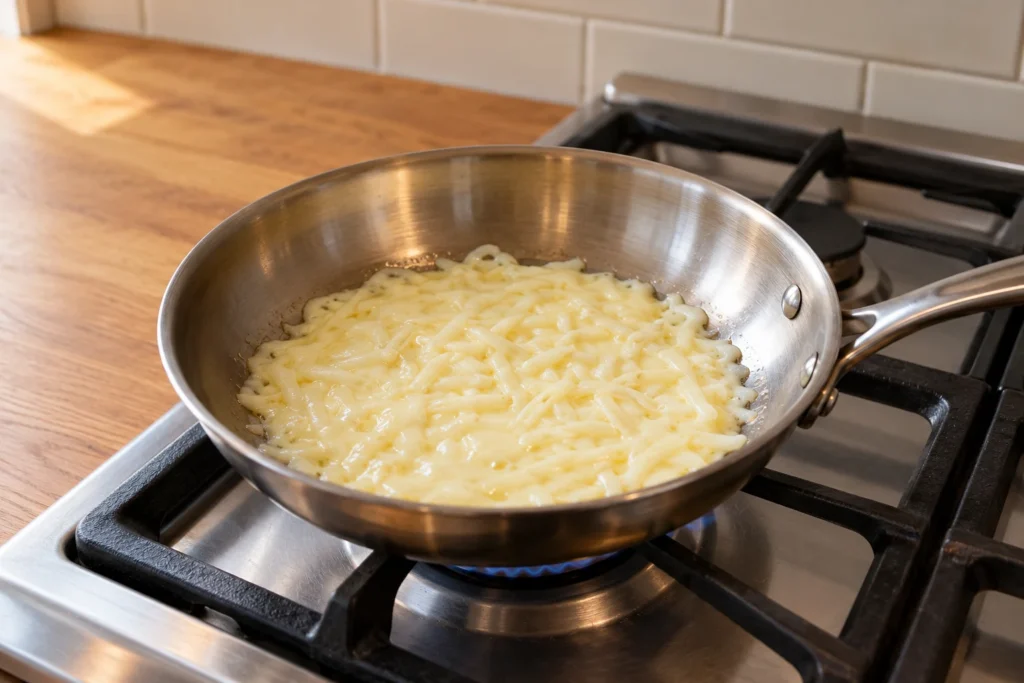
Every specific technique for melting cheese well traces back to one underlying principle: lower heat applied more gradually gives that protein network time to loosen evenly instead of breaking apart all at once. In a pan or a pot specifically, that means melting consistently over low to medium-low heat rather than reaching straight for high, and adding the cheese toward the very end of a dish’s total cooking time rather than letting it sit exposed over direct heat for an unnecessarily extended stretch. In an oven, it means a moderate temperature with the cheese added toward the end of the bake, not the start, so it melts during the final stretch instead of being exposed to high heat for the entire cook.
Shredding instead of reaching for a block
A block of cheese melts unevenly almost by definition: the outer surface is already liquefying while the center is still cold and solid, which forces a choice between undermelted cheese in the middle or overheated, broken cheese around the edges by the time the center finally catches up. Shredding or finely dicing cheese thoroughly before it goes anywhere near real heat solves this problem directly and reliably, since every individual piece is small enough to melt through evenly and quickly, well before the surrounding fat has had any real chance to separate out on its own. This single habit does more to prevent a greasy, broken melt than almost any other single adjustment.
Tempering cheese the way a cook tempers eggs
Adding cold, shredded cheese straight into a very hot liquid or pan shocks it, and that sudden temperature jump is exactly the kind of fast heat that breaks the protein structure. Letting shredded cheese sit out briefly to lose some of its chill before it’s added, and stirring it into a liquid that’s warm rather than at a hard simmer or boil, both soften that temperature jump considerably. Adding cheese gradually, in smaller handfuls stirred in between additions rather than one large dump all at once, spreads the heat exposure out further and gives the protein network a better chance to stay intact the whole way through.
Why pre-shredded, bagged cheese sometimes melts worse than a block
Most pre-shredded cheese sold in bags is coated in a thin layer of starch or cellulose specifically to keep the shreds from clumping together in the package. That thin coating is genuinely doing its job well as an anti-caking agent, but it also interferes noticeably with how the cheese behaves once real heat is applied, often producing a slightly grainier, visibly less smooth melt than the exact same cheese shredded fresh off a whole block would. For a dish where melt quality is genuinely the whole point, a cheese sauce or anything meant to stretch and flow smoothly, shredding a block fresh right before using it, even though it takes a few extra minutes, produces a noticeably better result than reaching for the pre-shredded bag.
For dishes where cheese is scattered on top and melted under a broiler, that difference matters less, since a slightly grainier texture is far less noticeable in that context than it is in a smooth sauce. The pre-shredded bag is a reasonable convenience trade specifically there; it’s a worse one in anything built around the cheese melting into a liquid or sauce base.
Matching the cheese to what the dish actually needs
Not every dish wants the same melt quality, and picking cheese by that actual need rather than by habit solves a lot of disappointment before it starts. A dish built specifically around a smooth, pourable sauce wants a cheese with a genuinely reliable, well-documented melt, young cheddar, gruyere, or a similar semi-firm cheese, handled carefully with the low-and-slow approach already covered above in full. A dish where cheese specifically needs to stretch out into long, satisfying strands, the classic pull of a genuinely good pizza or a properly made grilled cheese, wants a cheese specifically known for exactly that elastic quality, most commonly mozzarella, which has a protein structure that behaves differently under heat than a harder, more crumbly cheese does. A dish where cheese is meant to add a sharp, concentrated finishing flavor rather than melt smoothly at all, shaved or finely grated over a finished plate, is often better served by a hard, aged cheese used exactly the way its dense structure wants to be used: barely melted, if melted at all.
A broken sauce isn’t always a lost cause
A cheese sauce that’s already started separating can sometimes be brought back by pulling it off the heat immediately and whisking in a small splash of cold liquid, cream or broth, a little at a time. The sudden drop in temperature and the extra liquid can help re-emulsify the fat back into the protein network rather than leaving it pooled separately. This doesn’t always work, and it works less reliably the further a sauce has already broken, which is exactly why prevention through gentle, gradual heat matters considerably more than any after-the-fact rescue technique ever will.
A fully broken sauce, one where the fat has pooled visibly and the solids have gone stringy and tough, is a genuinely different situation from one that’s just started to look slightly oily at the edges. The earlier a problem is caught, the better the odds a quick off-heat rescue actually works. Catching it early also means paying attention throughout the whole process rather than only checking in once something already looks obviously wrong, which by then is often too late to fully reverse.
A water bath for the most delicate situations
For a cheese fondue-style dish or anything where an especially smooth, stable melt genuinely matters more than speed, melting cheese indirectly over a double boiler (a bowl set over, not touching, a pot of gently simmering water) offers the most control of any method available. The water bath physically caps exactly how hot the cheese is able to get at any point, since it can never genuinely exceed the actual temperature of the gently simmering water sitting beneath it, which makes overheating the cheese past its breaking point almost impossible as long as the water itself stays at a bare simmer rather than a hard boil. It’s slower than melting directly in a pan, often by several extra minutes, but for a dish where a broken, greasy result would be a genuine disappointment rather than a minor inconvenience, that extra time is a reasonable trade for real reliability.
A small, deliberate amount of acid, a splash of white wine or a squeeze of something citrus, stirred in alongside the cheese in a genuine fondue-style application also helps keep the final texture noticeably smoother, since that acidity affects how the proteins interact with each other during melting in a way that tends to favor a more stable, cohesive result.
Building cheese directly into a dish, not just melting it on top
Melting cheese into a pan sauce behaves differently from melting it on top of something under a broiler, and the low-and-slow principle still applies to both, just in different forms. For a sauce, cheese added off direct heat or at the very end of cooking, stirred in gently rather than left to sit over active heat, holds together far better than cheese that’s been simmering in the pan the whole time. For a baked or broiled dish, a shorter stretch under higher, more direct heat right at the end does less damage than a long, slow bake at the same high temperature the whole way through, since the actual exposure time matters as much as the temperature itself.
Mistakes that turn good cheese into a greasy mess
- Melting over high heat to save time. This is the single most common cause of a broken, oily melt, regardless of which cheese is involved.
- Using a block instead of shredding or dicing first. Uneven surface area means the outside overheats before the inside has fully melted.
- Adding cheese straight from the fridge into a very hot pan or liquid. The sudden temperature shock breaks the protein structure before it has a chance to melt gradually.
- Reheating melted cheese too aggressively. A dish that already melted smoothly once can still break on reheat if that second round of heat is too fast.
- Choosing a hard, aged cheese for a dish that needs a smooth, stretchy melt. Some cheeses are genuinely better suited to shaving or grating over a finished dish than melting into one.
- Leaving melted cheese sitting over active heat longer than necessary. Even a cheese that melted perfectly at first can break if it’s left simmering or held over direct heat well past the point it actually needed to be there.
- Skipping the water bath for a dish that genuinely calls for one. Rushing a fondue-style application with direct heat instead of a double boiler is a common, avoidable reason that specific style of dish breaks.
Visual steps