
Kidney has the worst reputation of any organ meat most people have heard of, usually summed up as smelling like ammonia and tasting too strong to eat. That reputation is almost entirely about prep, not about the organ itself. A kidney that has been trimmed and soaked properly, and cooked for the right amount of time, tastes much closer to a well-cooked liver than to anything resembling the warnings most people have heard about it. Skip the soak or overcook it, and the same cut earns every bit of its bad name.
The part that causes most of the problem
Running through the center of a kidney is a pale, tougher core of connective tissue and small ducts, often called the core or the white membrane, that carried waste through the organ while the animal was alive. This core concentrates most of the strong, sharp flavor that gives kidney its reputation, and it needs to come out before cooking, not after. Leaving it in is the single most common reason a home-cooked kidney tastes far stronger than it needs to.
Trimming before anything else happens
Rinse the kidney and split it in half lengthwise with a sharp knife, laying both halves flat on a cutting board. The white core will be visible running through the center of each half, along with any remaining patches of the surrounding fat. Using scissors or the tip of a paring knife, cut and pull this core out entirely, along with any obvious fat or membrane still attached to the outer surface. What is left should be a relatively clean, deep red-brown piece of tissue without the pale streaks running through it. This step takes only a few minutes and matters more than almost anything else in getting kidney to taste the way it is supposed to.

Why the soak matters
After trimming, cut the kidney into even pieces, roughly bite-sized or slightly larger, and submerge them in either whole milk or a mild saltwater brine, about a tablespoon of salt per cup of water, for thirty minutes to two hours in the refrigerator. This step pulls out residual blood and some of the remaining compounds responsible for the sharper smell and flavor people associate with kidney, the same basic logic behind soaking liver in milk before cooking it. A longer soak, up to the two-hour mark, makes a noticeably bigger difference on a kidney that is a day or two old than on one bought the same morning, since the stronger smell builds as the organ sits, even under proper refrigeration.
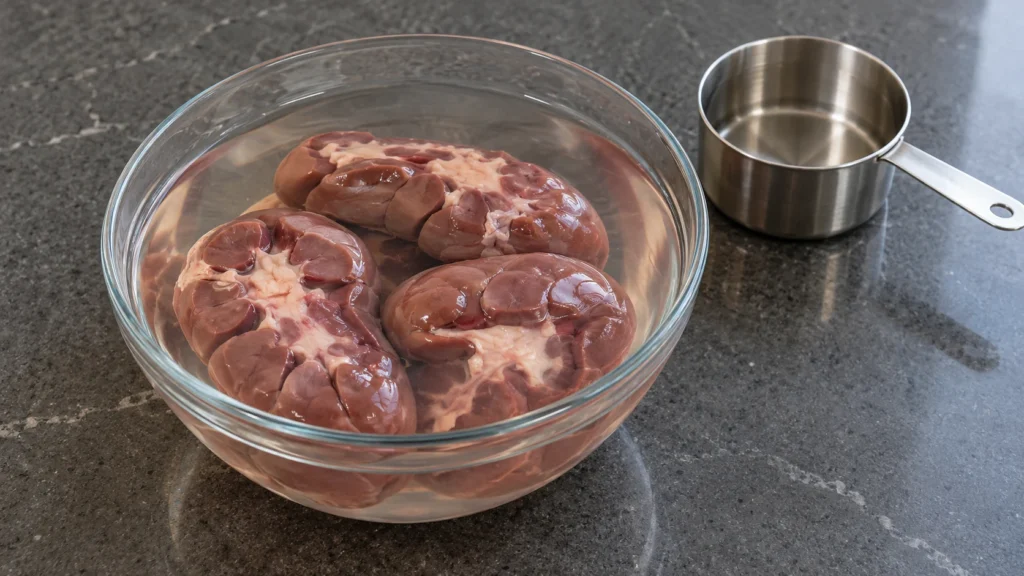
Freshness genuinely matters more here than with most other organ meat. A kidney that already smells strongly of ammonia before it has even been cooked is past the point the soak can meaningfully fix, and buying from a butcher who turns over organ meat quickly, rather than one where it sits in the case for days, makes a real difference before the cooking technique even comes into play.
The actual cooking method
Drain the soaked kidney pieces and pat them completely dry with paper towels; wet kidney steams instead of searing and will not develop any color in the pan. Heat a skillet over high heat with a small amount of butter or rendered fat until it is genuinely hot, close to smoking, then add the kidney pieces in a single layer without crowding the pan. Sear for roughly sixty to ninety seconds per side, the same general approach used for liver, and pull the pieces while the centers are still slightly pink. They will finish carrying over the last bit of heat once off the pan.
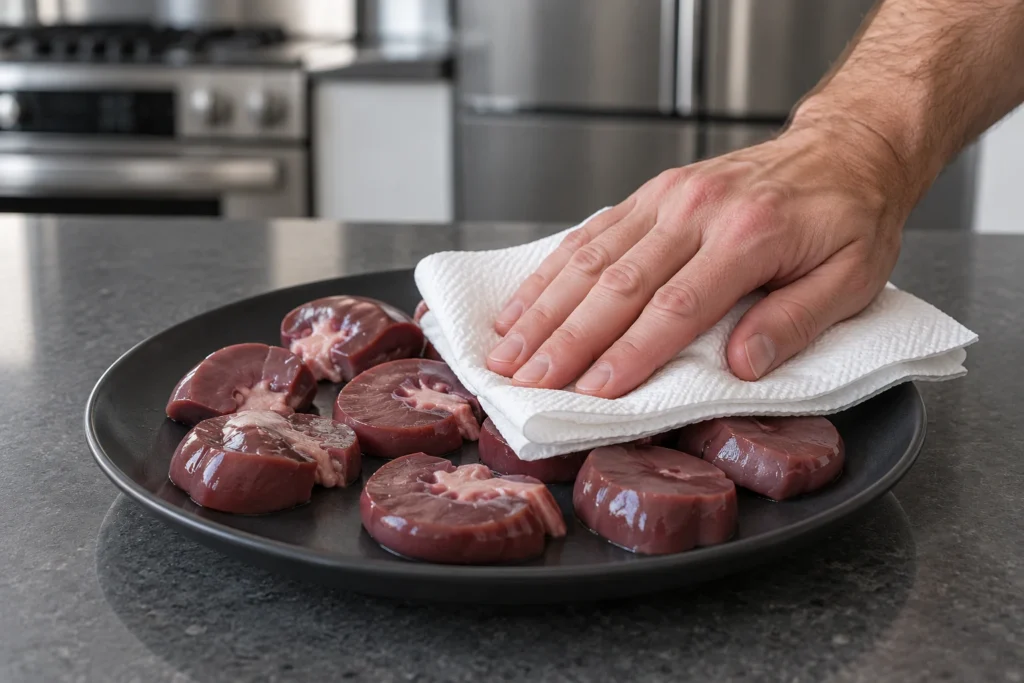
Overcooking is the second major mistake, right behind skipping the trim and soak, and it actively makes the flavor stronger rather than milder, the opposite of what most people expect. Kidney cooked until fully grey throughout turns rubbery in texture and more pronounced in flavor at the same time, reinforcing exactly the reputation a careful soak and quick sear are meant to avoid. A kidney pulled from the pan while still slightly pink in the center, by contrast, is tender and considerably milder than its reputation suggests.
A normal smell while cooking that does not mean anything is wrong
Even a well-trimmed, properly soaked kidney gives off a noticeably stronger smell while it is actually searing than a piece of liver or a steak does, and this catches a lot of first-time cooks off guard into thinking something has gone wrong. It has not. This is simply how kidney smells while cooking, distinct from the sharper, more unpleasant ammonia smell that signals a kidney has gone bad or was never properly trimmed and soaked in the first place. Cracking a window or turning on the exhaust fan before starting is a reasonable, ordinary precaution, not a sign of a ruined batch. The smell settles considerably once the kidney is plated, and the flavor on the plate is far milder than the smell in the pan would suggest.
Other mistakes beyond skipping the trim or soak
Crowding the pan is an easy way to undo an otherwise careful prep. Kidney pieces packed too close together drop the pan’s temperature the moment they hit the surface, and the moisture they release has nowhere to evaporate quickly, leading to steamed, grey pieces instead of a proper seared crust. Working in two batches in a hot pan produces a noticeably better result than trying to fit everything in at once to save a few minutes.

Cutting the pieces too small is a related problem. Small, thin pieces cook through almost instantly in a hot pan, leaving essentially no window between a proper sear and overcooking. Cutting into pieces closer to an inch and a half across, rather than small dice, gives enough thickness to develop real color on the outside while the center still has a chance to stay pink before the whole piece cooks through.
What it tastes like done correctly
Properly trimmed, soaked, and quickly seared, kidney has a mild, slightly sweet, savory flavor with a texture closer to a firm piece of liver than to any muscle cut. It is distinctly an organ meat in flavor, more so than tongue, but nowhere near as sharp or mineral-heavy as most people expect going in. The version most people have actually tasted and disliked, if they have tried it at all, is almost always one that skipped the trim, the soak, or both, and was then cooked too long on top of that.

Beef, lamb, and pork kidney are not interchangeable
Lamb kidney is small, usually two to three ounces each, and noticeably milder than beef kidney, which makes it the easier starting point for a first attempt at this cut. Pork kidney sits in a similar size and flavor range to lamb, slightly larger but still manageable with the same quick-sear approach. Beef kidney is considerably larger, often close to a pound each, and stronger in flavor even after a proper trim and soak, which makes it better suited to long, slow cooking in a stew or the classic steak-and-kidney pie format rather than the fast sear used for the smaller versions. Treating a large beef kidney with the same thirty-second sear meant for lamb kidney leaves it both undercooked at the center and still carrying more of its stronger flavor than a long braise would resolve.
Veal kidney, less common but sometimes available from a specialty butcher, falls closer to lamb in both size and mildness, and responds well to the same quick-sear approach, including the classic preparation of finishing seared veal kidney with a mustard cream sauce. Whichever type is on hand, the trim and soak steps described above apply the same way across all of them; only the final cooking method changes based on size and how much of the kidney’s natural strength the trim and soak have already removed.
| Type | Typical size | Best approach |
|---|---|---|
| Lamb kidney | 2 to 3 ounces each | Quick high-heat sear |
| Pork kidney | 3 to 5 ounces each | Quick high-heat sear |
| Beef kidney | Up to roughly a pound each | Long, slow braise or stew |
Buying and freshness
Kidney is highly perishable, more so than most other organ meat, and should be bought the same day or the day before it is cooked rather than left in the refrigerator for several days. It should look deep red-brown and firm, without a slick surface or a sharp smell noticeable before it is even unwrapped. A butcher who keeps organ meat properly cold and sells through it quickly is a far better source than a supermarket case where it may have sat for an uncertain length of time. If it will not be cooked within a day of purchase, freezing it immediately is the safer choice over letting it sit fresh in the refrigerator and hoping for the best.
How it is actually used once cooked
Quickly seared lamb or pork kidney works well simply finished with a squeeze of lemon and chopped parsley, eaten much like a small, rich steak alongside a simple side. Beef kidney, braised slowly with onions, stock, and a splash of dark beer or wine, is the base of the classic steak-and-kidney pie, where the kidney’s stronger flavor mellows considerably over the long cook time and blends into the gravy alongside diced beef. Either direction depends on matching the technique to the size and type of kidney, not on one universal method applied to all three.
A bad kidney experience, when people describe one, is almost always one of a small number of specific things: the core left in, no soak at all, a kidney that was already a few days past fresh before it even hit the pan, or one cooked straight through to grey. Any single one of those is usually enough on its own to produce the strong, unpleasant version most people associate with the word. Handled with the trim, the soak, and a short, hot sear matched to the size of the piece, the actual eating experience is a considerably different thing from its reputation, and closer to liver than to anything that deserves the warnings it usually gets.
Where it shows up in other cooking traditions
British cooking has the longest-standing relationship with kidney of most Western food cultures, with steak and kidney pie and steak and kidney pudding both built around the same long beef kidney braise described above. French cooking has rognons, usually lamb or veal kidney quickly sautéed and finished with a mustard and cream sauce, a close cousin of the fast lamb-kidney approach covered here. Spanish riñones al jerez takes a similar quick-sear route, finished with a splash of sherry in the pan instead of mustard cream. All of these traditions rely on the same basic preparation logic: trim it properly, match the cook time to the size of the kidney, and do not push it past the point where it stays tender.
Cost, relative to the effort involved
Kidney sits at the same low end of the price scale as most other organ meat, usually well below the cost of any comparable amount of a muscle cut at the same counter. It asks for more hands-on prep than liver or heart, between the trimming and the soaking time, which is probably the bigger reason it shows up on fewer home tables than those two rather than anything about the eventual flavor. For anyone who has already gotten comfortable with liver and wants to try something a step further into the category, kidney is a reasonable next step, priced low enough that a first attempt that does not go perfectly is not a significant loss.
Leftovers
Cooked kidney keeps two to three days refrigerated, a shorter window than most other cooked meat, consistent with how perishable the raw organ is to begin with. Reheating gently in a covered pan over low heat, just long enough to warm through, avoids pushing already-cooked kidney past the point of toughness the way a hot microwave blast tends to. It is not a cut that freezes particularly well after cooking; the texture softens further on thawing in a way that is more noticeable here than with tongue or liver, so cooking only what will be eaten within a few days is the more reliable approach.
For the rest of this category, including liver, heart, bone marrow, and beef tongue, see the organ meat overview, which covers why each organ needs its own distinct handling rather than one shared technique.
Visual steps
