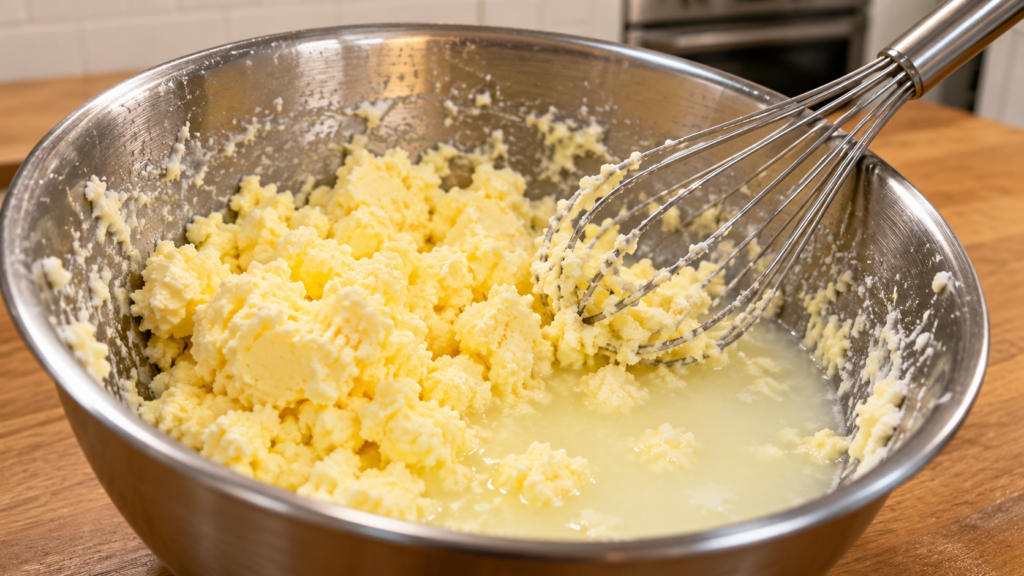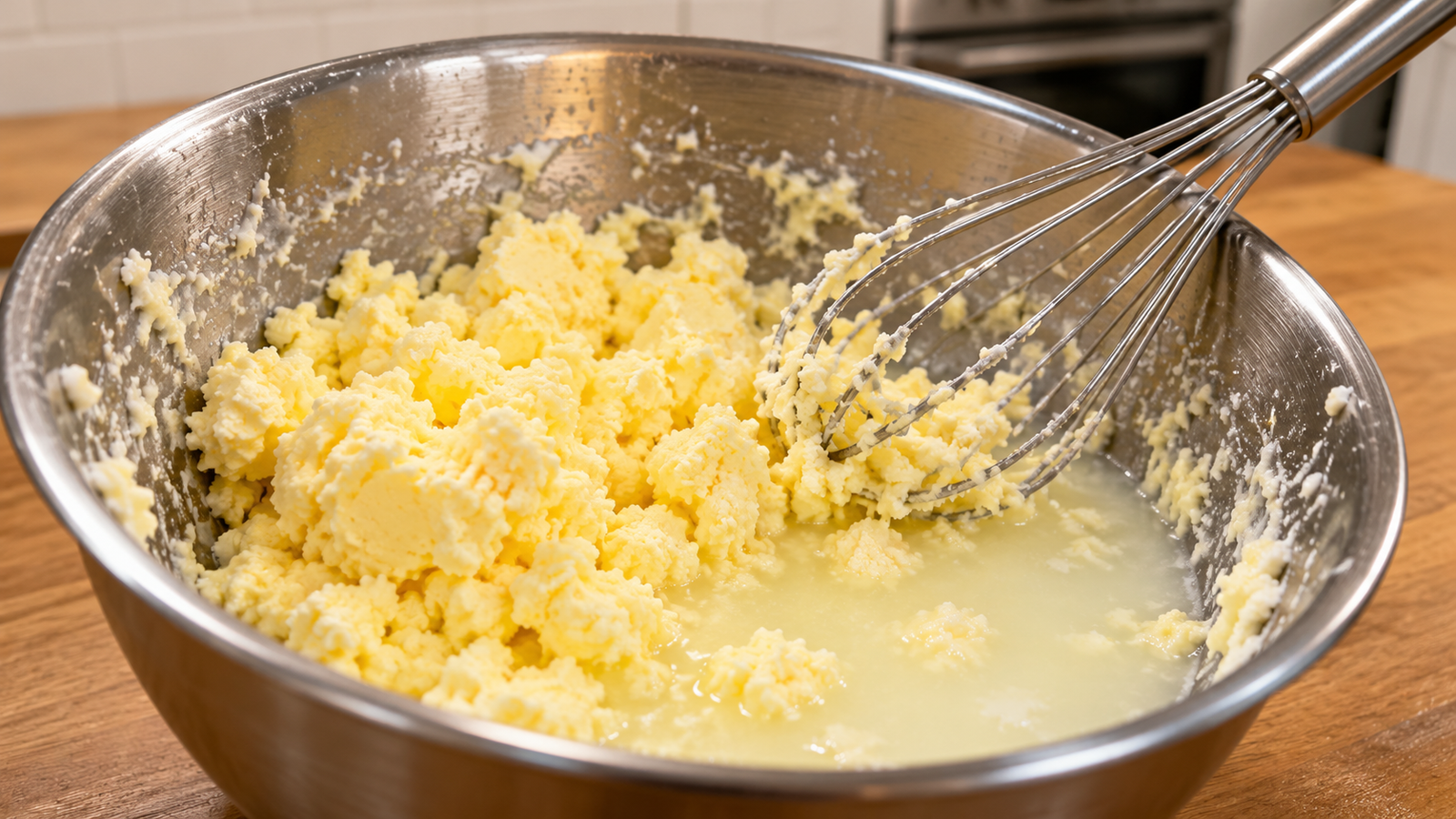
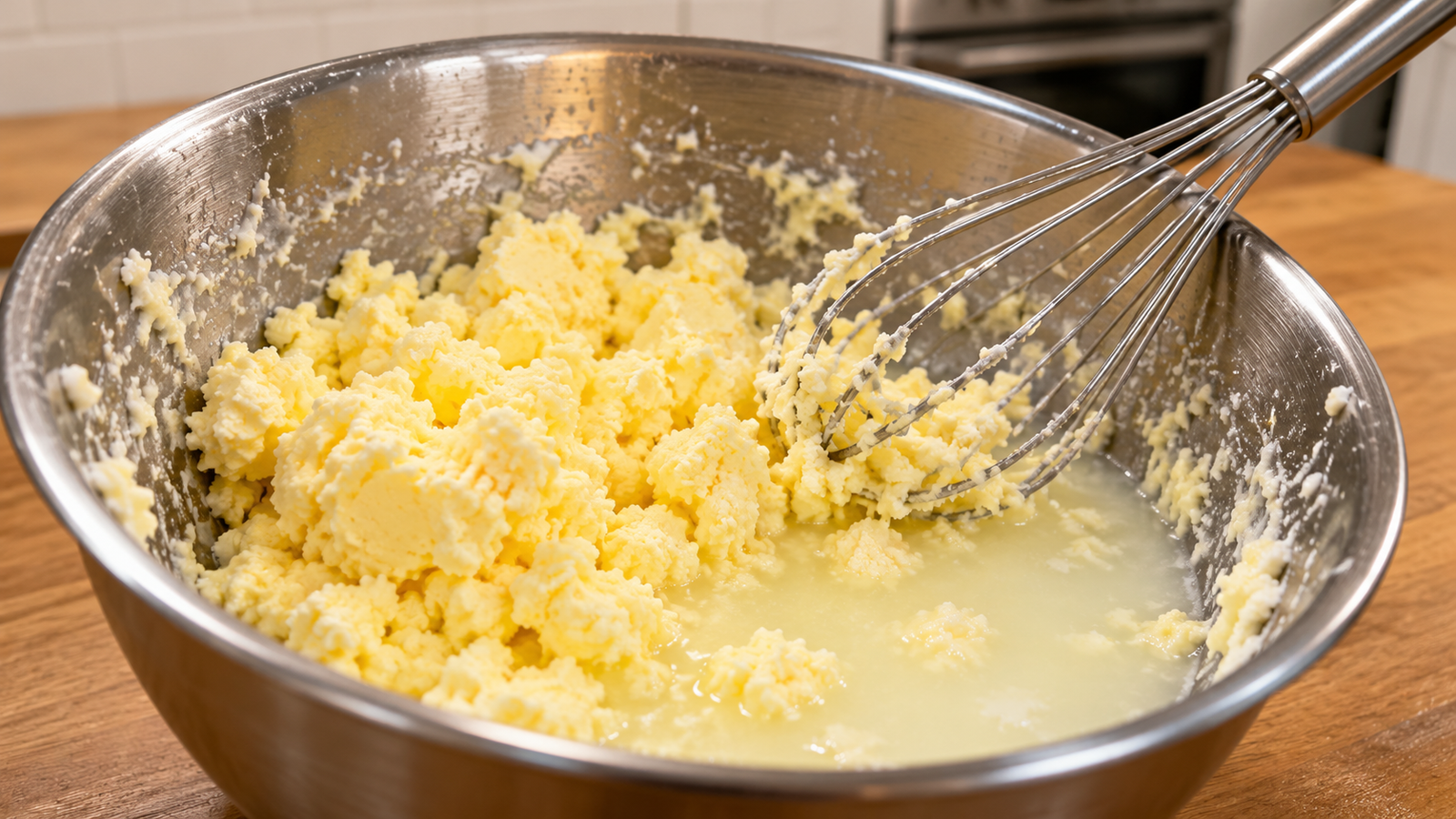
Whipped cream looks like a simple mechanical trick: beat air into fat until it holds a shape. Most of the time that’s exactly what happens. Then one day the same cream, the same bowl, the same beaters, and instead of soft billowy peaks there’s a grainy, curdled mess that keeps separating into yellow fat and thin liquid no matter how carefully it gets folded back together. Nothing went wrong with the cream. What happened is that whipping crossed a line it was always going to cross eventually, just a little further than intended.
What whipping actually does to cream
Cream is an emulsion: tiny fat globules suspended in a watery liquid, each globule wrapped in a thin membrane that keeps it from clumping together with its neighbors. Beating cream does two things to that structure at once. It whips air into the liquid in the form of small bubbles, and it agitates the fat globules enough that some of their protective membrane breaks down. Those slightly damaged globules start sticking to each other and to the surface of the air bubbles, which is what builds a stable network: a web of fat holding air in place, which is the entire physical reason whipped cream holds a shape instead of running flat like a liquid.
That process is a spectrum, not a single moment. Soft peaks happen early, once enough fat globules have linked up to trap air loosely. Keep beating and the structure tightens into stiff peaks, holding a sharper shape. Keep beating past that point and the same mechanism that built the structure starts tearing it apart: more and more fat globules break their membranes and clump together permanently, squeezing out the water they used to help hold in place. Past a certain point, that clumping doesn’t stop. It’s the exact same physical process that makes butter, just pushed further than whipped cream needs to go.
Soft peaks and stiff peaks are not the same target
A lot of recipes say “whip to peaks” without specifying which kind, and the difference actually matters for how the cream behaves afterward.
| Stage | What it looks like | Best for |
|---|---|---|
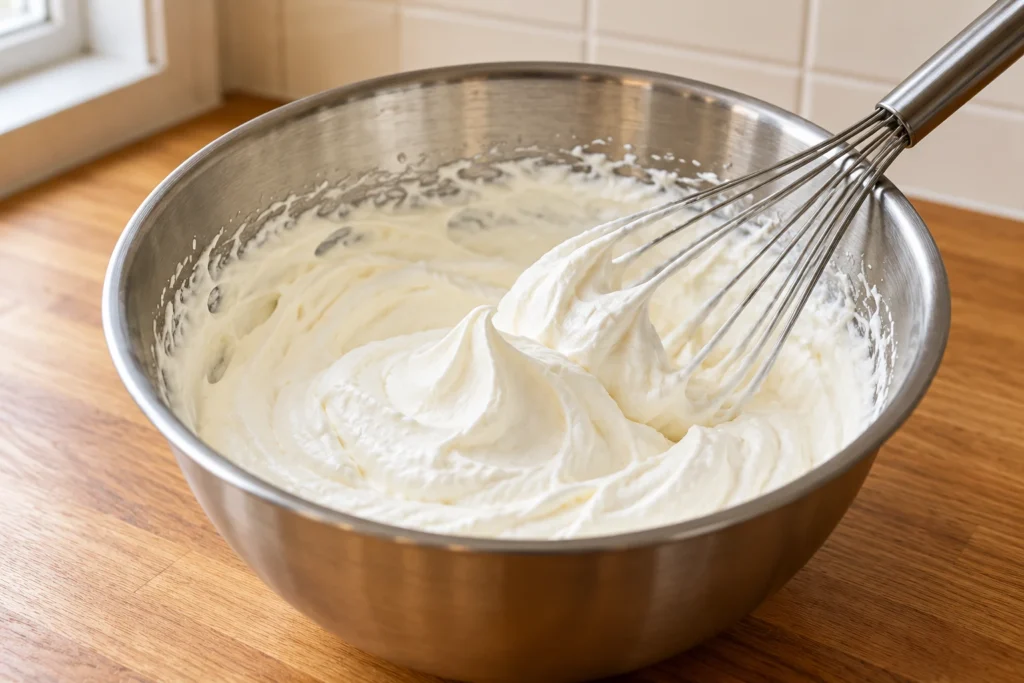
| Soft peaks | Peak curls over gently when the beater is lifted | Folding into something else, where stiffness would deflate the other ingredient |
| Medium peaks | Peak holds its shape but the tip still droops slightly | A general-purpose topping that needs to hold for a short while |
| Stiff peaks | Peak stands fully upright, no drooping | Piping, or anything that needs to hold its shape for hours |
| Past stiff | Grainy texture, visible separation starting | Nothing; this is the warning stage, stop immediately |
Stiff peaks sit right next to disaster, which is exactly why so many batches of whipped cream go wrong: the visual difference between properly stiff and just-starting-to-break is small, and by the time the grainy texture is obvious, the structure has already crossed the line. Checking frequently in the last stretch of whipping, rather than walking away or whipping on a fixed timer, is the actual fix for this.
Why cold matters more than almost anything else here
Fat is solid or soft depending on temperature, and cream’s fat globules hold their structure and whip into a stable foam far more reliably when they’re cold and firm than when they’re soft and closer to melting. Cream straight from the refrigerator whips faster and holds its peak longer than cream that’s been sitting at room temperature, since warm fat globules are more prone to clumping together permanently, the same butter-forming process described above, well before enough air has actually been incorporated.
Chilling the bowl and beaters in the freezer for ten to fifteen minutes before starting extends that same advantage. A cold bowl keeps the cream closer to its ideal whipping temperature for longer during the process itself, since the metal isn’t adding warmth back into the mixture with every pass of the beater. On a warm day, or in a warm kitchen, this step stops being optional and starts being the difference between cream that whips cleanly and cream that fights the whole way.
Fat content sets the ceiling before whipping even starts
Cream needs roughly 30 percent butterfat at minimum to whip into a stable foam at all; below that, there simply aren’t enough fat globules present to build the network that holds air in place, a mechanical limit rather than a matter of technique. Heavy cream, typically 36 percent fat or higher, has real margin to work with and tolerates a slightly longer whip before trouble starts. Whipping cream, sitting closer to 30 to 36 percent, has less margin and turns grainy faster once it’s pushed past its peak. Reaching for heavy cream specifically, rather than a lighter whipping cream, is a simple way to buy extra forgiveness on a first attempt or on a day when distractions are likely.
Why store-bought whipped topping doesn’t have this problem
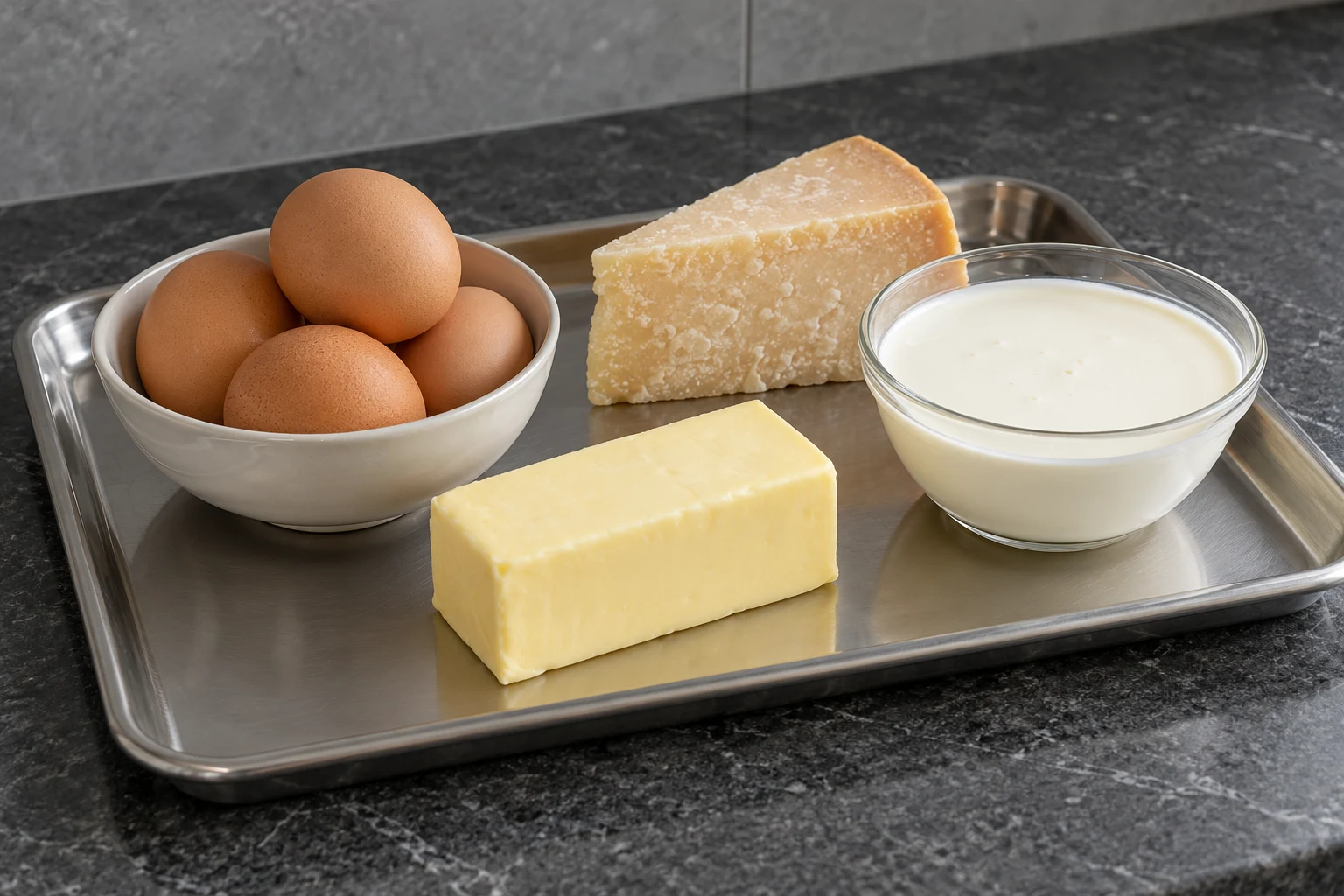
A canister of commercial whipped topping or an aerosol can of pre-whipped cream holds its shape for days without separating, which has nothing to do with being somehow better engineered cream. Most of those products rely on added stabilizers, gums, emulsifiers, or in the case of many “whipped topping” products, vegetable oil in place of real dairy fat entirely, specifically chosen because they resist the same fat-clumping mechanism that makes fresh whipped cream so time-sensitive. That stability is real, but it comes from ingredients that move the product further from a simple animal-product food and closer to an engineered one, which is exactly why fresh cream, whipped properly and used relatively soon after, is worth the extra attention it demands.
Stabilizing fresh whipped cream honestly, without reaching for a can
For cream that genuinely needs to hold its shape for several hours, a small amount of unflavored gelatin dissolved in a tablespoon or two of warm water, cooled slightly, then drizzled in during the final stretch of whipping, genuinely extends how long the structure holds without changing the flavor the way many other stabilizers do. The gelatin forms its own light network through the whipped cream, reinforcing the fat-and-air structure described earlier rather than replacing it. This matters specifically for cream destined to sit out at a gathering or hold overnight in the fridge, situations where a batch whipped an hour before serving would otherwise start to weep liquid and lose its shape.
Powdered sugar, when sweetening is wanted, holds a slight structural edge over granulated sugar for the same reason: the small amount of cornstarch typically present in powdered sugar acts as a mild stabilizer on its own, on top of dissolving more easily into the cream without the gritty texture granulated sugar can leave behind if it’s added too late in the process.
Where this actually fits in an animal-product kitchen
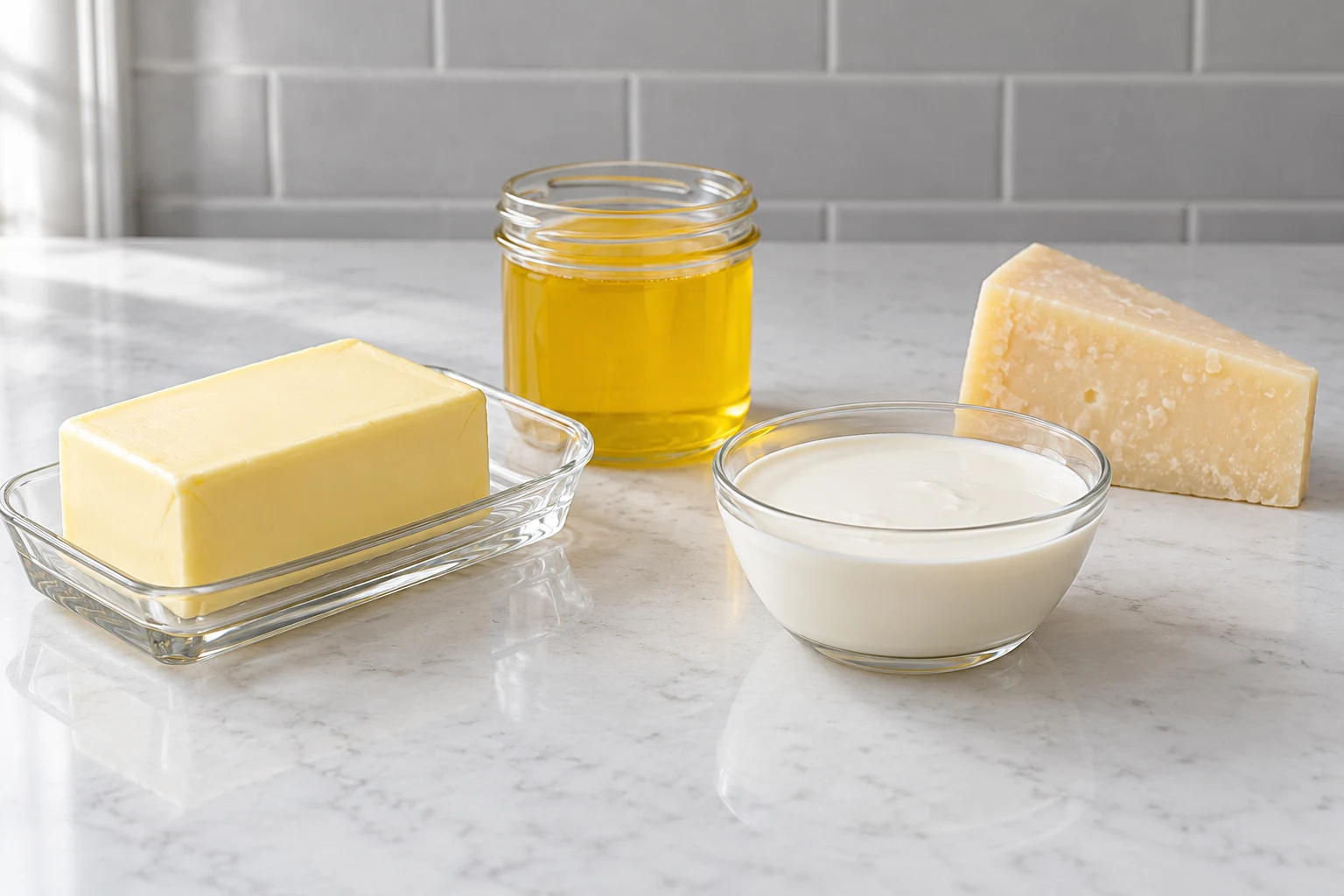
Whipped cream isn’t a dessert-only ingredient on this site. A spoonful folded into a properly gelled bone broth once it’s been chilled and whisked smooth turns it into something closer to a savory mousse, and a small dollop worked into a warm pan sauce right at the end of cooking, off the heat, adds richness the same way a pat of butter would, just with more air and less density. Thinking of whipped cream purely as a sweet topping undersells how much it can actually do in a kitchen built around real animal-product fat.
Pasteurized versus ultra-pasteurized, a real difference at the carton
Most cream sold in a standard grocery store is ultra-pasteurized, heated to a higher temperature than standard pasteurization specifically to extend shelf life considerably, sometimes by several weeks. That extra heat treatment genuinely changes the cream’s whipping behavior: ultra-pasteurized cream takes somewhat longer to whip to stiff peaks and can feel slightly less stable once there, since the higher heat alters some of the proteins involved in building that fat-and-air structure in the first place. It still whips, and for most everyday purposes the difference is minor, but anyone chasing the most reliable, fastest-whipping result specifically should look for cream labeled simply “pasteurized,” not “ultra-pasteurized,” when a store or dairy actually offers both side by side.
Checking the date on the carton matters here too, more than it does for most other dairy products. Cream genuinely closer to its sell-by date, even if still well within a safe window, whips less reliably than cream bought fresh, since the fat globule membranes that make whipping possible degrade gradually over time even under proper refrigeration.
What to actually do once it’s gone too far
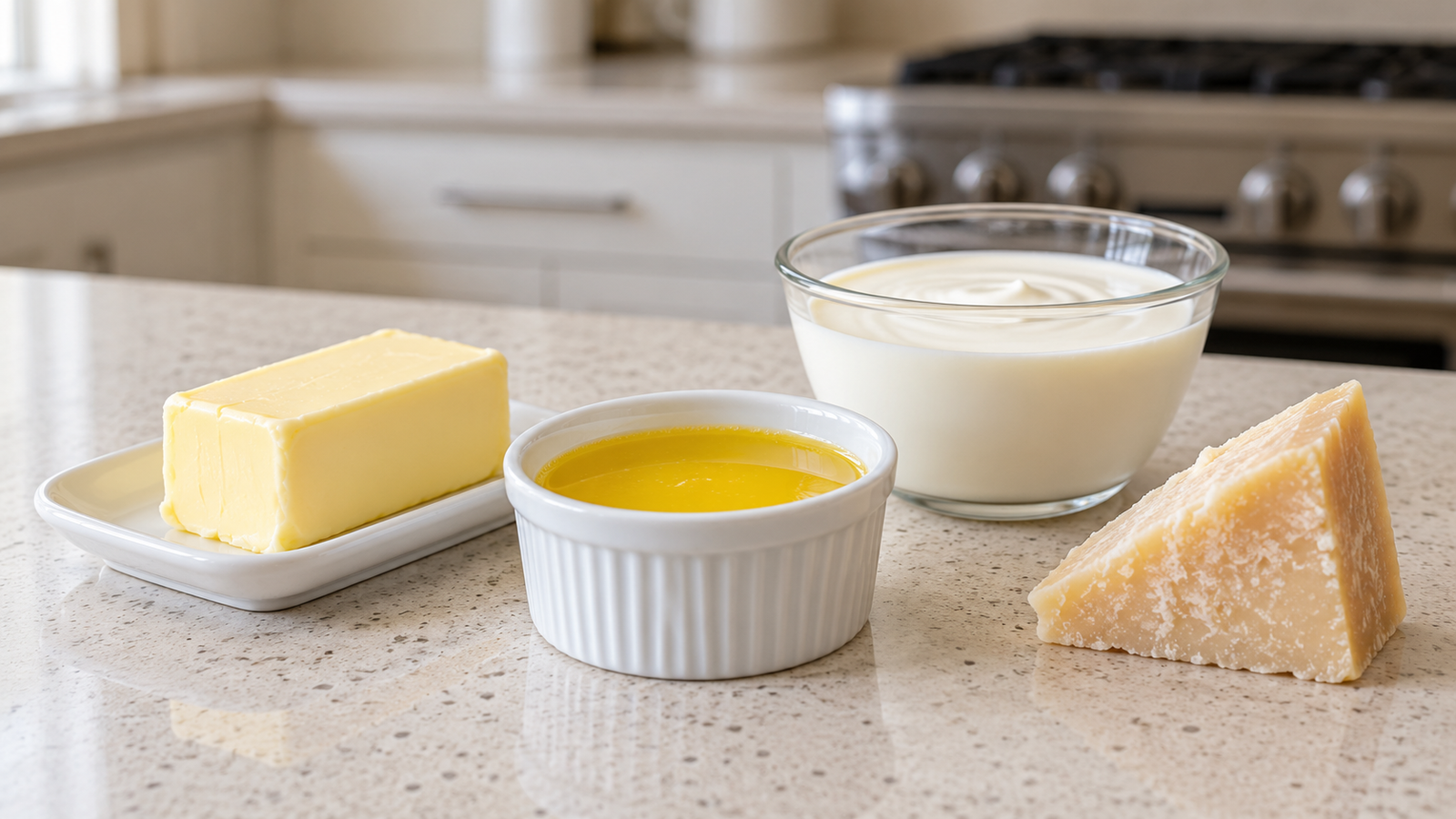
Overwhipped cream that’s just starting to look grainy, with no real liquid separation yet, can sometimes be rescued by gently folding in a splash of fresh, unwhipped cold cream by hand. That fresh fat and liquid helps loosen the overworked structure back toward something smoother, though it won’t fully undo the damage and the result is usually softer than a fresh batch would have been.
Cream that’s gone all the way to visible butter and separated liquid, called buttermilk at that point, hasn’t actually been ruined at all. It’s simply turned into a different, equally real product. Straining the solid butter away from the liquid, pressing out the remaining moisture, and working in a small amount of salt produces genuine fresh butter, not a consolation prize. Keeping that outcome in mind takes some of the pressure off getting the whipping stage perfect: worst case, the batch becomes something else useful rather than something wasted.
Mistakes that show up again and again
- Whipping on a fixed timer instead of watching closely. The gap between stiff peaks and ruined cream is measured in seconds on a fast mixer, not minutes.
- Using room-temperature cream, bowl, or beaters. Warm fat clumps into butter faster and with less warning than cold fat does.
- Reaching for whipping cream instead of heavy cream when extra margin for error matters. The lower fat content gives less room to recover from a slightly-too-long beat.
- Adding sweetener or flavoring too early. Sugar and other additions are easier to fold in evenly once soft peaks have already formed, rather than slowing down the whipping process from the very start.
- Panicking and tossing overwhipped cream. It’s almost always recoverable, either folded back toward smoother or pushed the rest of the way into real butter.
- Reaching for a carton closer to its sell-by date without realizing it matters. Older cream whips more slowly and holds its peak less reliably than genuinely fresh cream, even when it’s still perfectly safe to use.
- Using the wrong bowl size for the amount of cream. A bowl too small splashes cream out before it’s built real volume; a bowl too large makes it harder for the beaters to reach and properly incorporate a small amount of cream evenly.
Whipping by hand versus a mixer
A hand whisk takes longer to reach stiff peaks than an electric mixer does, which sounds like a disadvantage until the actual risk is considered: that extra time gives far more warning before cream crosses from properly whipped into overworked. For a first attempt, or for anyone who’s struggled with overwhipping on a stand mixer before, whipping by hand trades some arm effort for a much wider, safer window to actually see and feel when the cream is exactly right. An electric mixer on a low-to-medium speed, rather than the highest setting, offers a reasonable middle ground: faster than a whisk, but still slow enough to catch the right moment before it’s gone.
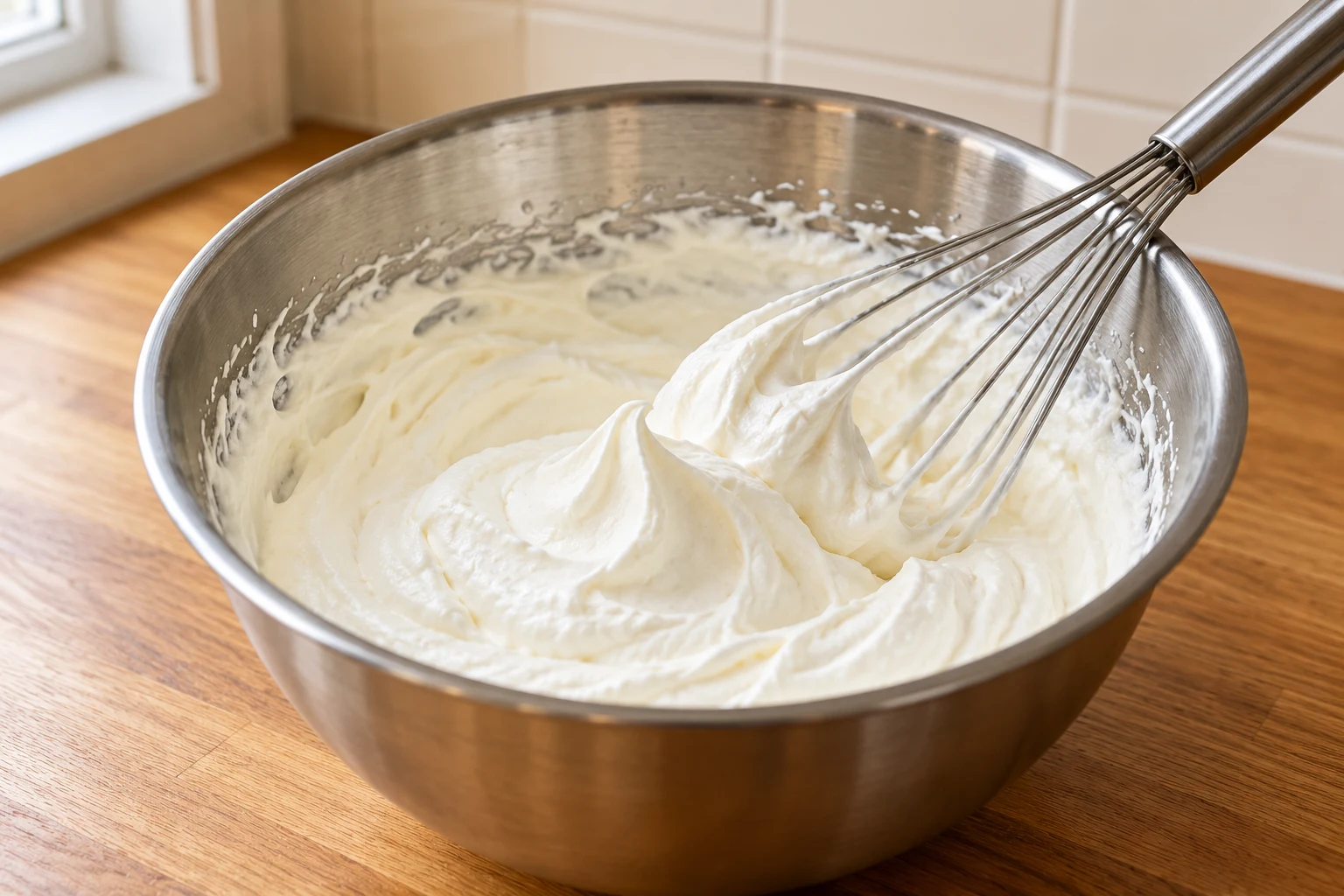
A stand mixer running unattended on high speed is where most genuinely bad overwhipping accidents happen, since nobody is actually watching the bowl during the exact few seconds that matter most. Staying at the mixer for the entire process, rather than starting it and walking away to do something else, costs almost nothing in time and prevents the single most common version of this mistake.
None of this requires a stand mixer, a fancy whisk, or any real equipment at all beyond a cold bowl and patience through the last stretch of whipping. The actual skill here is almost entirely about attention at the right moment, not technique in any complicated sense, which makes it one of the more forgiving dairy techniques on this site once the fat-content, temperature, and timing basics are actually understood rather than guessed at.
Visual steps