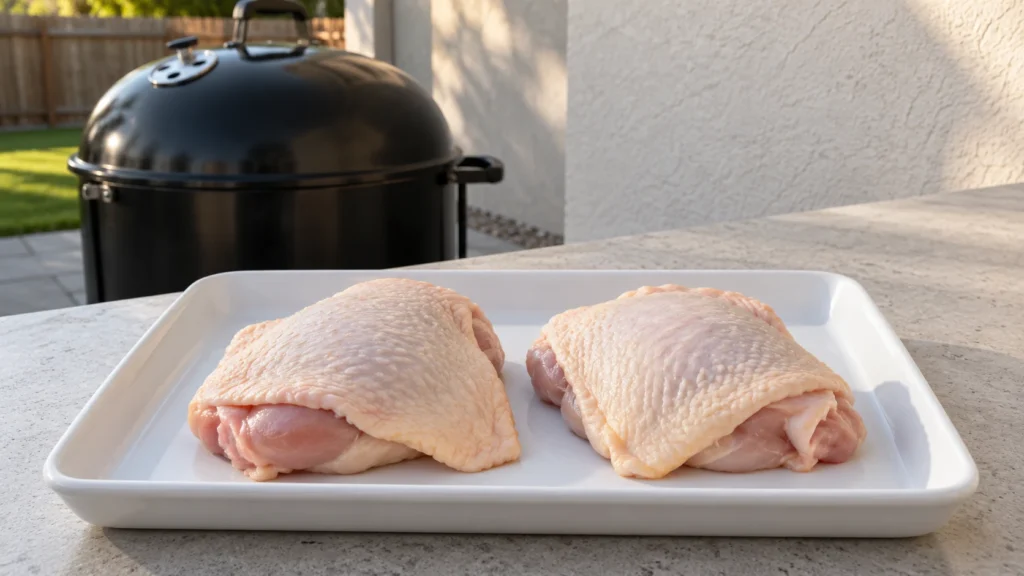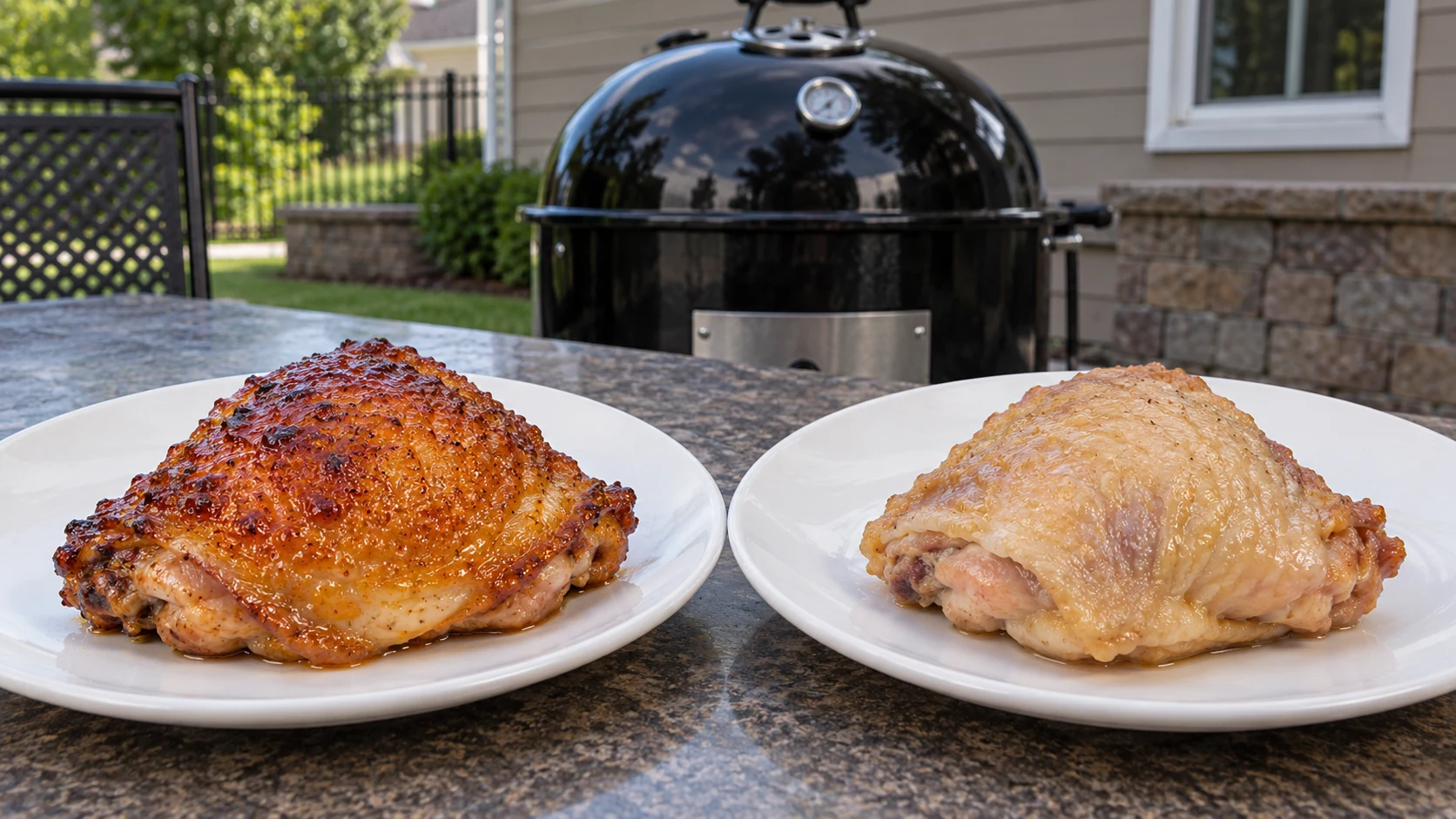
A brisket rewards low, patient heat for twelve hours straight. Chicken skin punishes that exact same patience. Smoke a whole bird at the standard low-and-slow brisket range and the skin comes out exactly the way a chicken breast does when it sits in a lukewarm oven too long: pale, soft, and slightly rubbery, with none of the shattering crackle a roasted or grilled bird develops. The real problem is using brisket’s temperature range on a food that needs something completely different from its surface, not the smoker itself.
Why low and slow is actually the enemy here
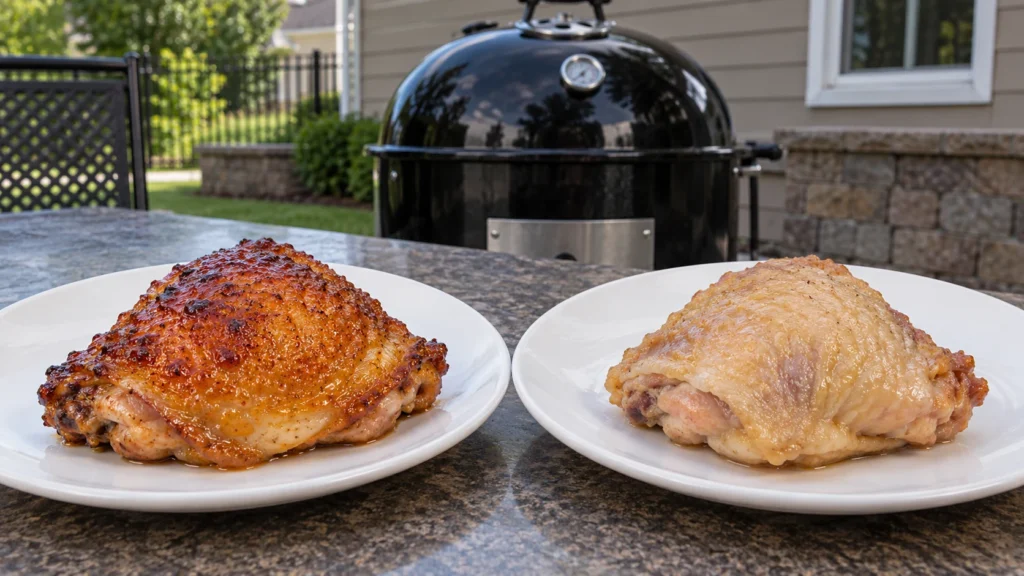
Crisp skin is a moisture problem before it’s a heat problem. Skin crisps when the water sitting in and under it evaporates fast enough, and fat renders out cleanly enough, that what’s left behind is a thin, dry, fat-crisped layer rather than a soft one still holding moisture. A smoker running in the 225 to 250°F range, the range that’s genuinely correct for breaking down brisket’s collagen over many hours, simply isn’t hot enough to drive off that surface moisture at a useful rate. The skin sits in a humid, smoky environment for hours, which is exactly what brisket wants from its connective tissue and exactly what chicken skin doesn’t want from its surface.
Humidity compounds the problem. A lot of smokers, especially water-pan designs, deliberately add moisture to the cooking chamber to help low-and-slow cuts stay juicy over a long cook. That’s a real benefit for a twelve-hour brisket. It’s actively working against a bird whose skin needs a dry environment to crisp at all.
The actual temperature range poultry skin needs
Somewhere in the 275 to 325°F range is the realistic target for smoking a whole chicken or turkey with skin that actually crisps, meaningfully hotter than the brisket and pork shoulder range covered elsewhere on this site. That’s still a real smoking temperature, well below a hot grill or a blasting oven, and it still produces genuine smoke flavor and a proper smoke ring. It’s just hot enough to actually drive moisture off the skin at a rate that lets rendering fat do its job instead of just sitting there.
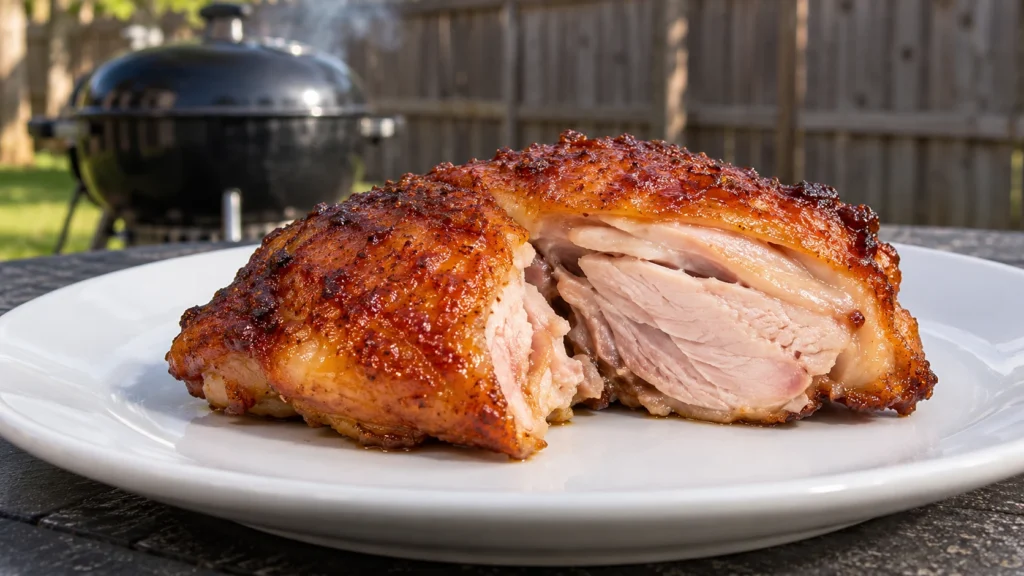
This is also why starting with bone-in chicken thighs works so well as a first project even though thighs share the same skin-crisping challenge as a whole bird: a thigh’s smaller size and shorter cook time (two to three hours) means less total time for the skin to sit in a humid environment before it’s done, which makes the problem less severe even without perfect temperature control. A whole bird, in the smoker for three to five hours depending on size, gives that same problem far more time to compound.
Drying the skin before it ever sees smoke
The single most effective fix happens before the smoker is even lit. Patting the bird completely dry, then leaving it uncovered on a rack in the refrigerator for several hours or overnight, pulls surface moisture out in a controlled environment instead of asking the smoker to do that job under humid, smoky conditions. This is the same air-drying principle used to get crisp skin on a roasted chicken, just applied earlier and more deliberately because the smoker’s environment works against the skin more than a dry oven does.

A light, even coat of salt applied during that same dry-brine window does double duty: it draws out a bit more surface moisture through the same mechanism covered in this site’s salting guide, and it seasons the skin all the way through rather than sitting only on the surface. Skipping this step and going straight from a wet package to the smoker is one of the more common, avoidable reasons the skin comes out soft.
Spatchcocking solves a second problem entirely
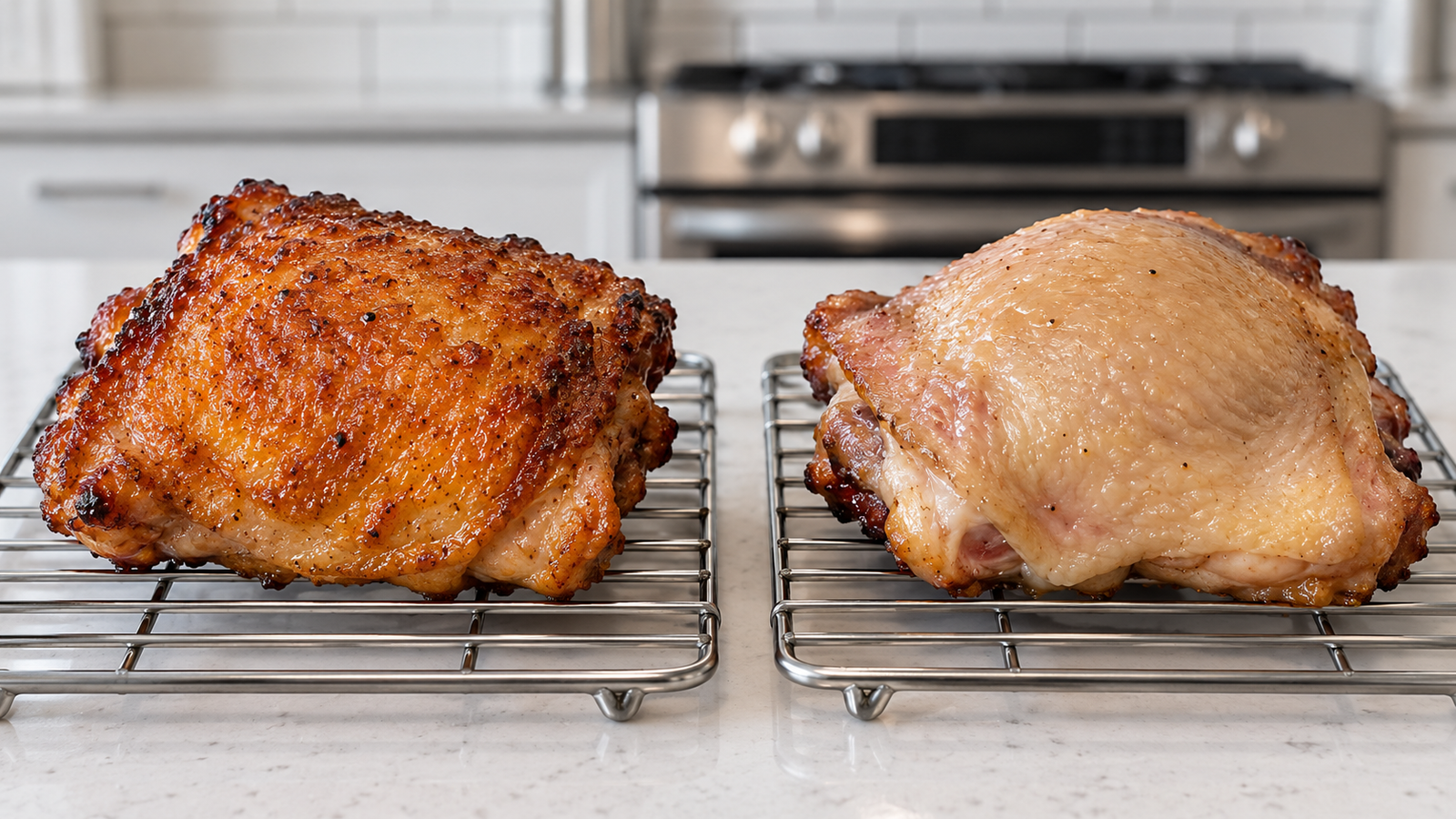
Spatchcocking, removing the backbone and flattening the bird, is worth doing for smoking for a reason beyond the even-cooking benefit already covered elsewhere on this site: it exposes far more skin surface area directly to the smoker’s heat and airflow at once, instead of leaving large sections of skin tucked against the cavity or pressed against a roasting rack where airflow barely reaches. More exposed surface area means more of the bird actually gets the chance to crisp rather than just the parts facing the heat source most directly.
The finishing blast, for anyone not willing to run the smoker hot the whole time
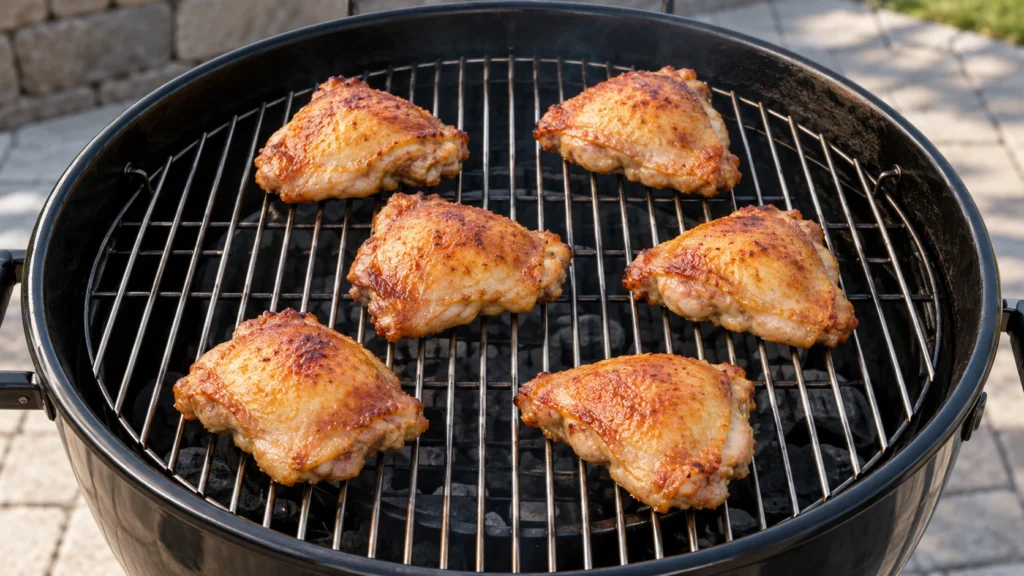
Running the entire smoke at 275 to 325°F isn’t the only path to crisp skin. A hybrid approach, smoking at a lower, more traditional temperature for most of the cook to build deep smoke flavor, then finishing with ten to fifteen minutes under a hot broiler or on a hot grill grate, gives up a little bit of total smoke exposure time in exchange for keeping the slower temperature range for most of the cook. This is a reasonable tradeoff for anyone who specifically wants the deeper flavor a longer, lower smoke builds and is willing to add one extra step at the end rather than running the smoker hot throughout.
The finishing blast only works if the bird is actually close to done already; using it to try to fully cook an undercooked center risks burning the skin before the interior catches up. It’s a texture fix for the last few minutes, not a shortcut around proper cooking time.
Wood choice matters less here than people assume
Poultry’s mild flavor means it picks up smoke faster and more noticeably than a heavily marbled cut like brisket does, which leads a lot of first-time poultry smokers to reach for the same strong woods, hickory or mesquite, that work well on a twelve-hour beef cook. On a three-to-five-hour chicken or turkey smoke, that same strong wood can easily turn overpowering rather than complementary, since there’s simply less meat and less cook time to balance it against. Milder woods, apple, cherry, or pecan, tend to suit poultry better precisely because the meat itself isn’t fighting the smoke flavor for attention the way a thick, rich brisket does. A wood that tastes well balanced on an all-day beef cook can taste genuinely harsh on a bird pulled in a fraction of the time.
This isn’t a hard rule. Plenty of people prefer a stronger smoke flavor on poultry specifically and get good results with hickory in smaller amounts. The point is that wood choice for poultry deserves its own consideration rather than simply carrying over whatever worked on the last brisket, since the ratio of smoke exposure to actual meat is a genuinely different equation on a shorter, lighter cook.
Resting a smoked bird works differently than resting a steak
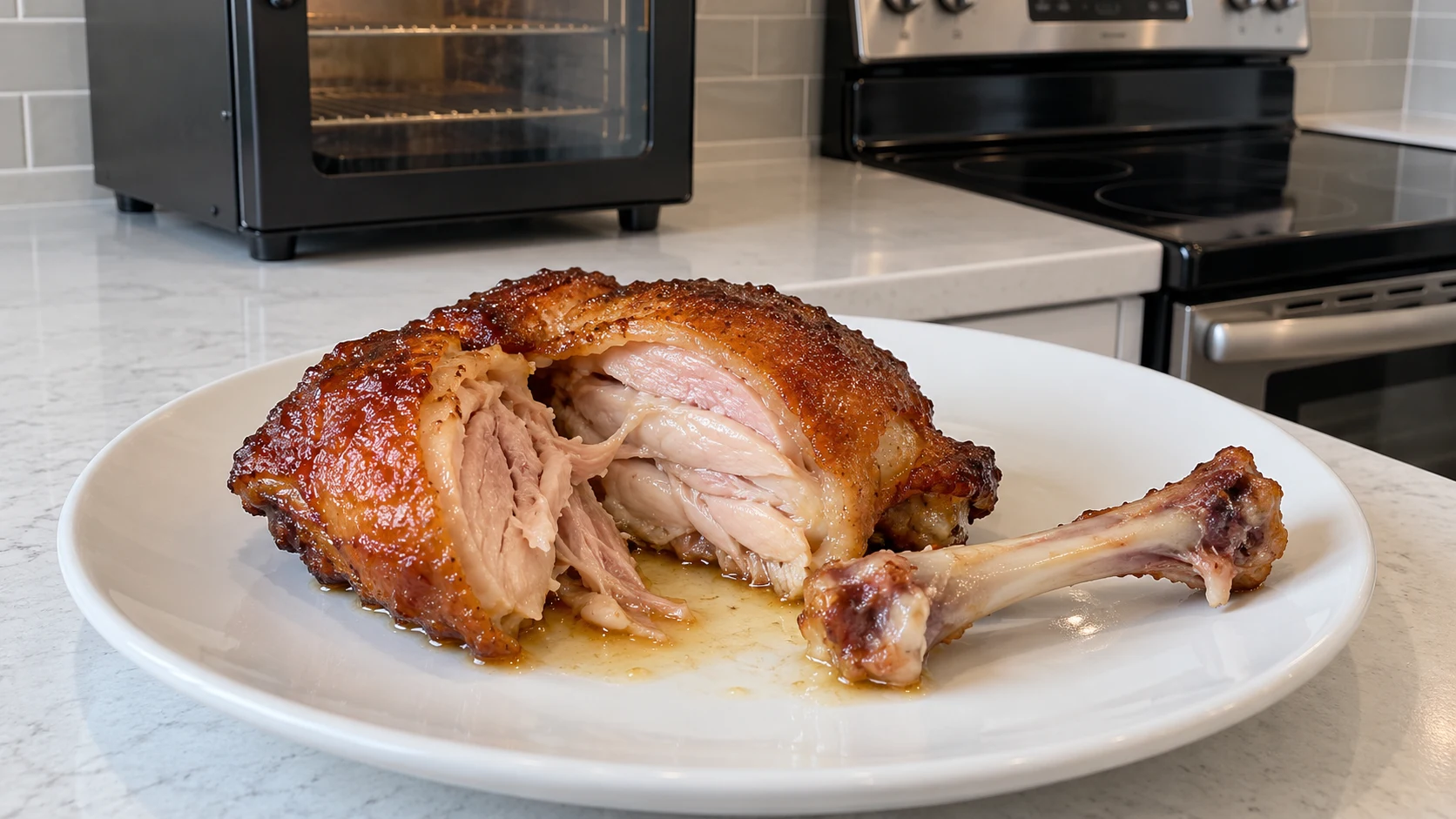
A short rest, ten to fifteen minutes loosely tented, still matters for a smoked whole bird for the same basic reason it matters for any other cut: carryover heat continues pushing the internal temperature up slightly after it comes off the heat, and juices pushed toward the center during cooking need a few minutes to redistribute before the first cut releases them. The difference with a smoked bird specifically is the skin. Tenting it too tightly or too long during that rest traps steam against skin that just spent hours earning its crispness, which can soften it right back down before it ever reaches the table. A loose tent, or no cover at all for a shorter rest, protects the texture better than the tight foil wrap that works fine on a rested steak or roast.
Turkey carries its own size-specific wrinkle
Everything above applies to both chicken and turkey, but turkey’s larger size adds a real complication: a whole turkey takes considerably longer in the smoker, often six to eight hours even at the higher 275 to 325°F range, which gives the skin even more total time in a smoky, somewhat humid environment before it’s actually done. Spatchcocking matters more here than on a chicken for exactly this reason, since it meaningfully cuts the total cook time by letting heat reach the bird more evenly and directly, which in turn limits how long the skin sits exposed before the whole thing is finished. A whole, un-spatchcocked turkey smoked at a careful, controlled temperature is still achievable, but it asks for more attention to the dry-brine step and a stronger case for a finishing blast at the end, simply because there’s more total time for the skin to lose ground.
What internal temperature still governs, regardless of skin texture
Skin texture is a separate question from doneness, and chasing crisp skin can’t override the actual safe temperature targets. Dark meat is safe at 165°F and genuinely improves well past it, while breast meat has a far narrower window and should be pulled close to 165°F rather than pushed higher chasing a skin outcome. On a whole bird, this means the thickest part of the thigh, not the breast, is the right place to confirm doneness, the same guidance that applies to a conventionally roasted chicken.

| What’s happening | What to do about it |
|---|---|
| Skin soft and pale after a long, low smoke | Run hotter (275 to 325°F) next time, or finish with a hot blast |
| Skin crisping unevenly across the bird | Spatchcock to expose more surface area evenly |
| Skin crisp but breast meat dry | Pull closer to 165°F on the breast specifically; don’t chase skin texture past that point |
| Not enough time to dry-brine overnight | Even one to two hours uncovered in the fridge helps meaningfully more than skipping it |
Mistakes that are specific to smoking poultry
- Applying brisket’s temperature range to a whole bird. The exact range that’s correct for breaking down tough connective tissue is the wrong range for crisping skin.
- Skipping the dry-brine window. Going straight from a wet package to the smoker leaves far more surface moisture for the smoker to fight against.
- Basting the skin during the cook. Unlike a roast where basting adds flavor and moisture to the meat, basting liquid added to already-struggling skin just adds back the moisture the dry-brine step was trying to remove.
- Judging doneness by skin color alone. Smoke itself darkens skin in a way that can look done well before the interior actually is; a thermometer in the thigh is the only reliable check.
A realistic timeline for a spatchcocked whole chicken
| Stage | What’s happening |
|---|---|
| The night before | Pat dry, salt lightly, uncovered in the fridge overnight |
| 0:00 | Smoker stabilized at 275 to 325°F before the bird goes on |
| 0:00 to 1:30 | Bird on, spatchcocked and skin-side up, resisting the urge to check too often |
| 1:30 to 2:00 | Check thigh temperature; skin should already show real color |
| 2:00 to 2:30 | Pull at 165°F in the thigh; optional finishing blast if the skin needs it |
| 2:30 to 2:45 | Short, loosely tented rest before carving |
A whole, un-spatchcocked turkey following the same general approach simply stretches every stage out further, which is exactly why the size-specific adjustments above matter more there than they do on a smaller, faster chicken.
Where this fits next to the rest of this category
Everything else in this site’s smoking content, brisket and pulled pork specifically, is built around the opposite goal: keeping the surface moist enough, and the heat low enough for long enough, to let tough connective tissue slowly soften. Poultry is the one common smoker project that asks for the reverse, more heat and less humidity at the surface, which is exactly why it trips up people who’ve already gotten comfortable with the low-and-slow logic that governs the rest of this category.
That reversal is worth remembering specifically because it’s easy to assume everything learned on a first brisket or a first pork shoulder carries over directly to the next project. Fire management, reading clean smoke versus thick acrid smoke, keeping a steady temperature: all of that genuinely does carry over regardless of what’s on the smoker. The specific temperature target and the humidity consideration do not, and treating poultry as simply a faster, smaller version of the same low-and-slow approach is the single most common reason an otherwise competent smoker still ends up with disappointing skin.
This is a technique guide, not a food-safety substitute. Always cook poultry to a safe internal temperature using a reliable thermometer, checked at the thickest part of the thigh. Reference: USDA/FoodSafety.gov safe minimum cooking temperatures.
Visual steps