Ground lamb on a skewer is one of the oldest ways to cook meat over fire, and most modern versions bury that simplicity under a spice cabinet’s worth of cumin, coriander, garlic, and onion before it ever touches the grill. Strip all of that away and you’re left with the part that actually made the dish work in the first place: fat-rich ground lamb, pressed tight onto metal, cooked fast over real heat until the outside chars and the inside stays juicy.
What makes ground lamb work on a skewer
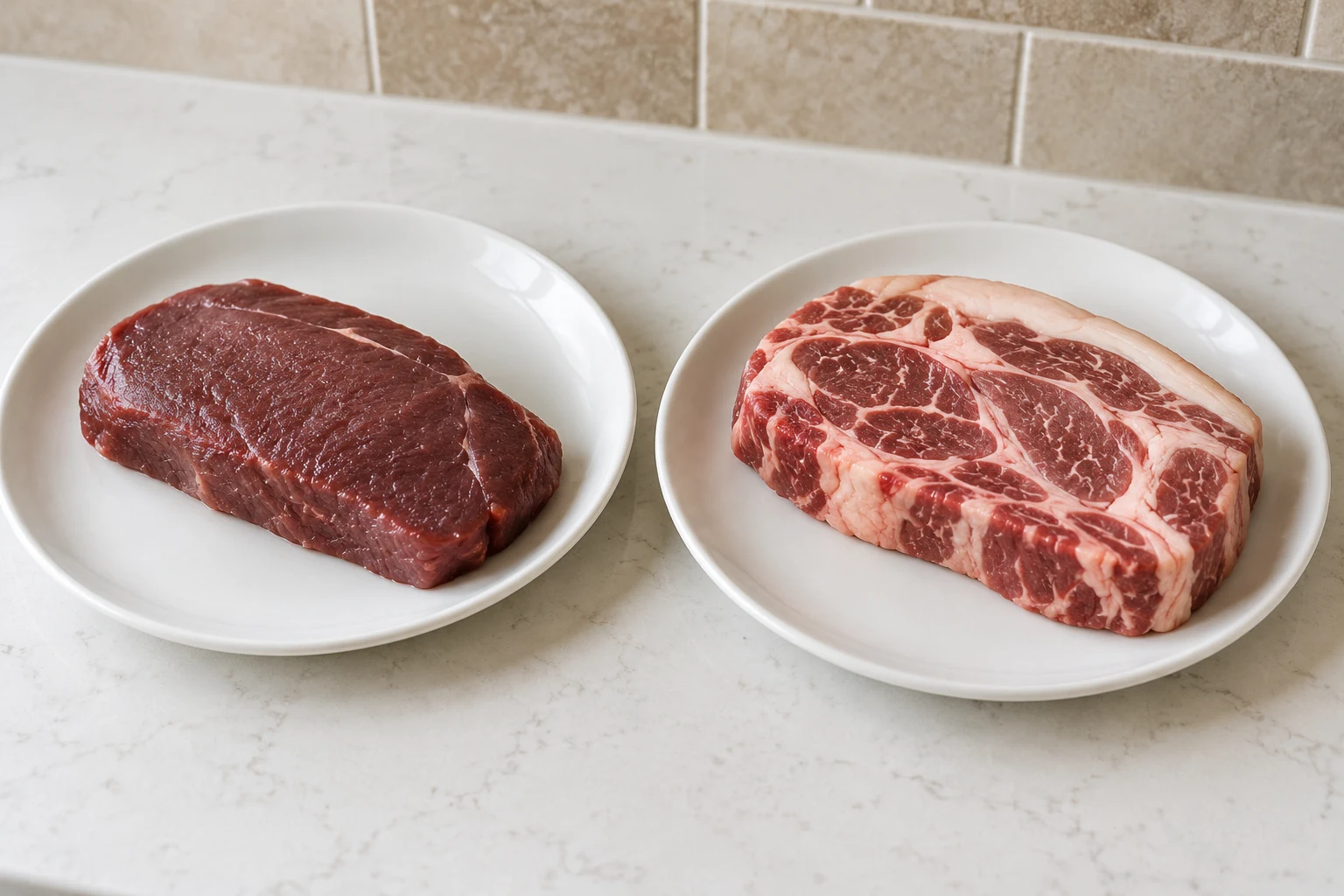
Lamb carries more intramuscular and surface fat than most ground beef you’ll find at a regular grocery counter, which matters enormously for a skewer because of how thin the meat ends up once it’s molded around a stick. A thin cylinder of lean ground meat dries out over direct fire in minutes; a thin cylinder of fattier ground lamb bastes itself as that fat renders and drips, staying moist through the same high heat that would ruin a leaner grind. If the ground lamb you’ve got runs lean, the fix is the same one that works for any lean ground meat: fold in rendered fat before forming.
What you need
- 1 ½ lbs ground lamb (aim for at least 20% fat; add 2–3 tbsp rendered lamb fat or tallow if leaner)
- Coarse salt
- Optional: a light crack of black pepper
- 4–6 flat metal skewers
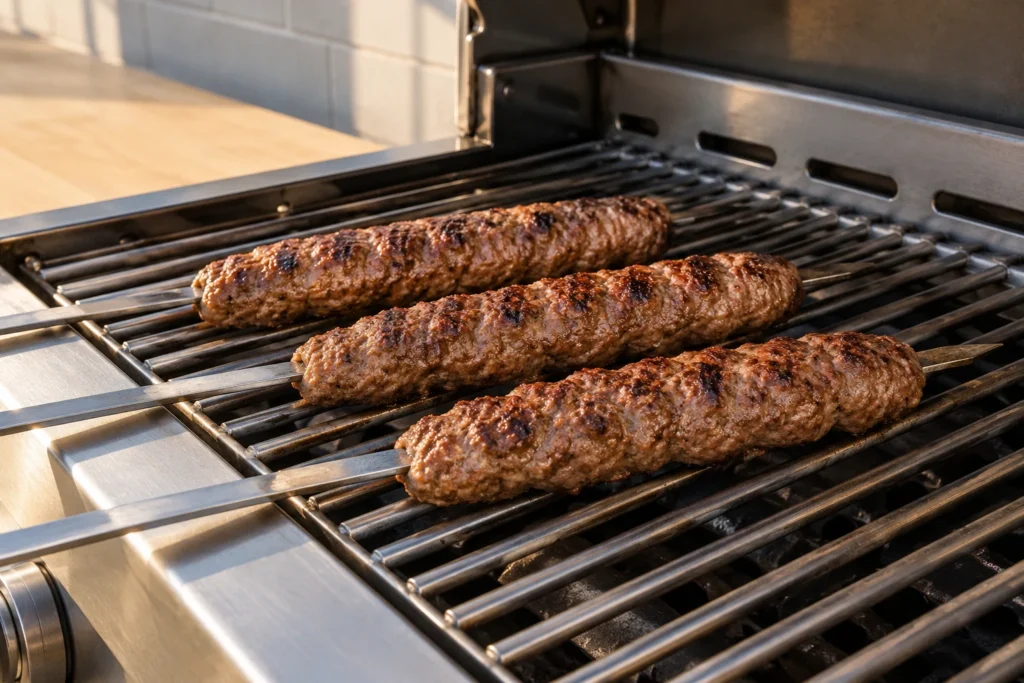
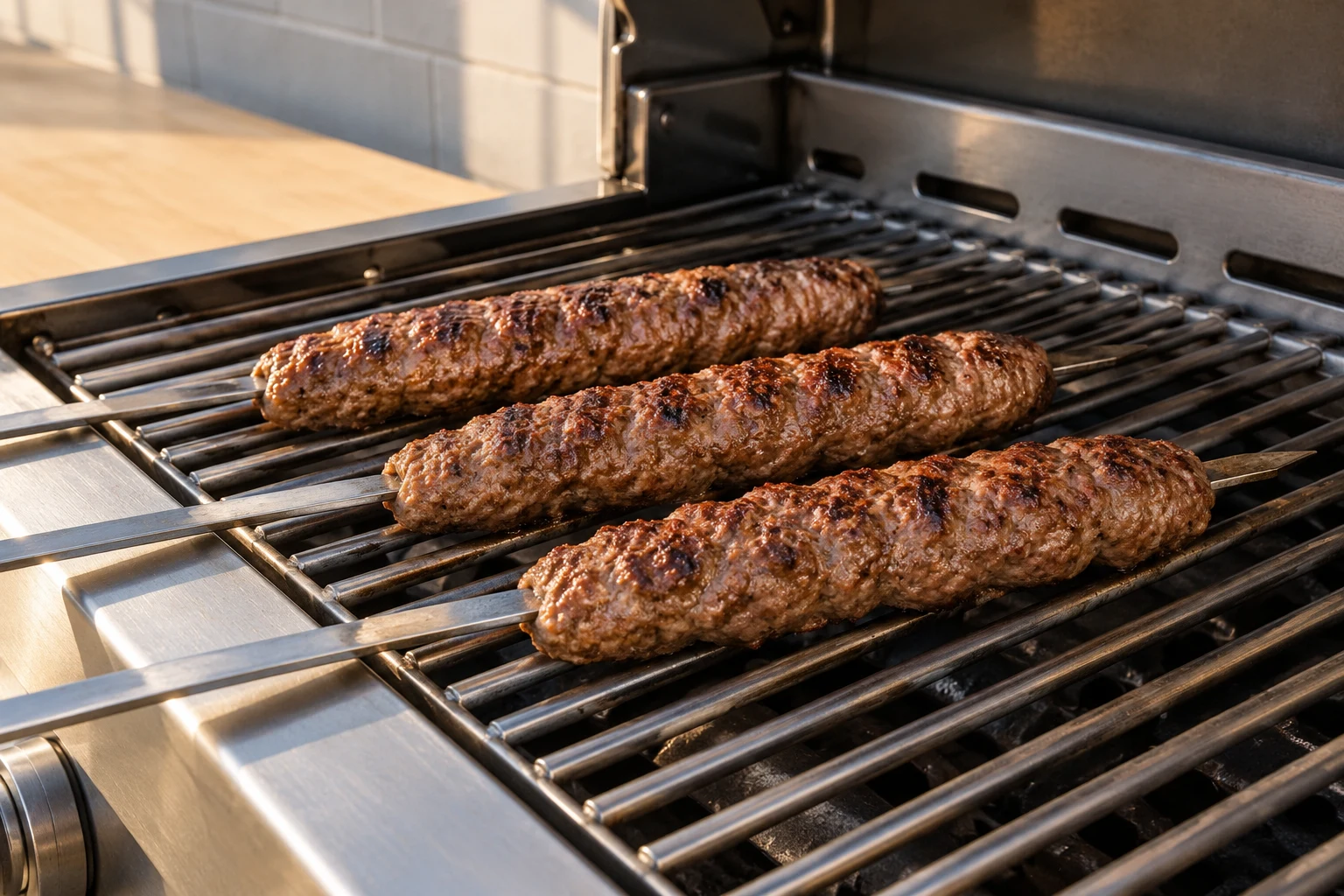
Flat skewers matter more than they sound like they would. Round skewers let the meat spin freely around them as you turn them over the fire, which means the side facing the coals keeps changing unpredictably. Flat skewers grip the meat and turn with it, so the side you intend to char is the side that actually gets charred.
How to make it
- If your ground lamb is on the leaner side, work the extra rendered fat into the meat by hand in small streaks before you do anything else. Keep the meat cold while you do this. Warm fat smears instead of distributing evenly.
- Salt the meat generously and mix just enough to distribute it evenly, no more. Overworking ground lamb compacts the proteins and gives you a dense, rubbery texture on the skewer instead of a tender one.
- Divide into 4–6 portions, roughly 4–5 oz each. Wet your hands with cold water, then mold each portion around a flat skewer into a long, even cylinder about ¾ inch thick, pressing firmly enough that it won’t slide or crack apart but not so hard that you compact the meat further.
- Rest the formed skewers on a tray in the refrigerator for 15–20 minutes before grilling. This firms up the fat just enough that the meat holds its shape over direct heat instead of slumping.
- Build a hot, direct fire. Charcoal or wood gives you more of the smoky char this dish is built around than a gas grill, but gas works fine if that’s what you have.
- Grill directly over the heat, turning every 60–90 seconds, for 8–10 minutes total, until the surface is deeply charred in spots and an instant-read thermometer in the thickest part reads 160°F.
- Pull immediately once at temperature and let rest for 2–3 minutes before sliding off the skewer.
The number that matters
This is ground meat, so the whole-muscle medium-rare conversation that applies to a lamb chop or a leg roast doesn’t apply here. The USDA’s Food Safety and Inspection Service sets 160°F as the minimum safe internal temperature for ground lamb, the same floor that applies to ground beef, bison, and pork, because grinding distributes any surface bacteria throughout the meat rather than leaving it confined to the exterior the way it stays on an intact muscle. There’s no softer version of this number for ground lamb specifically. 160°F is the floor, checked in the thickest part of the skewer, every time.
Getting real char without drying out the inside
The tension on any skewer this thin is that the surface needs real time directly over flame to char properly, but too much of that same direct heat pushes the thin interior past 160°F before the char has developed. Turning frequently, every 60–90 seconds rather than letting one side sit the whole time, spreads the heat exposure around the cylinder instead of concentrating it, which gets you more total char time across the whole surface without overcooking any single spot. A fire that’s genuinely hot (coals glowing and mostly ashed over, not still flaming) chars faster per second of contact than a lukewarm fire, which means less total time near the heat and a better shot at finishing with the char developed before the center overshoots.
If you don’t have a grill
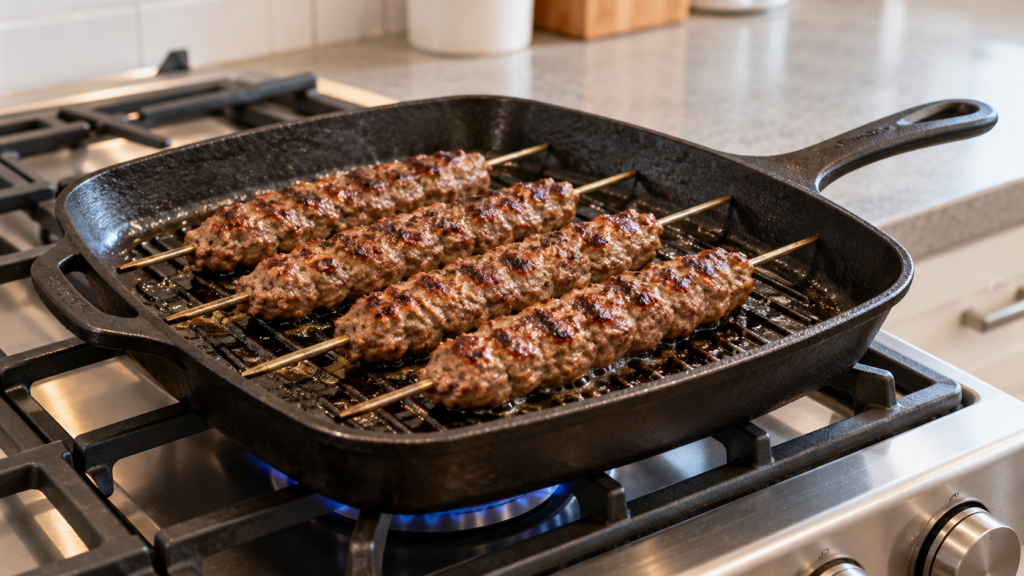
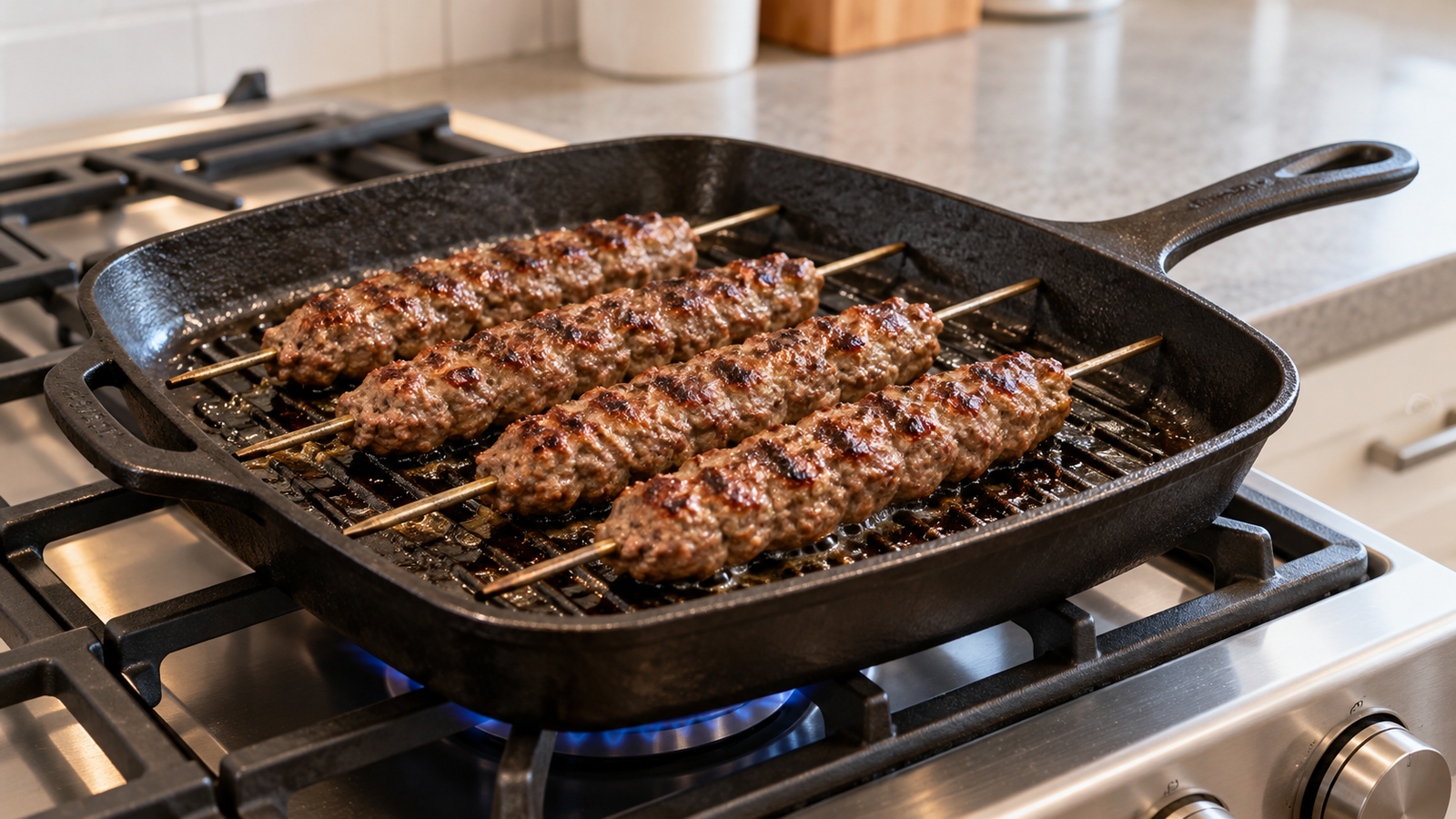
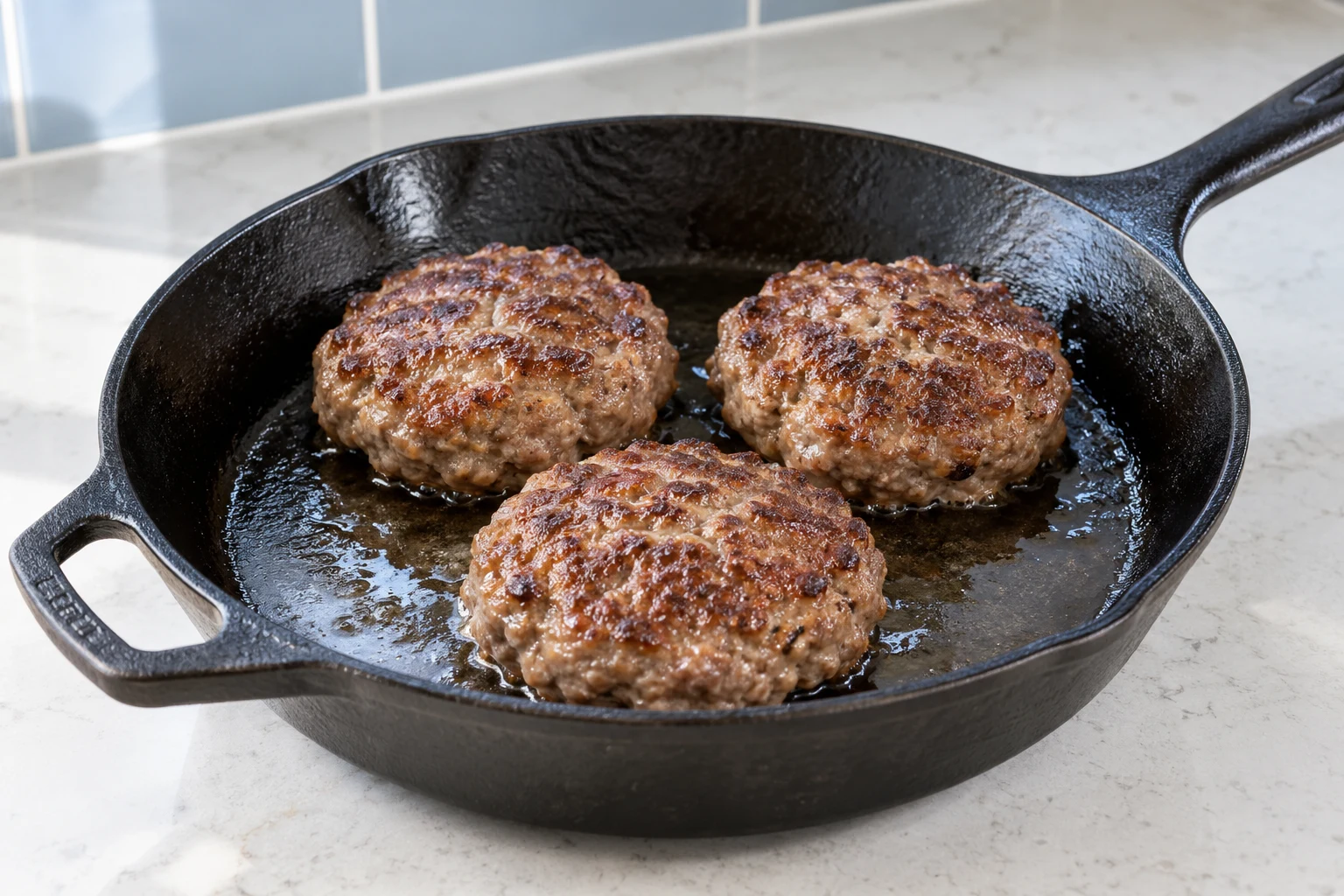
A cast-iron pan or a broiler set to high will both get you most of the way there, though neither replicates true open-flame char. For a pan, skip the skewers altogether and form the same mixture into flattened logs that lie flat in the pan, cooking a few minutes per side over high heat. For a broiler, keep the skewers on a wire rack positioned a few inches below the heating element and turn on the same schedule as you would over a fire.
Why lamb specifically, and not beef, for this format
Ground beef skewers are a reasonable substitute if lamb isn’t available, but lamb’s fat renders at a slightly lower temperature and carries a distinct flavor that holds up particularly well against direct char. The two together, smoke and lamb fat, are a pairing that predates almost every other grilled-meat tradition on earth. If the lamb you’re working with tastes sharper or more pronounced than you’re used to, that’s typically concentrated in the fat rather than the muscle itself, and a leg or shoulder grind tends to run milder than a grind that includes a lot of neck or belly trim.
Troubleshooting the shape
The most common failure on a ground-meat skewer isn’t flavor, it’s structure. The meat cracks apart, slides down the skewer, or falls off entirely partway through grilling. Most of that traces back to one of three things. First, the meat was too warm when you molded it, which means the fat didn’t have enough structure to hold the shape once it touched the grate; keeping the meat cold right up until it goes over the fire fixes this. Second, the grip between meat and metal was too light. Press firmly enough when molding that you feel real resistance, not just a loose wrap around the skewer. Third, the mixture itself was underworked in the wrong way: a little bit of mixing beyond the minimum needed to distribute salt actually helps the proteins bind the meat together structurally, so if your skewers keep falling apart, mix for an extra 30 seconds longer than feels natural before forming.
If structure is still an issue after addressing all three, double-skewering (running two flat skewers through the same cylinder of meat, spaced about an inch apart) adds enough extra support to hold even a looser mixture together through turning.
Reading char versus reading doneness
| What you see | What it tells you |
|---|---|
| Light browning, no real char | Fire isn’t hot enough, or the meat hasn’t had enough direct contact time yet |
| Deep char in spots, juices beginning to bead on the surface | Getting close. Check the thermometer now |
| Char all over, meat firm to the touch, no give in the center | Likely past 160°F already. Pull immediately if you haven’t already |
Visual cues are useful for timing your checks, but they shouldn’t replace the thermometer as the final call, especially on a cut this thin where the gap between underdone and overdone by temperature is only a minute or two of grill time.
Serving
Serve straight off the skewer with nothing added, or slide the meat off onto a plate and drizzle with any rendered fat that collected in the grill’s drip pan while cooking. That fat carries real flavor and shouldn’t be wasted. These skewers also hold up well as part of a larger spread alongside other grilled cuts, since they cook fast enough to be one of the last things you put over the fire while slower items rest.
Common questions
Can I use wooden skewers instead of metal?
Soaked wooden skewers will survive the cook time here since it’s short, but they don’t conduct heat the way metal does, which means you lose a small amount of extra cooking from the inside out that metal skewers provide. If metal isn’t available, soak wooden skewers in water for at least 30 minutes first and keep a closer eye on them near the fire.
My skewers are charred outside but still under 160°F inside. What should I do?
Move them to an indirect zone, away from direct flame, and let them finish climbing to temperature there rather than leaving them over direct heat, which would just add more char on an already-charred surface without helping the center. This is more likely to happen with thicker-molded skewers, so next time aim for a slightly thinner cylinder.
Storage and reheating
Cooked skewers keep refrigerated for three to four days. Reheat in a hot, dry pan for a minute or two per side rather than the microwave. The microwave tends to steam already-charred meat and softens the crust you worked for over the fire. If you’re freezing extras, slide the meat off the skewers first and freeze flat in a single layer before transferring to a bag; frozen cooked lamb keeps well for up to three months and reheats the same way as refrigerated leftovers, just with a few extra minutes from frozen.
If this is your first time working with ground lamb and you’re unsure why it behaves differently from ground beef in general, it’s worth reading why lamb tastes gamey and what actually changes it, which explains the fat chemistry this recipe leans on. The same principle of salting without overworking the meat shows up in why meatballs fall apart, and what actually holds them together, and the broader logic of adding fat back into lean ground meat is covered in more detail in what to do with rendered animal fat.
One last point worth planning around: these skewers cook fast enough that they’re easy to lose track of if you’re also managing other things on the grill at the same time. Because the gap between a perfect pull and an overcooked skewer is measured in a minute or two rather than the five-to-ten-minute margin a thicker cut gives you, it helps to treat these as the thing you’re actively watching rather than something you check on occasionally between other tasks. Get everything else on the grill to a stopping point first, then bring the skewers on last and give them your full attention for the short time they need it.
Choosing the lamb
Pre-packaged ground lamb at a grocery counter varies widely in fat content, and the label doesn’t always say so outright the way ground beef labels usually do. If you have a butcher counter available, ask for a grind from shoulder or leg with visible fat left in rather than a trimmed, lean grind. Shoulder in particular tends to carry more marbling than leg and makes an even more forgiving skewer. If you’re grinding your own from a shoulder roast, aim to keep roughly a fifth of the total weight as fat, either from the cut itself or supplemented with separately rendered lamb fat saved from a previous roast. A small amount of saved fat from a roasted leg of lamb, strained and refrigerated, is worth keeping around specifically for projects like this one, where a lean grind needs a boost.

Pre-ground lamb from a larger supermarket is sometimes blended from several different cuts and can run leaner than you’d expect from a cut generally considered fatty. If your first batch comes off the grill drier than this recipe describes, that’s the first thing to check before assuming the method itself failed. Add more rendered fat next time rather than changing the cook temperature or time.
Scaling up for a crowd
This recipe scales cleanly. Double or triple the lamb and salt proportionally, and form as many skewers as you need rather than making fewer, larger ones. Larger skewers take longer to reach 160°F in the center, which gives the exterior more time over direct heat and increases the odds of burning the char past the point of being pleasant before the center catches up. Staying close to the ¾-inch thickness recommended here, no matter how much total lamb you’re cooking, keeps the ratio of char to interior consistent at any scale. If you’re cooking for more people than your grill grate can hold directly over the fire at once, work in batches rather than crowding the grate. Crowded skewers block airflow and steam each other slightly instead of charring cleanly.
Visual steps