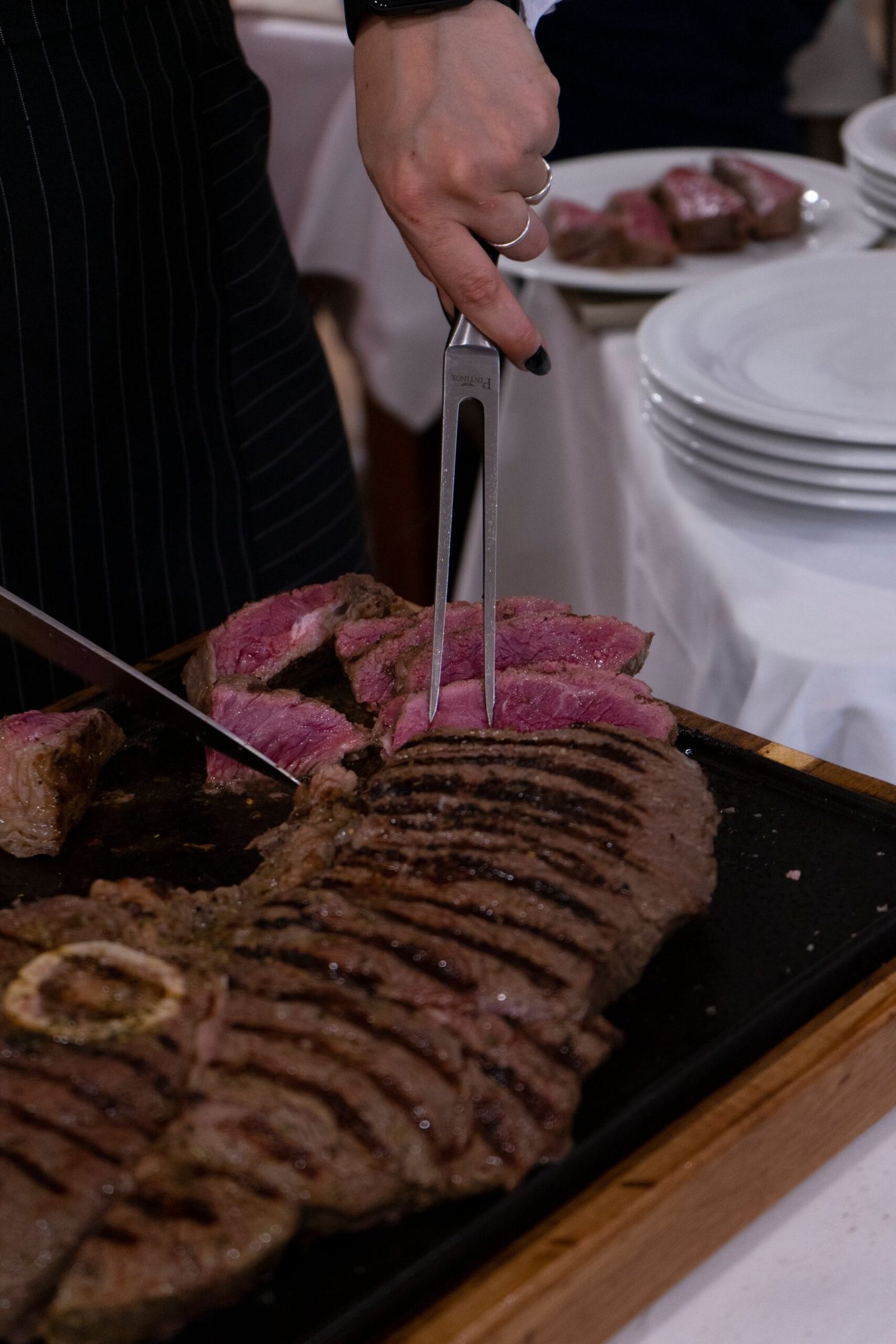
Game meat has one enemy, and it is dryness. Venison, and to a large extent duck breast, rabbit, and other wild or lean meats, carry very little of the intramuscular fat that gives beef and lamb their margin for error. That fat is what keeps a slightly overcooked steak forgivable. Take it away and there is nothing to hide behind: a few minutes too long and lean game goes from tender to dry, tight, and livery. Almost every complaint about game meat traces back to this one problem, and almost every fix is a way of working around it.
Lean means you cook it less
The first and most important adjustment is simply to stop sooner. Tender cuts of game, the loin and the backstrap, the duck breast, want to be pulled at medium-rare and no further. Where you might take a fatty steak to medium without much loss, the same doneness on venison starts to dry it out. Cook these cuts hot and fast, pull them early, and let them rest, treating them as even less forgiving versions of a lean steak. If you are used to cooking beef, retrain yourself to take game off the heat before you think it is ready.
Add back the fat it does not have
Since the meat brings little fat of its own, the classic move is to supply it from outside. Wrapping a lean roast in bacon or a layer of pork fat, called barding, bastes it as it cooks. Searing and basting in butter or a rendered fat does the same on a smaller cut. A pat of fat to finish, or a rich sauce, adds the mouthfeel the meat lacks. None of this is cheating; it is compensating for the exact thing that makes game lean in the first place, and it is why traditional game cookery leans so heavily on fat and sauce.
For the tough cuts, go the other way
Not all game is a quick-cooking cut. The hard-working parts, the shoulder and shank of a deer, are both lean and tough, which is a difficult combination for fast cooking. Here you do the opposite of pulling early: you braise them long and slow in liquid, the way you would any tough cut, so that time and moist heat break down the connective tissue while the surrounding liquid keeps the lean meat from drying. Fast heat is for the tender cuts; low, wet, patient heat is for the tough ones. Choosing the wrong one is how good game gets wasted.
On marinades
Marinades get credited with more than they do. They flavor the surface and, with acid, can slightly soften it, and they are a fine way to season game and mellow strong flavors. What they do not do is add fat or meaningfully keep the inside moist; that still comes down to not overcooking and to the fat you add. Use a marinade for taste if you like, but do not lean on it as insurance against a dry result. That job belongs to the heat and the fat.
The whole game in one line
Tender cuts: cook them less than you think, add fat, pull at medium-rare. Tough cuts: braise them long and wet. Everything else about cooking lean game is a variation on staying ahead of dryness. Respect that one enemy and venison stops being difficult and starts being some of the best lean meat there is.
For food safety, the USDA gives 145°F for whole cuts of game and 160°F for ground; doneness preferences below that on whole muscle are a personal choice. Techniques here are standard practice, not tested claims.