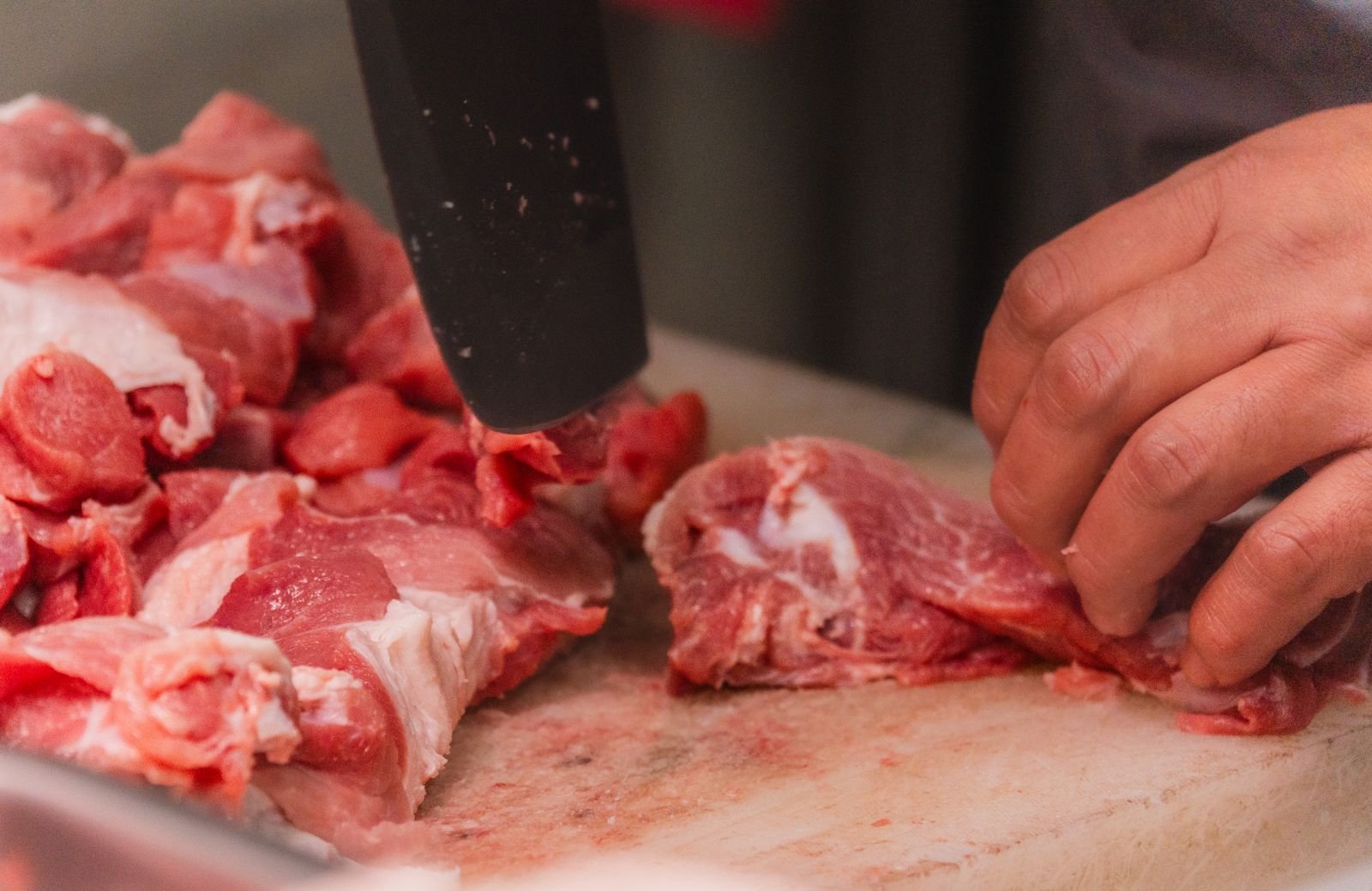
The number on the sticker is not the price of the meat. The price of the meat is what you pay for the part you actually eat, and those two figures can be far apart. A cut that looks cheap by the pound can turn out expensive once you throw away the bone, the fat cap, and the gristle, while a cut that looks dear can be a bargain if almost all of it lands on the plate. Buying meat well is mostly a matter of learning to see past the tag to the real cost per usable pound.
Pay attention to what you can actually eat
Before comparing prices, mentally subtract the waste. A bone-in cut priced lower per pound than a boneless one may cost more per edible pound once the bone is gone, though the bone itself has value if you use it. A heavily marbled or fat-capped cut loses weight when trimmed and when the fat renders. None of this means avoid bones or fat; it means judge a price by the meat you will eat, not the gross weight, and the cheapest tag is often not the cheapest dinner.
Cheap and tough beats pricey and tender, if you have time
The best value on the whole counter is usually the tough, hard-working cuts. A shoulder or a chuck costs a fraction of a tenderloin, and given a long, gentle cook it eats every bit as richly, arguably more so. What you are really trading is money for time: the expensive tender cuts are quick, and the cheap tough ones ask for hours you may or may not have. If you have the time, the tough cuts are where your budget goes furthest, which is the same reason they anchor most braises.
Buy bigger, break it down, and use the freezer
Larger cuts and whole primals almost always cost less per pound than the same meat sliced into tidy portions, because you are doing the butchering the store would otherwise charge for. A whole loin broken into chops, a big pack of thighs split into meal-sized bags, a chuck roast portioned before freezing: each costs a little effort and saves real money. The freezer is what makes this practical, letting you buy when the price is right and a bigger quantity than you can cook at once without any of it going to waste.
Use the whole thing
The cheapest meat of all is the meat you already bought and would otherwise throw out. The bones from a roast or a rack make stock. Trimmed fat, rendered down, becomes cooking fat you would otherwise pay for. Even the browned bits and drippings left in a pan are flavor you have already paid for. Treating these as ingredients rather than scraps quietly lowers the real cost of everything else you cook, because one purchase ends up feeding more than one meal.
The value mindset
Stop shopping by the sticker and start shopping by the plate. Cost per usable pound, cheap cuts plus time, buying big and breaking it down, and wasting nothing: none of these are frugality for its own sake. They are just how you eat well on meat without overpaying, and once the habits are in place they run on their own.