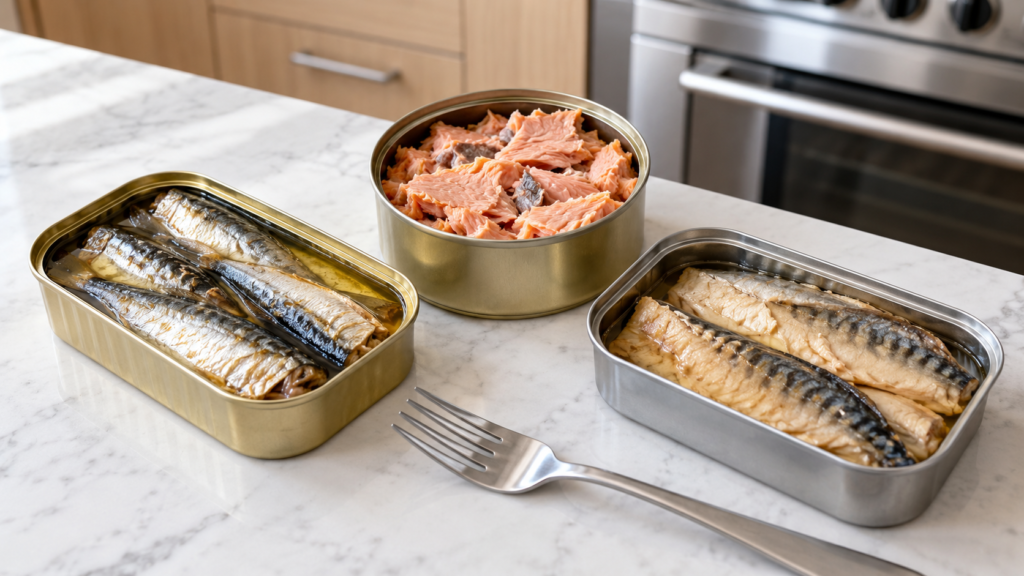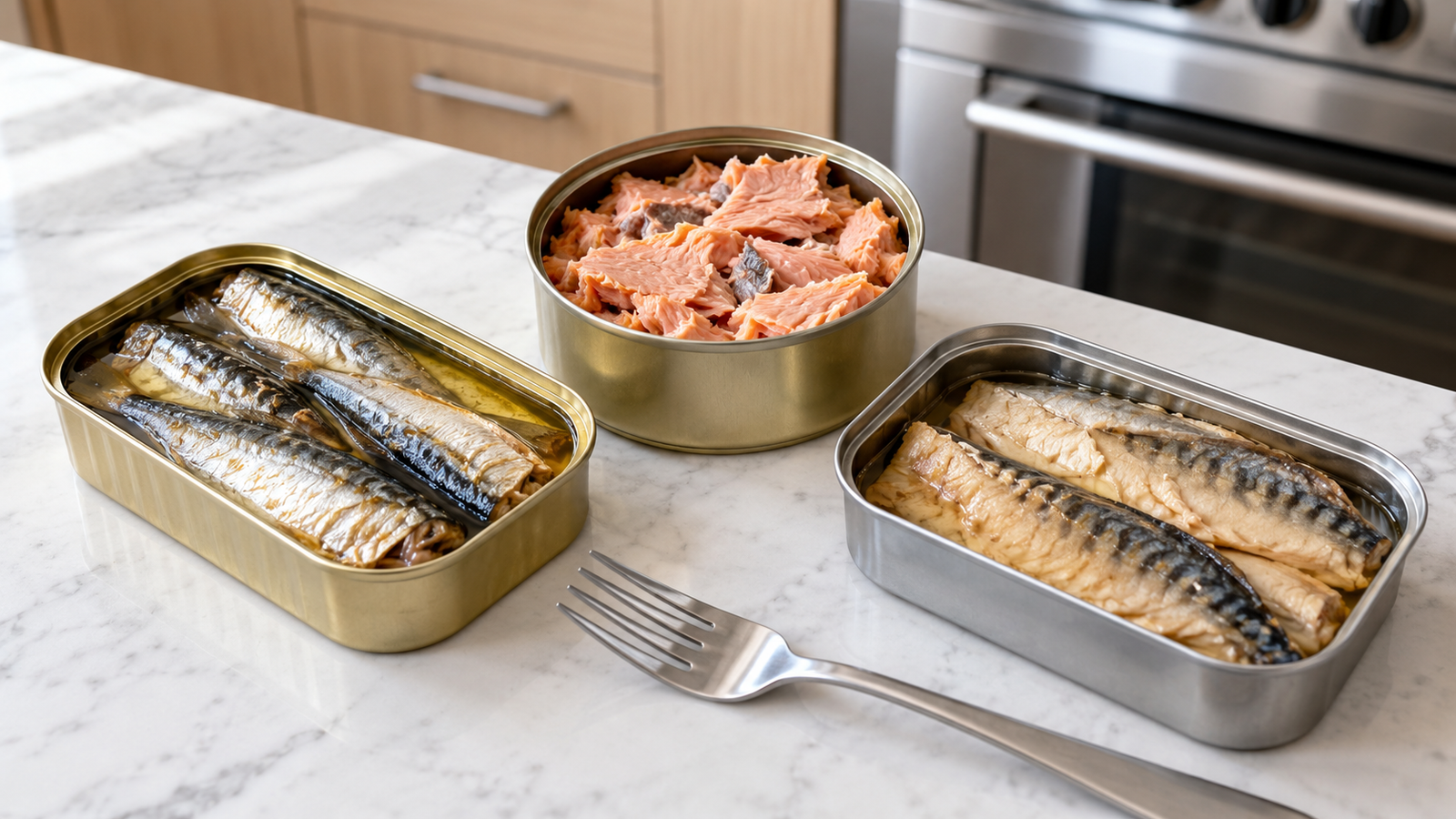
Canned fish gets treated as a backup for when real cooking isn’t happening, and that framing undersells it badly, more than almost any other item in a typical pantry. A tin of sardines or a can of wild salmon is already fully cooked, shelf-stable for years, and often carries more real nutrition per dollar than almost anything else at a grocery store. Calling it a fallback misses the real point entirely: it’s a genuinely legitimate staple on its own terms, not merely a lesser substitute standing in for a fresh fillet that simply didn’t get cooked that particular day.
Why it belongs in regular rotation, not just an emergency drawer
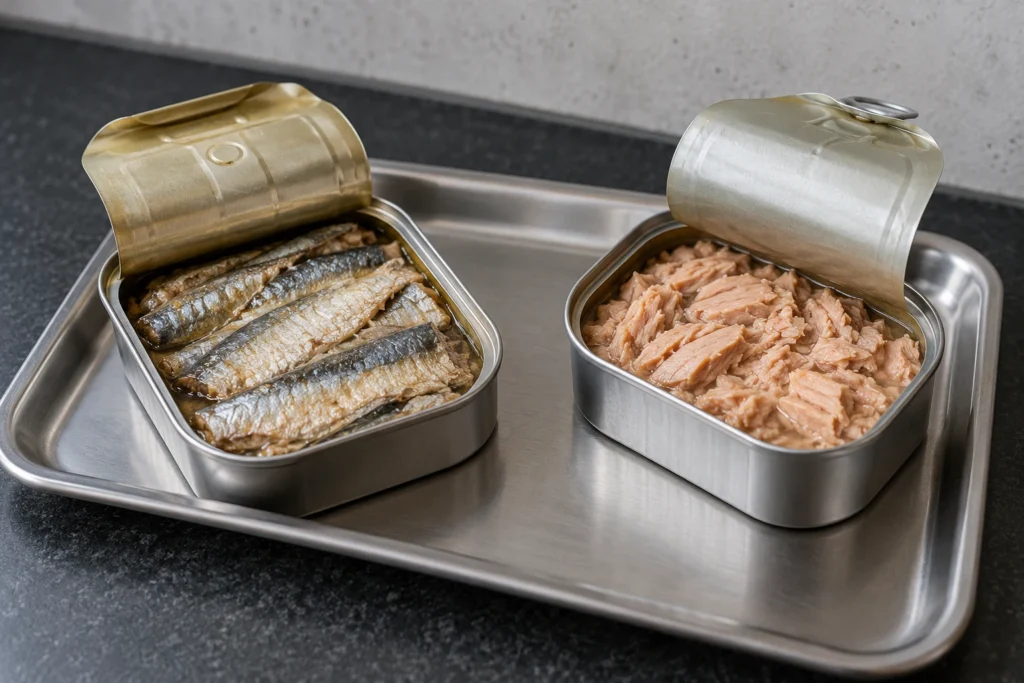
Most canned fish, sardines especially, is processed and canned extremely close to catch, often within hours, which actually gives it an advantage over a lot of “fresh” fish that’s spent days in transit and in a display case before reaching a plate. The canning process itself, high heat under pressure, is a genuine cooking method, not just a preservation step, which is why canned fish tastes fully cooked and ready to eat straight out of the can rather than raw or under-processed.
It also solves a real, specific logistics problem that nothing else covered anywhere on this site quite matches: zero actual cooking, zero cleanup afterward, and a shelf life measured honestly in years rather than days. A stocked shelf of canned fish is genuine insurance against a day when nothing got prepped and nothing is thawed, the kind of day that otherwise tempts a trip through a drive-through instead.
Reading the label like it actually matters, because it does
Not every can on the shelf is equivalent, and a few label details genuinely change what ends up on the plate.
| Label detail | What it actually means |
|---|---|
| Packed in water | Plainest option, lets the fish’s own flavor lead, easiest to mix into other dishes |
| Packed in olive oil | Richer, more flavorful on its own, adds real fat worth counting as part of the meal |
| Packed in soybean or generic “vegetable” oil | Cheaper filler oil, not adding the same quality as olive oil |
| Bone-in | Bones are fully softened by the canning process, edible and add real textural crunch and calcium |
| Boneless, skinless | Milder, more uniform texture, costs more for the extra processing |
| BPA-free lining | Worth checking for specifically; not every brand discloses this clearly on the front of the can |
Packed-in-water sardines or salmon are the more versatile pantry default, since they fold into other dishes without the oil’s flavor fighting whatever else is going into the pan. Packed-in-oil versions are worth keeping around specifically for eating straight from the can, where that extra richness is doing real work rather than getting diluted into something else.
Sardines, salmon, and mackerel aren’t interchangeable either
Canned sardines are small, whole fish, bones and all, with a pronounced, briny flavor that some people genuinely love from the very first can and others need several real attempts to actually warm up to before it clicks. Canned salmon, usually sold as chunks or flaked pieces, has a milder flavor and a texture that works well flaked into a dish or formed into a patty. Canned mackerel sits somewhere between the two: a stronger flavor than salmon, a firmer texture than sardines, and often the best value per can of the three. None of them are a direct substitute for each other in a specific recipe, and knowing the real texture and flavor differences up front avoids the common disappointment of expecting one to taste like another.
Eating it straight from the can
This is the entire point for a lot of people, and it’s a genuinely complete, zero-effort meal: drain the can if it’s packed in water, or don’t if it’s packed in oil, add a crack of black pepper and a squeeze of something acidic if there’s any on hand, and eat it directly. Sardines in particular hold up well this way, since their stronger flavor doesn’t need much help. This is also the format that travels best, in a bag or a desk drawer, for anyone needing a reliable animal-product option away from a kitchen entirely.
A quick skillet upgrade, five minutes of real cooking
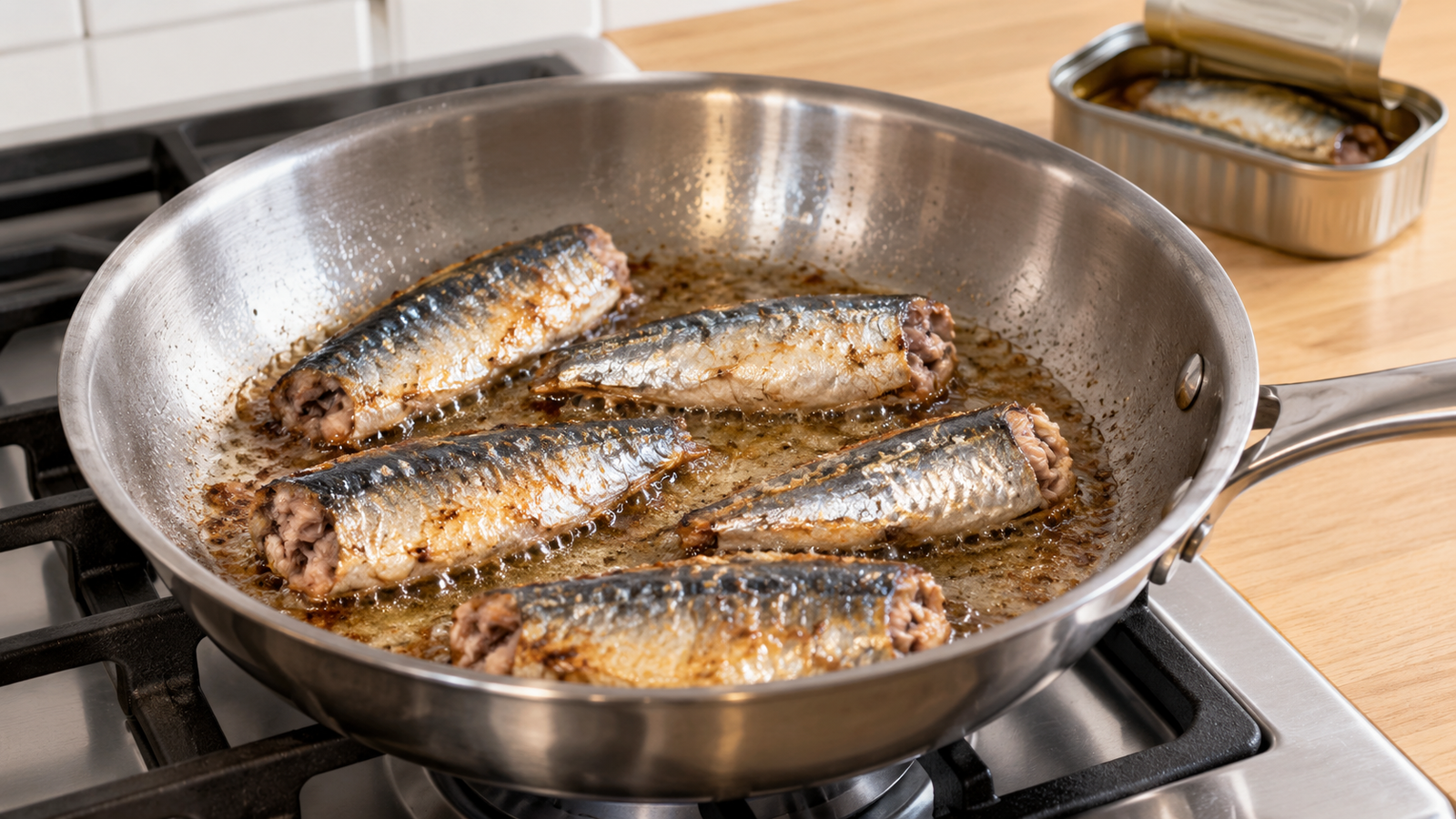
For a bit more effort, draining a can of sardines or mackerel and crisping them briefly in a hot pan with a little rendered fat turns the straight-from-the-can version into something closer to a quick-seared fillet. Two to three minutes is plenty, since the fish is already fully cooked and only needs enough heat to warm through and pick up a bit of color on the surface. Overdoing this step risks drying out fish that’s already been through one cooking process, so the goal is warming and lightly crisping, not re-cooking from scratch.
Mixed into something else entirely
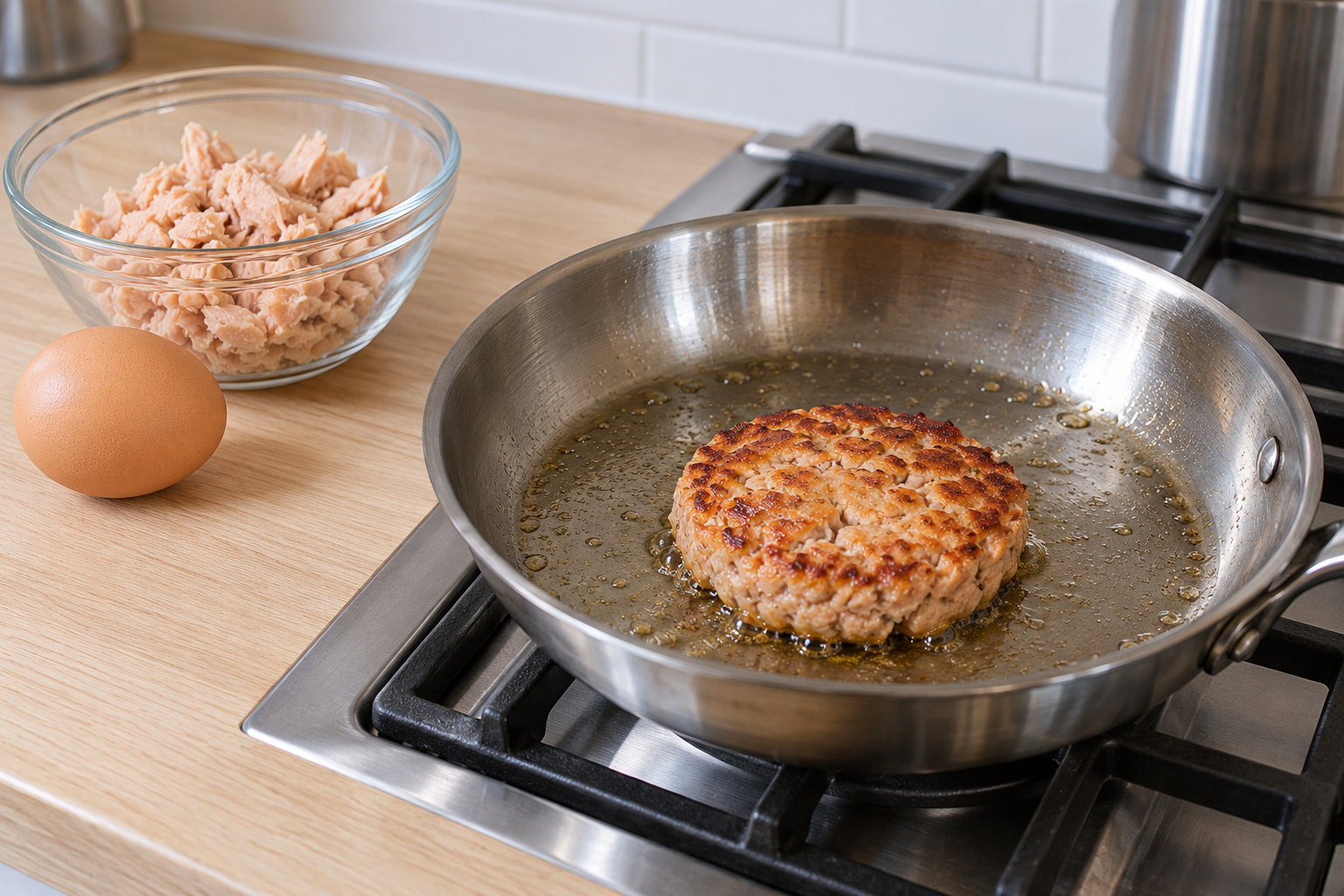
Canned salmon in particular works well formed into a simple patty with an egg as a binder, the same structural role an egg plays in holding a meatball together, then pan-seared until the outside browns. Flaked canned fish folded into a quick scramble, or simply mixed with a bit of mayonnaise or a plain yogurt-free dressing for something closer to a classic salad, both turn a shelf-stable pantry item into a dish that doesn’t read as an emergency backup at all.
What it actually costs, compared to the alternative
A can of sardines or mackerel consistently ranks among the cheapest animal-product servings available anywhere in an ordinary grocery store, startlingly so for anyone comparing it to the fresh seafood counter for the first time, frequently coming in under the cost of an equivalent amount of fresh fish by a wide margin, and often cheaper per serving than ground beef as well. Canned wild salmon costs more than sardines or mackerel but still regularly beats fresh salmon on price, especially once the inevitable waste from a fresh fillet going bad before it gets used is factored into the real cost rather than just the sticker price.
That value holds up specifically because canned fish almost never gets thrown out from spoilage the way fresh fish sometimes does when a meal plan quietly changes or a given week turns out busier than originally expected. A can sitting unopened in the pantry for an extra month costs nothing extra; a fresh fillet sitting in the fridge for an extra few days past its window is a real, direct loss.
Wild versus farmed, and why it matters more here than with fresh fish
Canned salmon is overwhelmingly wild-caught rather than farmed, which is actually the reverse of the fresh salmon case at most counters, where farmed salmon tends to dominate. This is largely a practical matter of species and processing economics rather than a deliberate quality choice, but it does mean a can of salmon is one of the more reliable ways to get wild-caught fish specifically without having to seek out a specialty counter or pay the premium wild salmon commands fresh. Checking the label for the specific species, pink, sockeye, or coho are the common canned varieties, each with a slightly different color, fat content, and price point, is worth doing the same way checking a cut of beef matters more than just grabbing whatever’s closest on the shelf.
Building it into an actual weekly routine
Canned fish is one of the easiest items to fold into a regular prep-day routine, since there’s no prep day decision to make at all: it’s already shelf-stable and ready, which makes it the single lowest-effort category to simply keep stocked rather than something that needs active planning each week. Where a freezer system handles the fresh and frozen side of a stocked kitchen, a shelf of canned fish covers the exact gap a freezer can’t: something ready to eat with zero thaw time at all, useful on the specific days when even reheating something frozen feels like too much.
Buying a few cans each time a regular grocery trip happens, rather than a single large stock-up all at once, keeps a rotating supply fresh rather than letting a large batch sit unused for a year or more. Canned fish keeps for years unopened, which makes this more about building a steady habit than avoiding any real spoilage risk.
A simple shelf rule helps here: newest cans go toward the back, oldest toward the front, the same basic rotation principle a restaurant kitchen uses on any shelf-stable ingredient. It takes seconds to maintain and means nothing sits forgotten behind a newer can for years at a time, slowly aging well past the point anyone actually remembers buying it.
A few more ways it actually fits into a plate
Beyond a straight patty or a quick scramble, flaked canned salmon or mackerel stirred into a bowl alongside a couple of hard-boiled eggs makes a complete, varied meal with genuinely zero active cooking involved, useful on a day when even the five-minute skillet crisp feels like too much. Sardines mashed with a fork and spread directly onto nothing more than their own can lid, eaten with a spoon, is a real, unembarrassed way some people eat them daily, closer to how they’d treat a quick snack than a formal meal, and there’s no reason it needs to be dressed up as anything more than that.
Canned fish also folds well into a simple pan sauce base: breaking it up directly into a hot pan with a bit of rendered fat and a splash of broth, then spooning that over a portion of leftover meat from an earlier prep session, turns two separate pantry and freezer items into a complete dish in the time it takes the pan to heat up.
Sourcing labels worth recognizing on sight
A blue, fish-shaped Marine Stewardship Council label on a can indicates third-party certification for sustainable wild fishing practices, a genuine independent check rather than a producer’s own unverified claim. It’s a useful shortcut for anyone specifically prioritizing sourcing, though its absence on a can doesn’t necessarily mean the product fails that standard; plenty of responsibly sourced canned fish simply hasn’t pursued that specific certification. “Wild-caught” printed directly on the label is a more basic claim worth confirming for salmon specifically, given how much canned salmon already defaults to wild sourcing compared to the fresh market.
Storage once a can is actually opened
Unopened canned fish is effectively shelf-stable indefinitely in practical, real-world terms, though a best-by date printed on the can is still worth respecting for quality reasons rather than any genuine safety concern. Once opened, transfer any unused portion to a sealed container rather than leaving it sitting in the original can, refrigerate it promptly, and use it within three to four days, the same general leftover window that already applies to other cooked fish and seafood elsewhere on this site. Leaving fish in an opened metal can specifically, rather than transferring it, is also a common source of a faint metallic off-taste developing over just a day or two, independent of any real food-safety issue.
Mistakes that undersell a genuinely good staple
- Treating it as always inferior to fresh. A well-processed can caught and canned within hours often beats a fresh case fillet that’s been sitting for days.
- Buying only one type and assuming they’re all the same. Sardines, salmon, and mackerel each bring a genuinely different flavor and texture to the table.
- Ignoring the oil versus water choice. The two pack types actually serve different purposes, not just a price difference.
- Leaving opened cans in the fridge in the can itself. Transferring to a sealed container keeps it fresher and avoids a metallic taste developing over a few days.
- Overcooking it when crisping in a pan. It’s already fully cooked; the pan step is about warming and browning, not cooking from raw.
This is a practical food guide, not a nutrition or medical recommendation. Reference: FDA guidance on seafood safety. Check the label of any specific product for BPA status and sourcing details, since these vary by brand.
Visual steps