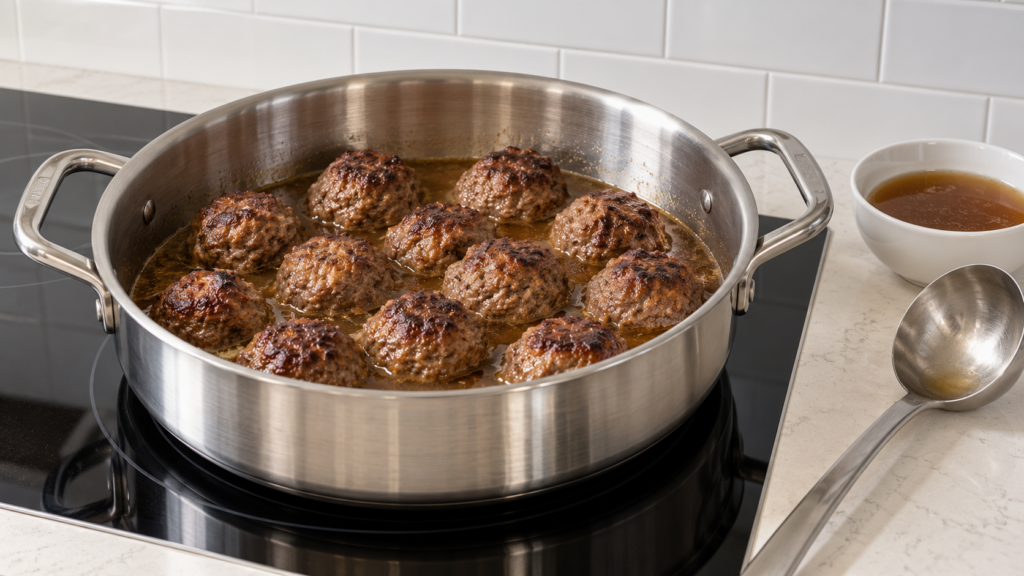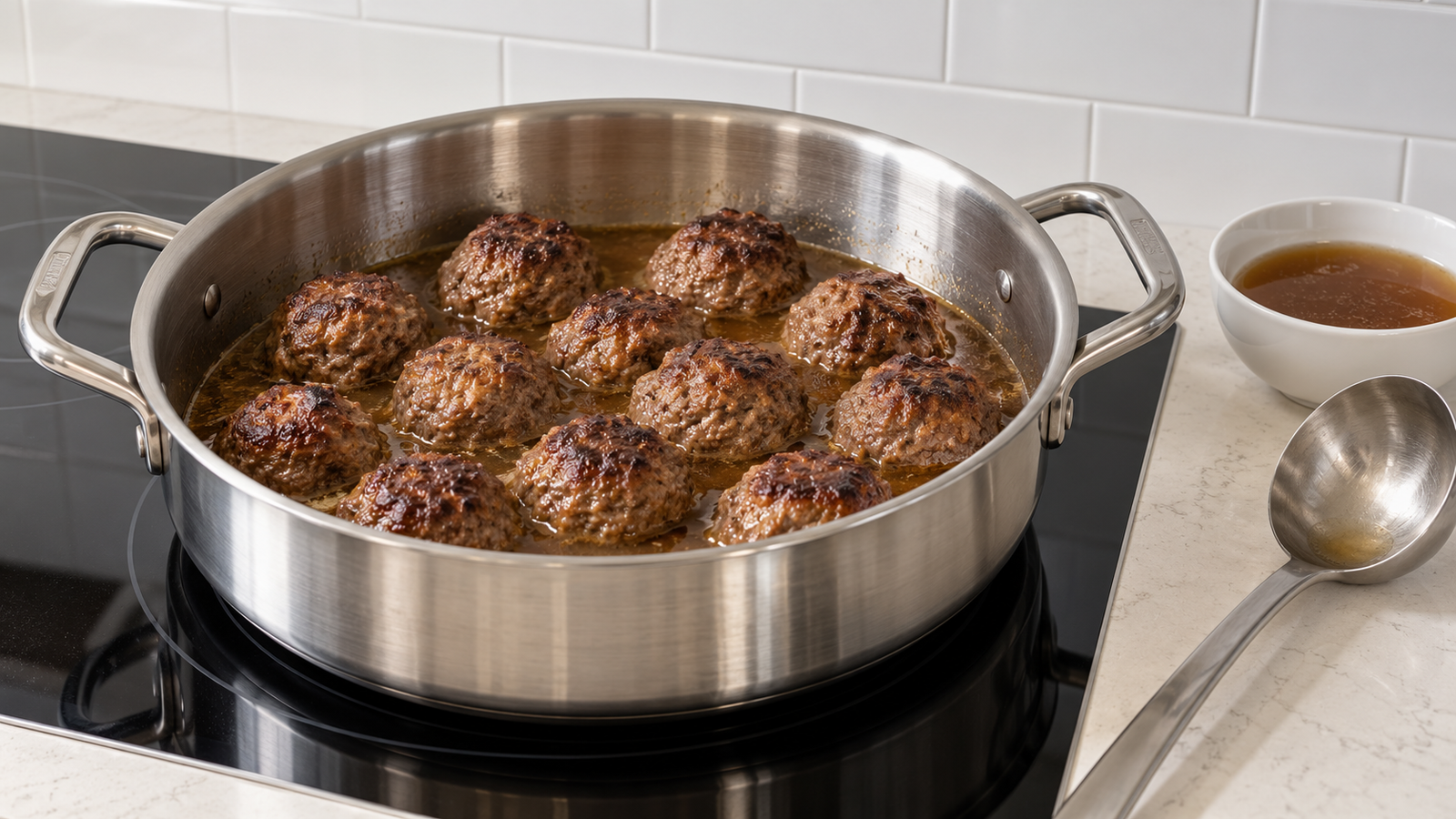
Meatballs usually lean on breadcrumbs and egg to hold together and on tomato sauce to carry most of the flavor. Pull both of those out, and you need a different plan for structure and a different plan for the liquid they simmer in. Bone broth solves both at once, it holds the meatballs gently as they finish cooking, and it reduces alongside them into something closer to a sauce than a soup.
What holds a meatball together without egg or breadcrumbs
A conventional meatball binds in two ways: egg proteins coagulate as they cook and glue the structure together, and breadcrumbs soak up moisture and swell, filling gaps between pieces of meat. Remove both, and the job falls entirely to the meat’s own proteins. Ground beef, mixed just enough to let its myosin proteins form a light network (not so much that it turns dense and rubbery), will hold together on its own without any binder at all, provided two things go right: the meat is cold when it’s mixed and formed, and the meatballs get a chance to firm up briefly before they hit any heat.
What you need
- 1 ½ lbs ground beef, 80/20
- 4 cups beef bone broth (homemade, meat and bones only)
- 1 tbsp tallow
- Coarse salt
- Optional: a light crack of black pepper
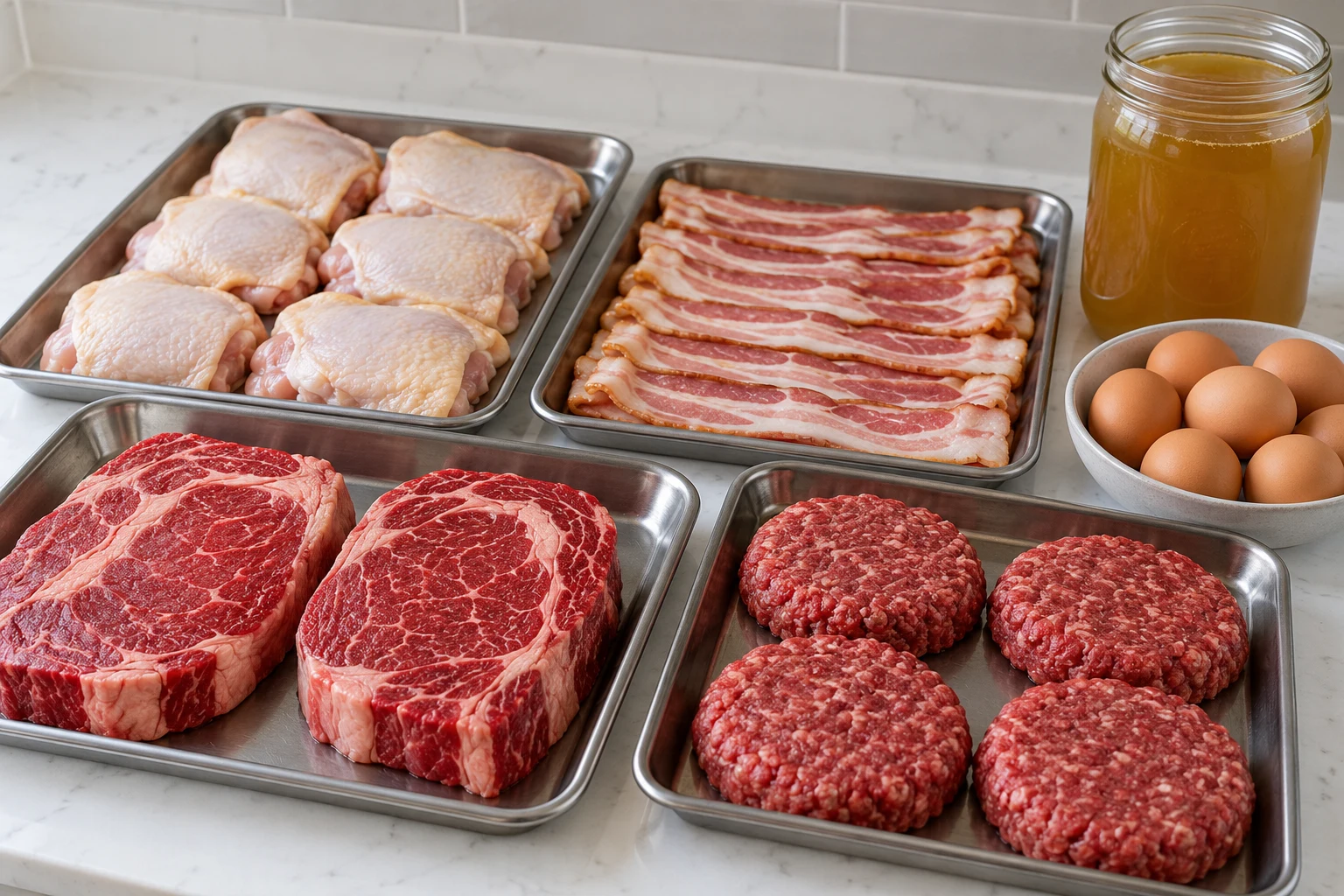
No egg, no breadcrumbs, no parmesan, no garlic or onion. The usual meatball supporting cast is entirely plant-based or dairy, and none of it is here. The broth is both the cooking liquid and, by the end, most of the sauce.
How to make it
- Keep the ground beef cold until you’re ready to form the meatballs. Pull it from the refrigerator right before you start, not earlier.
- Salt the meat and mix gently with your hands for about 30 seconds, just enough to distribute the salt and develop a very light stickiness in the mixture. That slight stickiness is the sign the proteins are starting to bind; stop as soon as you feel it rather than continuing to mix.
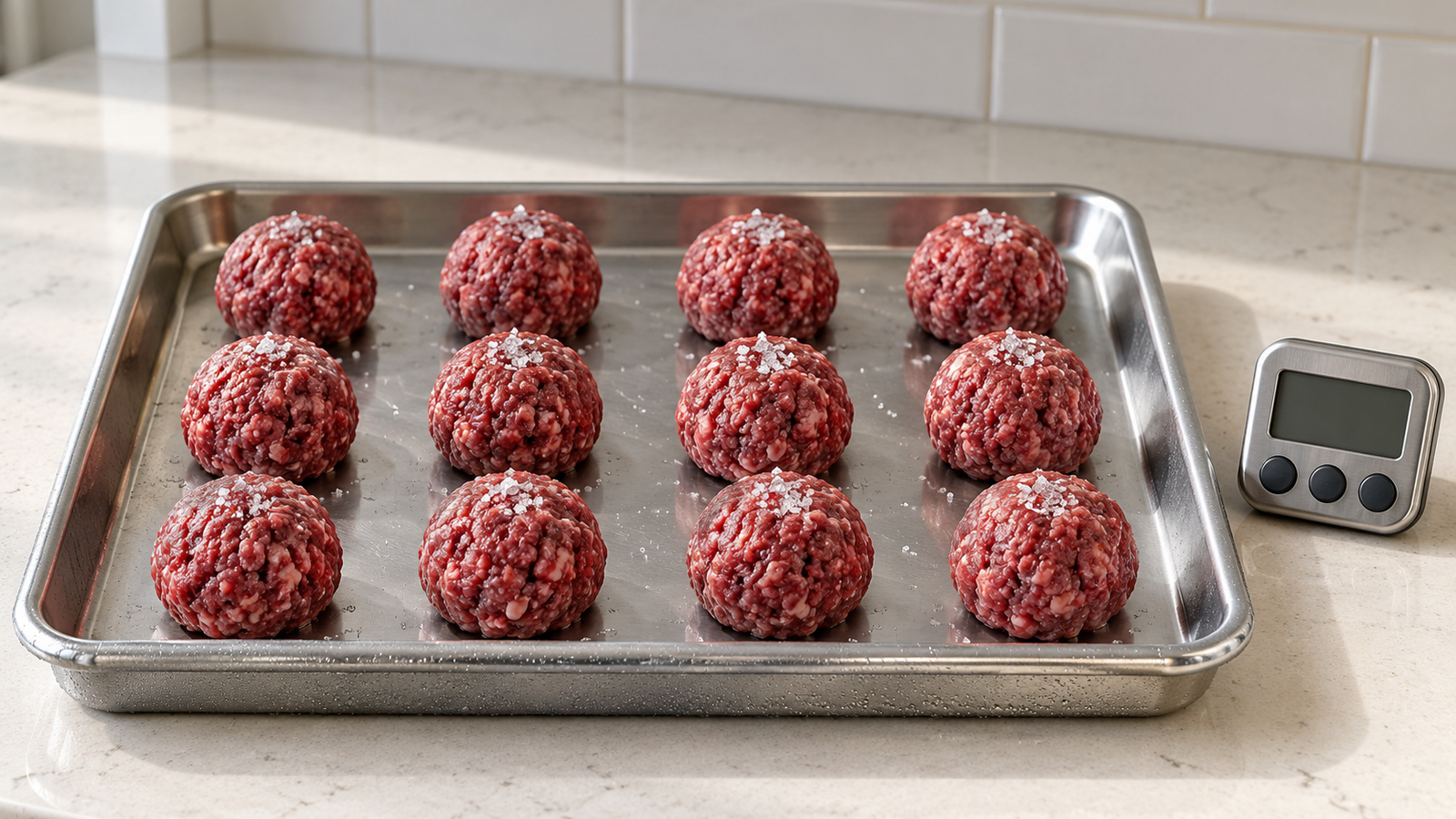
- Roll into balls about 1½ inches across, roughly golf-ball sized, using light pressure. Place them on a tray and refrigerate for 20 minutes before cooking, this firming step matters more here than in a conventional recipe, since there’s no egg or breadcrumb to provide backup structure if the meatballs go into the pot too soft.
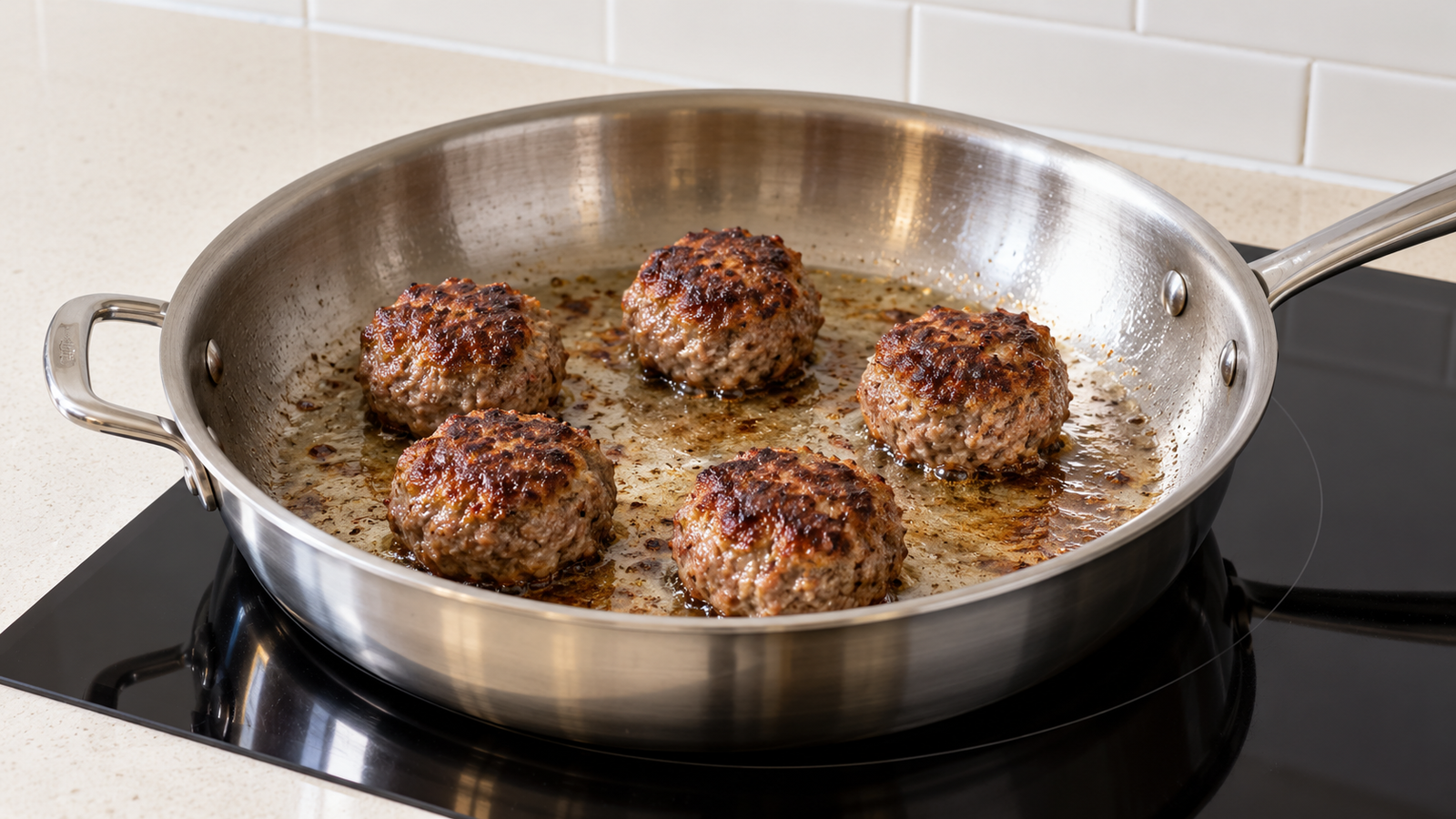
- In a wide, heavy pot, melt the tallow over medium-high heat and brown the meatballs in batches, turning carefully, until deeply colored on at least two sides. Don’t worry about browning every surface. The goal is flavor development, not a uniform crust, and the broth will finish the cooking.
- Once all the meatballs are browned and set aside, pour the bone broth into the same pot and bring to a simmer, scraping up any browned bits from the bottom as it heats.
- Return the meatballs to the pot, reduce to a gentle simmer, and cook uncovered for 20–25 minutes, until the internal temperature reaches 160°F and the broth has reduced and thickened slightly around them.
The temperature that matters
Ground beef follows the same safety rule regardless of shape or cooking method: the USDA’s Food Safety and Inspection Service sets 160°F as the minimum safe internal temperature for ground beef, checked in the center of the largest meatball in the batch. Because these meatballs finish in a simmering liquid rather than dry heat, it’s easy to assume a long enough simmer guarantees they’re done, but size variation between individual meatballs means the largest one in the pot can lag behind the smaller ones by a few minutes. Check the largest, not an average-sized one, with an instant-read thermometer before calling the batch finished.
Why browning first still matters even though they finish in liquid
It would be simpler to skip browning and just poach the raw meatballs directly in the broth, but that skips the Maillard browning reaction entirely, which is where a meaningful share of a meatball’s savory depth comes from. A meatball poached from raw tastes flatter and greyer, both in color and in flavor, than one that spent even a few minutes developing a seared surface first. The few extra minutes of browning, done in batches so the pot isn’t crowded, pay for themselves once the broth reduces around the finished meatballs and carries that browned flavor through the whole dish. Skipping it to save five minutes is one of the easiest ways to end up with a competent but forgettable version of a dish that’s genuinely worth the extra attention.
Getting the broth to reduce into something sauce-like
An uncovered simmer, rather than a covered one, is the key to ending up with a thickened broth instead of a thin soup. Covering the pot traps steam and keeps the liquid volume nearly constant; leaving it uncovered lets water evaporate steadily while the broth’s own gelatin and reduced flavor concentrate in what remains. If your broth still looks thin after the 20–25 minutes the meatballs need to cook through, pull the meatballs out once they hit 160°F and continue reducing the broth alone for another 5–10 minutes before returning them to the pot to rewarm, that way you’re not risking overcooking the meatballs themselves just to chase a thicker broth.
Sizing for consistency
| Meatball size | Approx. simmer time to 160°F | Best for |
|---|---|---|
| Golf ball (1½”) | 20–25 min | This recipe’s default, balances quick cooking with a satisfying bite |
| Larger (2″+) | 28–32 min | Fewer, heartier meatballs; needs closer thermometer monitoring |
| Smaller (1″) | 12–15 min | Meal prep or appetizer portions; cooks fast, easy to overshoot if unwatched |
Whatever size you land on, keep the batch uniform. Mixing wildly different sizes in the same pot is the single easiest way to end up with some meatballs safely at temperature while others are still short of it, since the thermometer check on one tells you nothing reliable about the others.
Meal-prepping this in bulk
This recipe scales up cleanly for a week’s worth of meals. Double or triple the beef and broth proportionally, brown in batches regardless of total volume (crowding the pot during browning is the one step that doesn’t scale well), and simmer in a pot large enough that the meatballs aren’t stacked more than two layers deep, which helps them cook evenly. Portioned into individual containers with enough broth to keep them from drying out, a big batch keeps the same three-to-four-day refrigerated window as a smaller one, so plan to freeze whatever you won’t eat within that window rather than letting it sit past day four hoping it’s still good.
What to serve it with
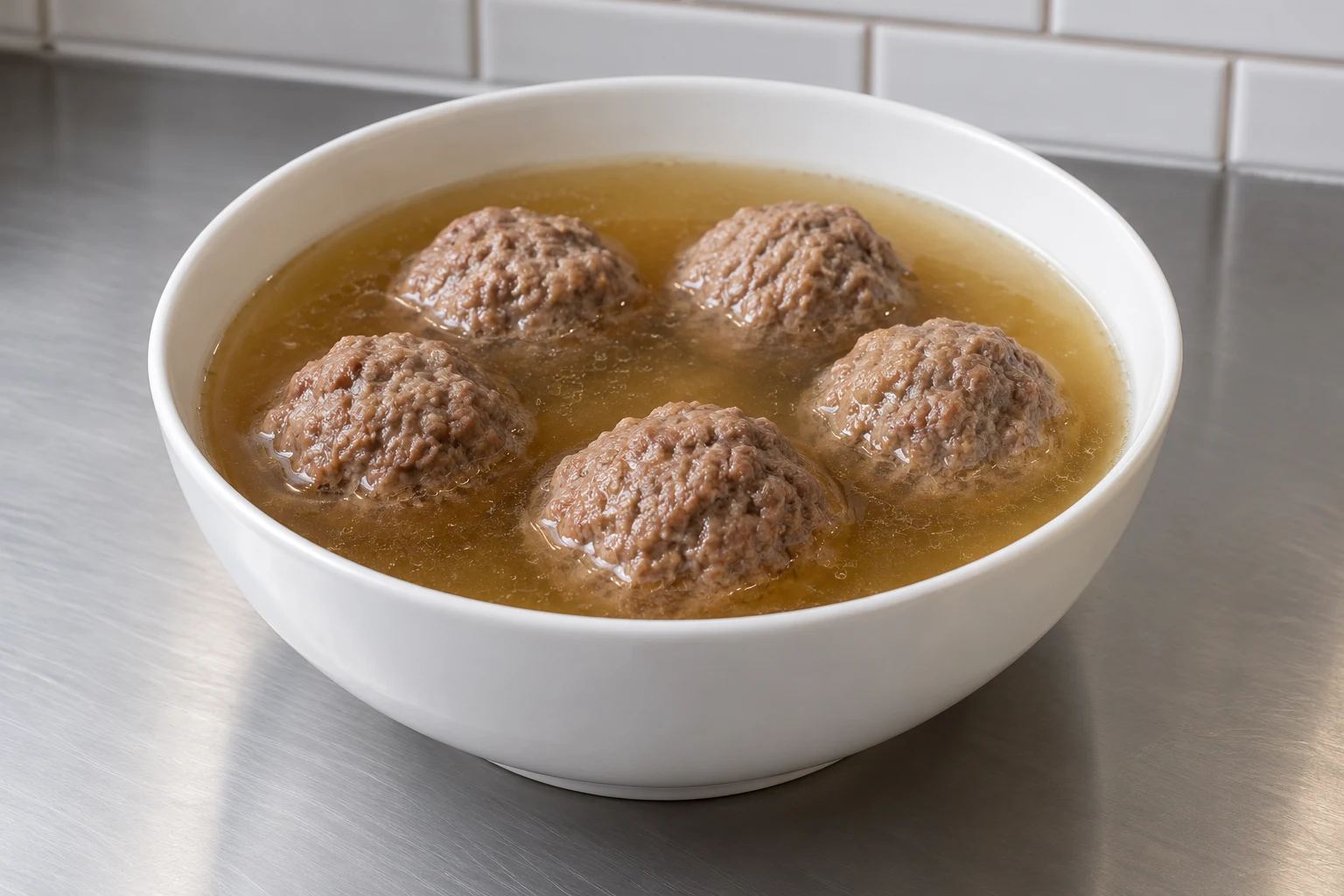
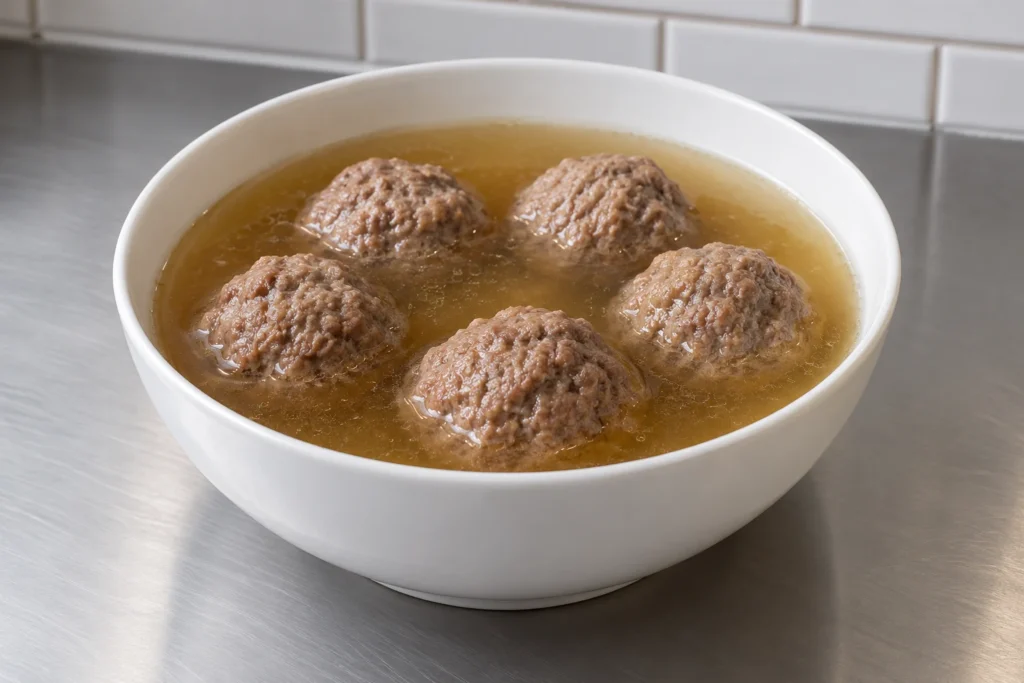
On its own, in a bowl with a generous ladle of the reduced broth, this is a complete meal. If you want more volume without adding anything beyond meat and fat, shredded slow-cooked beef or a side of crispy rendered fat cracklings both fit the all-animal approach without pulling in grains, starches, or vegetables the way a conventional meatball dish would lean on pasta or rice.
Common questions
My meatballs fell apart in the broth. What happened?
Almost always one of two things: they went into the pot too soon after forming, without the 20-minute refrigerator rest, or the beef was too warm when it was mixed and shaped. Both issues trace back to the same root cause. The fat and proteins need to be cold and firm going into the heat, not just at the end of mixing but all the way through forming and the rest period before cooking.
Can I use a leaner ground beef for this?
You can, but expect a slightly less rich result, since 80/20’s fat content is contributing real flavor and moisture to both the meatballs and the broth they simmer in. If lean is what you have, consider working a tablespoon of extra tallow into the mixture before forming to compensate, the same fix used for lean ground bison or venison elsewhere in this collection.
Do I need to turn the meatballs while they simmer?
A gentle turn or two partway through helps them cook and color evenly on more sides, but be gentle about it. Use a spoon to roll them rather than tongs, which can tear into a meatball that hasn’t fully set yet. If you’re nervous about breaking them apart, it’s fine to leave them mostly undisturbed; the simmering liquid cooks them from all sides regardless of whether you turn them.
Storage and reheating
Stored submerged in their broth, these keep refrigerated for three to four days, and the broth continues to protect the meatballs from drying out the same way it did during cooking. Reheat gently on the stovetop over medium-low heat until warmed through to 165°F, the standard reheating target for previously cooked meat. They also freeze well, broth and all, for up to three months. Freeze in a container that leaves some headspace, since liquid expands as it freezes, and thaw in the refrigerator overnight before reheating.
The binding principles behind this recipe connect directly to why meatballs fall apart, and what actually holds them together, which goes deeper into the protein chemistry than this recipe needs to. If you’re building your own bone broth for the first time to use here, bone broth that gels covers exactly what separates a rich, gelling broth from a thin one, and that difference will show up directly in how well this dish reduces. The same gentle-handling principle for ground beef shows up in why your burgers turn out dense, even though the final shape and cooking method are completely different.
A note on the pot you use
A wide, heavy-bottomed pot does more for this recipe than it might seem to on paper. Width matters because it lets you brown a reasonable number of meatballs per batch without crowding the pot, and crowding during browning is one of the more common ways this dish goes wrong. Too many meatballs in the pot at once drops the surface temperature, steams rather than sears, and leaves you without the Maillard-browned base the broth depends on later. Weight in the pot’s construction matters because a heavier base holds heat more evenly through the browning stage and resists scorching the fond on the bottom once the broth goes in and you’re trying to scrape those browned bits loose. A thin, lightweight pot will work in a pinch, but expect to manage the heat more actively. Lower it sooner than you think you need to, and watch the bottom of the pot more closely during the browning stage specifically.
If you only have a smaller pot available, there’s no harm in splitting the recipe across two batches entirely, browning and simmering each separately, rather than trying to force the full quantity into a pot that’s genuinely too small for it. The extra time is worth it compared to a crowded first batch that steams instead of browning properly.
Why this dish works especially well as a repeat meal
Unlike a lot of simply seared cuts that are genuinely best eaten the moment they come off the heat, this dish actually improves slightly on day two, after the broth has had a full overnight chill to let the gelatin set further and the flavors settle together. Reheated gently, it tastes more cohesive than it did fresh, closer to how a good braise or stew tends to taste better the next day than it did the night it was made. That makes it a particularly good candidate for cooking once and eating across several meals rather than something you need to time perfectly for a single sitting, and it’s one of the more forgiving dishes in this collection if your schedule doesn’t line up with a fresh-cooked dinner every night. Cook it on a day you have the time, and let the next few days benefit from work you’ve already done.
That overnight improvement is worth planning around deliberately rather than treating as a happy accident. If you know you have a busy week ahead, this is a strong candidate for a Sunday cooking session specifically because the payoff compounds instead of degrading. Unlike a seared steak, which is genuinely at its best in the minutes right after cooking and only goes downhill from there, this dish is still arguably improving by day two or three in the refrigerator. Build your cooking schedule around dishes like this one when you know ahead of time that weeknights won’t leave much room for anything beyond reheating. The pot does the waiting for you.
Visual steps