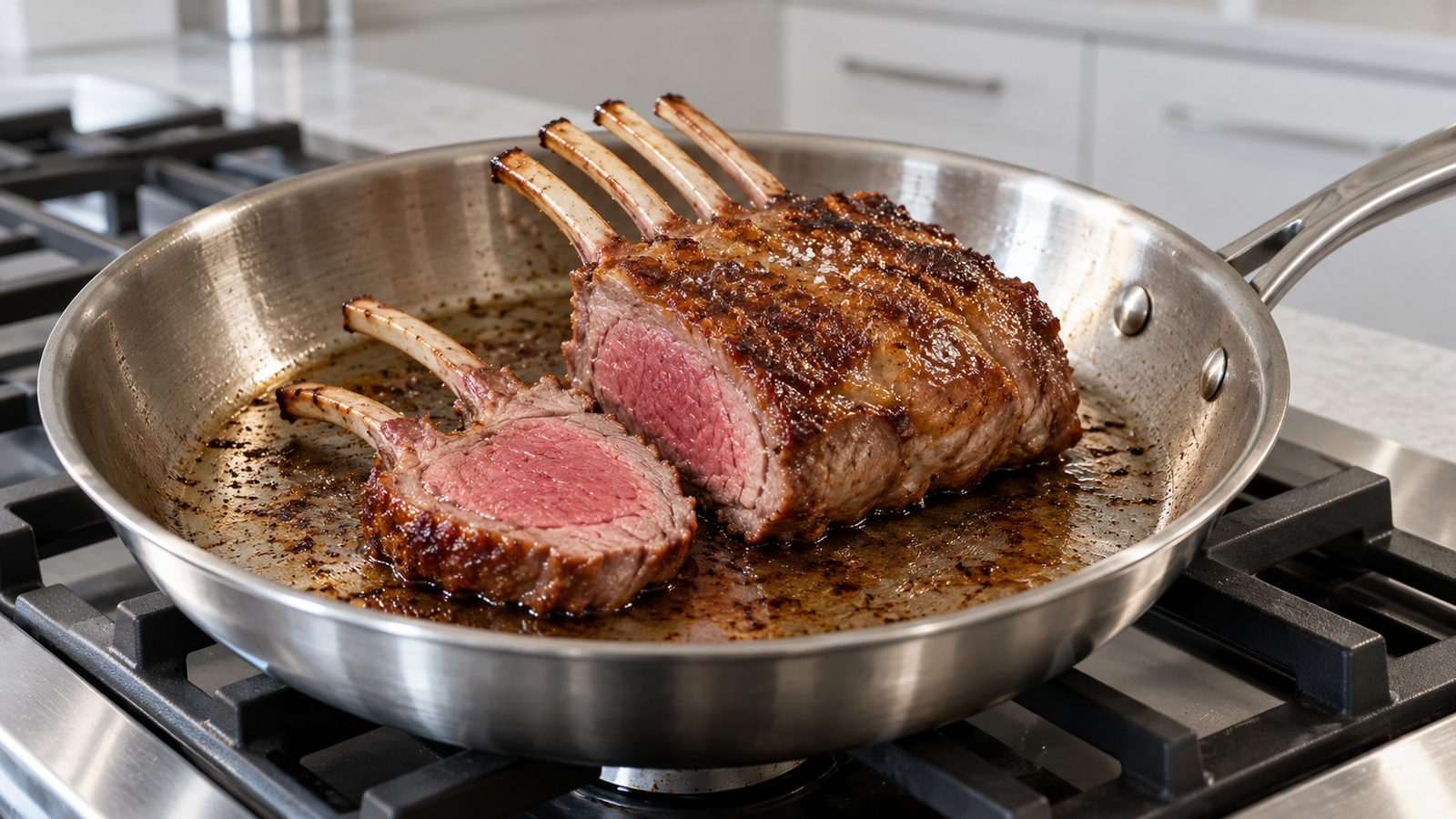
What makes a restaurant-looking rack of lamb look harder to cook than it actually is? Mostly presentation. The frenched bones, the fanned-out plating, the price per portion — all of it suggests a technique well beyond pan-searing a steak, when in practice a rack of lamb is simply a connected row of small, tender chops that cooks in roughly the same way a thick-cut chop does, just all at once and on the bone. Handled with a hot pan and a short oven finish, it is one of the faster special-occasion cuts you can cook at home.
What You Need
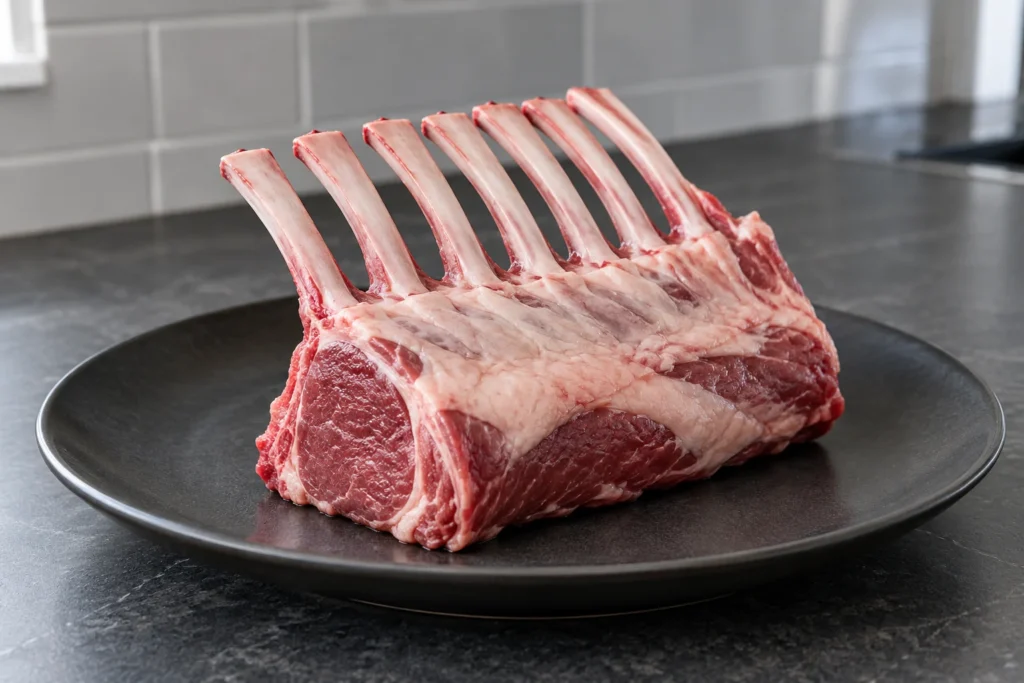
- 1 rack of lamb, 8 ribs, frenched, about 1½–2 lbs
- Coarse salt
- A light crack of black pepper, optional
- 2 tablespoons tallow, lard, or butter
“Frenched” means the butcher has already scraped the meat and fat away from the top inch or so of each bone, which is purely cosmetic and makes the rack easier to handle and carve — it does not change how the meat itself cooks. If your rack is not frenched, it will cook exactly the same way; you will just have a bit more trimming to do yourself before serving. Either way, look for a rack with a visible, even layer of fat across the back rather than one that has been trimmed down to almost nothing — that fat is doing real work in this recipe, both for flavor and for protecting the lean loin muscle underneath it during the sear and roast.
Salting and Resting Before the Pan
Salt the rack generously on all sides and let it sit at room temperature for 45 minutes to an hour before cooking, or salt it the night before and refrigerate uncovered if you want deeper seasoning — see our guide on salting meat early for why this step changes the final result more than most people expect. Whichever timeline you use, make sure the rack is not cold in the center when it hits the pan; a cold center fights the sear and throws off your timing, often leaving you with a well-browned exterior sitting on top of meat that is still noticeably cooler than you’d expect once you check with a thermometer partway through the oven stage.
The Method
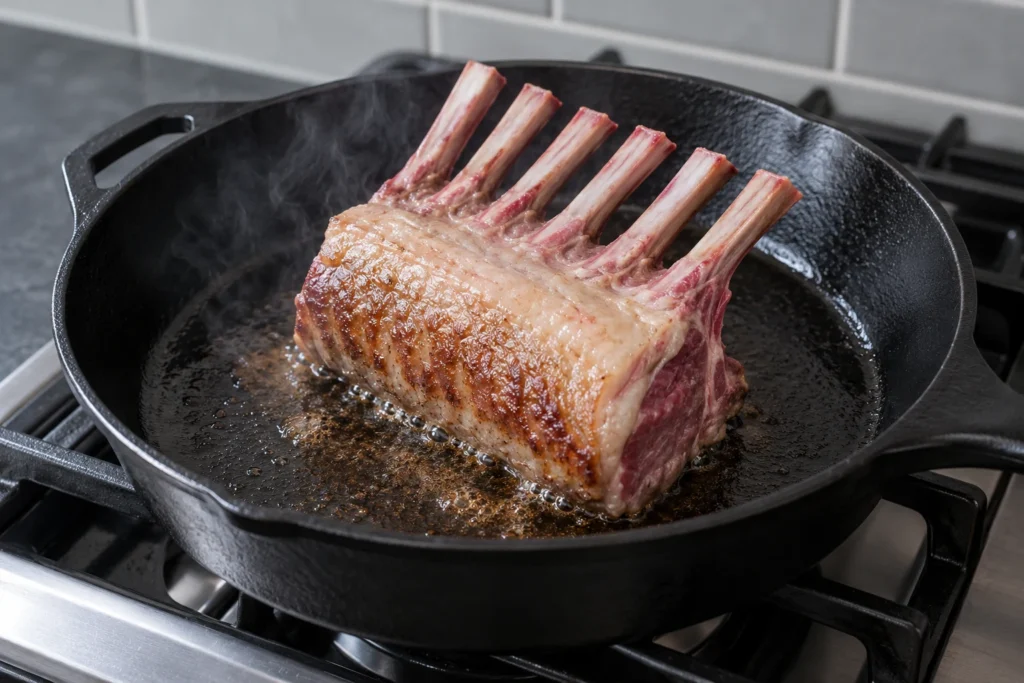
- Preheat the oven to 400°F (204°C). Heat an oven-safe skillet, ideally cast iron, over medium-high heat on the stovetop.
- Add the fat and let it melt until shimmering.
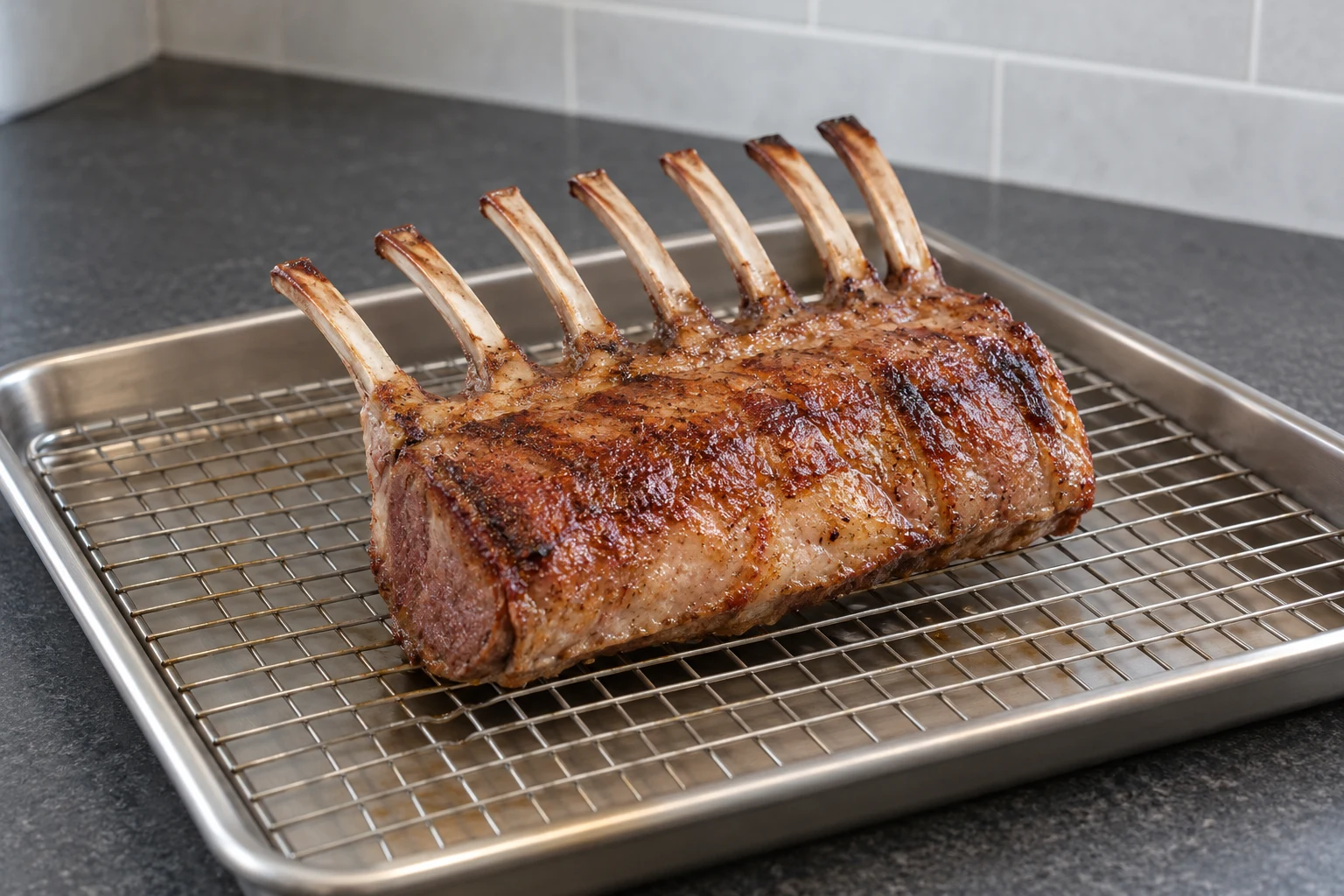
- Place the rack fat-side down first and sear for 3 to 4 minutes, until deeply browned. This is the side with the most fat to render and the most flavor to develop.
- Turn and sear the meat side for another 2 to 3 minutes, then sear briefly along the bone side as well, about 1 minute, to pick up color there too.
- Transfer the skillet to the oven, bone-side down, and roast for 12 to 18 minutes depending on thickness, checking temperature starting around the 10-minute mark.
- Pull the rack at 125°F (52°C) for rare, 130°F (54°C) for medium-rare, or 140°F (60°C) for medium, measured at the center of the loin muscle away from bone and fat.
- Rest for 10 minutes, tented loosely with foil, before slicing between the bones into individual or double chops.
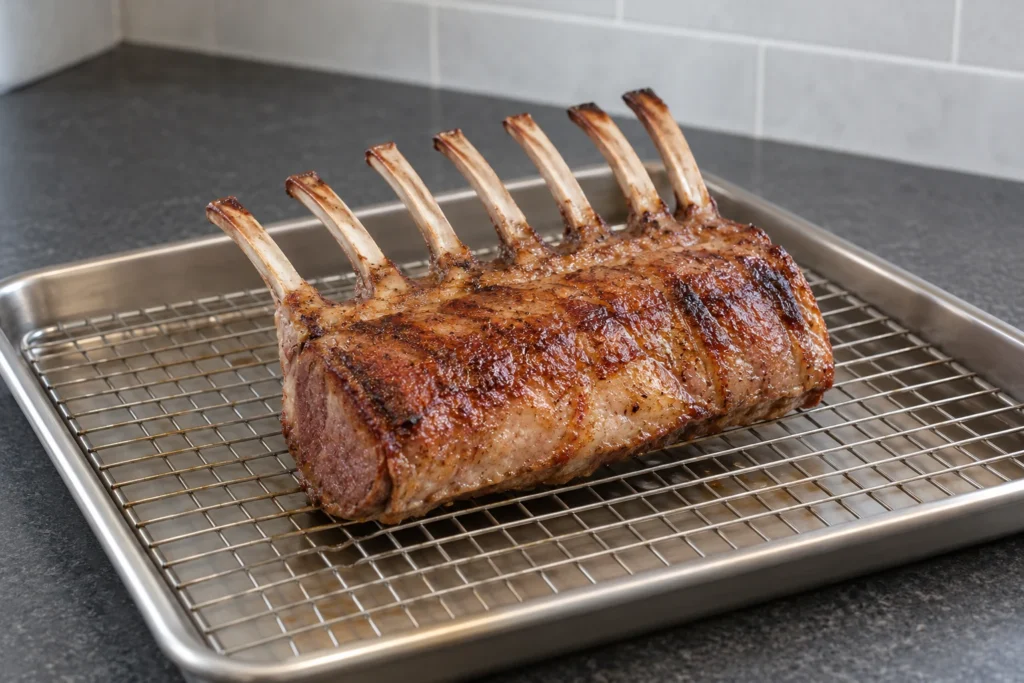
Total active and cooking time runs about 30 minutes including the rest, most of it unattended once the rack is in the oven.
Why Fat-Side-Down First
A rack of lamb carries a cap of fat along its back that, left unrendered, turns chewy and unpleasant rather than the crisp, flavorful layer it can become with the right treatment. Starting fat-side down in a hot pan gives that fat the longest, most direct contact with heat of any stage in the cook, rendering a meaningful amount of it before the leaner loin muscle ever touches the pan directly. This is the same logic behind searing a duck breast skin-side first, and it matters more on lamb than most people assume — a rack seared meat-side first often ends up with a fat cap that is merely warmed through rather than properly rendered and crisped.
Doneness Guide
| Internal temp | Doneness | Texture |
|---|---|---|
| 120°F | Rare | Deep red center, very soft |
| 125°F | Rare+ | Red center, soft, warm throughout |
| 130°F | Medium-rare | Pink throughout, the standard target for rack of lamb |
| 140°F | Medium | Light pink, firmer |
| 150°F+ | Medium-well and beyond | Mostly gray-brown, noticeably firmer and drier |
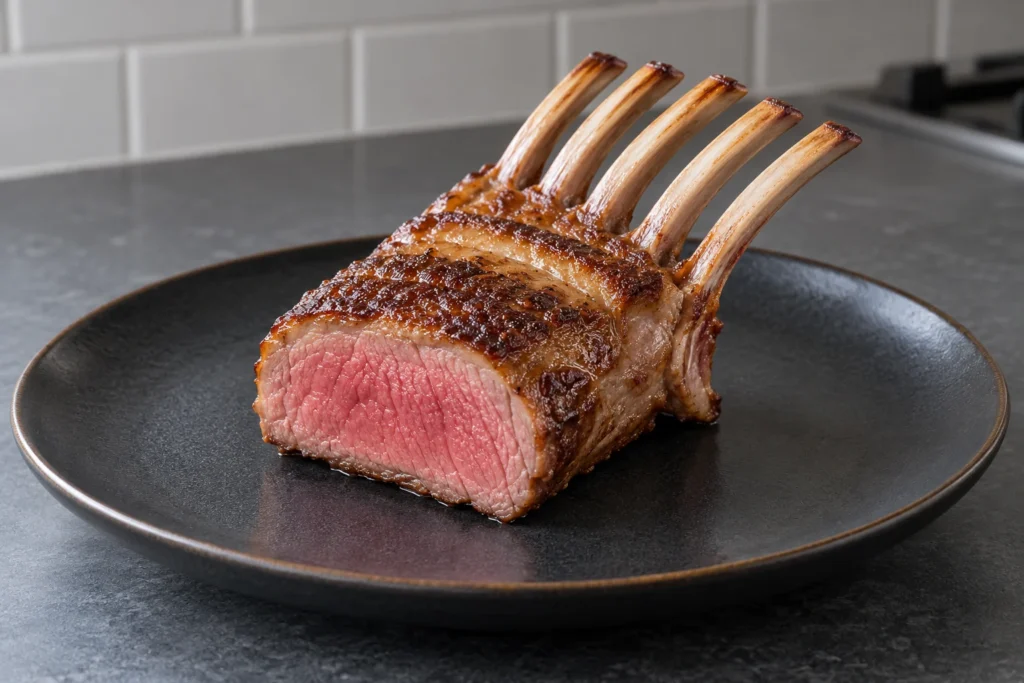
Unlike ground meat or poultry, whole-muscle lamb has no single fixed safety number that forces a particular doneness — the USDA lists 145°F (63°C) with a 3-minute rest as its recommended minimum for whole cuts of lamb, but rack of lamb is traditionally, and safely, enjoyed well below that at rare to medium-rare, the same way a beef steak often is. If you are cooking for someone with a weakened immune system or who is pregnant, cooking closer to or past the 145°F USDA recommendation is the more conservative choice; for everyone else, rare to medium-rare on a whole, intact cut like this carries the same low, well-understood risk profile as a rare steak.
Common Mistakes
- Searing meat-side down first. You lose the chance to properly render the fat cap, which stays chewy in the finished dish.
- Skipping the rest. A rack this size still needs 10 minutes to let juice redistribute; cutting immediately loses a visible amount onto the board.
- Measuring temperature too close to the bone. Bone reads differently than muscle and will throw off your reading. Center the probe in the thickest part of the loin itself.
- Not accounting for carryover. A rack pulled at 130°F will often climb another 5 degrees during the rest — pull a few degrees below your actual target doneness.
- Cutting between every single bone before serving. Double chops (two ribs per piece) hold moisture slightly better during serving and plating than single chops cut immediately before the table.
Why Lamb Takes Fat and Heat So Well
Lamb’s flavor comes substantially from the fat itself, more so than with beef or pork, which is part of why trimming a rack too aggressively before cooking actually works against you rather than making for a lighter dish. The fat cap along the back of a rack carries much of what people describe as lamb’s distinctive character, and rendering it properly — rather than scraping it away raw or leaving it unrendered and chewy — is the difference between a rack that tastes mild and a rack that tastes unmistakably like what it is. If you have read our piece on what actually changes lamb’s gamey reputation, the fat-rendering step here is a direct application of that same principle: properly rendered fat reads as rich and savory, while fat that is left raw, cold, or merely warmed through reads as the stronger, less appealing flavor people associate with lamb done badly.
Scaling for a Dinner Party
A single 8-rib rack serves two to four people depending on appetite and what else is on the table, which means a dinner for six or eight requires two or three racks. Cook them in the same pan if it is large enough to hold them without crowding, searing in sequence if not — fat-side down for each rack individually rather than trying to cram multiple racks into one pan at once, which prevents proper contact with the hot surface for any of them. Once seared, multiple racks can share the same oven tray for the roasting stage, since oven heat surrounds every piece evenly regardless of how many are in there together, unlike the stovetop sear which needs direct pan contact per piece.
What to Serve It With
Rack of lamb is rich enough to carry a meal on its own, and the rendered fat and pan drippings left behind after cooking are worth using rather than discarding — spoon them directly over the sliced chops, or save them to sear a second cut later in the week. If you want to round out the plate with something else from this site, a cup of bone broth or a few slices of pan-seared venison backstrap both complement lamb’s richness without competing with it, keeping the whole meal within the same all-animal approach.
Carving
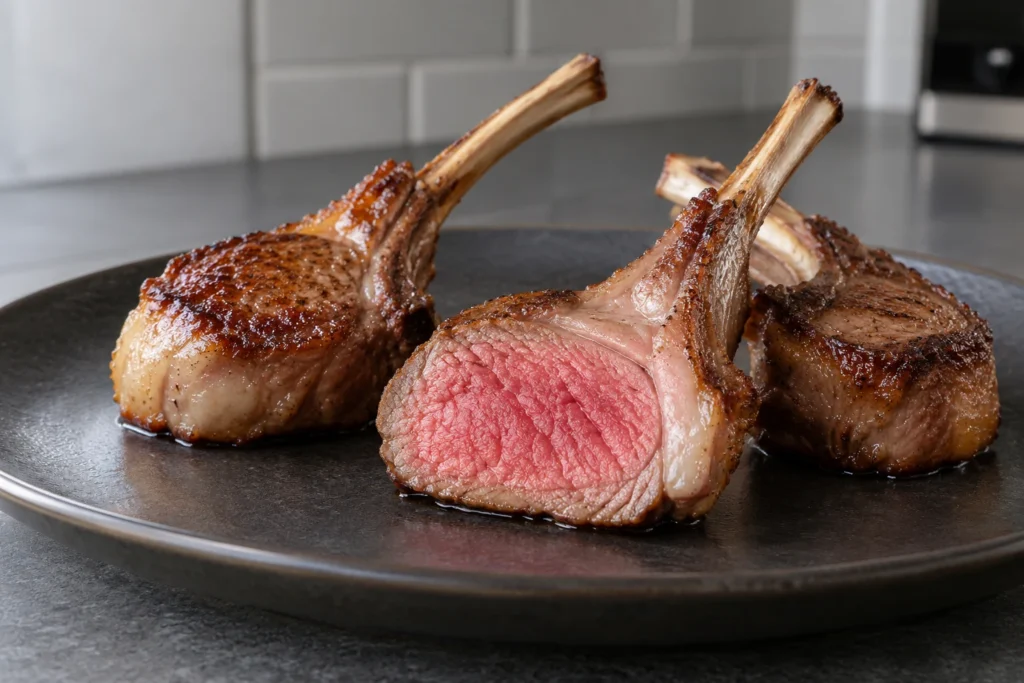
Stand the rested rack upright, bones facing up, on a cutting board with enough surface area to work comfortably, and use a sharp, thin knife to cut straight down between each bone or every second bone for double chops. A steady hand and a sharp knife matter more here than force — a dull blade tears through the rendered fat cap instead of slicing cleanly, which can push a good crust out of place. Serve immediately while the fat is still at its best texture; it firms up and loses some appeal as it cools on the plate, which is also a good reason to time the carving for right before people are ready to eat rather than carving ahead and letting the plated chops sit around going lukewarm on the counter.
Storing and Reheating
Leftover lamb keeps refrigerated in a sealed container for three to four days. Reheat gently — a quick pass in a hot skillet for 60 to 90 seconds per side warms it through without pushing a medium-rare chop toward well-done, since lamb this lean and already cooked once has little margin left for additional heat. Avoid the microwave, which heats unevenly and tends to overcook the thinner edges before the center is even warm. Rack of lamb is less practical to freeze raw than other cuts on this site since the bone structure makes even thawing trickier, but cooked, sliced leftovers freeze acceptably for up to two months if needed. Wrap portions tightly to limit air exposure, and thaw in the refrigerator overnight before the same brief, gentle reheat described above rather than attempting to reheat straight from frozen.
Frequently Asked Questions
Do I need to buy a frenched rack, or can I french it myself? A butcher can usually french a rack for you at no extra charge if you ask, and it is a fussy, time-consuming job to do well at home with a boning knife. Buying it already frenched is worth the convenience for most home cooks.
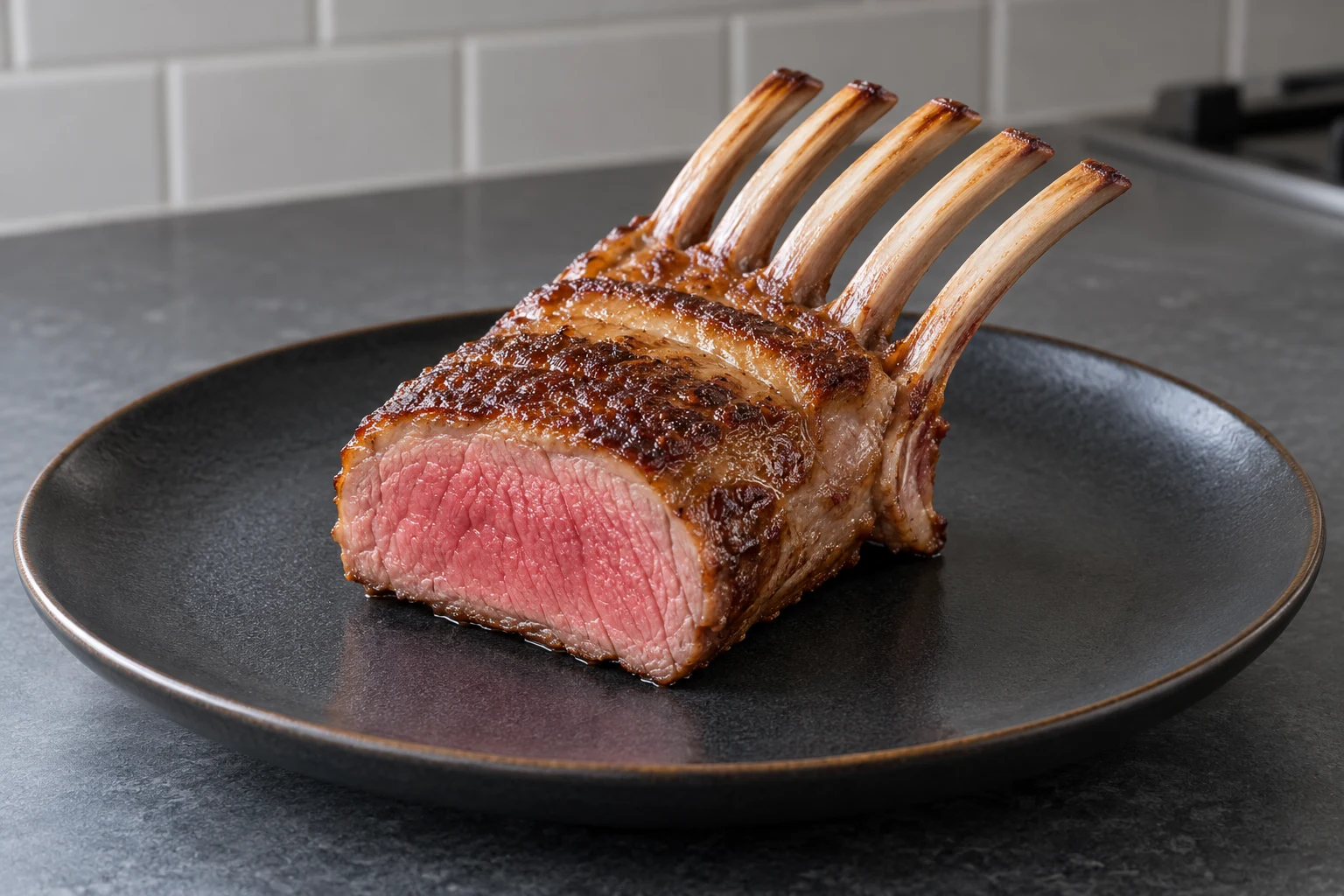
Why did my fat cap stay chewy even though I seared it first? This is usually a heat or time issue — either the pan was not hot enough when the rack went in fat-side down, or the sear was cut short before the fat had a real chance to render. Give that first side the full 3 to 4 minutes at a genuinely hot pan temperature rather than rushing to flip. A good visual cue that the fat is actually rendering rather than just sitting in the pan: you should see a small, steady pool of clear, golden fat collecting around the base of the rack as it sears, not just dry contact between fat and metal.
Can I cook this entirely on the stovetop without the oven? For a thinner rack, yes — reduce heat to medium after the initial sear and cover the pan, checking temperature frequently. A thicker rack benefits from the oven’s more even ambient heat to cook the center through without further charring the exterior.
What’s the difference between a rack of lamb and a rack of baby back ribs or pork rib chops? Structurally similar — a connected row of rib bones with the loin muscle attached — but lamb racks are smaller, cook much faster, and are traditionally served at a lower internal temperature than pork, which has a different, lower USDA safe minimum of 145°F but is rarely served as rare as lamb is by convention. Do not substitute cook times between the two.
I don’t own a cast-iron skillet — does that change anything? Any heavy, oven-safe pan works. What matters most is that the pan can hold a hot, steady temperature through the sear and then transfer cleanly into a 400°F oven without the handle or any coating being damaged by that heat.
What looks like the most intimidating cut on this list turns out to be one of the most forgiving once you understand the shape of it: fat-side down first, a short oven finish, and a thermometer doing the real work instead of guesswork. The presentation takes care of itself once the cooking is right. Once you have made it once and seen how little hands-on time it actually demands, it stops feeling like a special-occasion-only dish and starts looking like a reasonable Tuesday option when you want something better than the usual rotation without committing an entire afternoon to it.
Visual steps
