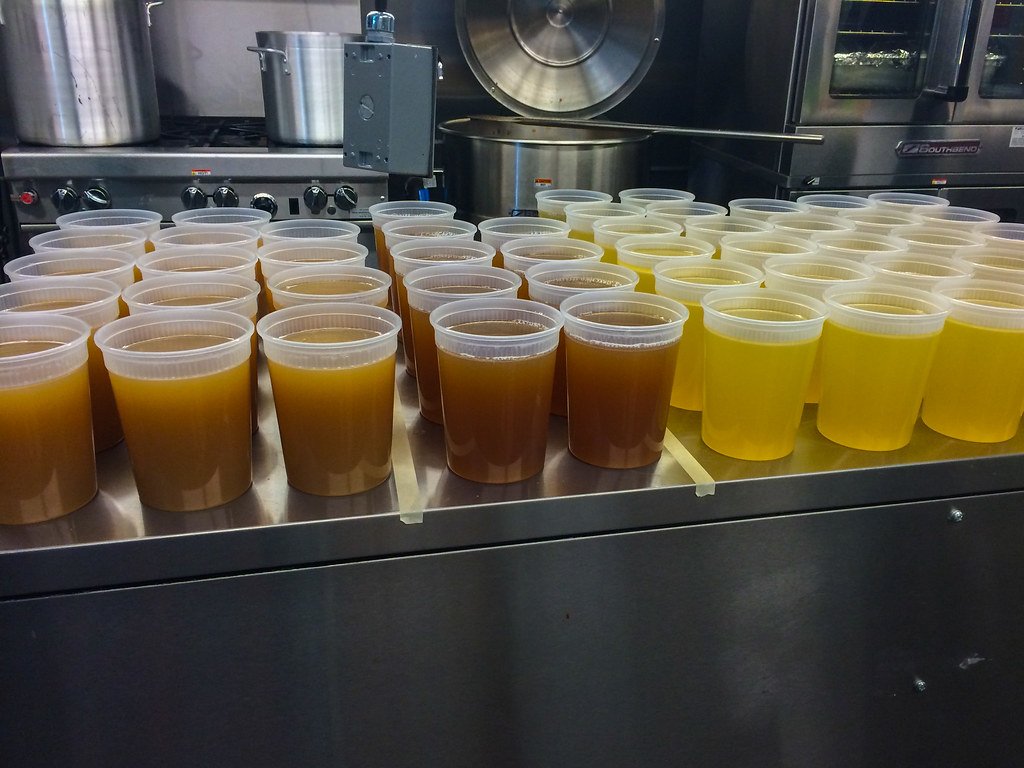
The difference between good bone broth and a disappointing one is visible the next morning. Chill a batch overnight, and good broth sets into a soft, wobbling jelly you could almost slice. Weak broth stays loose and watery. That set is gelatin, and gelatin is the entire point of the exercise: it is what gives broth its body, its lip-coating richness, and the reason to bother simmering bones for hours in the first place. Everything about how you make it comes down to coaxing collagen out of the bones and turning it into that gel.
Start with bones that actually have collagen
Clean, hollow marrow bones look the part but are not where gelatin comes from. The collagen lives in connective tissue: joints, knuckles, feet, necks, and knobby bone ends. A batch built on those will gel; a batch of plain marrow bones often will not, no matter how long it simmers. Mixing in a few gelatin-rich pieces is the single easiest way to guarantee body, so choose the bones with that in mind before you think about anything else.
Roast first, then simmer low and long
Roasting the bones first is optional but worth it, deepening both color and flavor before any water is involved. The simmer itself is where the gelatin is made, and it is a matter of time. Collagen converts to gelatin slowly, over hours, which is why a rushed broth tastes thin; you are asking for a transformation that the clock has to allow. Keep the water level enough to cover the bones without drowning them, so the flavor and gelatin are not diluted into weakness.
Never let it boil hard
This is the mistake that turns a promising pot cloudy and greasy. A hard, rolling boil churns the rendered fat into the liquid and emulsifies it, leaving broth that is murky and slick instead of clean. Keep the pot at a bare simmer, barely trembling, and skim the foam and fat that rise in the early stages. Low heat is not just gentler; it is what keeps the broth clear and lets the gelatin come through without the grease riding along with it.
Strain, cool, and store safely
When it is done, strain out the solids and cool the broth promptly rather than leaving a big pot sitting warm on the stove for hours; a large volume of warm liquid is exactly the kind of thing food-safety guidance warns about, so get it into the fridge without a long wait, dividing it into smaller containers if that helps it cool faster. Any fat that sets on top can be lifted off the next day, or kept and used for cooking. Then look at what is underneath. If it jiggles, you did it right.
Judge it by the jiggle
Forget the exact hours and the folklore. A good broth is one that gels when cold, tastes clean rather than greasy, and coats a spoon. Get collagen-rich bones, hold a bare simmer long enough, and keep the boil off it, and you will have that. Chase the jiggle and the rest follows.
The collagen-to-gelatin conversion behind a good broth follows established food science as described in Harold McGee’s On Food and Cooking. This is a culinary guide to texture and flavor; it makes no health claims. Cool and store broth according to standard food-safety practice.