Resting meat does not “let the juices flow back in,” at least not the way the phrase suggests, as if the liquid politely returns to where it started. What actually happens is quieter and more useful to understand. Straight off the heat, the outer layers of a piece of meat are much hotter than the center, and the muscle fibers are contracted and under pressure. Cut into it then and that pressure drives liquid out onto the board. Give it a few minutes and the temperature evens out, the fibers relax, and far less liquid escapes when the knife goes in. That is resting. Knowing the mechanism tells you exactly when it matters and when it barely does.
A thick steak is where you feel it most
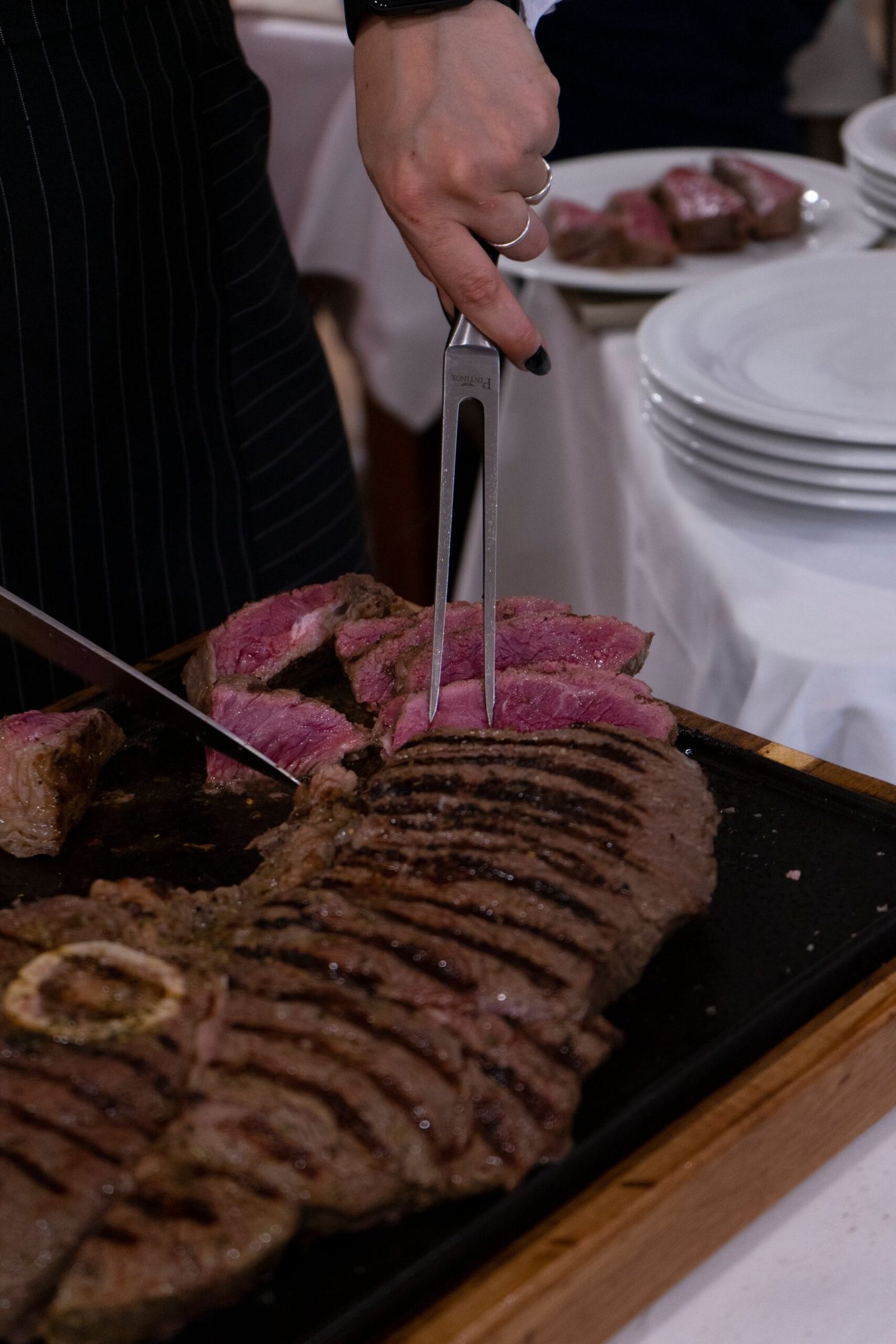
Sear a thick steak and you create a steep temperature gap between the browned surface and the rosy middle. This is the classic case for resting. Five to ten minutes off the heat lets that gap close and the fibers settle, so when you slice, the juice stays in the meat instead of pooling under it. It also gives carryover cooking time to finish the job, which is why pulling the steak a few degrees early and letting it rest lands it where you wanted. Skip the rest on a thick steak and you can watch a good portion of what you were after run out onto the plate.
A big roast needs real time, not a token pause
The larger the piece, the longer the inside takes to settle, and the more carryover heat it carries. A roast or a whole bird can hold heat for a surprisingly long time, so it wants a proper rest, often fifteen to thirty minutes or more, tented loosely so it does not steam its own crust soft. This is not wasted time; a big roast that rests carves cleanly into slices that hold their juice, while one carved straight from the oven sheds liquid and can look done at the edges but be a moving target in the middle. Plan the rest into the schedule rather than treating it as an afterthought.
Where resting barely earns its keep
The same logic that makes resting matter for a thick steak makes it nearly pointless for a thin one. A thin cutlet or a quickly cooked slice has little internal temperature gap and cools fast, so a long rest gains you almost nothing and can leave it lukewarm. A burger is similar; a brief moment to settle is fine, but it does not need the treatment a roast does. If a piece of meat is thin, cooked fast, and served hot, do not let dogma talk you into resting it until it is cold. The rule is a tool, not a ritual.
The rule of thumb worth keeping
Rest in proportion to size and to how big the temperature gap is. Thick cuts and large roasts genuinely benefit and should be built into your timing. Thin, fast-cooked pieces mostly do not. Once you think of resting as temperature evening out and fibers relaxing, rather than a magic step you perform on everything, you know when to wait and when to just eat.