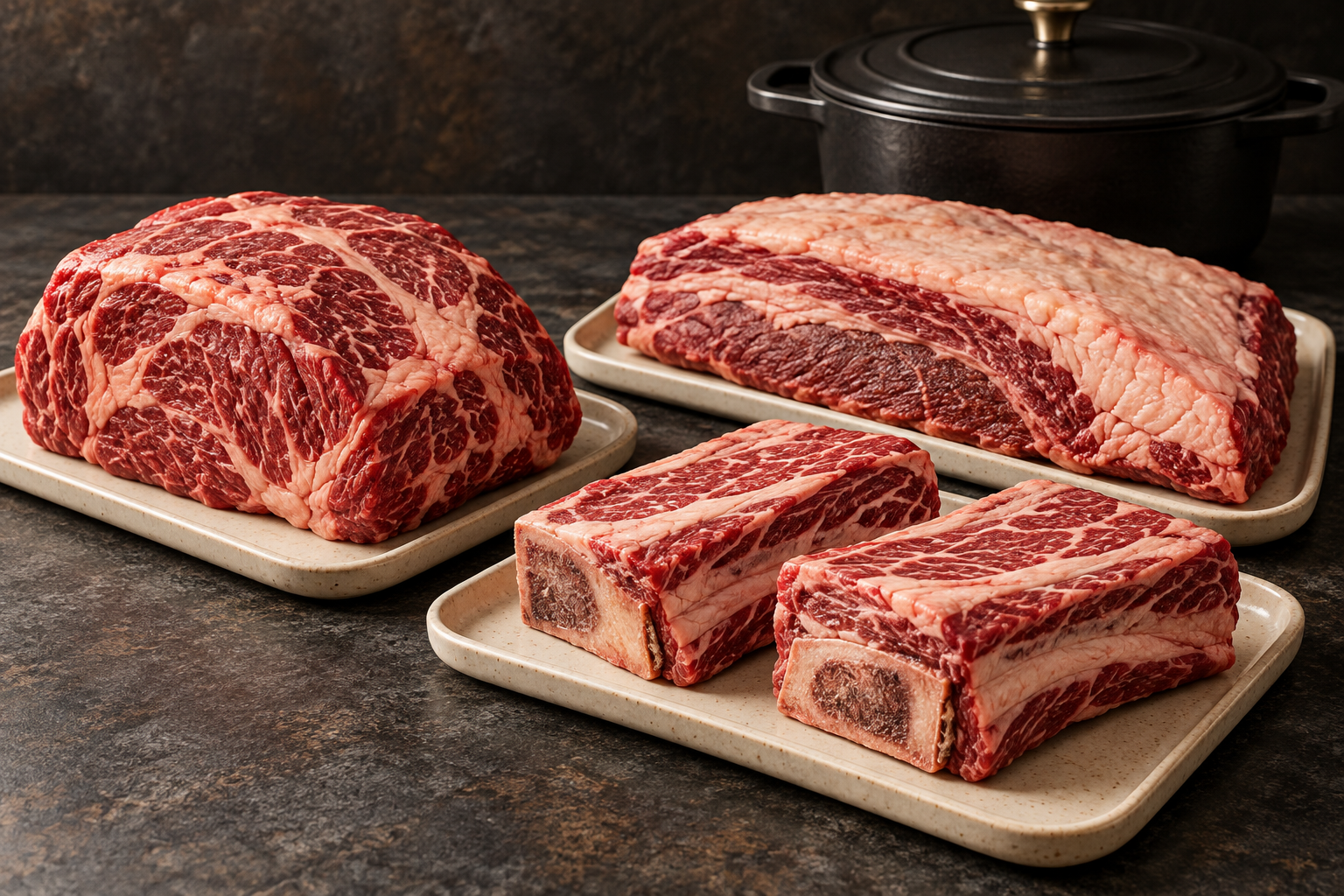
The most expensive cut on the braising shelf is rarely the best one for the pot. Short ribs cost more than chuck by a wide margin, and there are dinners where they earn it, but if you buy them expecting a better stew than chuck would give you, you have misread what braising actually rewards. The three cuts most people reach for when they want fall-apart beef—chuck, brisket, and short rib—are not interchangeable. They collapse in different ways, on different timelines, toward different textures.
Knowing which one belongs in tonight’s pot is less about price and more about what you want on the fork at the end.
Their toughness is the feature, not the flaw
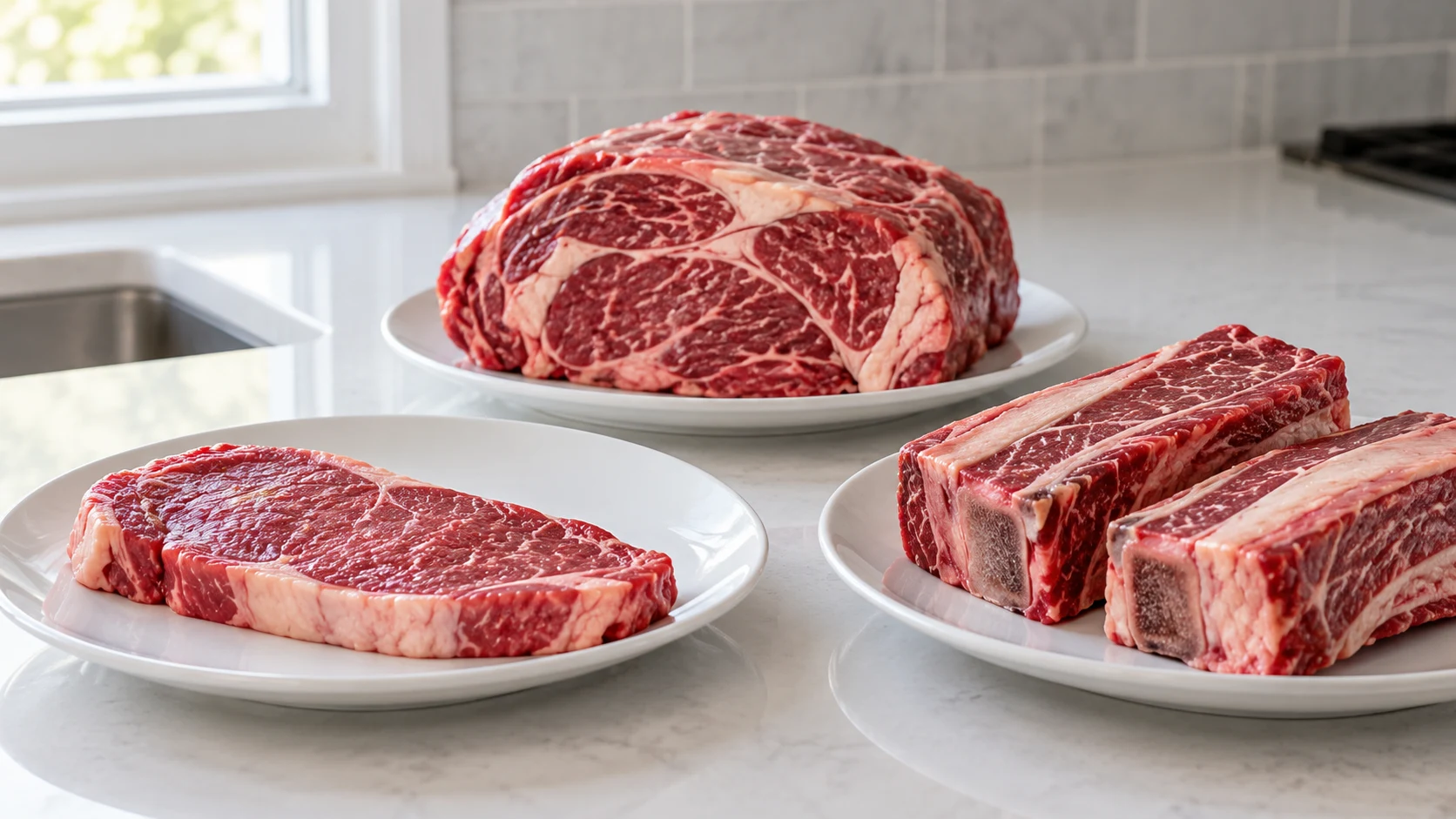
All three cuts come from parts of the animal that worked hard, which means they are dense with connective tissue. Raw and seared quickly, that connective tissue is exactly what makes them chewy. Given time in gentle, moist heat, the collagen in it converts to gelatin, and that gelatin is what coats your lips and gives a good braise its body. This is well-documented food science, laid out in Harold McGee’s On Food and Cooking, and it is the reason a cheap, tough cut can out-eat an expensive tender one when you cook it the right way.
So the question is not which cut is most tender to start with. It is how each one behaves once that conversion is underway.
Chuck earns its place as the default
Chuck comes from the shoulder. It is well-marbled, streaked with connective tissue that runs throughout rather than sitting in one seam, and it is forgiving in a way the other two are not. Pull it a little early and it is still good. Push it a little long and it is still good. It shreds cleanly into soft, beefy chunks, which makes it the right choice for stews, chili, ragù, and anything where you want the meat to melt into the dish rather than stand apart from it.
Its one honest weakness is that it does not slice. If you are hoping for neat portions, chuck will fall apart on the knife. For most braises, that is exactly what you want, which is why it lives in my pot more weeks than not.
Brisket rewards patience and punishes shortcuts
Brisket is a large, flat muscle from the lower chest, and it comes in two parts that behave differently. The point is fattier and more forgiving. The flat is leaner, and the flat is where people get into trouble. Braise a lean flat too fast or pull it too soon and it turns dry and stringy instead of tender, because it has less fat running through it to keep things generous while the collagen breaks down.
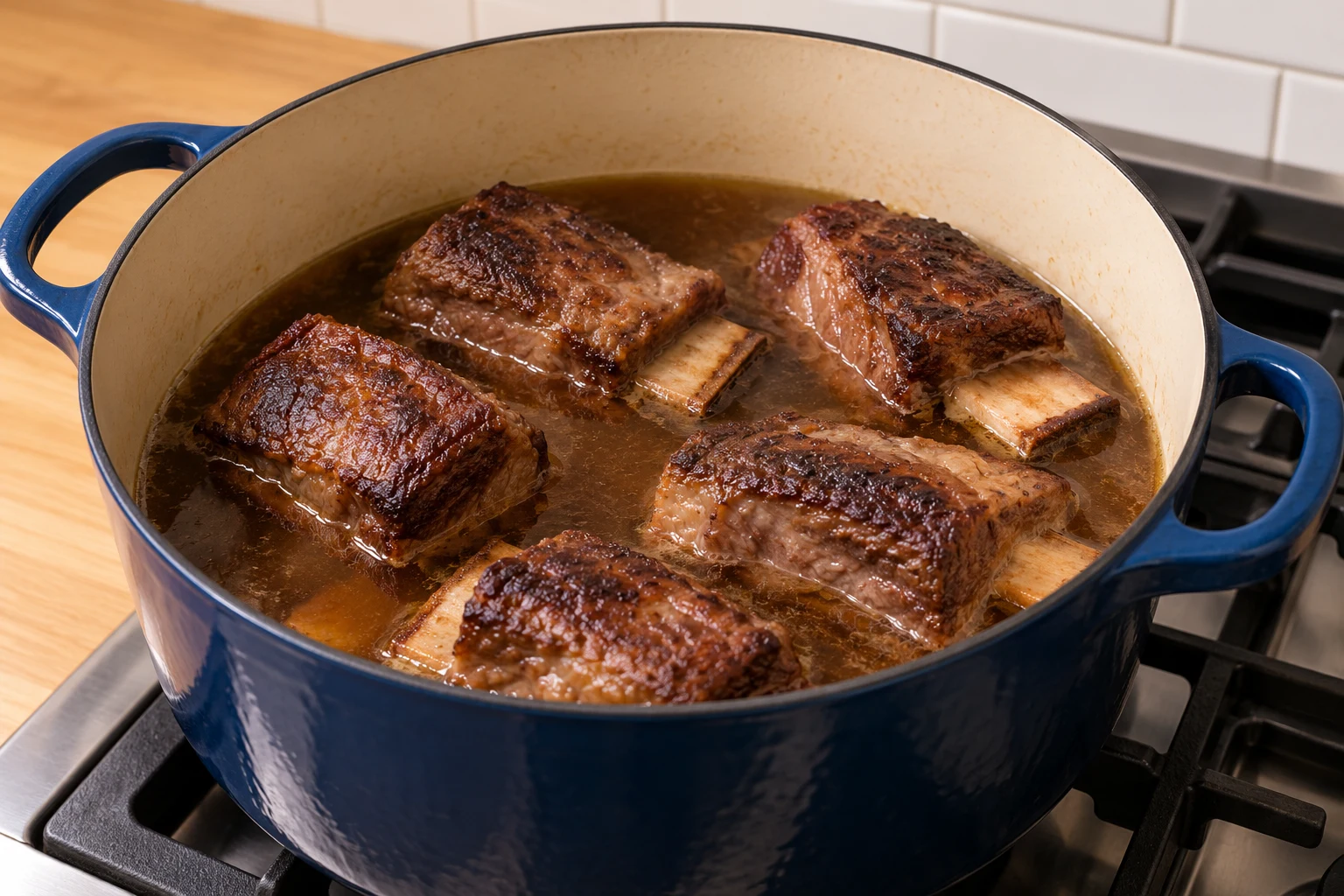
What brisket offers that chuck does not is slices. Cooked low and slow until it is properly tender, then rested and cut against the grain, it holds together in clean pieces. That makes it the cut to choose when you want a braise that looks like a roast: pot roast you can plate in slabs, or anything served in portions rather than spooned.
Short rib gives you richness, at a cost you should see coming
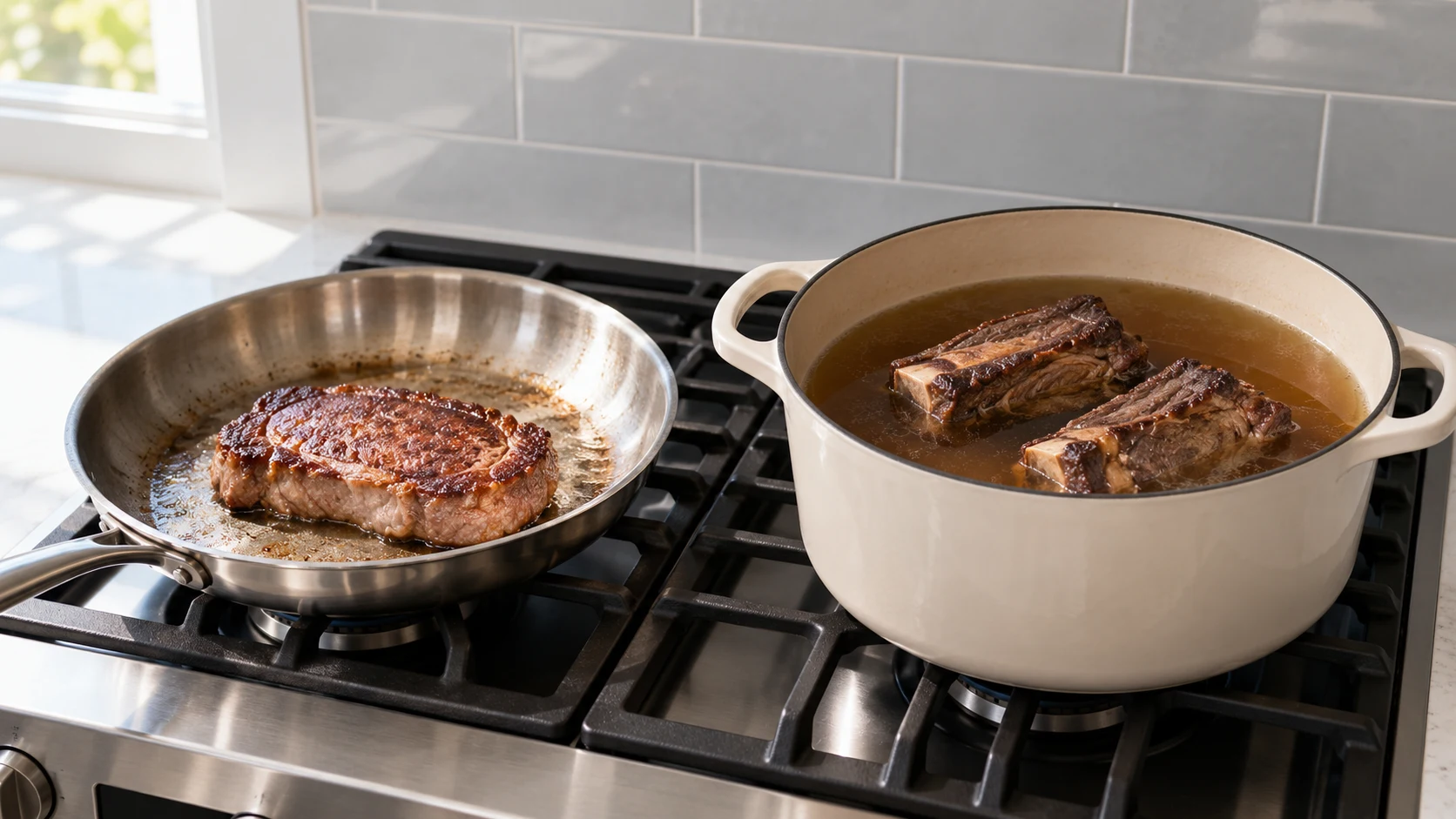
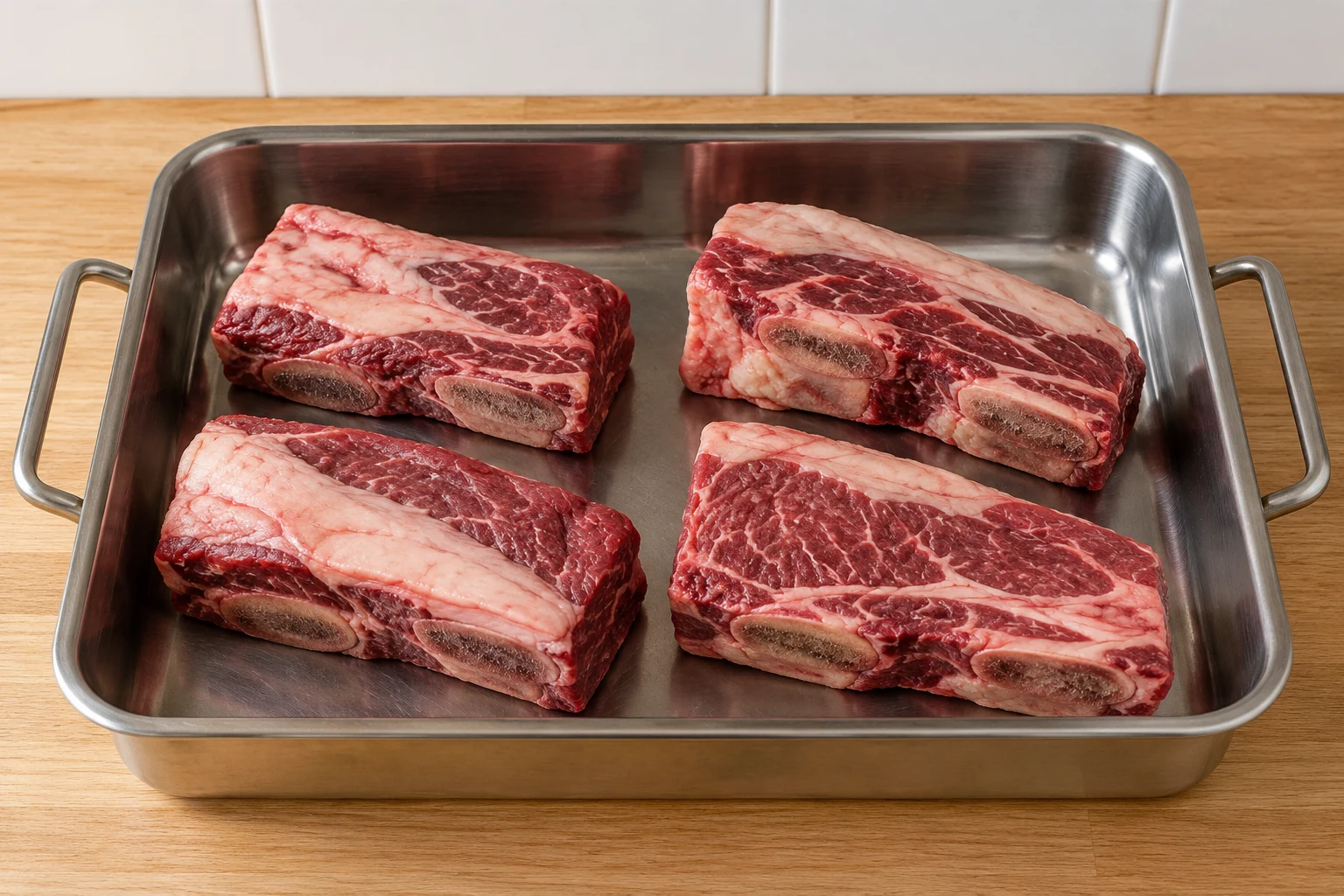
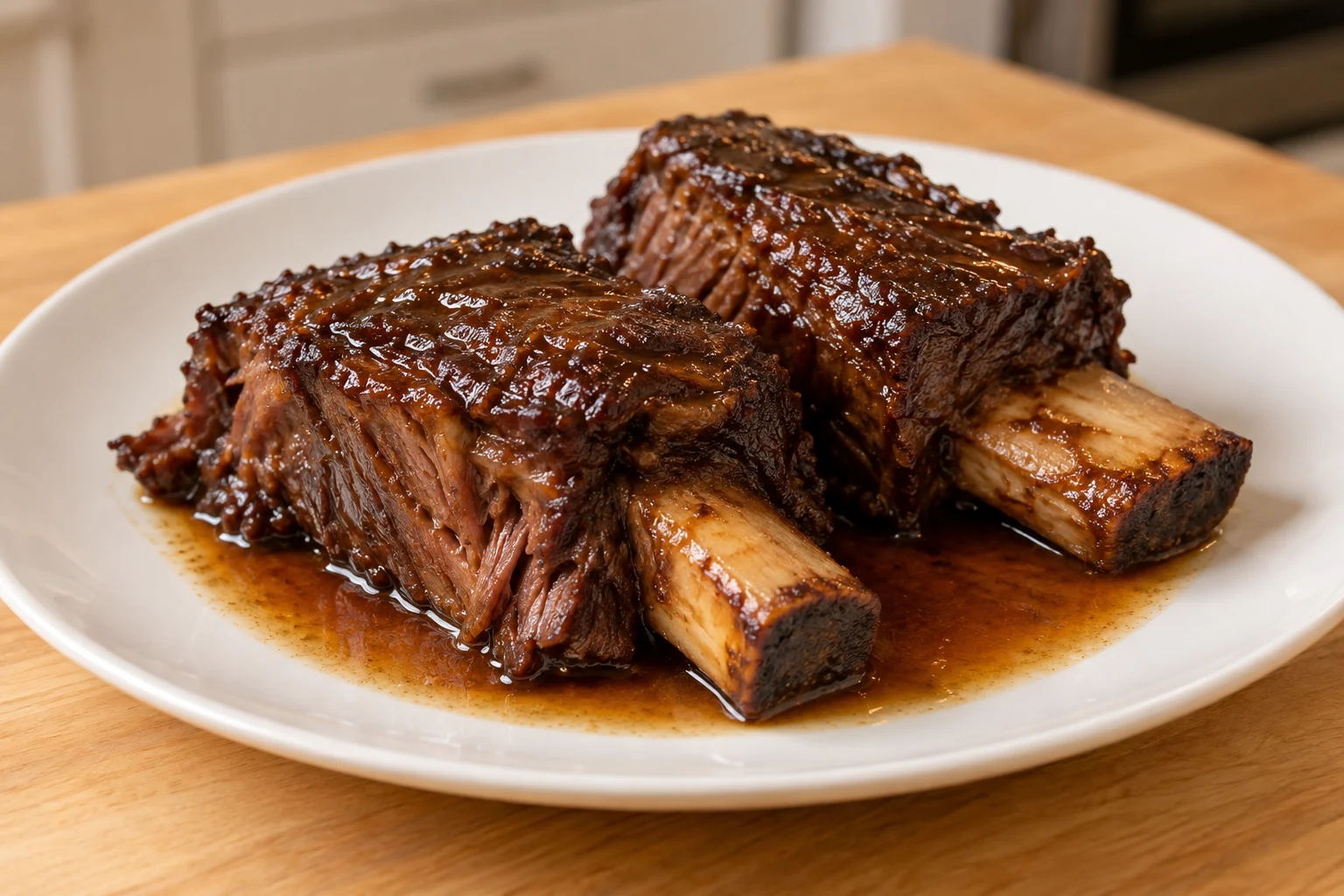
Short ribs carry the most fat and the most connective tissue of the three, and it shows. Braised properly, they render into something close to silk, deeply rich, the kind of texture that makes a small portion feel like plenty. If you want the most luxurious result and you are cooking for a few people rather than a crowd, this is the cut.
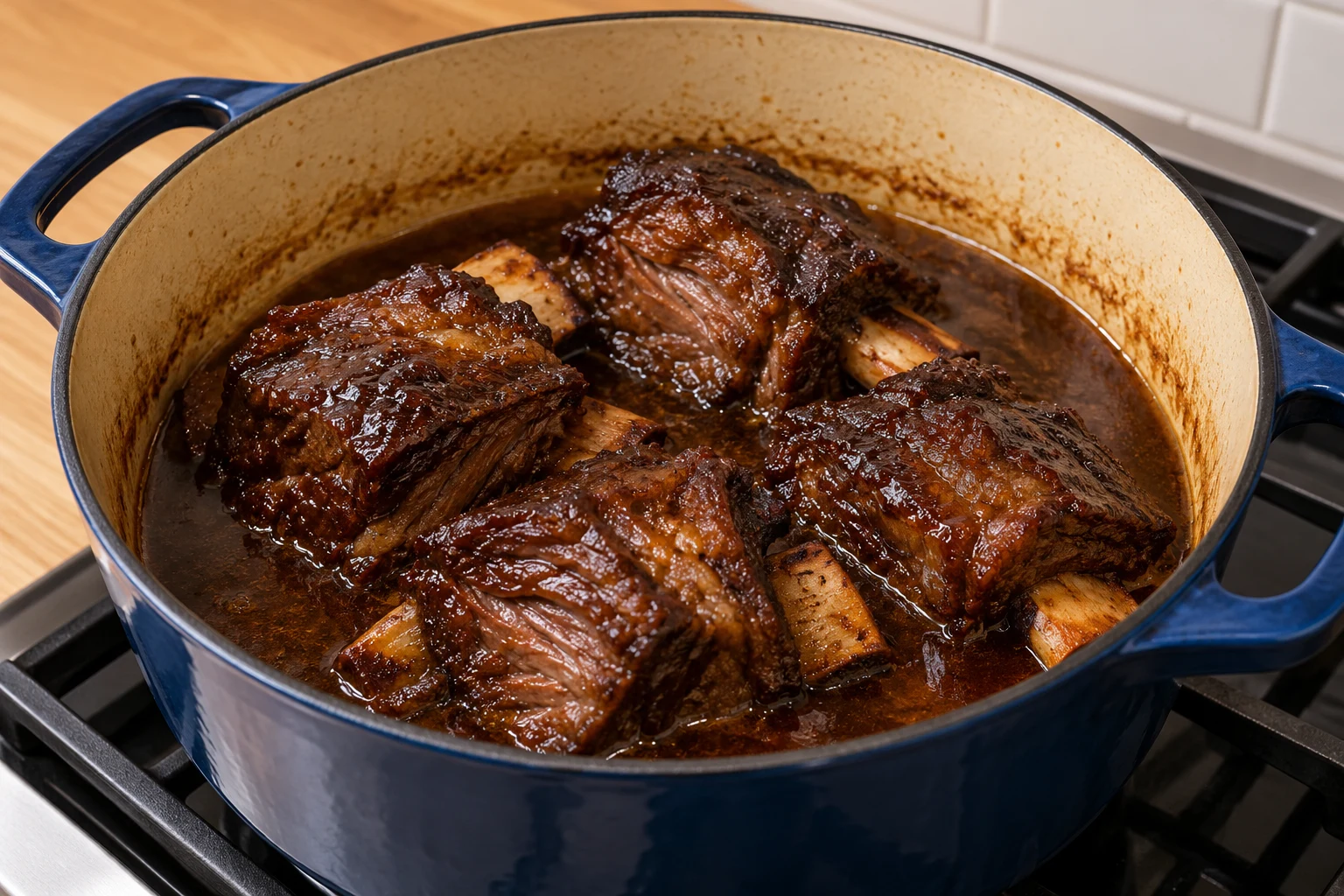
The cost is literal and physical. You pay for bone weight you cannot eat, and you pay again in the fat you will need to skim off the finished braise, which can be considerable. A pound of short rib feeds fewer people than a pound of chuck. For a rich dinner for four, that trade is worth making. For a big pot meant to stretch across a week, it usually is not.
Choosing by the result you want
Work backward from the plate. If you want soft, shreddable meat folded into a sauce or stew, buy chuck and stop overthinking it. If you want tender slices you can portion, buy brisket and give it the long, low time it demands. If you want the richest possible braise for a smaller table and you accept the bone-and-fat tax, buy short rib. The mistake is choosing by price, landing on short rib because it felt like the premium option, and then wondering why your everyday stew got smaller and greasier without getting better.
Most weeks, I reach for chuck, because most weeks I am making something spoonable and I want the meat to disappear into it. The exception is a deliberate one: when the point of the meal is the beef itself, sitting in its own rich sauce, the short ribs come out and I plan the portions around them from the start. Neither is the “better” cut. They are answers to different questions.
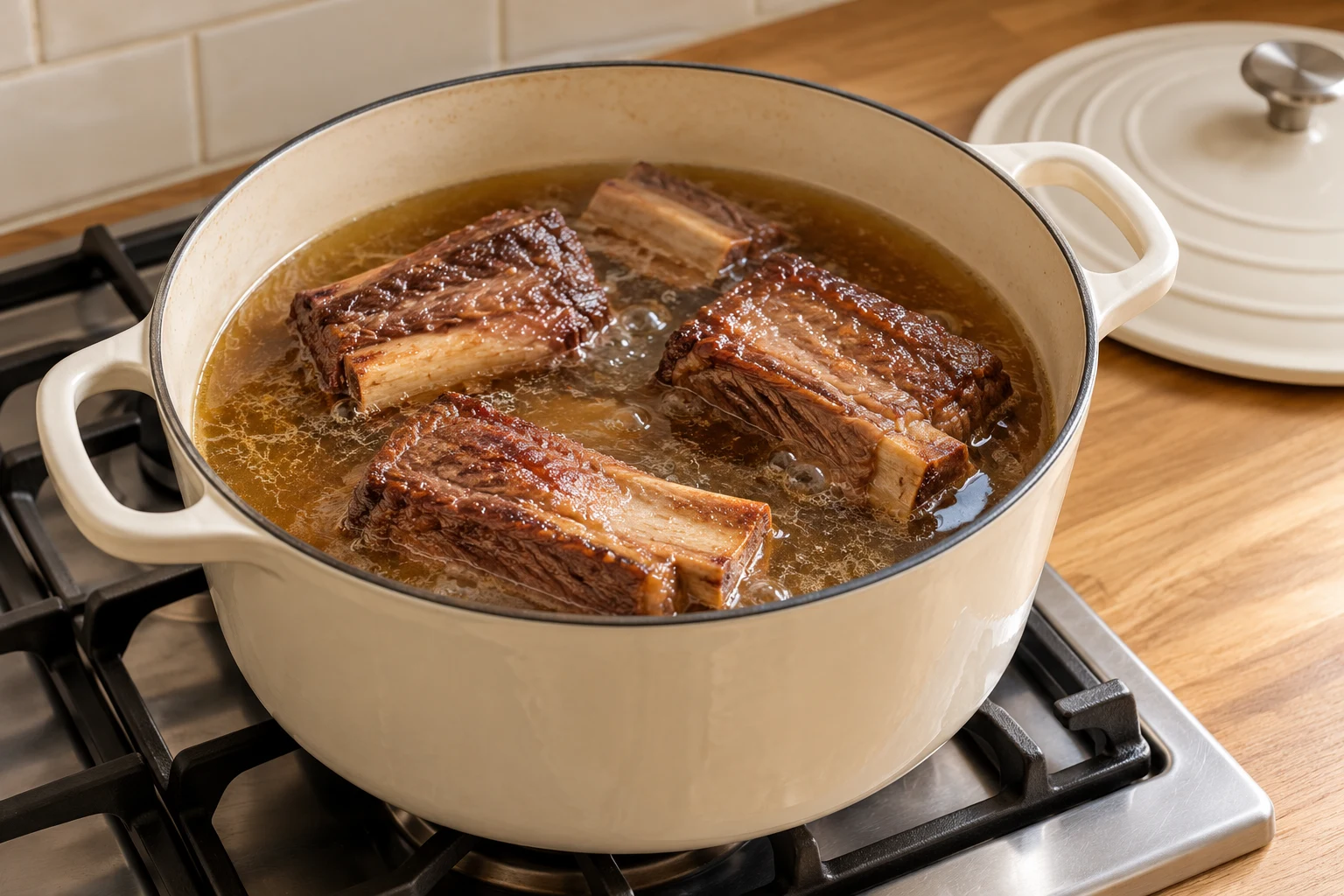
The description of how connective tissue converts to gelatin during braising follows established food science as set out in Harold McGee’s On Food and Cooking. Cut recommendations here are culinary judgment, not tested claims.