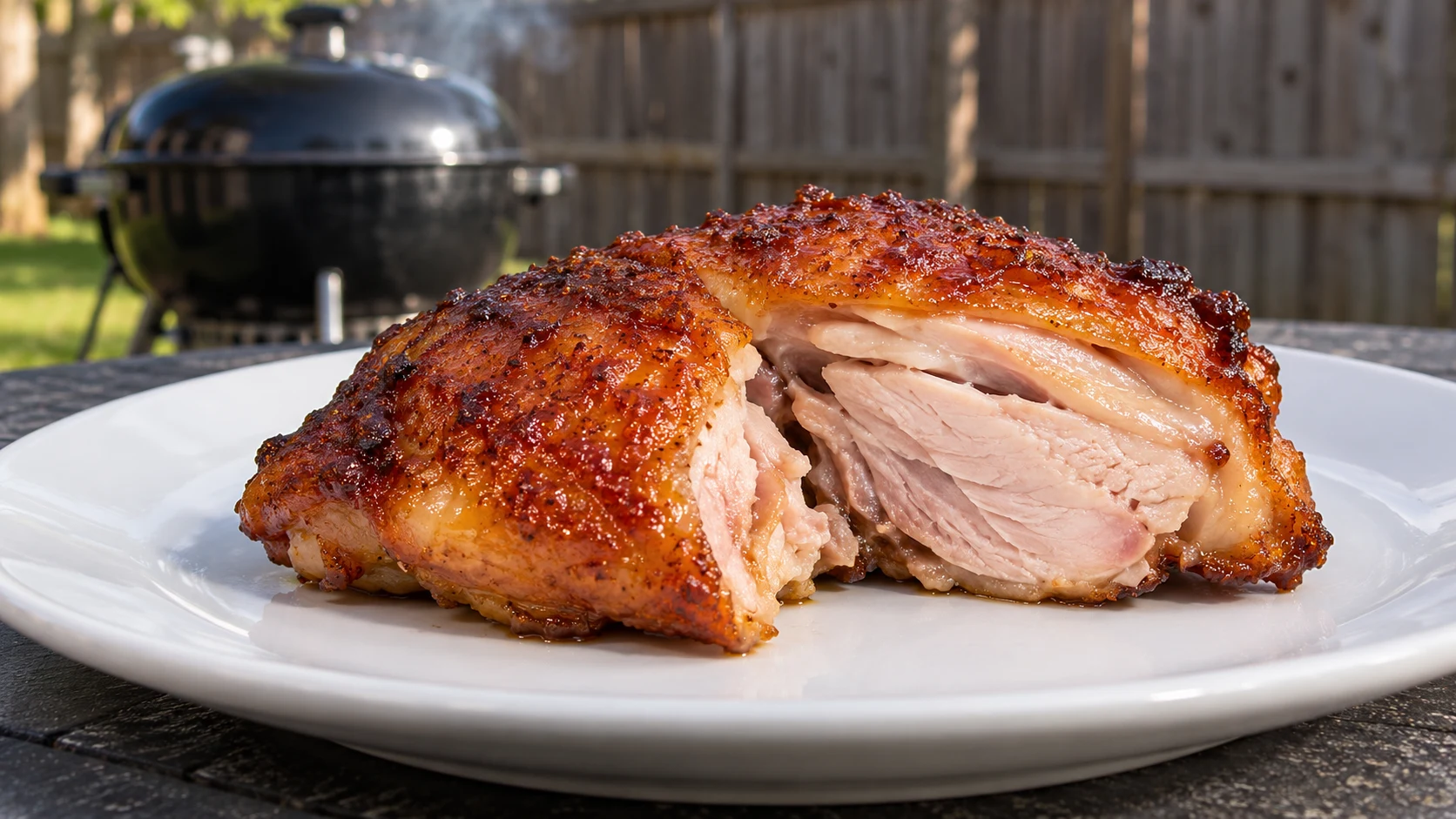
You pushed the thermometer into the thickest part of the thigh, saw 165, and pulled the tray. Ten minutes later you are chewing meat that squeaks against the bone, working at a tendon that will not let go. Nothing went wrong with the chicken. You cooked it to the temperature that makes it safe and stopped at almost the exact point where a thigh is still at its worst.
Here is the distinction almost every recipe skips: 165°F is the line that makes poultry safe to eat. It is not the line where a thigh becomes good. Thighs keep improving for another twenty to thirty degrees, and that hotter zone is still completely safe, because it is more heat, not less. The trouble starts when a rule written for breast meat gets copied onto a cut that behaves in the opposite way.
165°F is where the risk ends, not where the thigh starts tasting good
The safety number is not up for debate. The USDA’s Food Safety and Inspection Service sets a safe minimum internal temperature of 165°F for all poultry, measured in the thickest part of the meat and kept away from the bone. That figure exists to deal with pathogens. It says nothing about texture, and you should treat it as the one non-negotiable in this whole discussion.
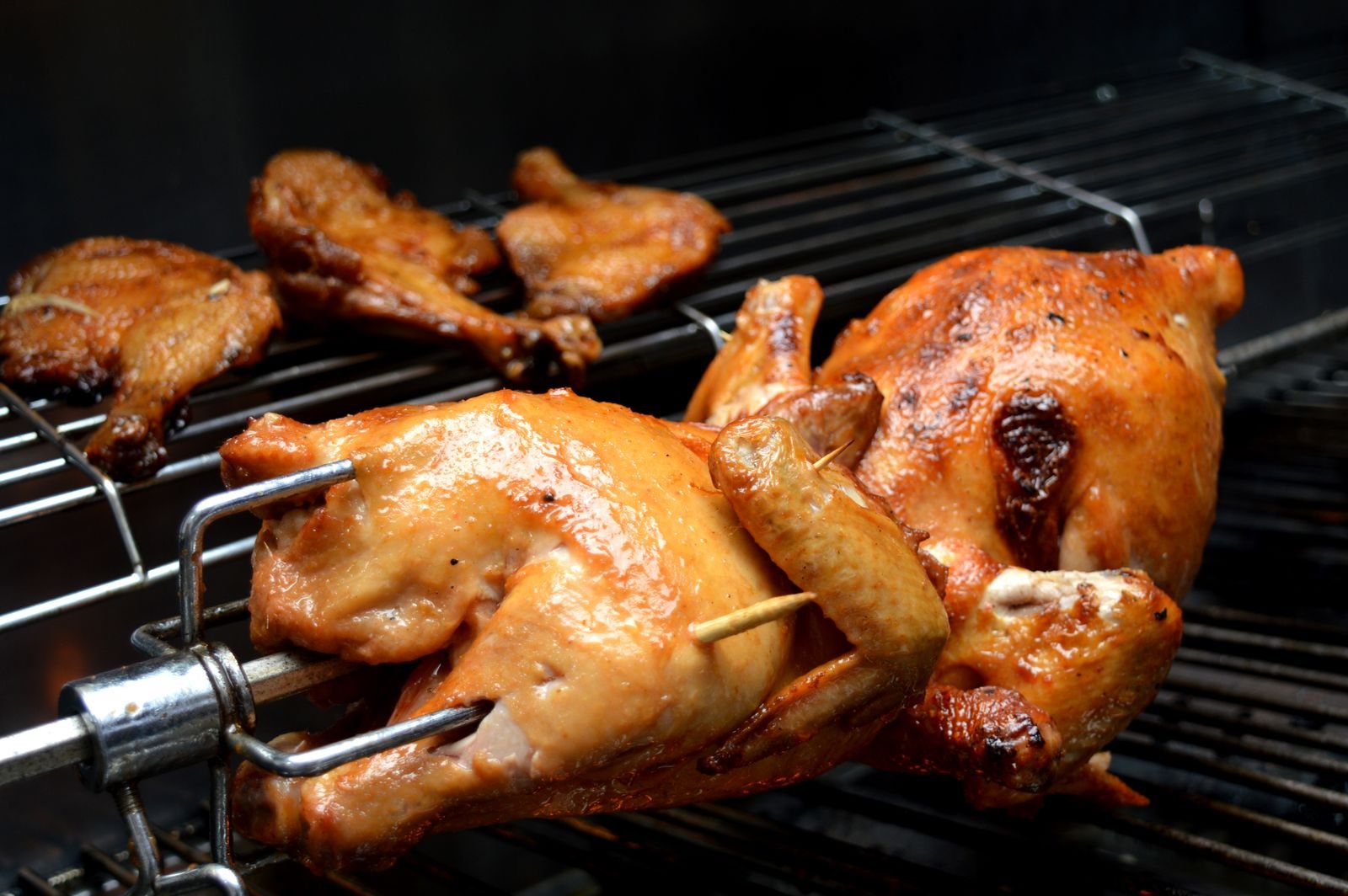
What trips people up is reading 165 as a ceiling. It is a floor. A thigh that reaches 182°F is not dangerously overcooked in some food-safety sense; it is simply hotter, and hotter poultry is not less safe than poultry at the minimum. So the real question is not whether you can go past 165. You can, freely. The question is how far past it you want to go, and that is a matter of what the meat is doing on the inside.
One practical note on the measurement itself. Bone conducts heat differently from muscle and will give you a misleading reading if the probe touches it, usually reading warmer than the meat around it. Aim for the thickest section of the thigh, slide the tip toward the center, and keep it clear of the bone. Expect a few more degrees of carryover after the meat leaves the heat.
What keeps changing between 165 and 195
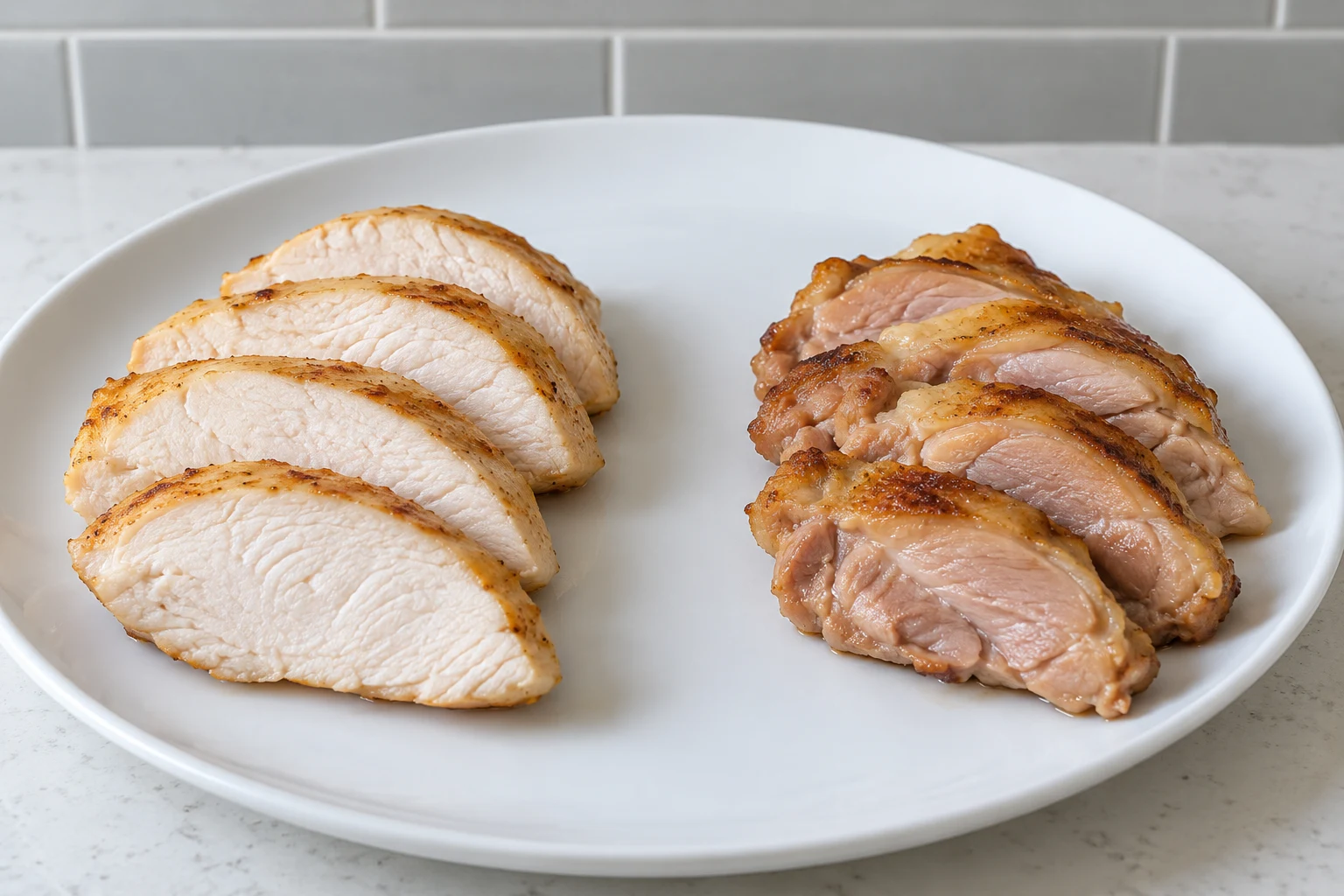
A thigh is working muscle. It carries far more connective tissue and fat than a breast does, and that difference is the whole story. The breast is lean and dries out quickly, which is where the “pull it the moment it is done” instinct comes from. Apply that instinct to a thigh and you rob it of the part that makes dark meat worth eating.
The connective tissue in a thigh is mostly collagen. With enough time and heat, collagen breaks down into gelatin, and that conversion runs faster as the temperature climbs out of the mid-100s. This is standard food science, laid out clearly in Harold McGee’s On Food and Cooking, and you can taste it happening. At 165°F a lot of that collagen is still intact, which is exactly why the meat feels firm and the tendon resists. Give the thigh more time in the 170s and 180s and the connective tissue softens, the fat renders, and the texture shifts from springy to yielding.
This is also why overcooking a thigh the way you overcook a breast is genuinely hard to do. The same heat that would leave a breast dry and stringy is busy melting the thigh’s connective tissue into something soft. A thigh is not fighting the heat. It is using it.
A rough map of the thigh’s doneness zone
These are temperatures you cook toward, not a warning line you stay under. Think of them as a map rather than a set of rules.
| Internal temp | What it’s like | Best for |
|---|---|---|
| 165°F | Safe, but firm and springy; the tendon resists and the meat can squeak | When you truly cannot wait; not the goal |
| 170–175°F | Loosening up; juices run clear; still a touch firm | A quick weeknight thigh you want off the heat |
| 180–185°F | Tender; most of the connective tissue has given way | The everyday sweet spot for roasted or grilled thighs |
| 190–195°F | Very soft, close to pull-apart | Braises, stews, and anything you plan to shred |
Reading a thigh without staring at the thermometer
The thermometer settles the safety question, and you should keep using it for that. But once you understand what a thigh feels like as it climbs, you can read the cut with your eyes and hands and use the probe to confirm rather than to guess.
Watch the underside near the joint. As a thigh finishes, the meat pulls back from the tendon and the end of the bone, exposing a little more of it than when it went in. Press the thickest part: at 165 it feels tight and pushes back fast, while by the mid-180s it gives more easily and springs back slower. The juices should run clear rather than pink or red, though color on its own is a cue, not proof. Temperature is the proof of safety; the visual signs just tell you where the texture is heading. And remember that the meat right against the bone is the last part to come up, so if anywhere is going to lag, it is there.
The method decides how easily you land in the zone
Every cooking method has its own path into the 180s, and its own way of going wrong. Knowing the failure mode ahead of time is most of the battle.
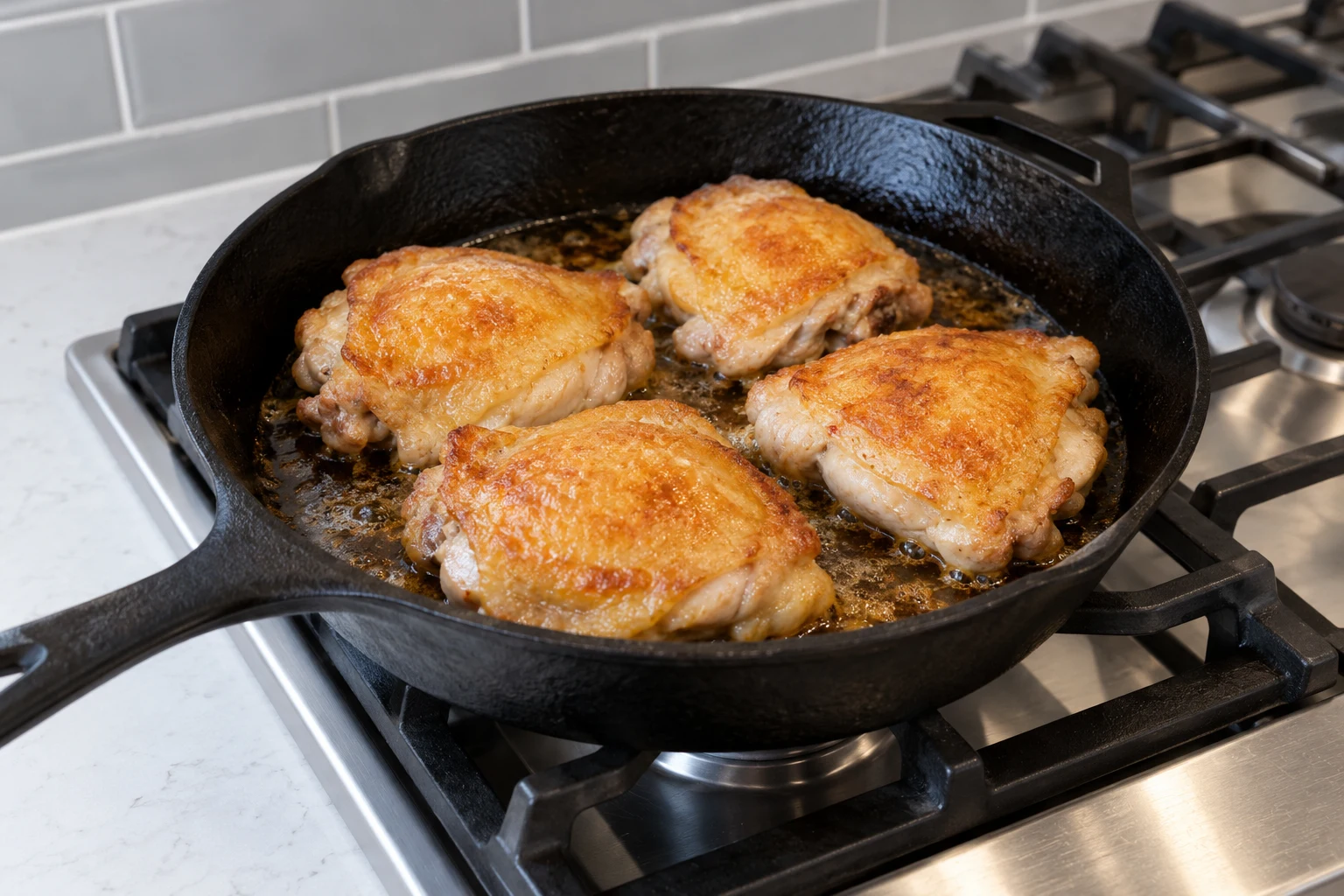
In a skillet, you get excellent color from direct contact, but a bone-in thigh has an awkward geometry: the thin edges race ahead while the center by the bone lags behind. Boneless thighs are much easier to bring up evenly here, which is why so many quick stovetop recipes call for them.
A hot oven is the most forgiving option for a full tray, and it is what I reach for by default. Somewhere around 425 to 450°F renders the skin and carries the center into the 180s without much babysitting. The one thing that ruins it is crowding: pack the thighs together and they steam in their own moisture instead of roasting, and the skin never firms up.
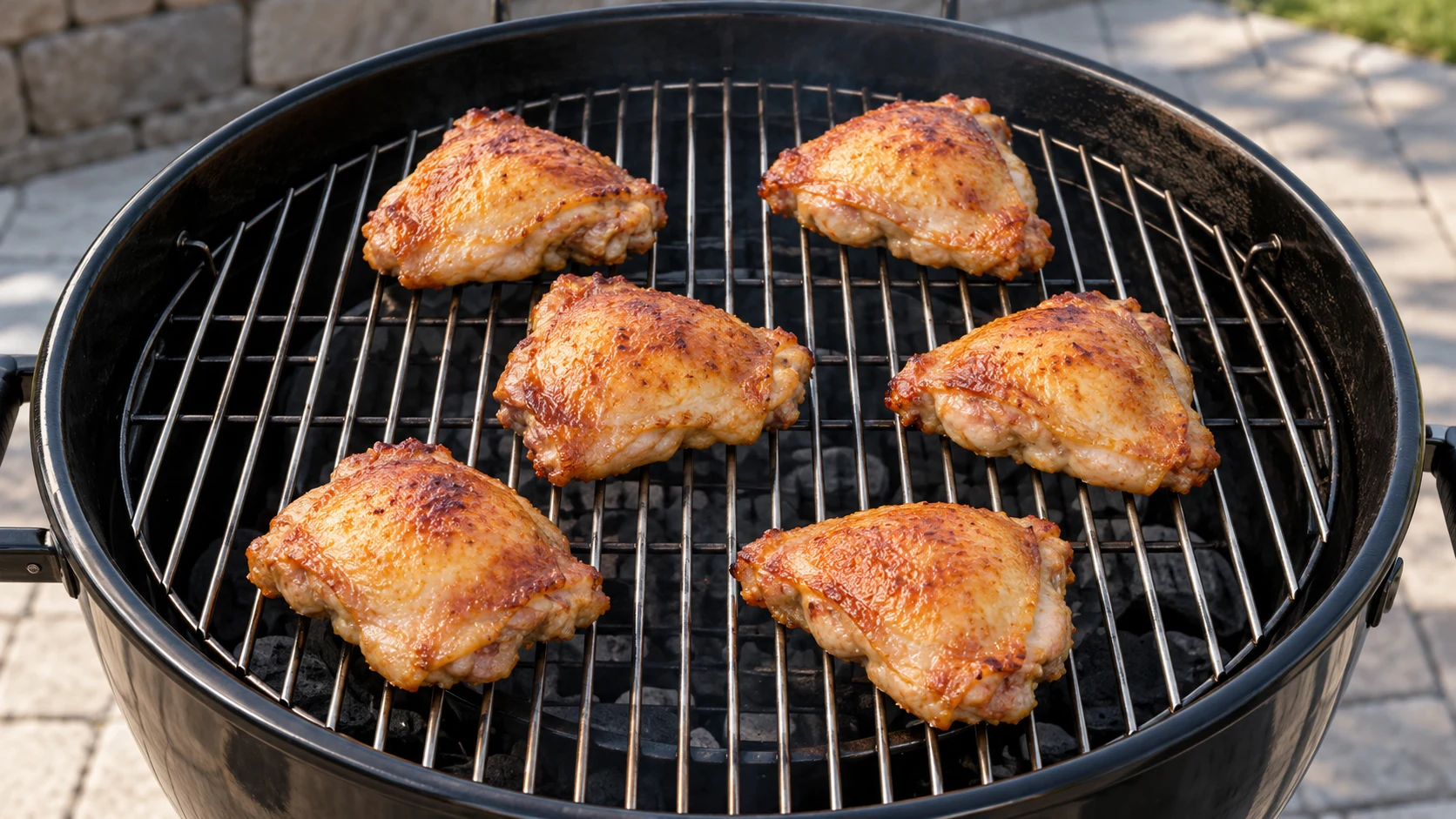
The grill gives you the best skin and the most flavor, and it is also the easiest place to burn the outside long before the inside reaches the good zone. A two-zone fire fixes this. Start the thighs over the cooler side to bring the interior up, then move them over direct heat at the end to crisp the skin.
A braise is the one method built around the top of the range. Gentle liquid heat over time is what takes a thigh into the 190s and leaves it falling off the bone. Its failure mode is impatience. If the meat still clings, it has not finished, and the answer is more time, not more heat.
Which mistakes you can walk back, and which you can’t
Most thigh problems are recoverable, which is another reason dark meat is easier to live with than breast. If a thigh comes off firm and underdone, put it back; it forgives returned heat far better than a breast would. If a braise is not tender yet, let it keep going. Neither situation is a disaster.
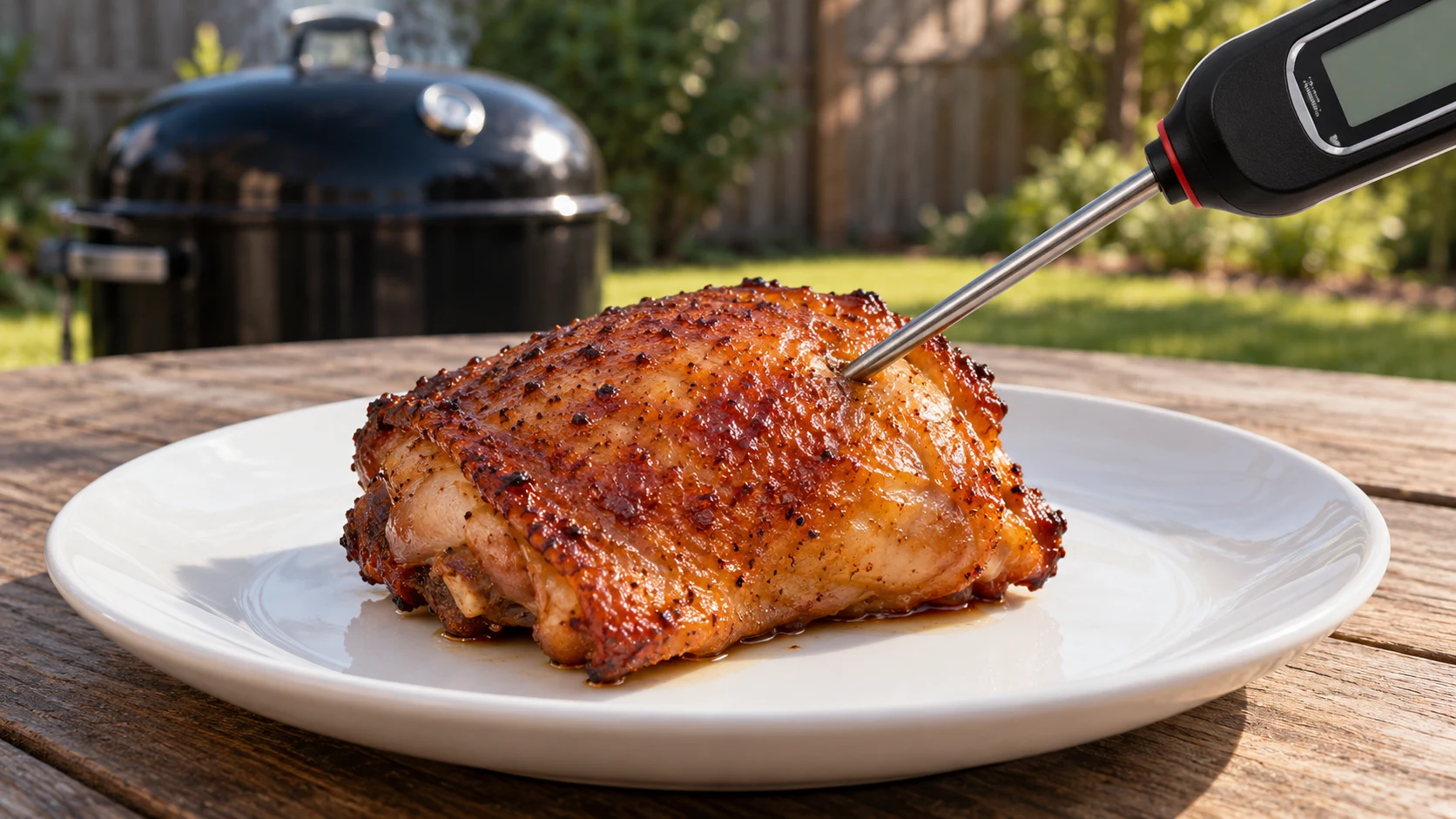
The mistakes that stick are the ones on the surface. Skin blackened to bitter char over a direct flame will not un-burn even if the inside eventually catches up. Boneless, skinless thighs held a long time under very high dry heat can tip from tender into dense and dry, because you have taken away the skin and fat that were protecting them. Thighs resist drying, but they are not immune to being pushed hard with nothing to shield them.
The most common ruined thigh, though, is the one nobody counts as a mistake: pulled at 165, served tight and squeaky, and quietly filed away as evidence that dark meat is not for you. It usually was. You just stopped one decision too soon.
What I’d do with a tray of them tonight
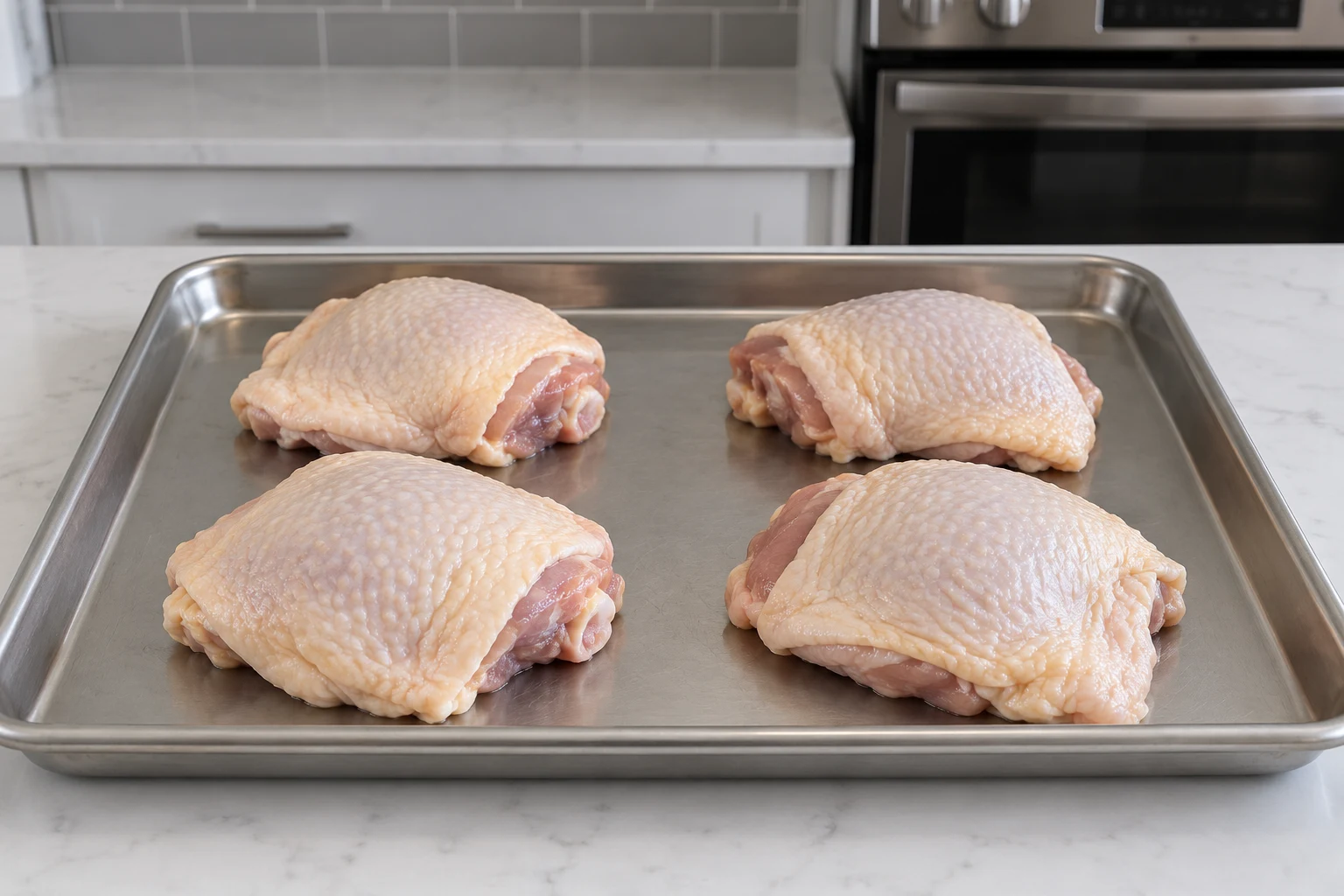
Bone-in, skin-on thighs, a 450°F oven, arranged on a rack or spaced out on a sheet pan so they roast instead of steam. I cook them to roughly 185°F in the thickest part and give them a few minutes to rest before serving. If they are going into a stew or getting shredded, I stop watching for a target number and let them ride up into the 190s in the liquid until a fork twists the meat apart without any argument.
The thermometer answers one question, and it answers it at 165: is this safe to eat. Everything after that number is texture, and texture is the decision you get to make on purpose.
Safe-temperature guidance here follows the USDA Food Safety and Inspection Service. The description of how connective tissue behaves with heat draws on Harold McGee’s On Food and Cooking. Temperatures above the safe minimum are a matter of culinary preference, not safety.